
While non-Muslims are now allowed to visit the city of Medina, they are not allowed to enter what I would refer to as the beating heart of the town, the Al Masjid al Nabawi. Also known as the Prophet’s Mosque, this immense mosque, the second biggest one in the world to be precise, is home to the tomb of Prophet Mohammad. This is why, in the Islamic world, the religious importance of this site is only truly outmatched by the Kaaba in Mecca, a city that is completely off-limits for non-Muslims. Join me, as we take a closer look at this special site.
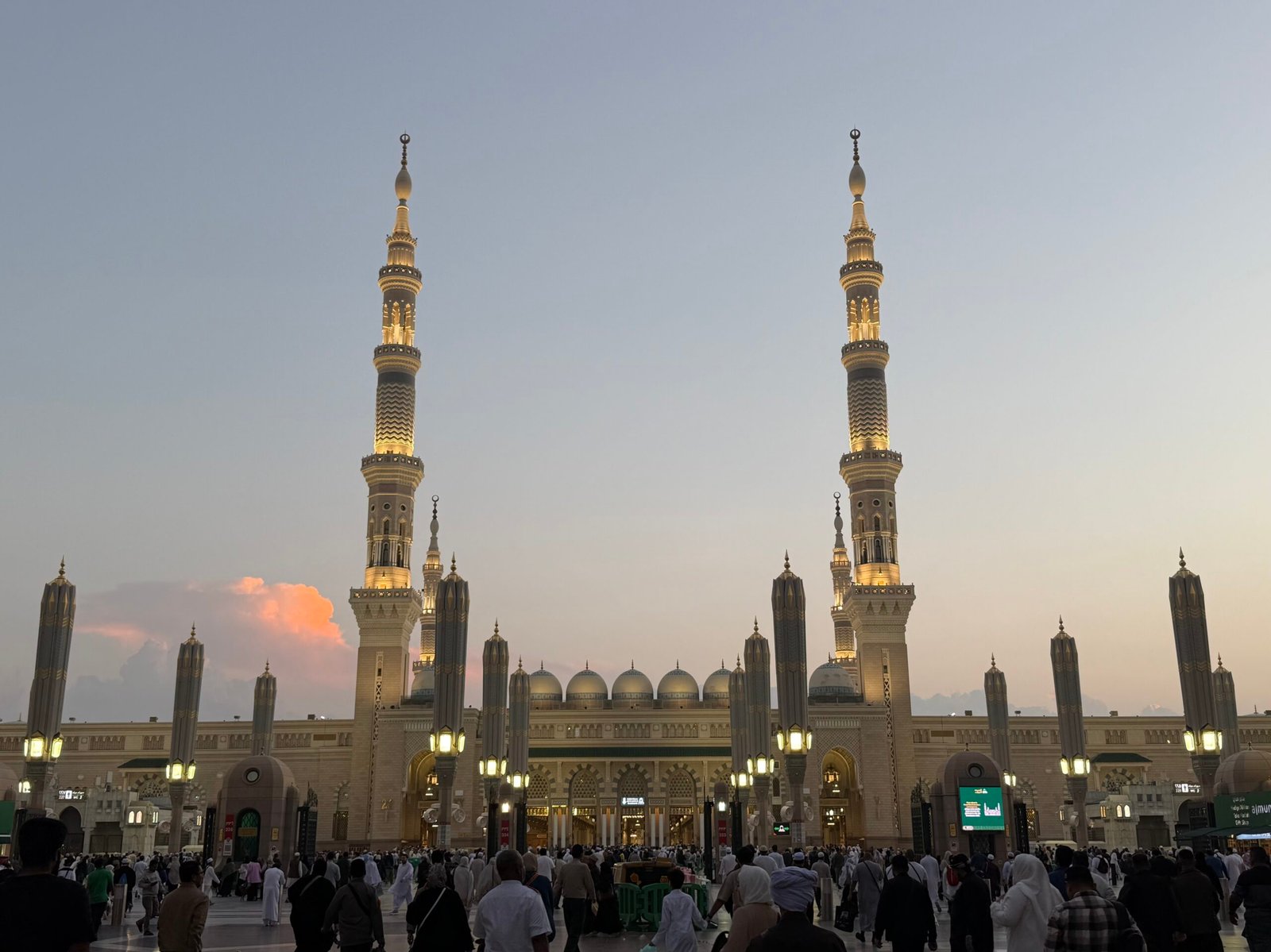
Al Masjid al Nabawi dates back to 623, being built just a year after Hijrah, when Prophet Mohammad escaped the persecution in Mecca and made his way to Medina. This makes the Al Masjid al Nabawi one of the oldest mosques in the world.
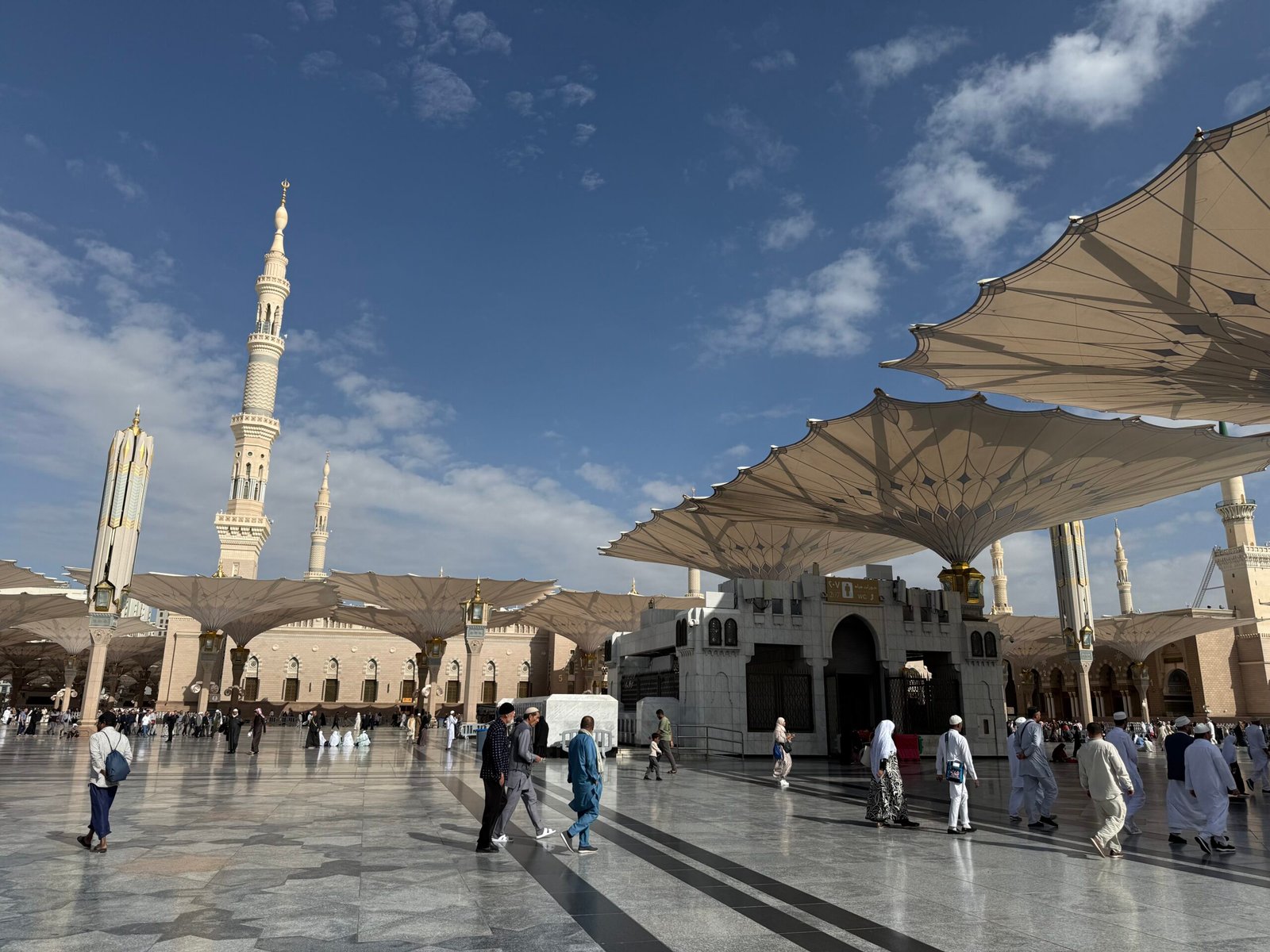
Over time, successive Arab caliphates, Mamluk and Ottoman caliphs, and eventually Saudi kings made sure to extend the mosque in their own ways, adding to the capacity and opulence of the structure as the time went.
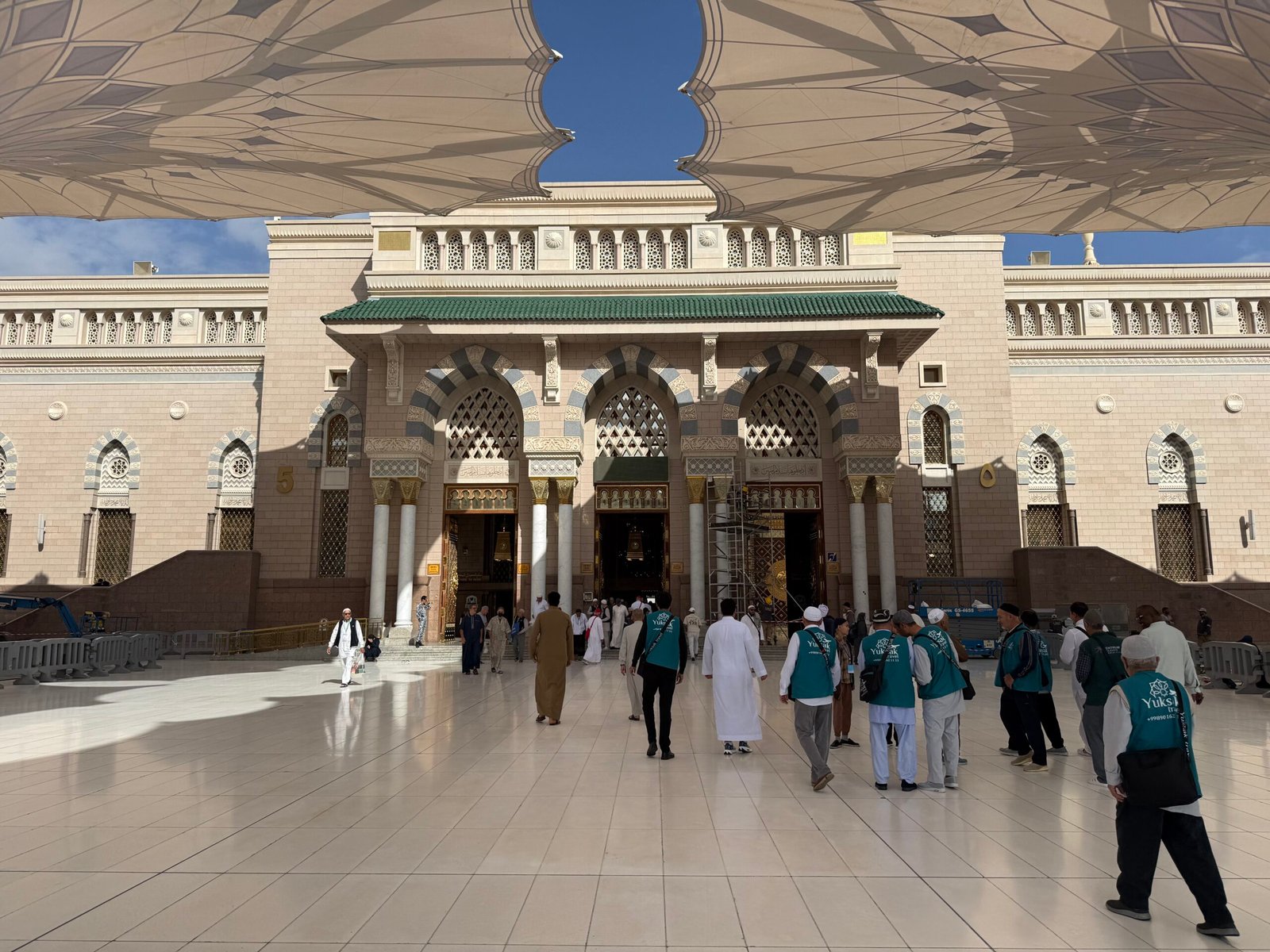
These alterations did not simply result in a massive mosque without a soul. The fact that these additions occurred under different dynasties and over fourteen centuries meant that one can enjoy the entire history of Islamic architecture by simply touring around Al Masjid al Nabawi today. For example, many of its doors are different from one another, showings signs of early Arab, Mamluk, Ottoman, or Saudi architectural styles.
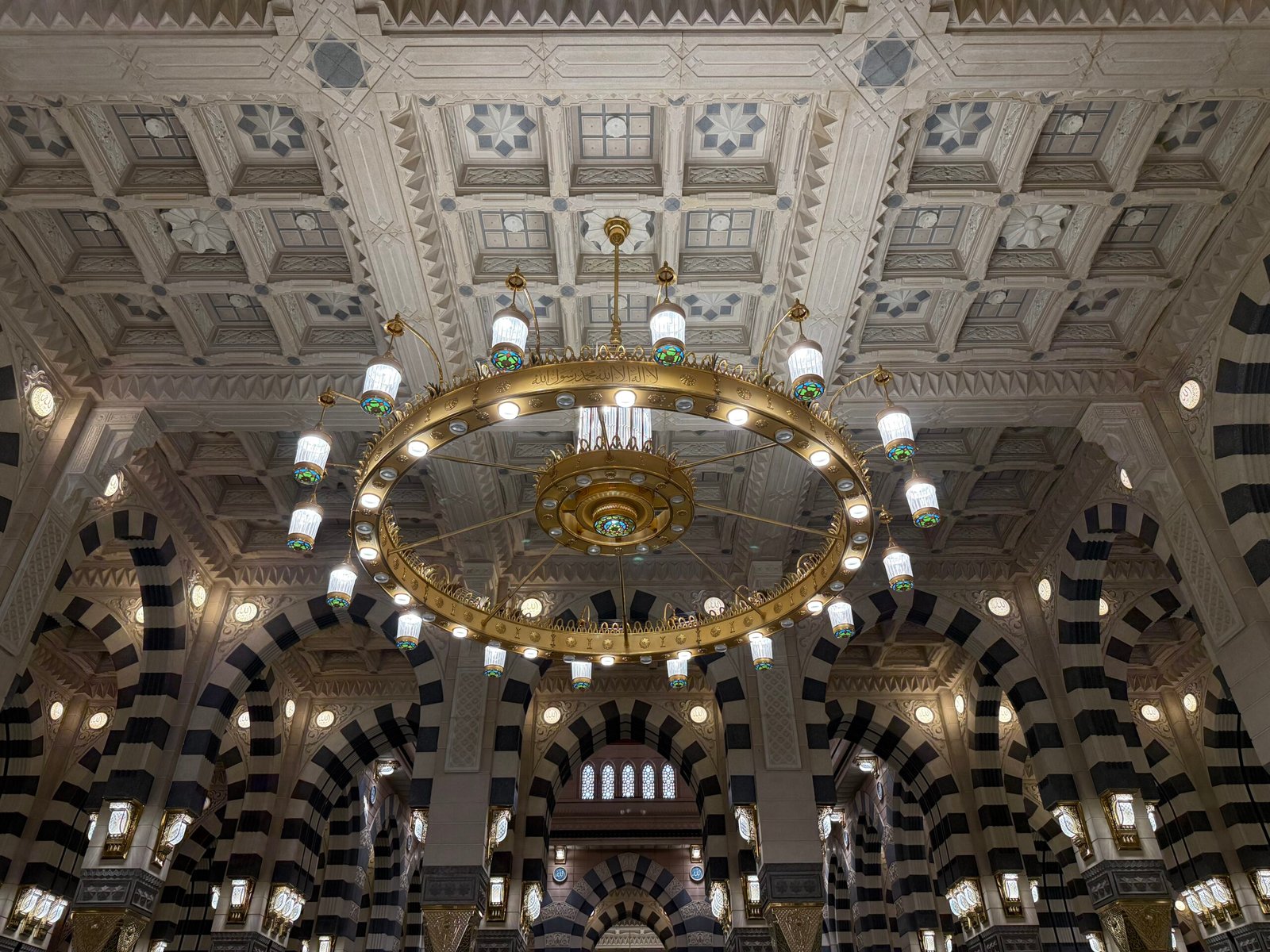
While the exterior of the mosque is already quite gorgeous, it becomes an outright feast for one’s eyes once you make your way inside. Here one can find imposing lanterns, some excellent stonework, and a lot of arcs of varying sizes, colours, and of course styles.
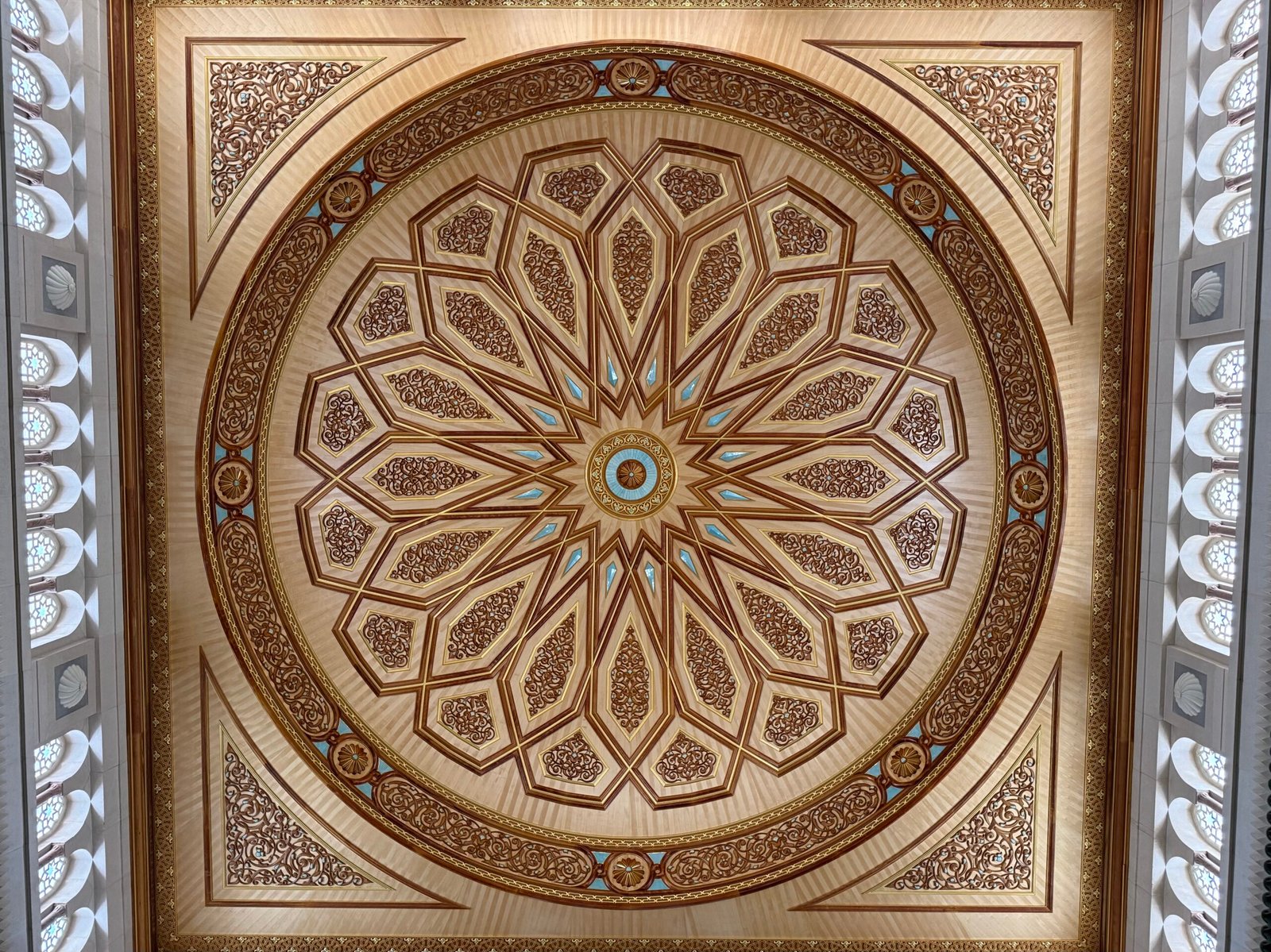
Some of the roofs are covered with what seemed to be woodwork, whereas some others were carved out of different types of stones. Regardless of the material, the designs themselves were often quite intricate. To be honest, most folks simply enjoy their prayers here and do not necessarily have the time to take in the views, but it certainly does not hurt that the architects took their times with these details.
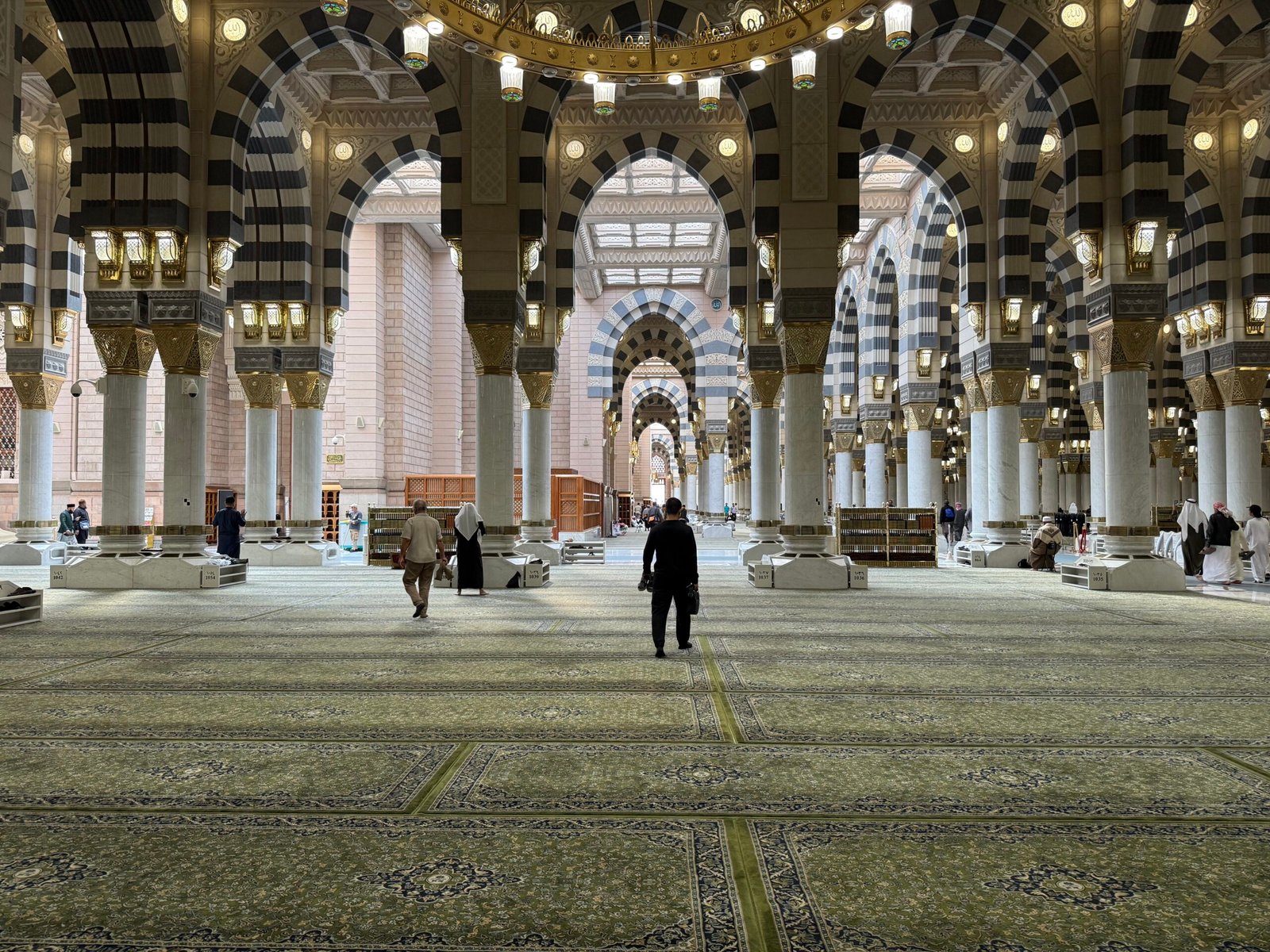
Speaking of prayer, obviously Al Masjid al Nabawi is first and foremost a mosque. Prayer mats cover most of the floor area. There are some marble roads that divide these prayer areas into smaller ones and allow for one to walk around more freely, but I believe those roads are also used as a prayer space when the need arises.
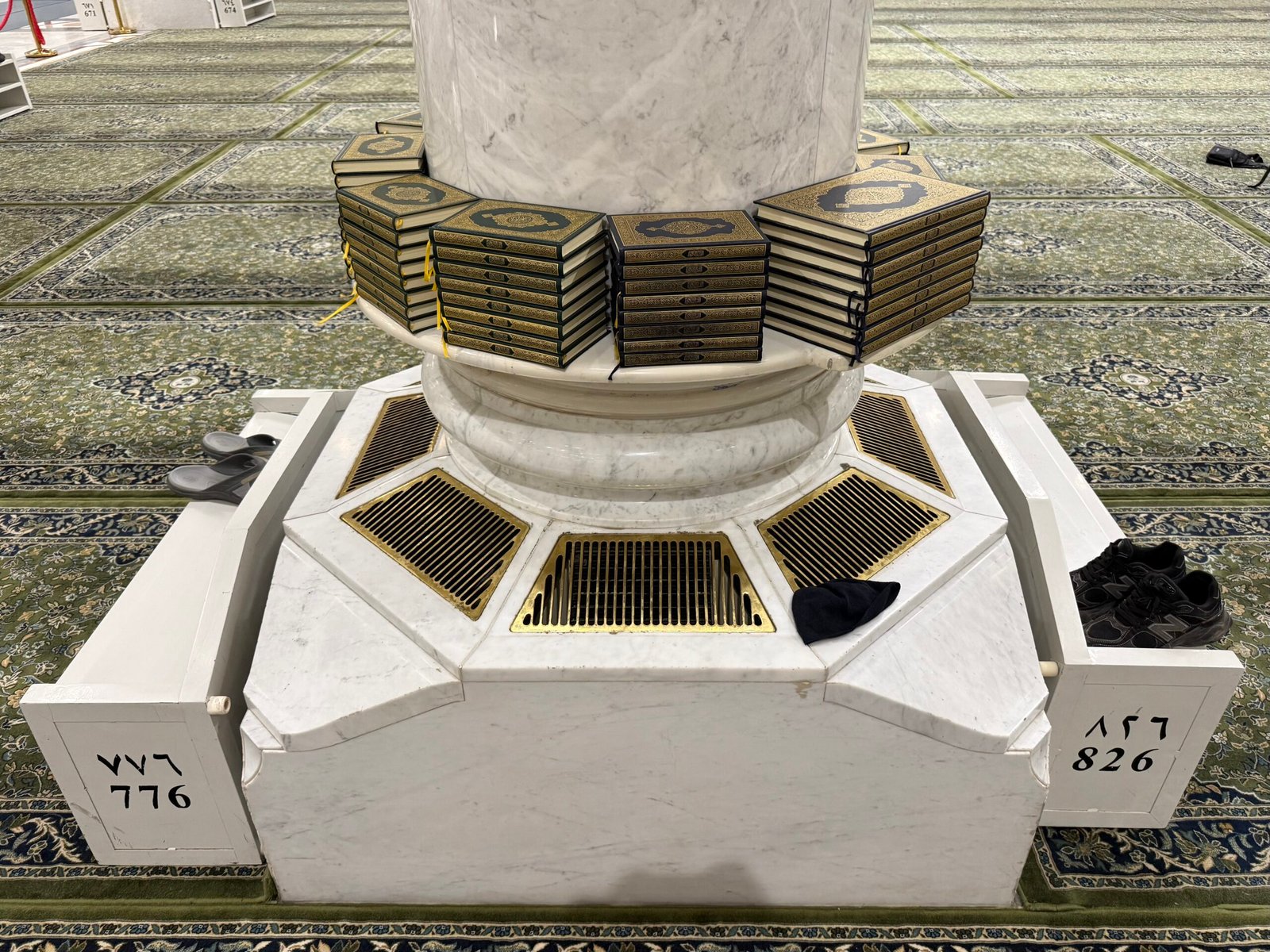
Quran in multiple languages is available throughout the mosque for those who wish to study it in peace. Moreover, there are quite literally thousands of places to put your dirty shoes on, and the hundreds of staff members tirelessly clean the interior of the mosque throughout the day.
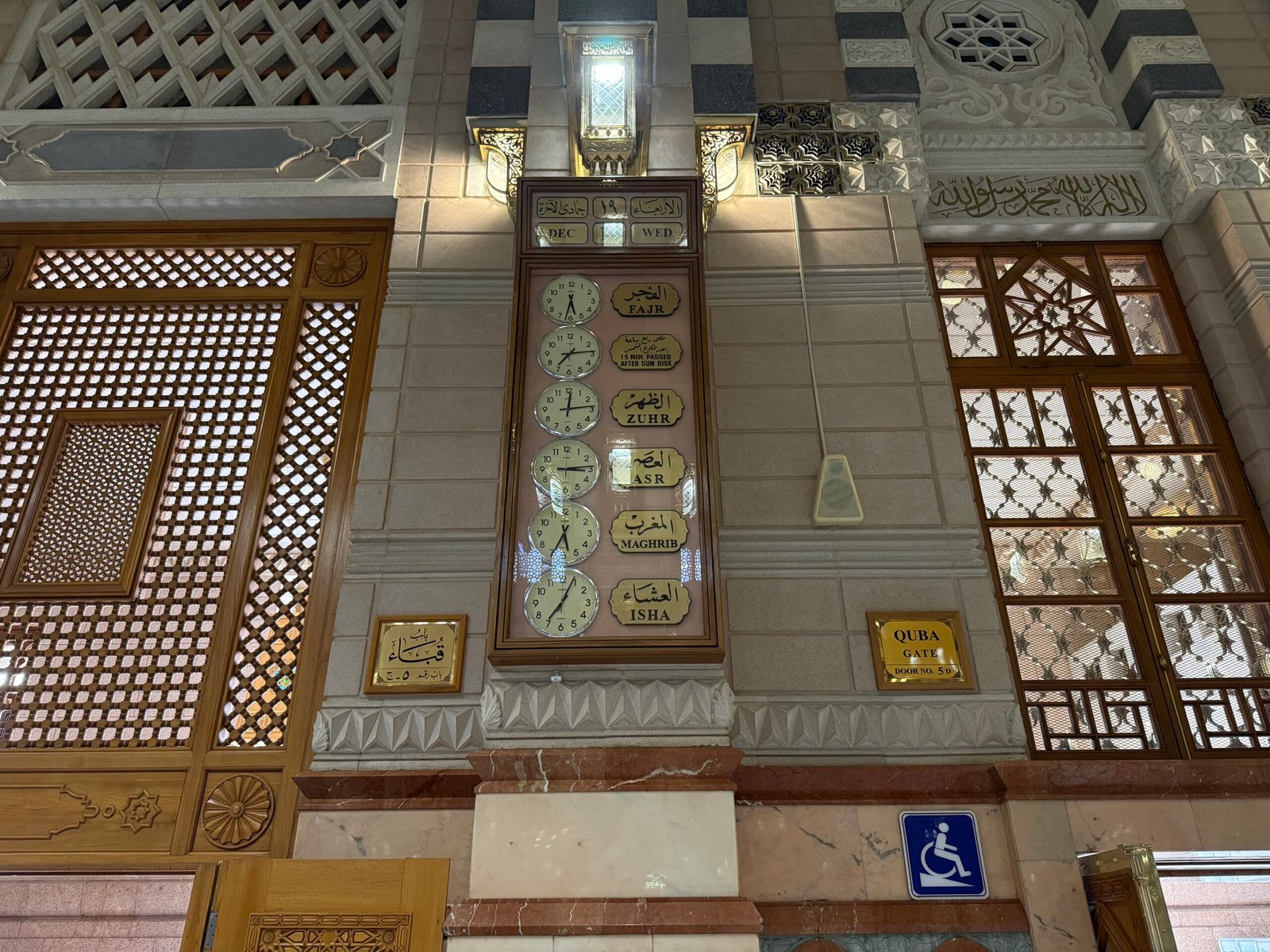
Here, you can even see prayer times just as they were announced in the old days, shown with actual clocks telling worshippers when the next prayer is. Of course, today most people simply use apps on their phones, but I remember this being the norm in the mosques of my hometown, Kastamonu, back in the days as well.
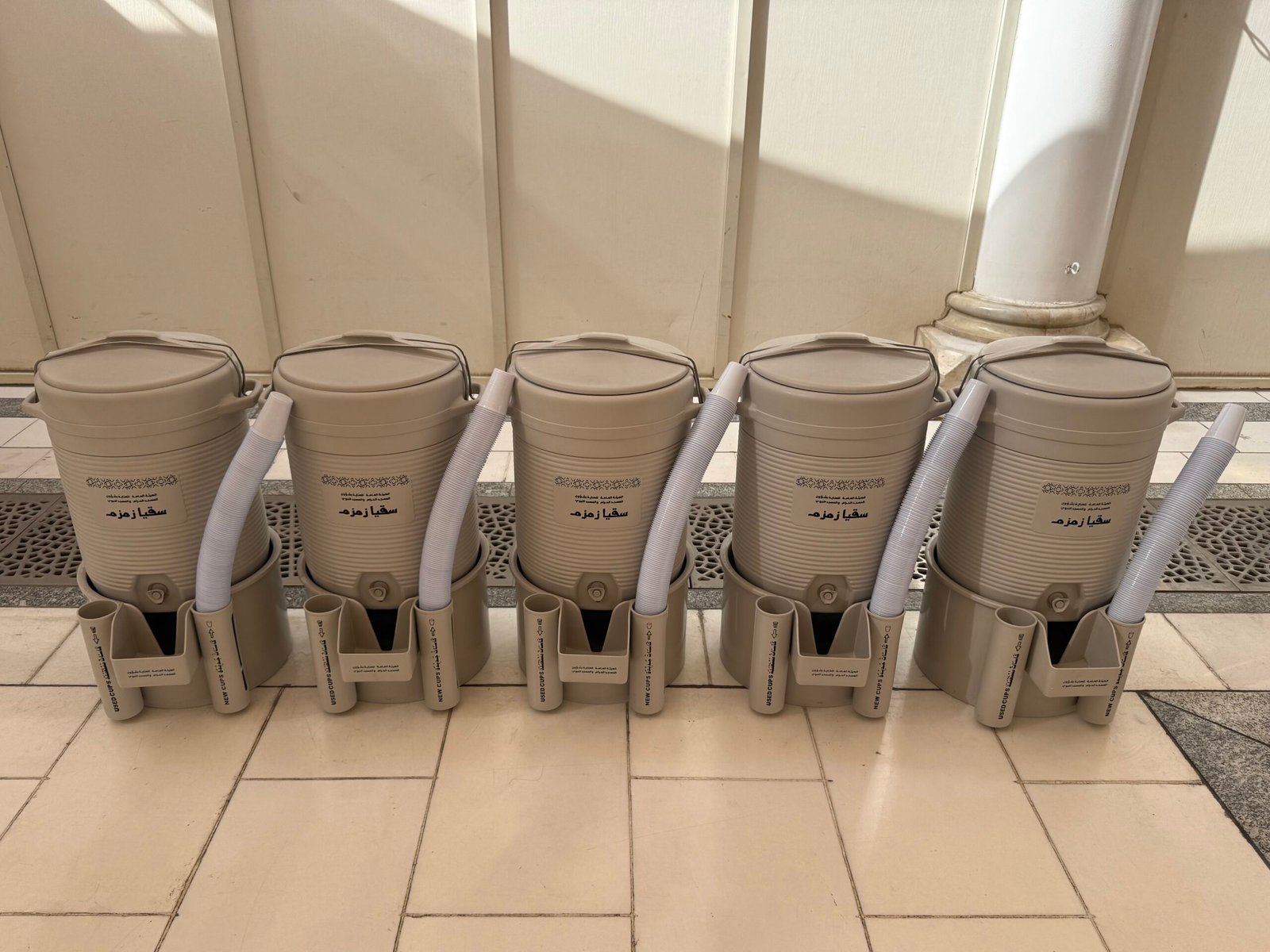
Such nostalgic services are not the only ones that are provided at Al Masjid al Nabawi. One can also enjoy an endless supply of warm, cold, or Zamzam water here. The Zamzam water comes from a well near the Kaaba in Mecca, and many pilgrims even bring some back home so that all of their family and friends can enjoy this specific well’s water as well.
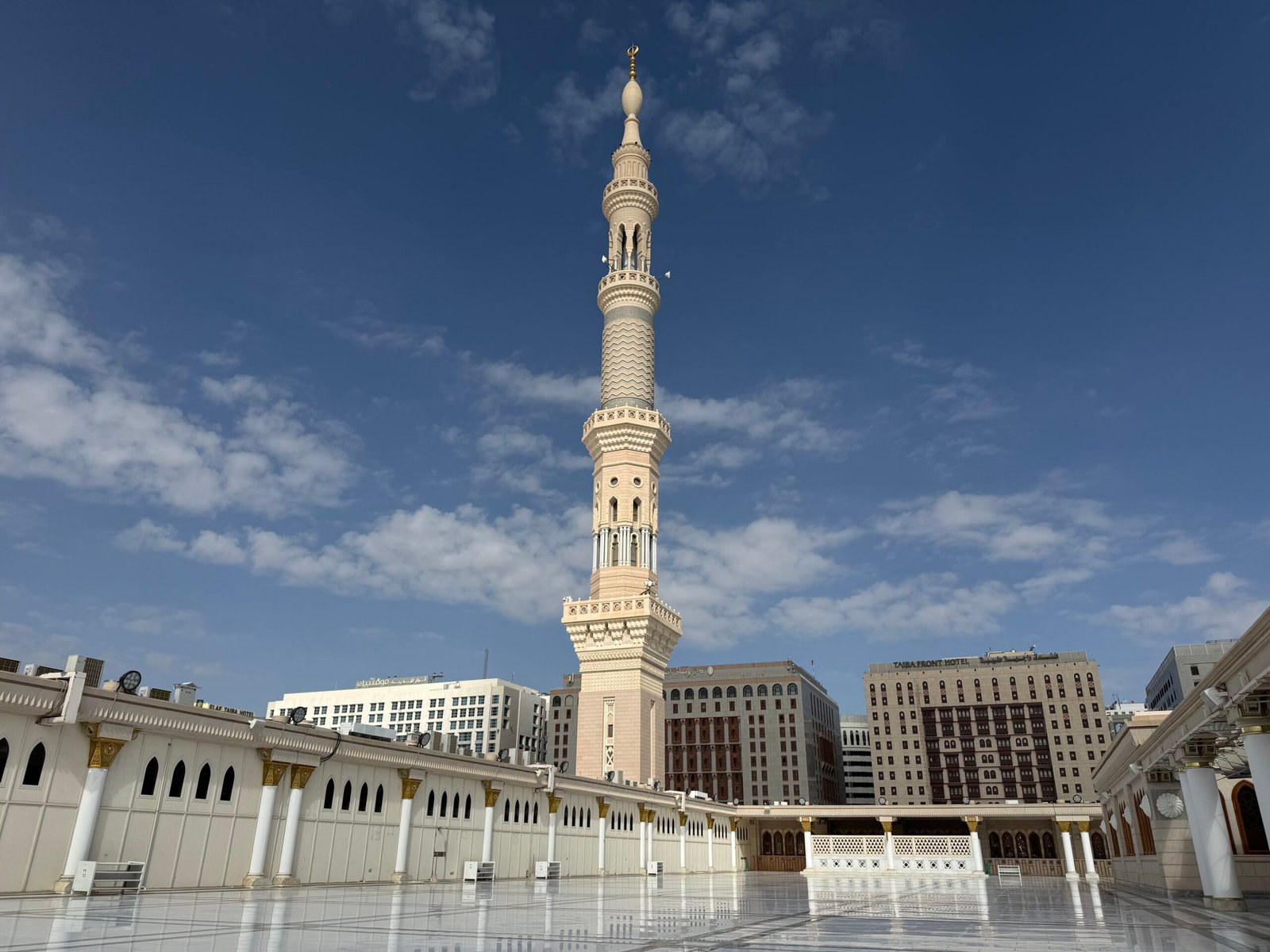
For some reason, I only thought about going up to the roof of this mosque on my second day in Medina. As expected, it had far fewer people on it than inside the mosque, since the sun would normally be scorching this area, and I was only spared momentarily thanks to the few clouds above at that time.
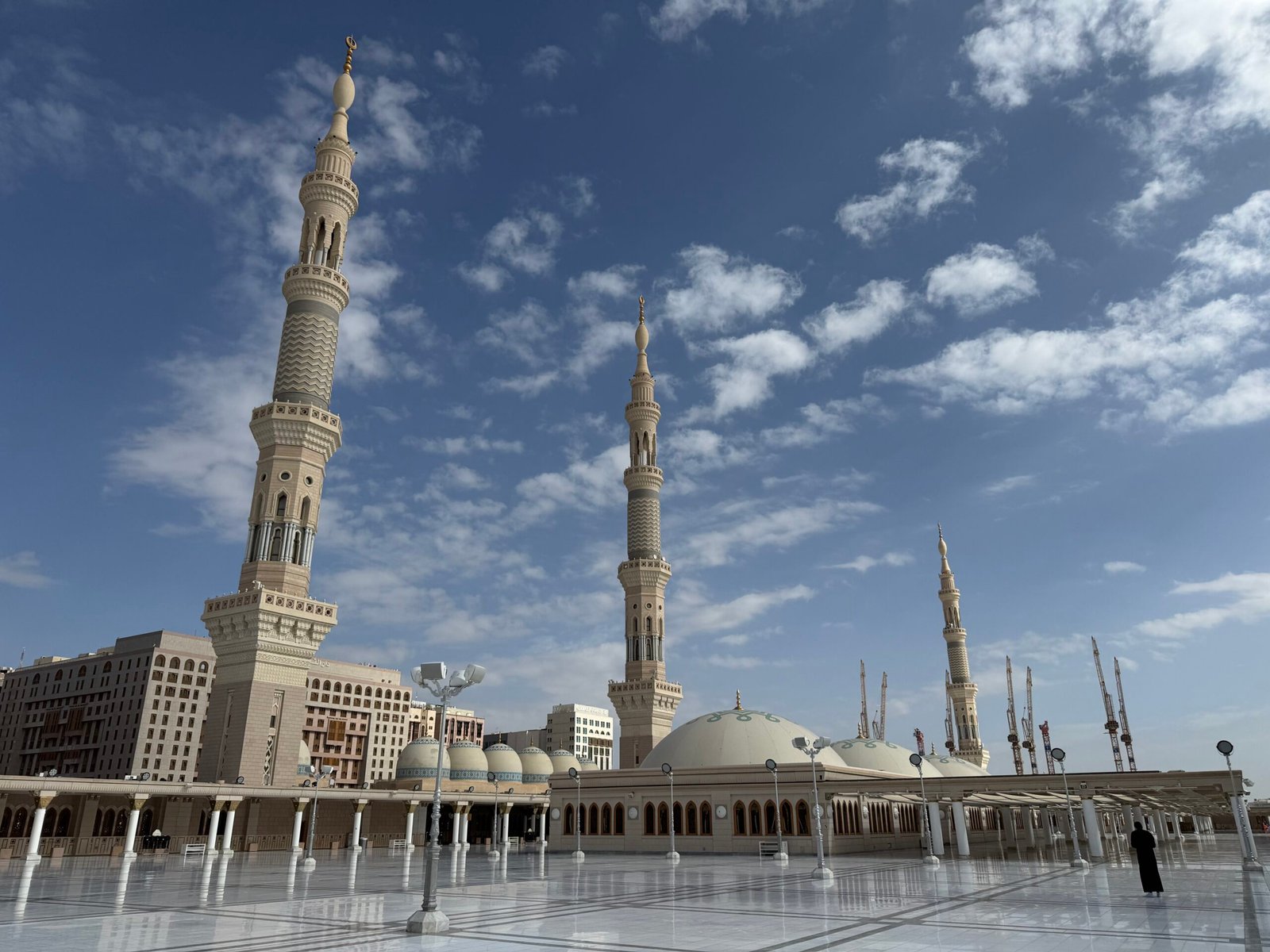
You can take a closer look at the minarets of Al Masjid al Nabawi from this roof. There sure are a lot of them, ten to be precise. Well, ten for now. You can see that there is some construction work going behind the mosque in this photograph, though apparently, it was not actually work on the mosque itself. Nevertheless, development is the name of the game in Saudi Arabia, and it is not unthinkable that in the near future, this already massive mosque will grow even larger.
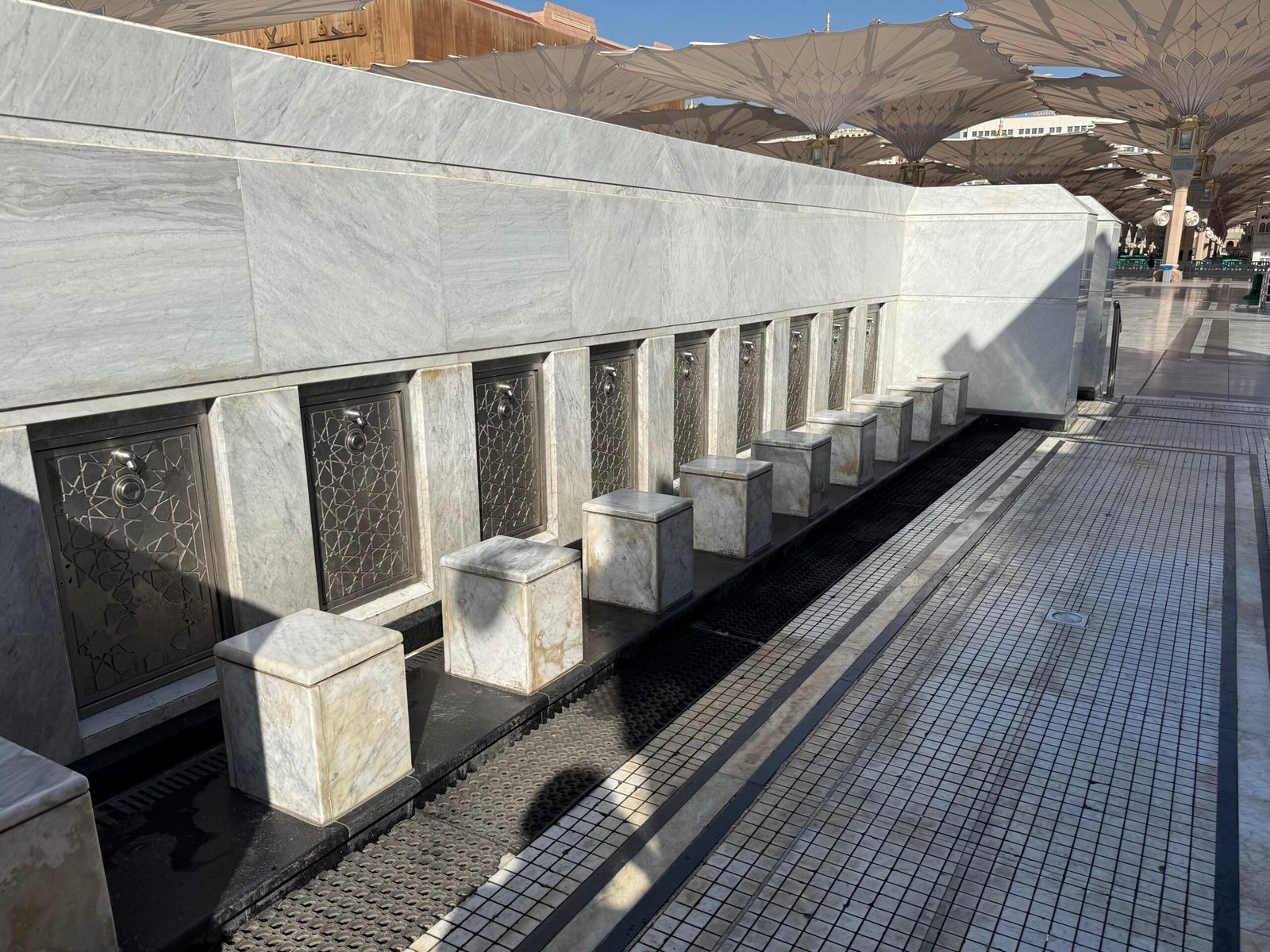
If you are interested in how the mosque was developed over time, I highly recommend paying a visit to the nearby Prophet’s Mosque Building Exhibition. I will write more about it next week, but to put it succinctly, in it you can find out pretty much everything you want about the Al Masjid al Nabawi. You can even find out just how many of these ablution areas are there in the premises of the mosque!
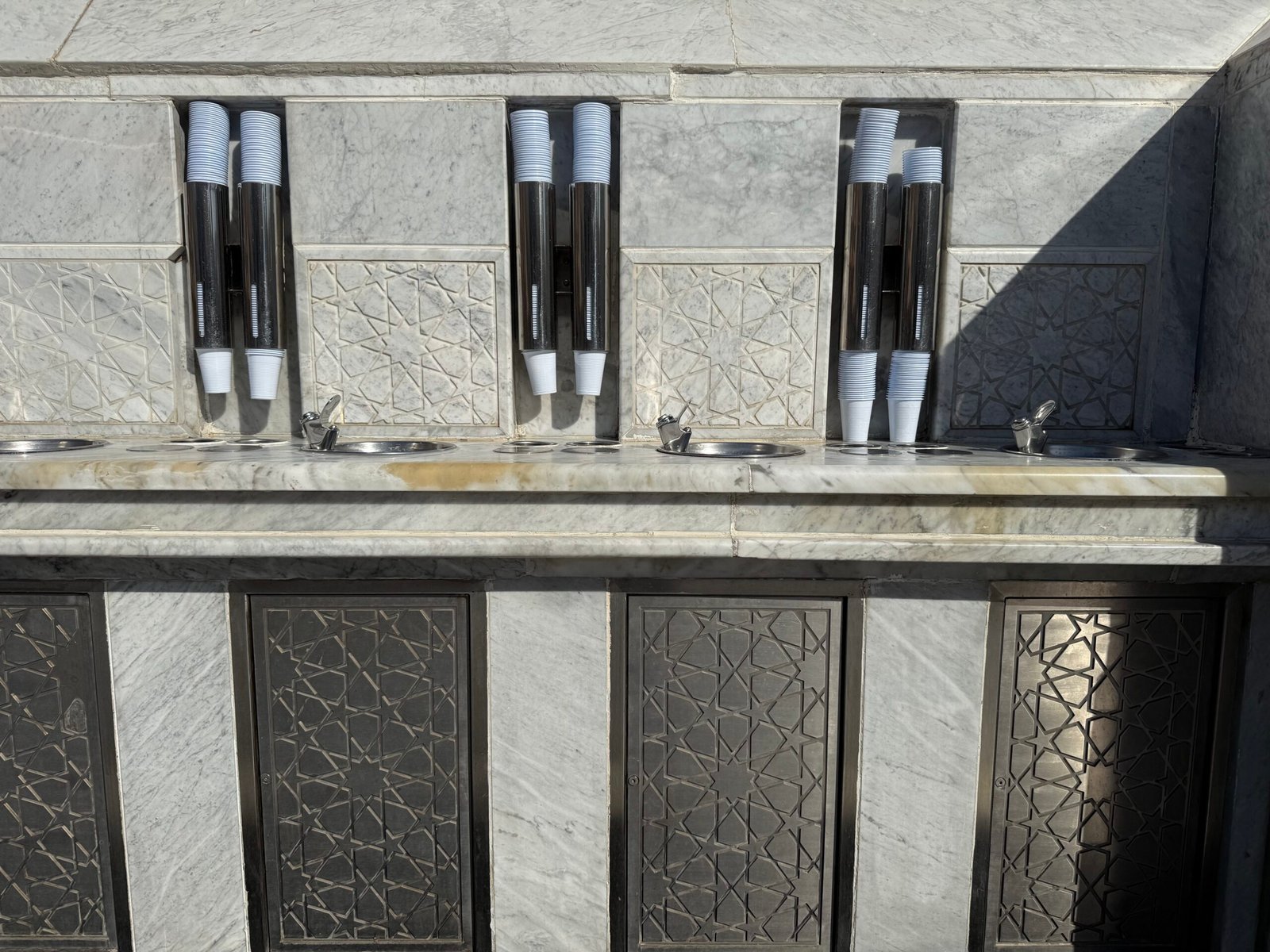
Or how many of these fountains are installed across the courtyard of the mosque, when where they installed, and by whom.
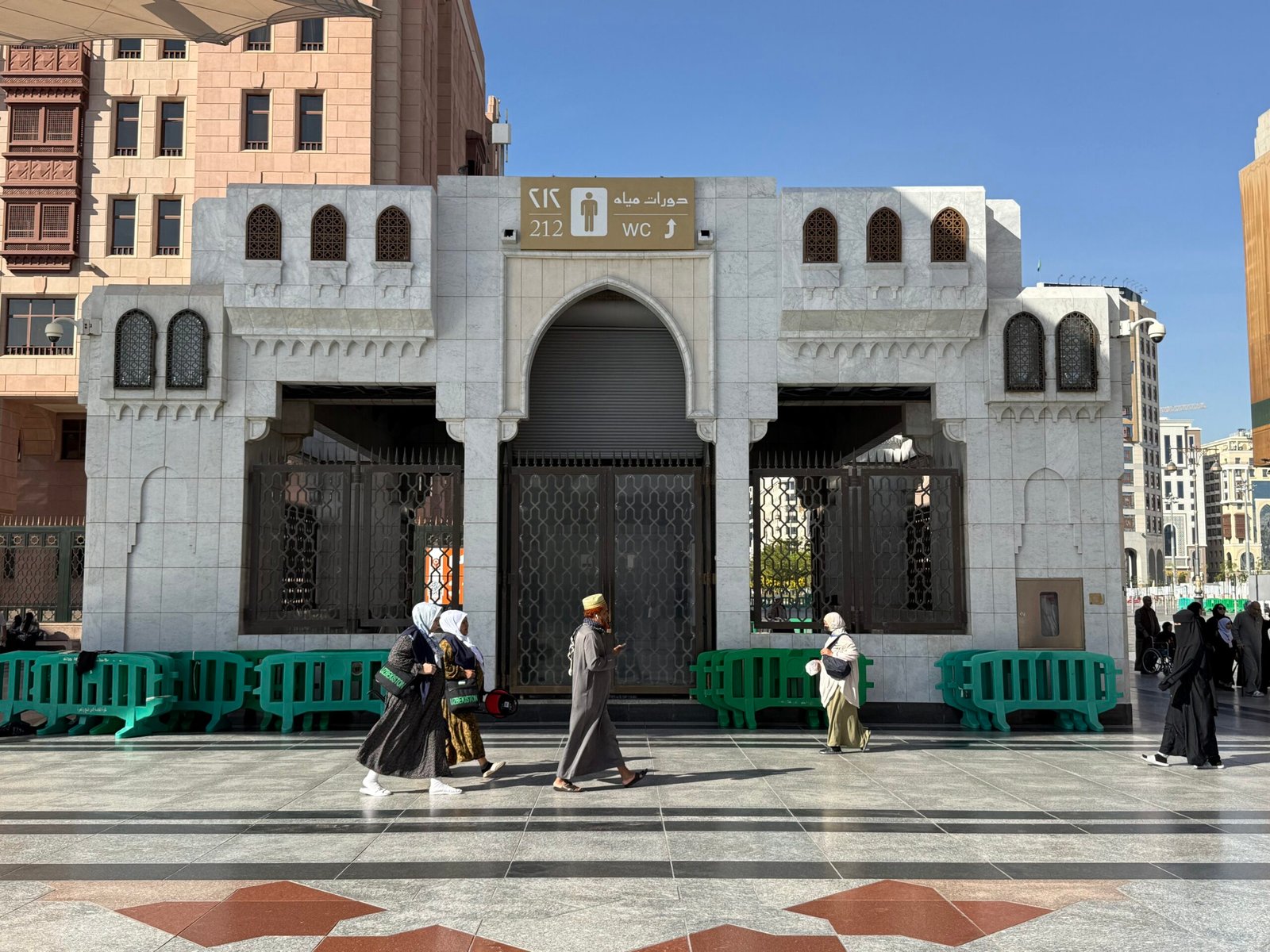
You can even learn about the bespoke wastewater management system and the total capacity of the toilets of Al Masjid al Nabawi in that exhibition. And before you assume that this mosque “only” has these few hundred toilets that you can find above ground, think again. Many more are hidden underground, creating an extremely massive infrastructure that is difficult to see, but impossible not to appreciate.
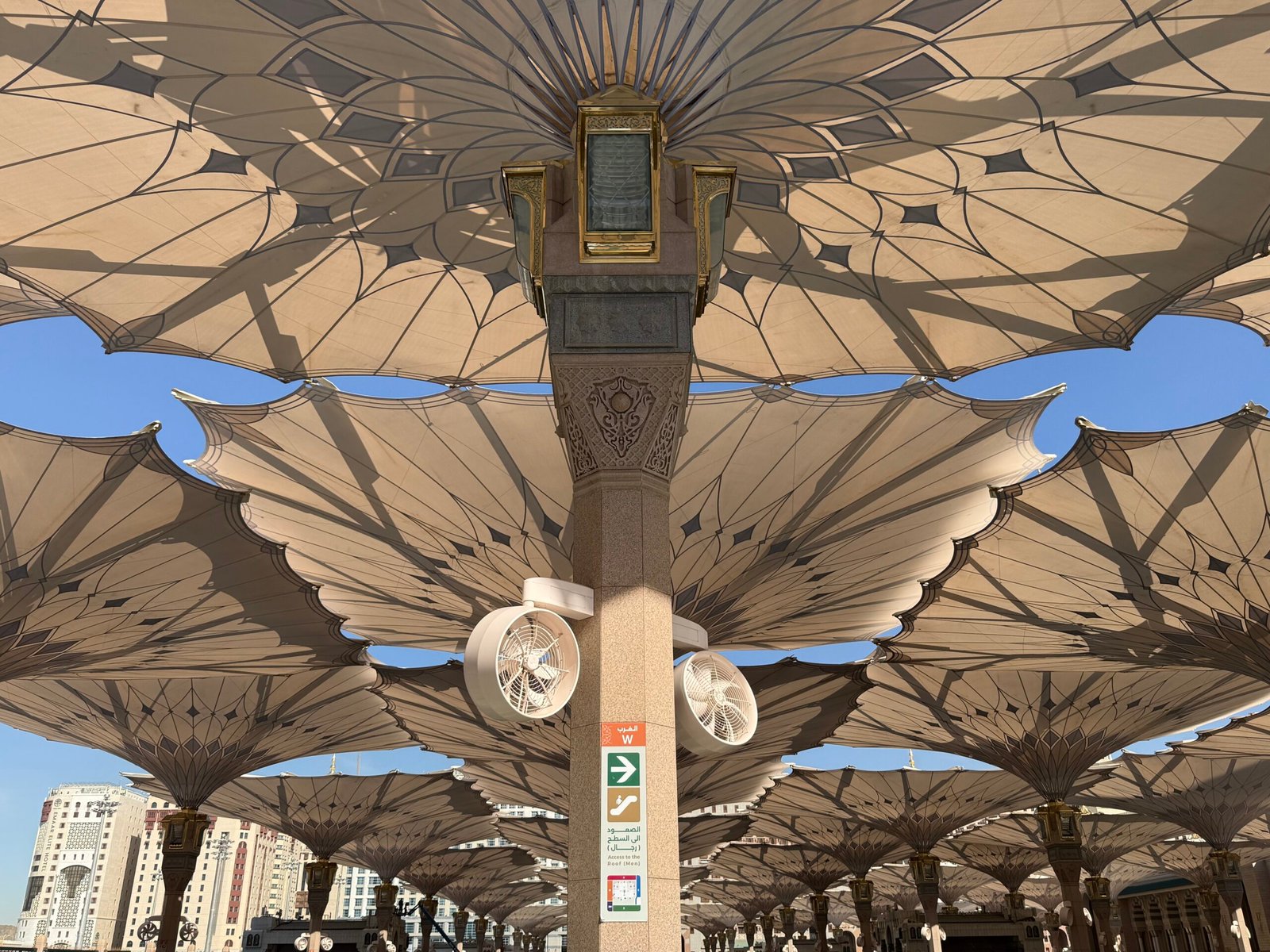
A particularly enjoyable addition to Al Masjid al Nabawi are these enormous umbrellas that now populate its courtyard. They are fully open during the day, protecting prayers from the sun’s wrath, and close sometime after sunset. It is a joy to watch them open and close, though you may want to ask a staff member for the exact timings instead of waiting around after sunset as I did.
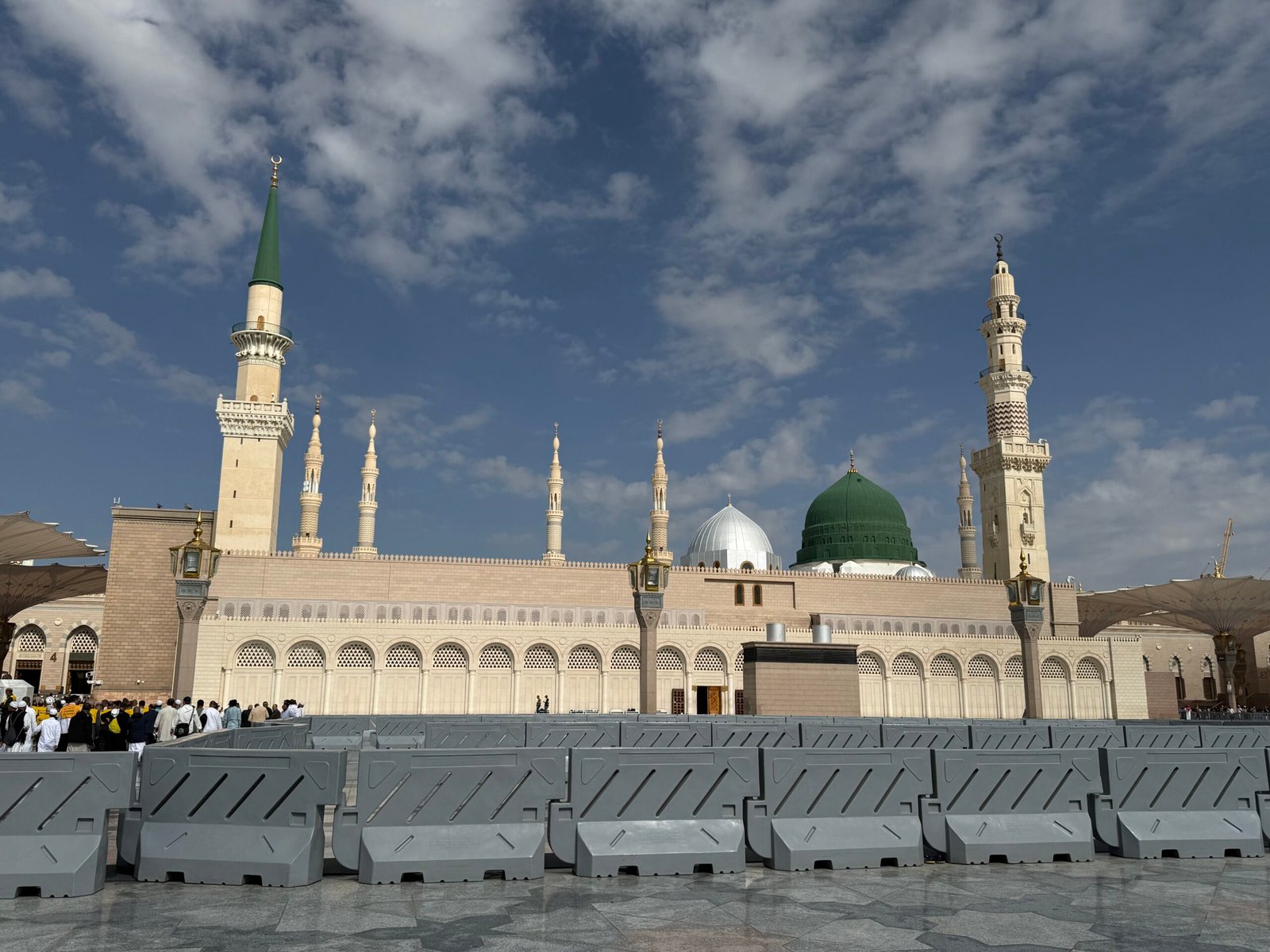
Well, one cannot write an article on Al Masjid al Nabawi without mentioning this green dome. This is, by far, the most crucial part of this mosque. Under that dome, the tomb of Prophet Mohammad can be found.
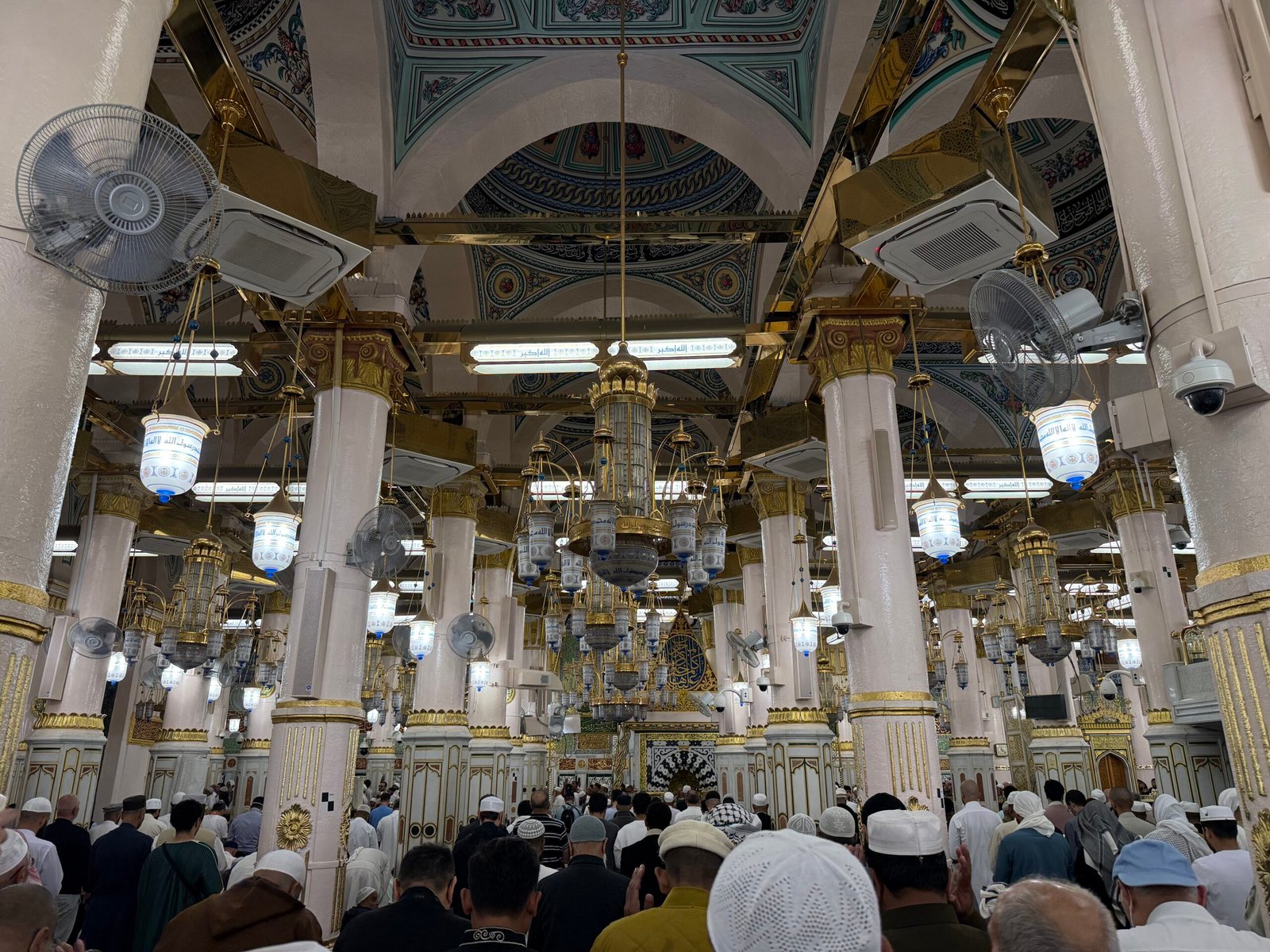
Entry to this area, known as the Noble Rawdah, requires a reservation made through the NUSUK app. Understandably, those reservations are not easy to find. I implore you to check your app regularly, and as early as possible. Moreover, the logistics behind this visit change regularly, so it is best to ask your Umrah/Hajj operator, or the friendly staff members you will find around the courtyard for latest information.
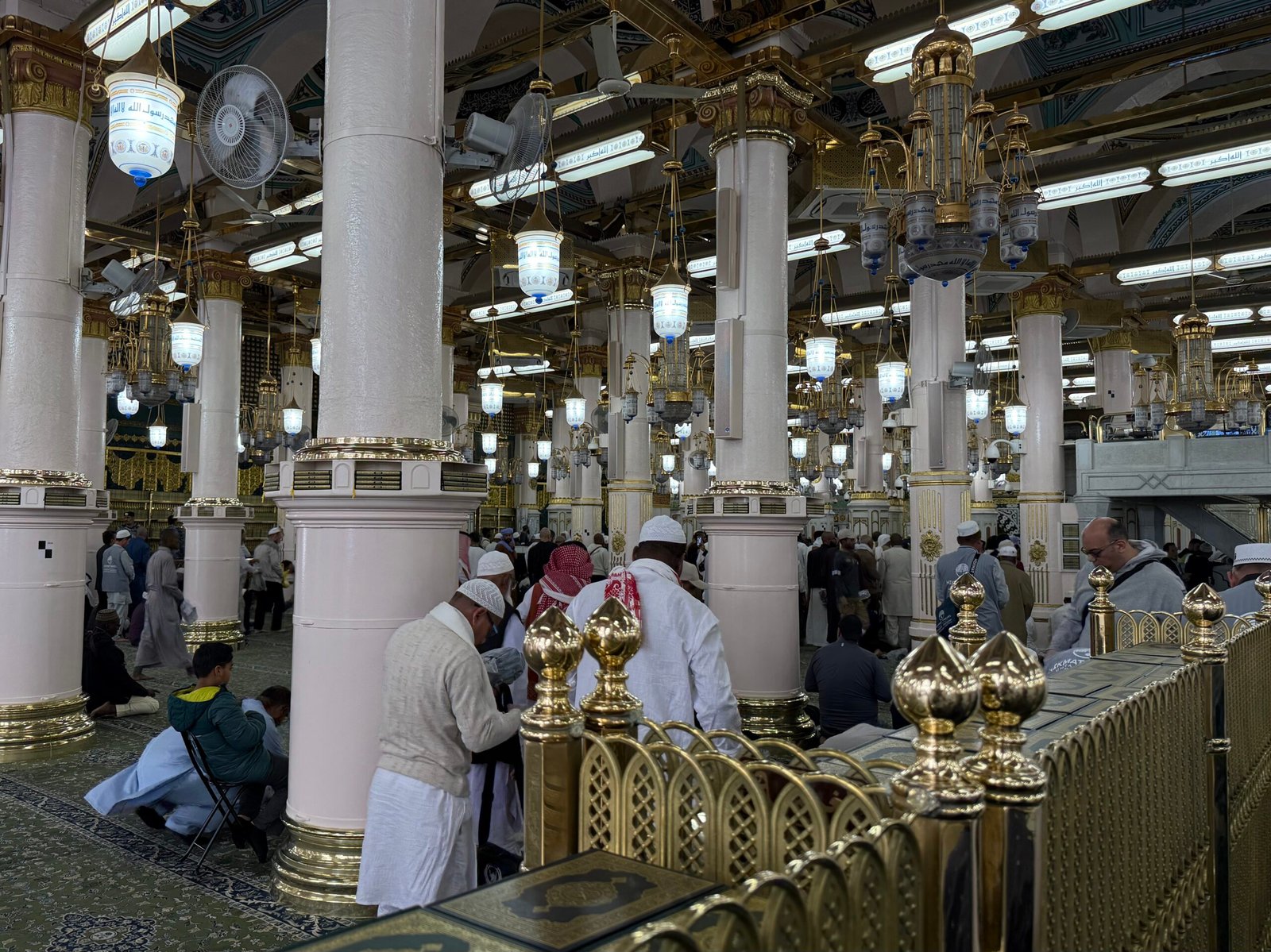
Once you enter the queue to visit the Prophet’s tomb, you will be escorted through different parts of the Noble Rawdah, a process that can take up to an hour. That is why you should really be there at least twenty minutes before your official time to queue up, and dedicate about two entire hours for this purpose.
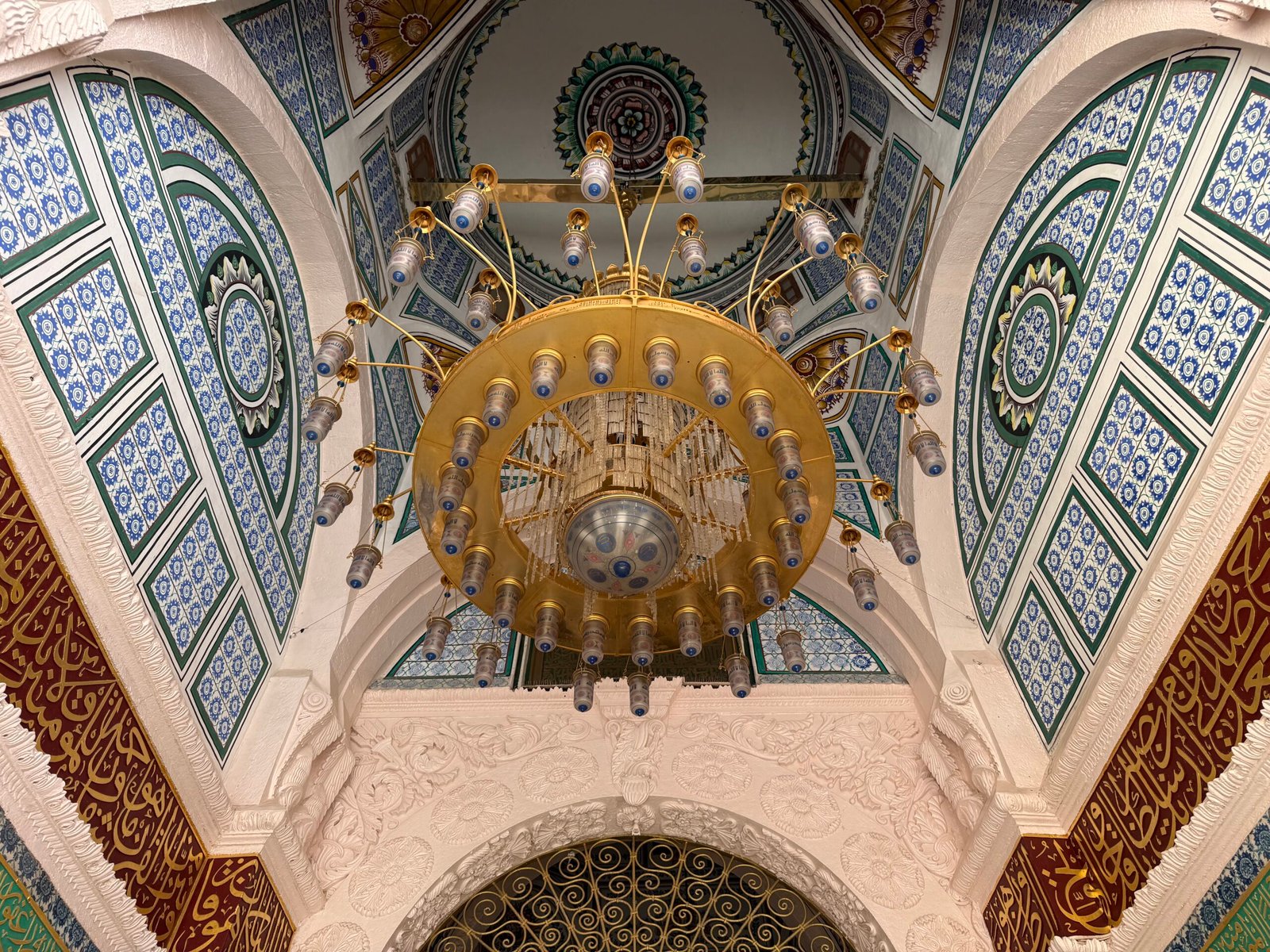
In my case, after about an hour, we were told that our group could now be admitted to the area that has the actual tomb of Prophet Mohammad. You first go through an older door with some colourful ceramics and Arabic calligraphy adorning the path that leads to it.
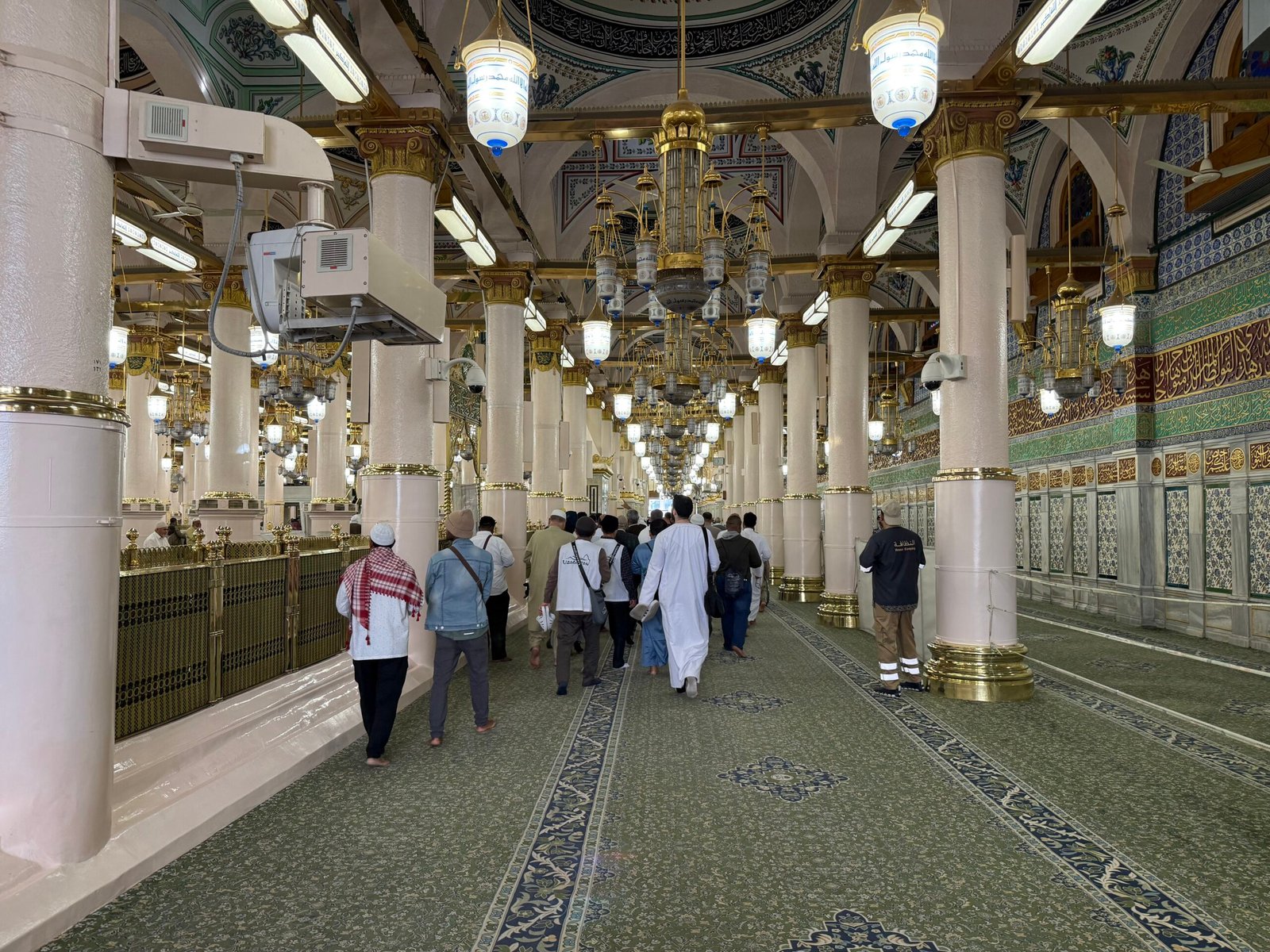
This design language continues well into the actual tomb area, where you will join an extremely crowded group of pilgrims who refuse to budge in an effort to spend as much time near the tomb as possible, often because they want to show their relatives this area by video calling them. This may not be an issue by the time you read this article, as Saudi authorities are taking the necessary steps to somehow combat against the excessive use of phones inside the holy sites of Mecca and Medina. Eventually, you will arrive at the tomb itself, which is protected by ornamented gates that are guarded by soldiers and scholars alike. Beyond these gates are the tombs of Prophet Mohammad, and two of his close companions, Abu Bakr and Umar. Unfortunately, I do not have a photograph of these doors for you. Simply put, I believe it is best to respect this particular area, and the anonymity of the gentlemen that guard it.
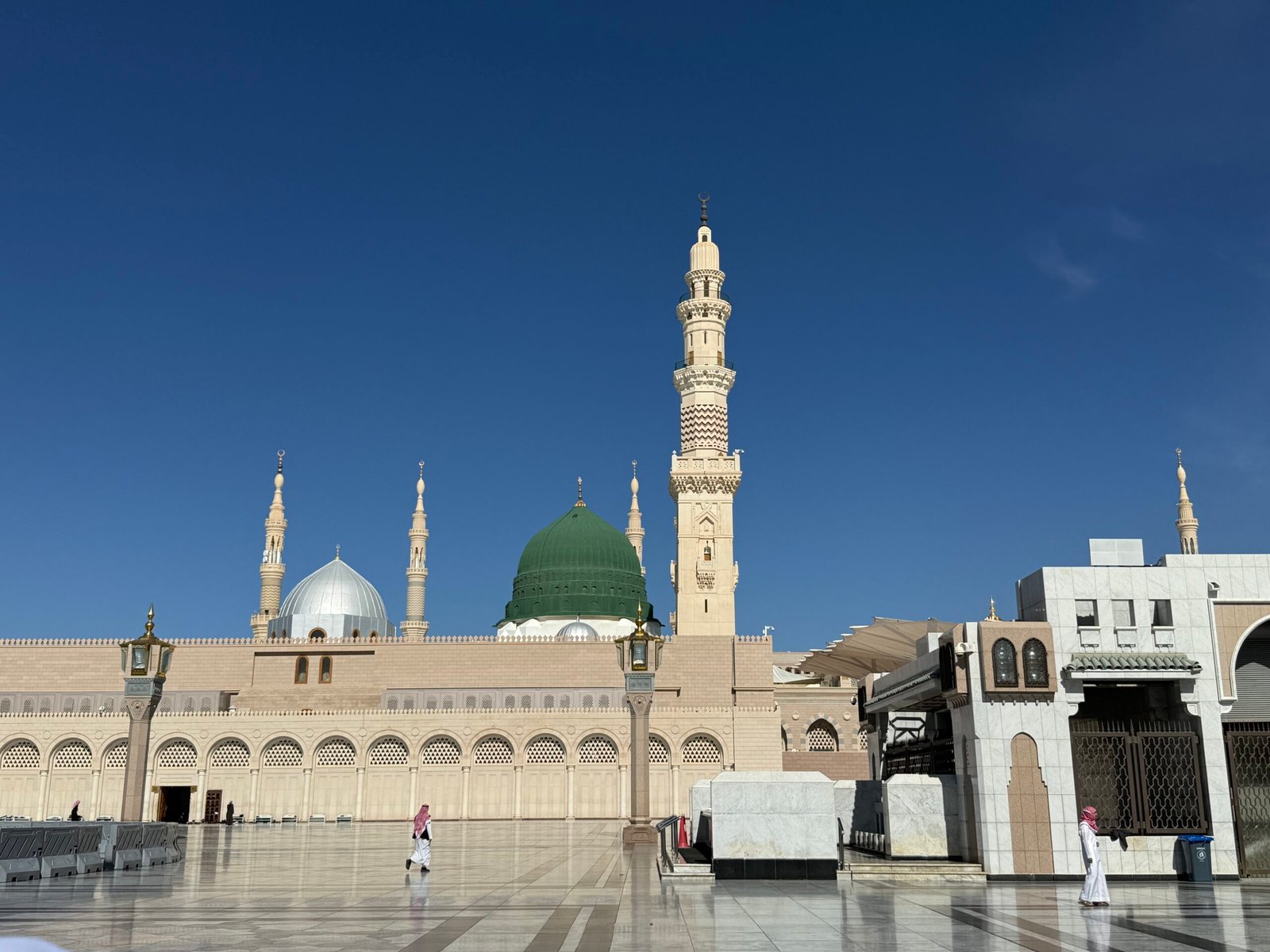
On your way out of the Noble Rawdah, you will be given a bottle of Zamzam water, and you will be allowed to wear your shoes once again. Interestingly, to me, it seemed like even the courtyard of the mosque seemed clean at all times. Perhaps that is why I ran into plenty of people who did not wear any footwear in the courtyard as well. Each to their own.
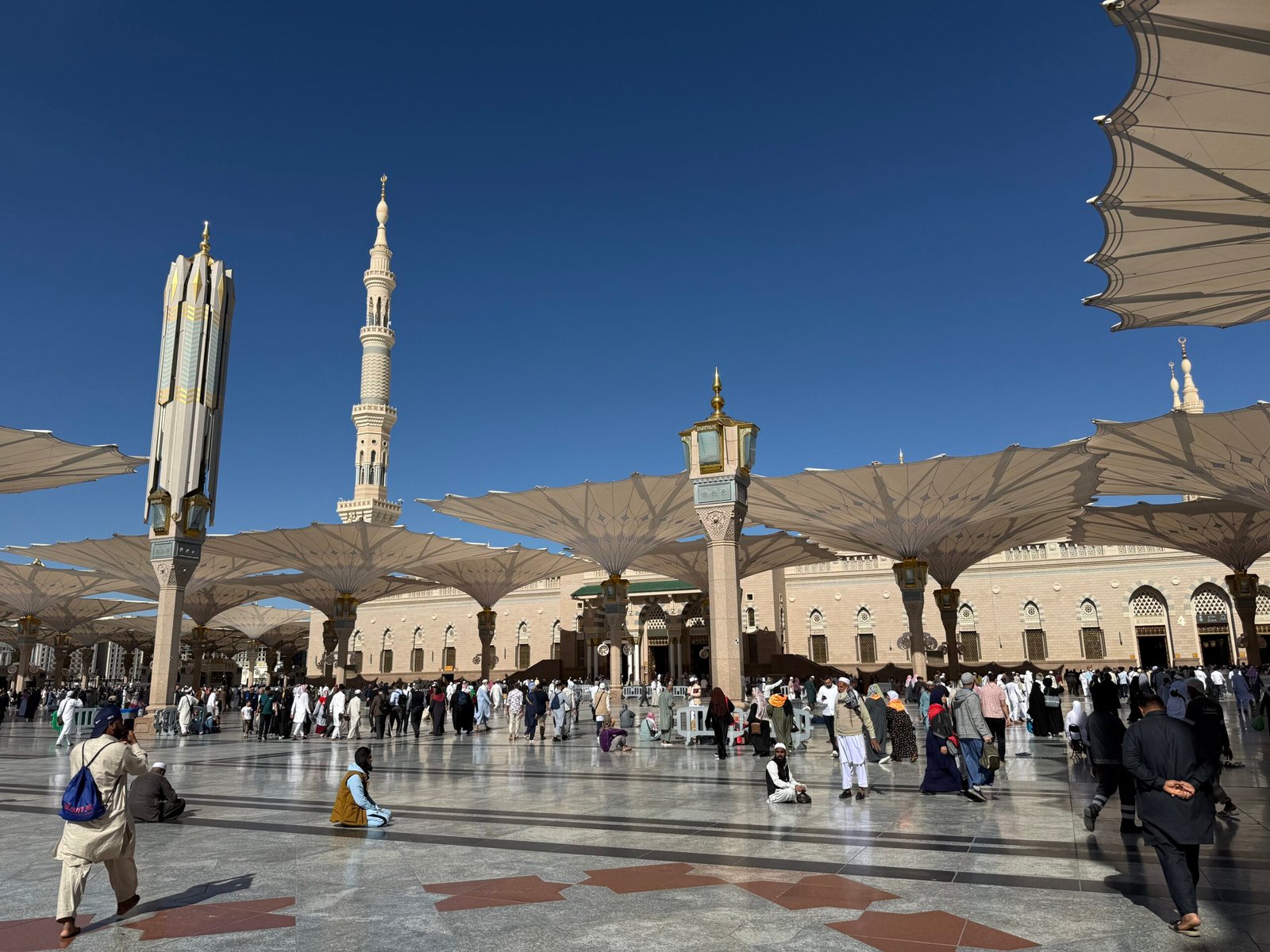
It should not come as a surprise to anyone when I conclude this article by stating that Al Masjid al Nabawi is never quiet, never devoid of people, and never dark. There is always some activity here, and since most hotels in Medina directly surround the Prophet’s Mosque, most people that you see buzzing around are not even necessarily there to pray at that exact moment. That is why, despite being a mosque, it also functions as the very center of Medina, where people gather, drink Zamzam water, enjoy their meals in the courtyard, study together, and more. It is also not very surprising that Al Masjid al Nabawi is surrounded by some interesting museums on all of its sides. We will take a closer look into some of these museums and a bit more next week.