
Medina is my favourite Saudi city. In fact, it is among the top three most enjoyable towns that I ever visited. Due to a healthy mix of (somewhat interrelated) reasons, this city is abnormally peaceful, relaxing, and delightful. My conversations with the locals suggest that the main reason for all of that has to do with the fact that Prophet Mohammad was laid to rest here. I have been told time and time again that devout Muslim locals do their best not to disturb the peace of this city where he once lived in. This may sound like some over the top religious rhetoric to some of you, but what the locals actually mean by this is, for example, not using their car honks unless it is absolutely necessary, unlike how trigger free some drivers can get in many other towns. It also means not littering all willy nilly, not living in a rush, not using loudspeakers for advertisements, and so on. The result is a rather quiet city, despite the fact that it is often crowded with locals and pilgrims alike and it is now even visited by an increasing number of non-Muslim travellers who can freely enter the city since 2023. Join me, as we take a closer look at this peaceful town, and see why it should be on your itineraries too if you are traveling to the Kingdom of Saudi Arabia.
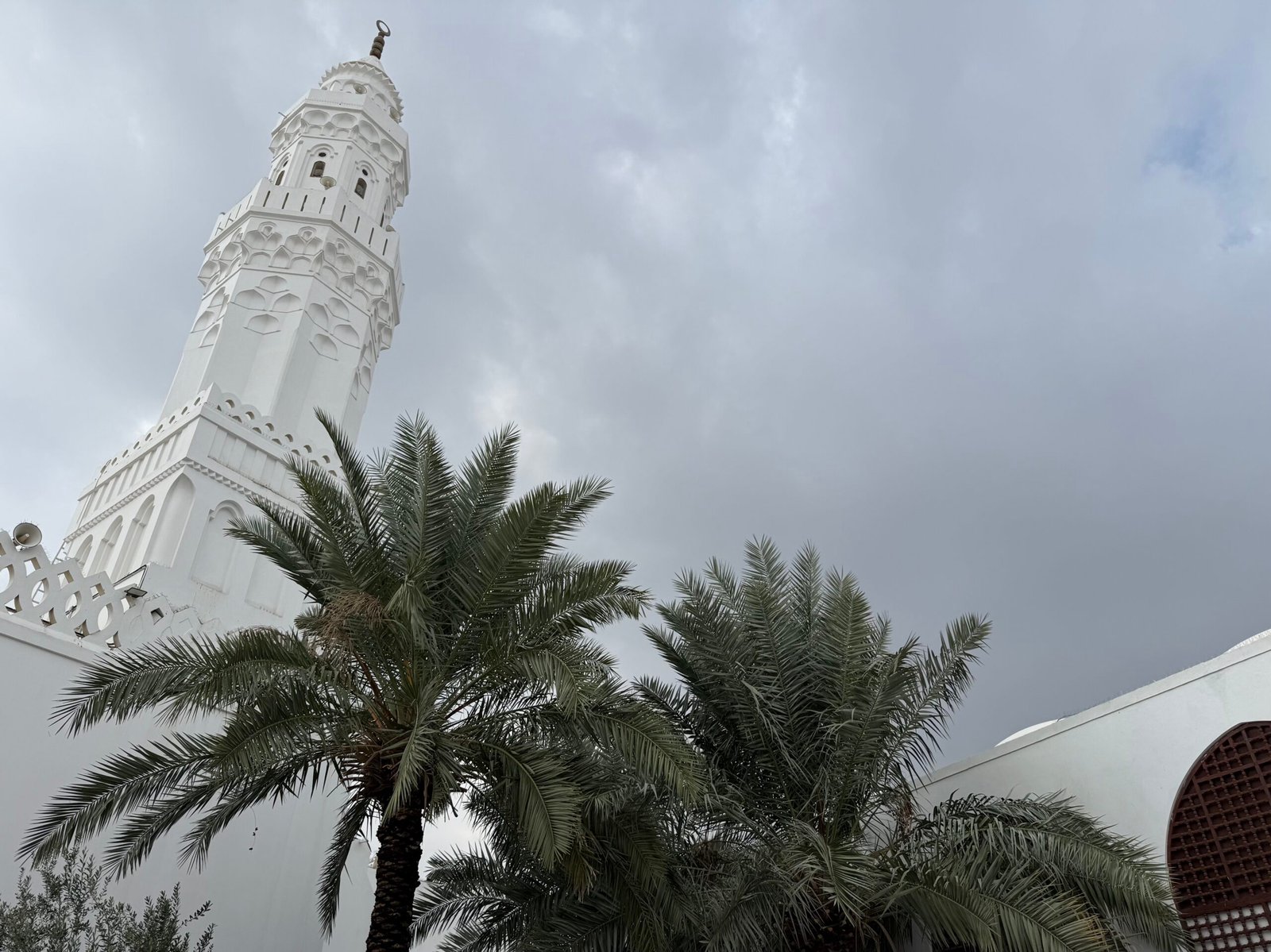
Medina was the town Prophet Mohammad migrated to in order to escape persecution back in his hometown of Mecca. This event, known as Hijrah, took place in 622. Due to its importance, this Hijrah is considered the beginning of the Islamic lunar calendar. It goes without saying that this move transformed Medina into a city with some of the highest concentration of Islamic heritage, which is why most of its landmarks revolve around its Islamic identity.
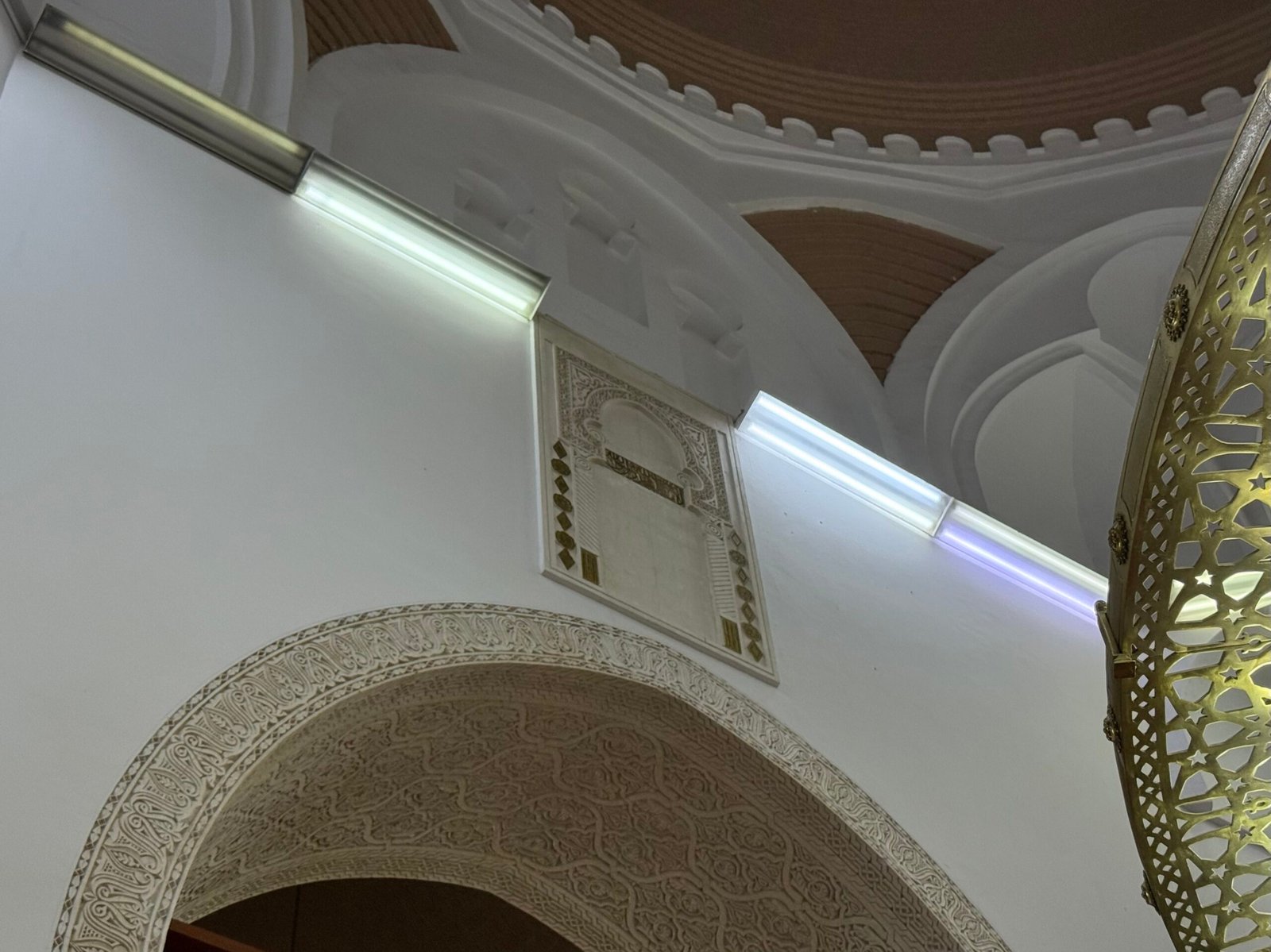
After all, many of Islam’s firsts took place in Medina. For example, today, Muslims around the world pray towards the Kaaba in Mecca, but that was not always the case. There was a period when they prayed towards the direction of Jerusalem instead. This changed in 623, when Prophet Mohammad changed the orientation of the prayer in Masjid al-Qiblatayn. You can see the previous direction, or qiblah, still being visible in this mosque to this day, though the actual prayers themselves take place in the opposite direction today. A visit to this mosque is a journey into the earliest days of Islam, and one that should be on your itineraries.
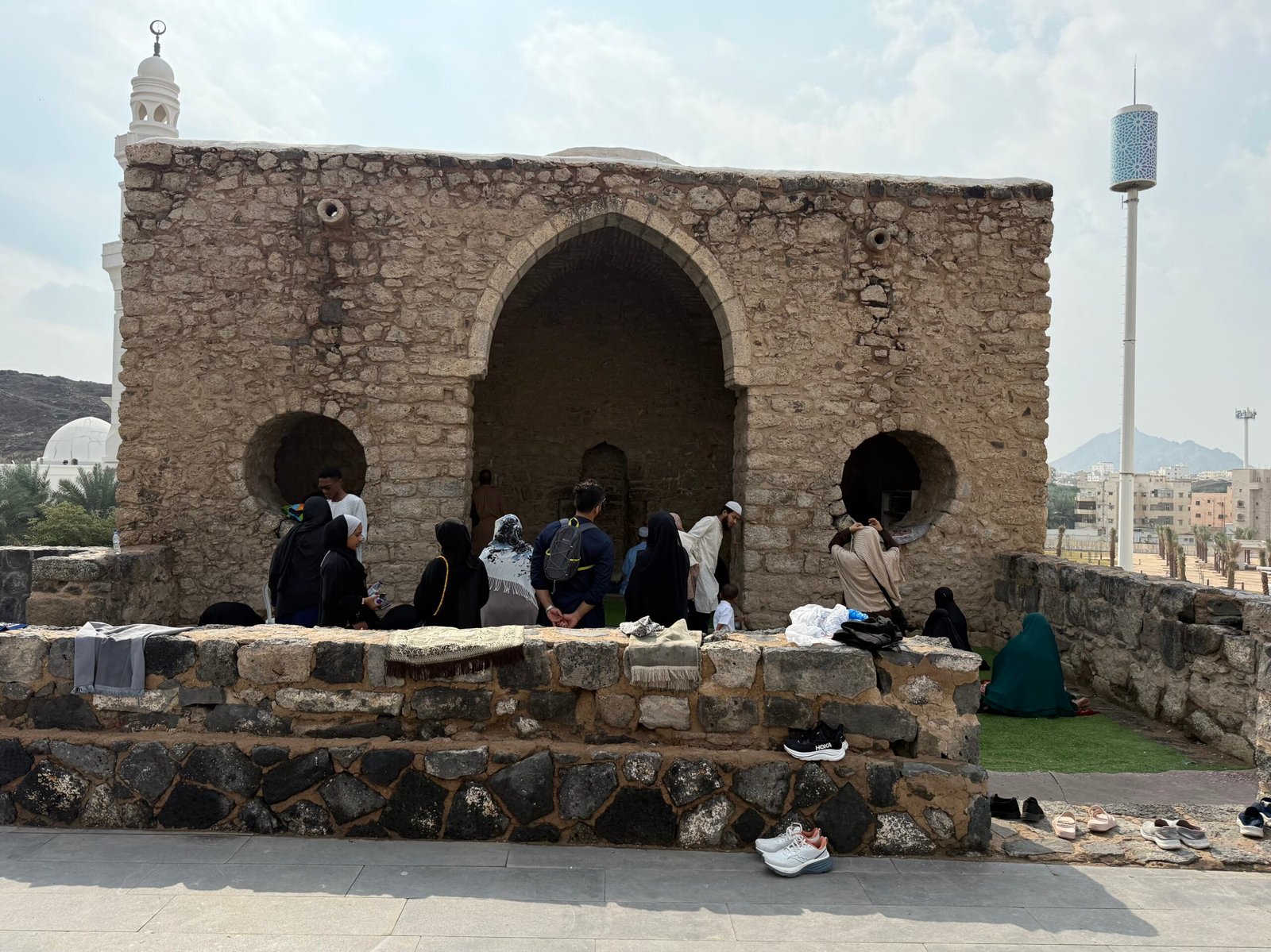
Speaking of foundations of Islam, just like many other religions, it heavily relied on preaching the faith in dedicated temples. The temples in question in this case are mosques. In the earlier years of the religion, there were not many mosques to begin with, and therefore the earliest few examples often have some history surrounding them.
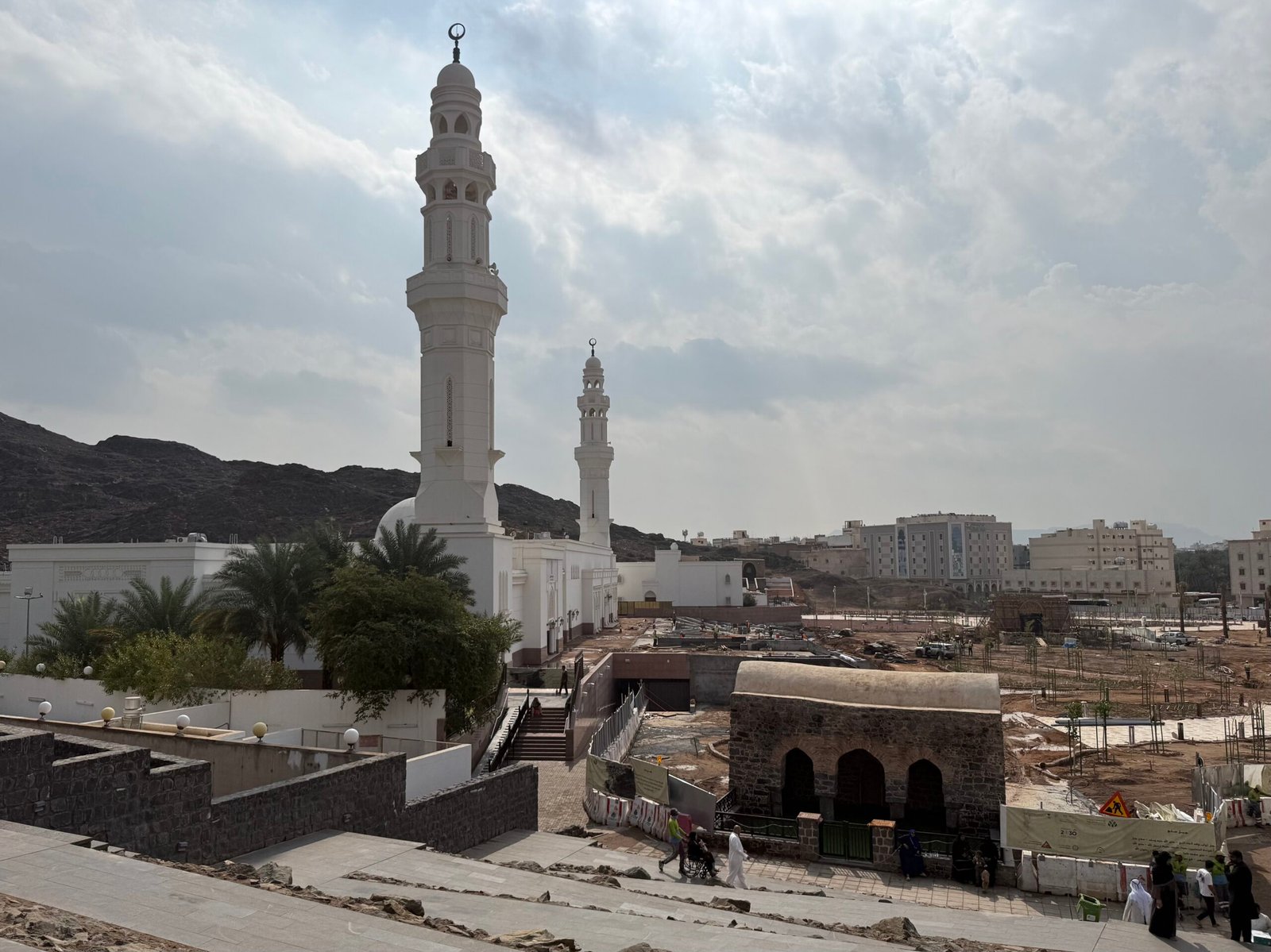
Some of the oldest mosques in Medina can be visited in an area called Seven Mosques. Well, that name is a bit of misnomer, since there are six mosques here, but some suggest that the seventh one is Masjid al-Qiblatayn since many (like me) visit it alongside the mosques in this region. Some others suggest that the seventh mosque refers to the Masjid al-Khandaq, a much grander (and newer) mosque that you can see on the left side of the photograph above.
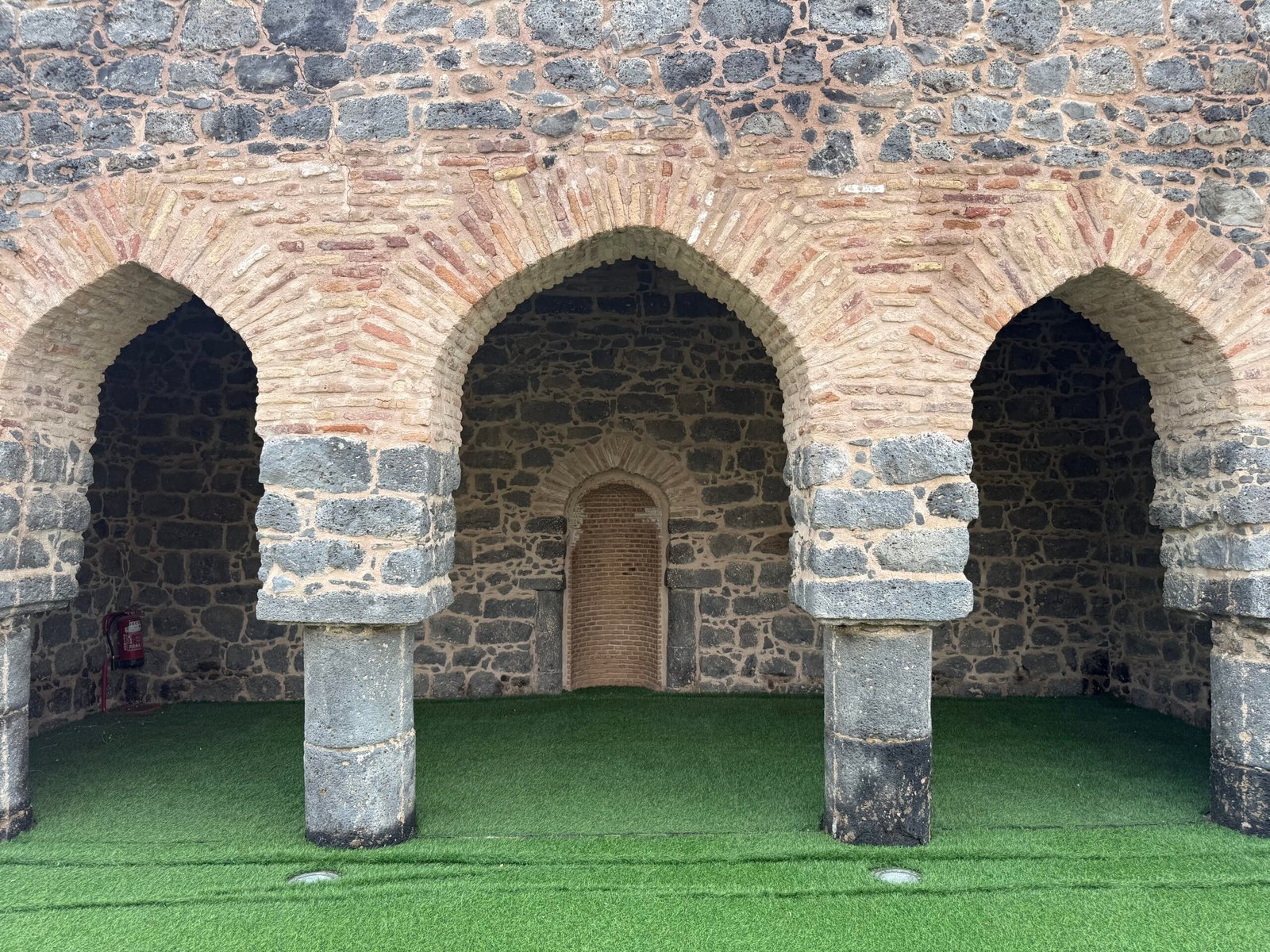
Regardless of which seven mosques does the name now refer to, here you will find plenty of smaller mosques with significant histories. These are from a far humbler period, when other issues, such as warring with the pagan neighbours of Medina took precedence over building enormous ornate mosques that cost a little fortune. This entire area seemed to be undergoing some renovations when we visited it and I believe that the intention of this renovation was to make this area not only prettier but also help connect it to the rest of the city more conveniently.
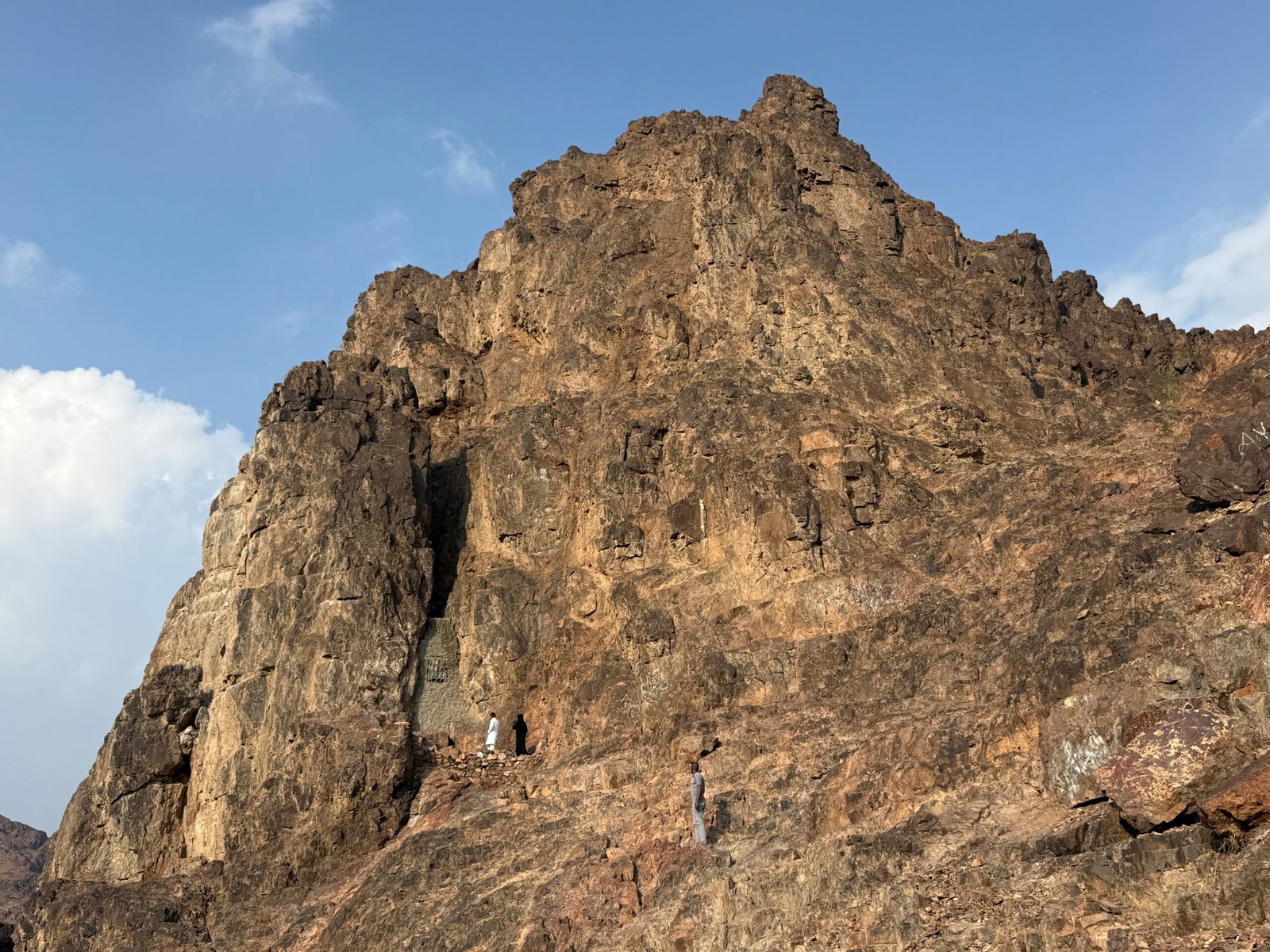
Early Islamic history witnessed numerous battles, some to defend the fledgling new religion, others to help spread it further. Since Islam was still a small religion after Hijrah, most of the earlier battles that took place around Medina were of the former kind, a bid to survive the often-hostile political landscape of the period. This resulted in wars like the Battle of the Trench (627), which was fought where the Seven Mosques can be found today, and the Battle of Uhud (625), which took place around the Uhud mountain, which can be found to the north of Medina’s city center.
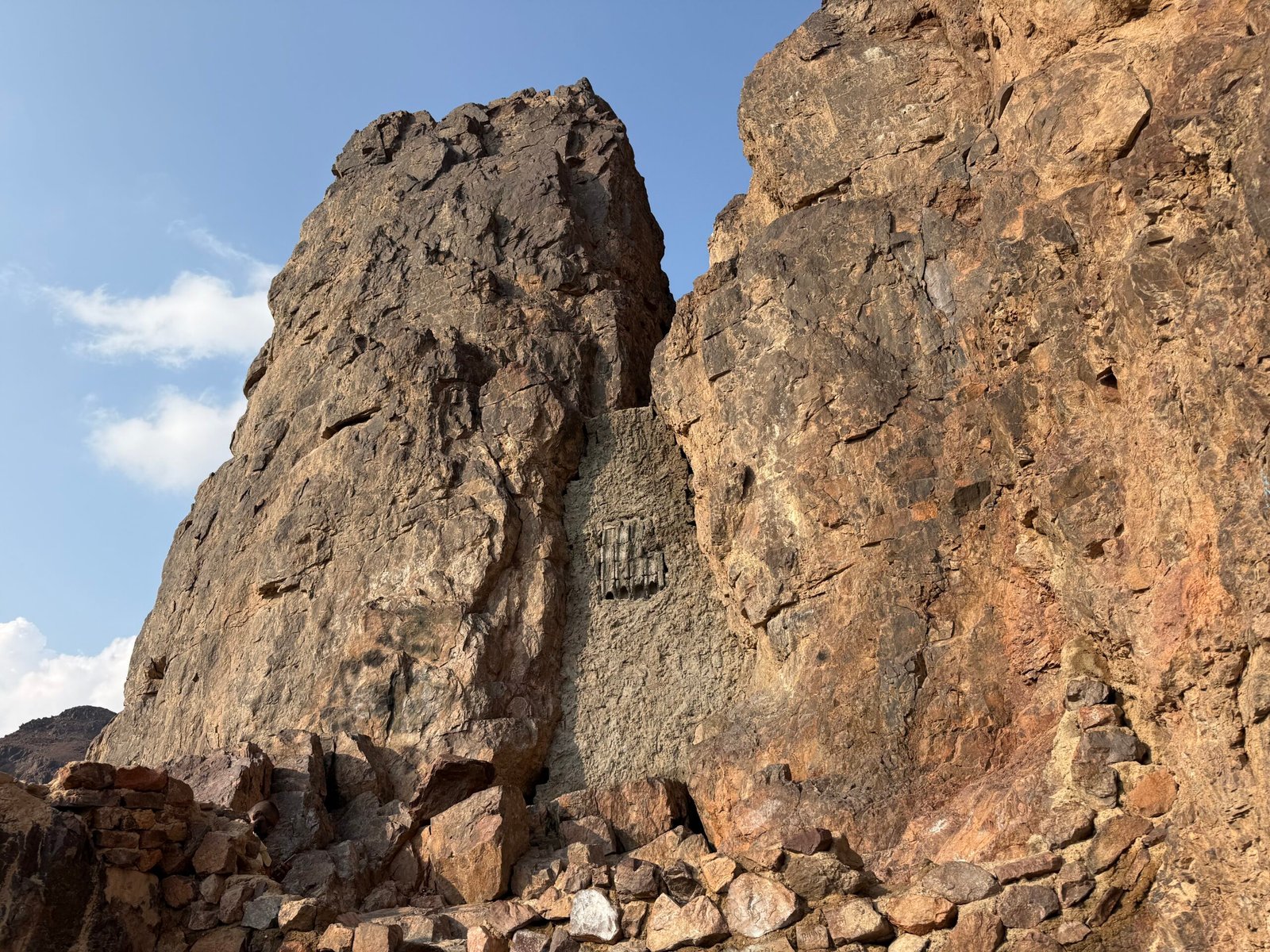
In this particular battle, Prophet Mohammad was wounded and had to be escorted out of the battlefield. He then partially recovered from his wounds in a nearby cave. There are numerous caves that fit this bill to my knowledge. I for one do not know which one of these caves is the exact cave in question, but to my understanding, it is best that this issue remains vague. After all, an extreme reverence for sites where the Prophet was once in can be seen as bid’ah by some Muslims, which is a very convoluted issue that I am not qualified to discuss. Nevertheless, I was told by some locals that this was the cave in question, which seemed likely to me as its entrance was walled off to keep it safe, though some pilgrims were flocking to caves closer to the battlefield, a few hundred meters below from this one.
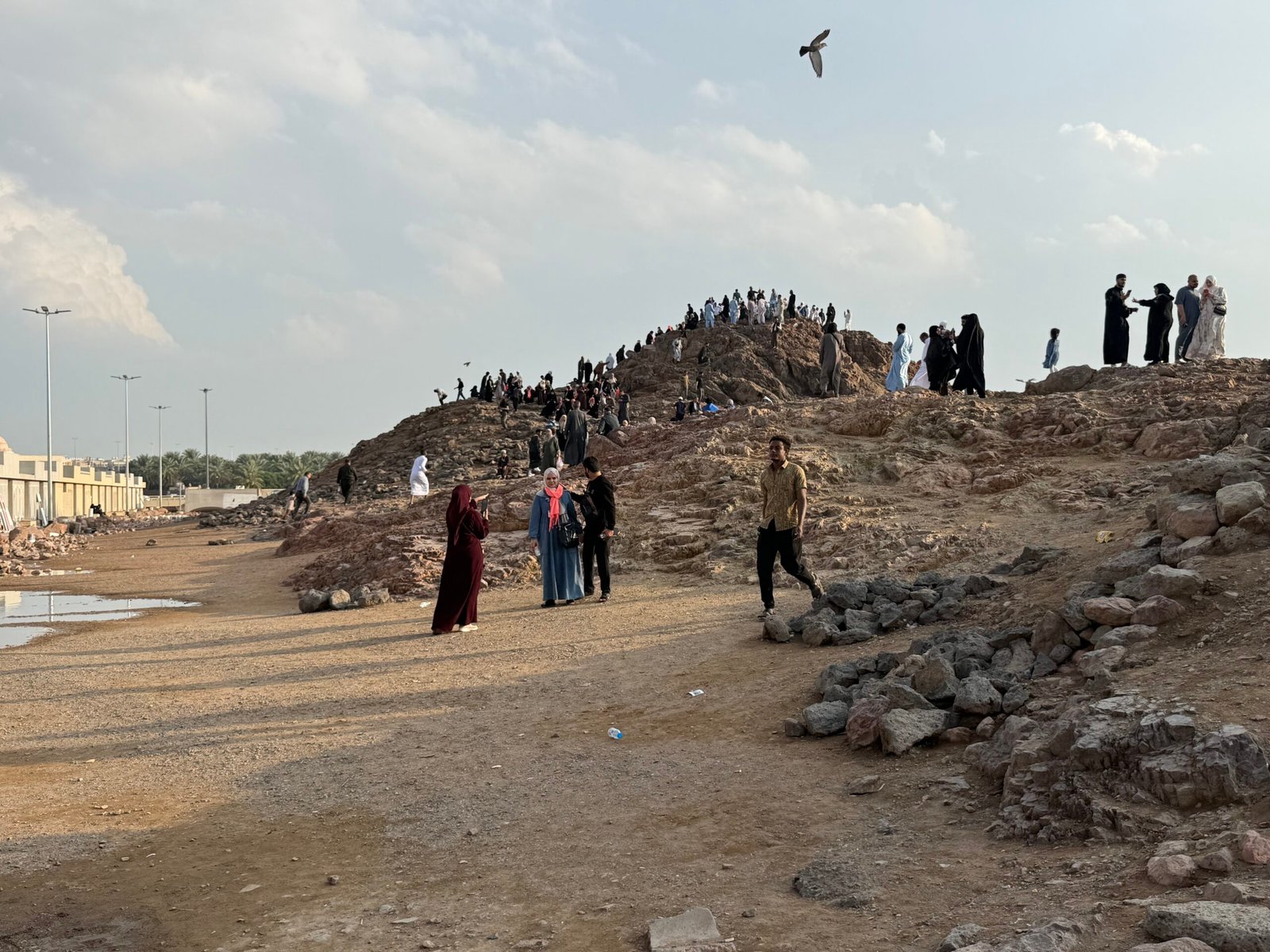
In any case, while the Battle of Uhud took place near the Uhud Mountain, today, it is mostly known for events that took place on this one particular (and significantly smaller) mound, named the Archer’s Hill. The accounts suggest that during the war, Muslim archers were stationed here to help fight against the advancing Quraysh forces. However, they left their spots a tad too early, which resulted in the Quraysh forces winning the battle. I had always assumed that the hill in question would have been slightly higher than this, though, I have been told that the desert winds curbed its size during the last fourteen centuries.
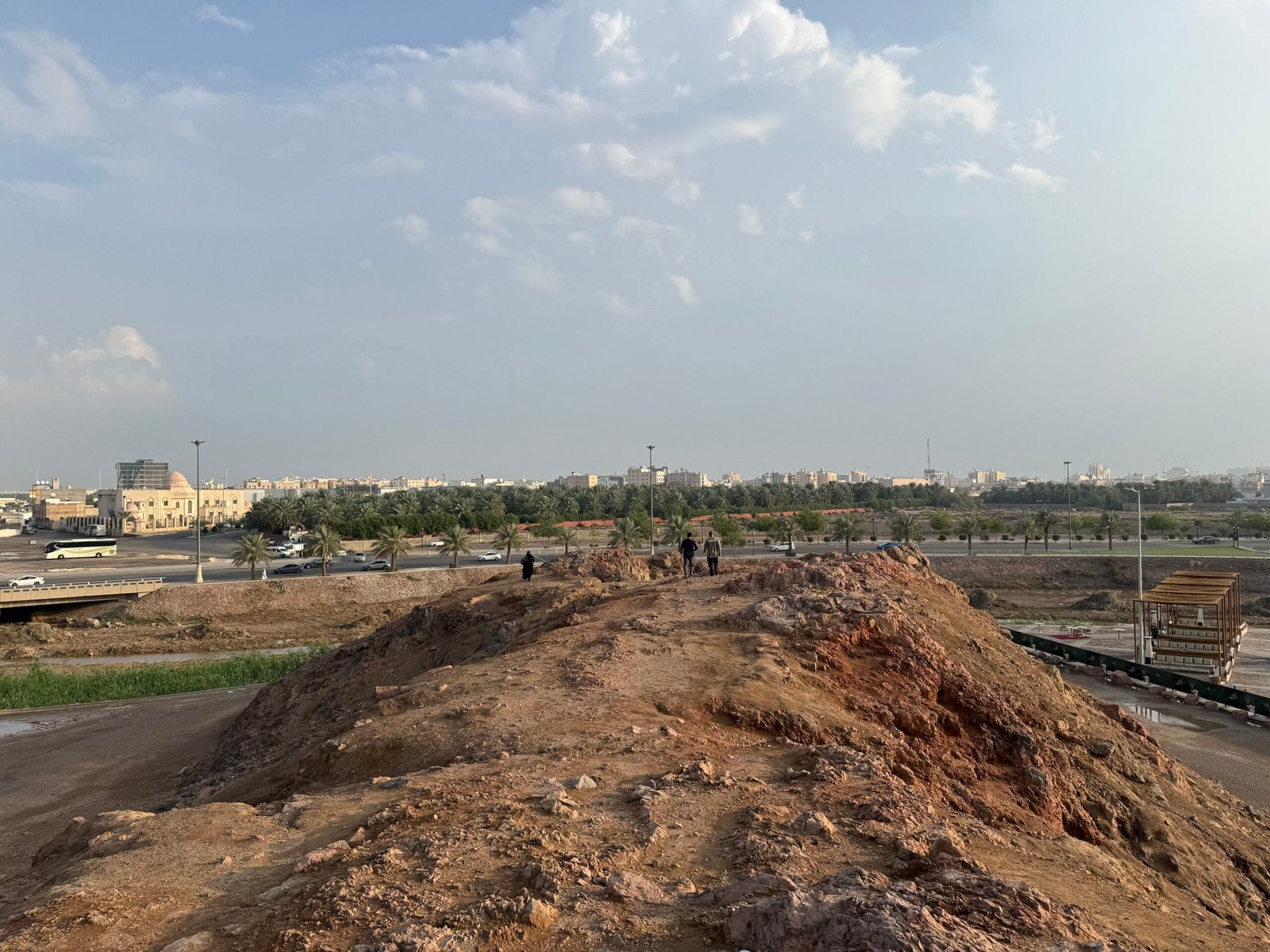
Nevertheless, I certainly recommend you take a look at Medina from above the Archer’s Hill, as you can clearly see the date trees that the area is known for and more, even from this humble height. This part is often crowded, though if you keep walking to the edges, you will find openings like this where you can relax and take in the views as you like. You can, of course, see the Uhud Mountain in all its glory as well, though I simply forgot to take a shot of it at the time.
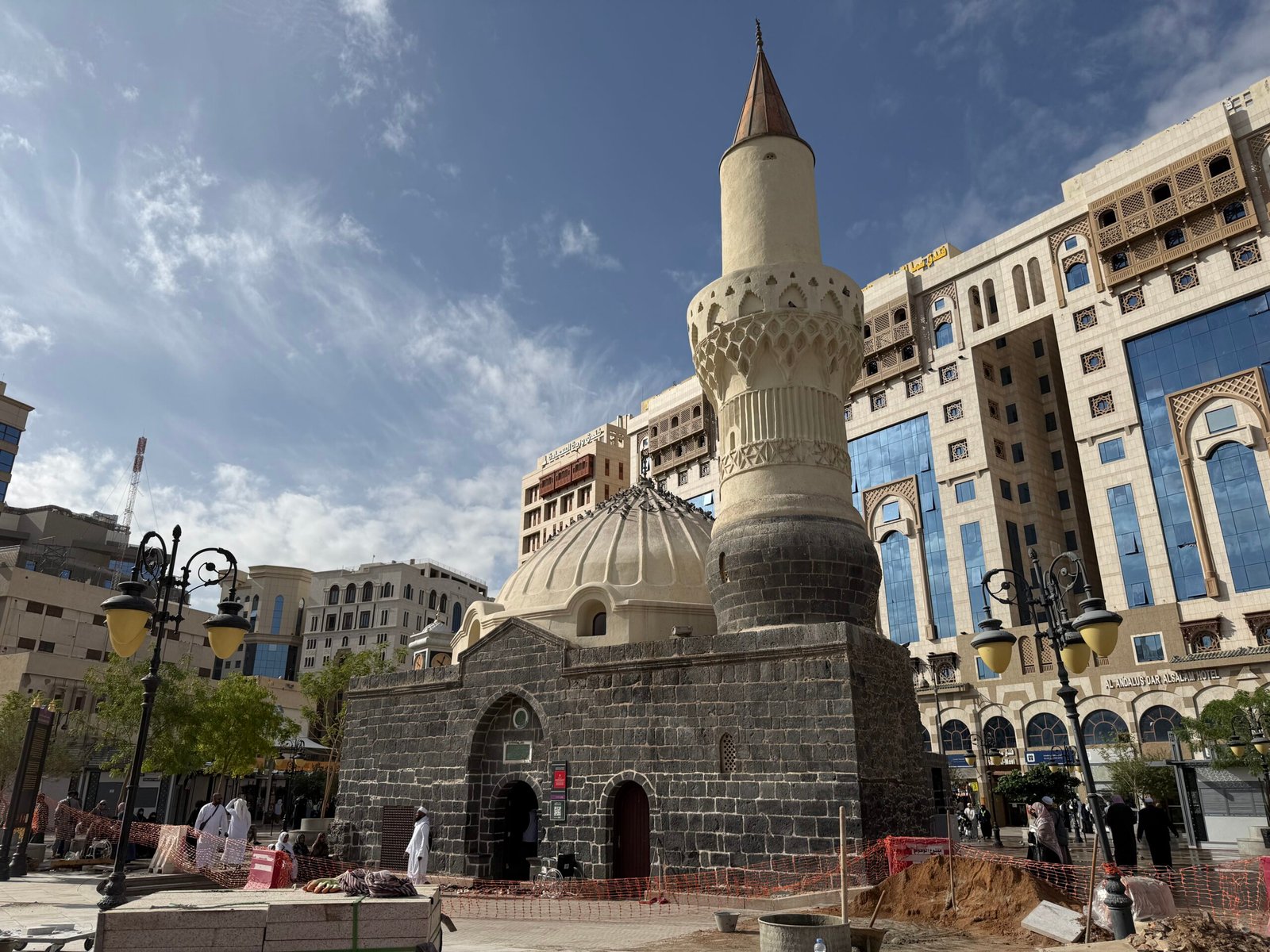
Once you are done exploring the area near Uhud Mountain, you may as well go back to relax in the center of Medina. This is where you can find the most crowded and urbanized parts of the town, specifically the parts that surround the Al Masjid-e-Nabawi, where Prophet Mohammad was laid to rest. I will have a dedicated post to that mosque next week, for now, allow me to continue writing about what else one can see in Medina.
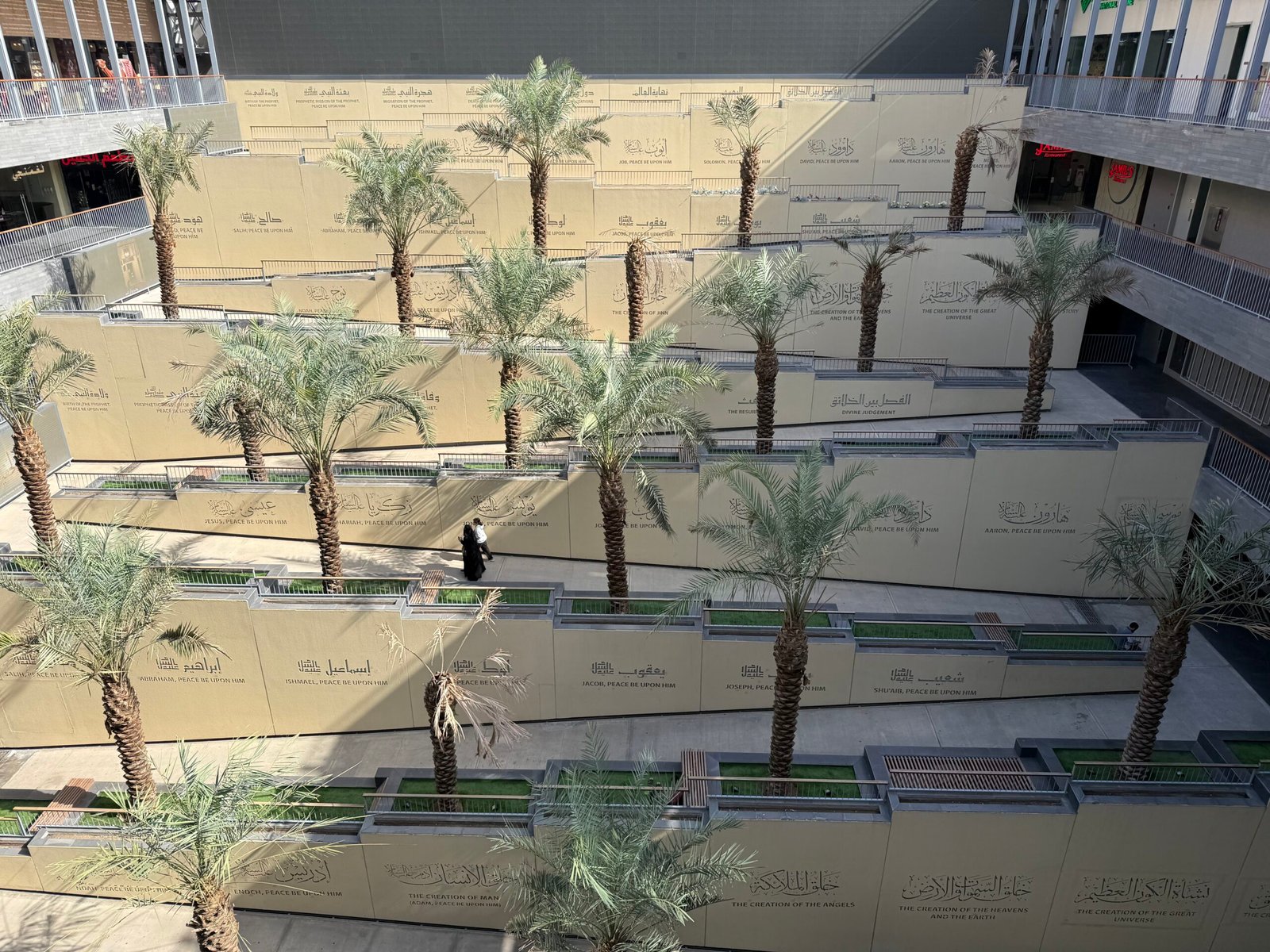
While Islamic heritage sites of the city are praiseworthy, I must admit that there is another reason that made me appreciate this city as much as I did. While it is a holy city for many, it is not “only” a holy city. Let me explain. Muslims are supposed to do the Hajj at least once in their lifetime. This involves a trip to Mecca and includes a lot of activities that take place within the general vicinity of that city. Technically speaking, you are not obligated to visit Medina to perform a Hajj. Therefore, while Medina certainly receives tons of pilgrims who frequently add it to their itineraries if their budget allows them, the city does not purely rely on them for its local economy, and thus said pilgrims and their often-religious itineraries do not fully account for the versatility of this city.
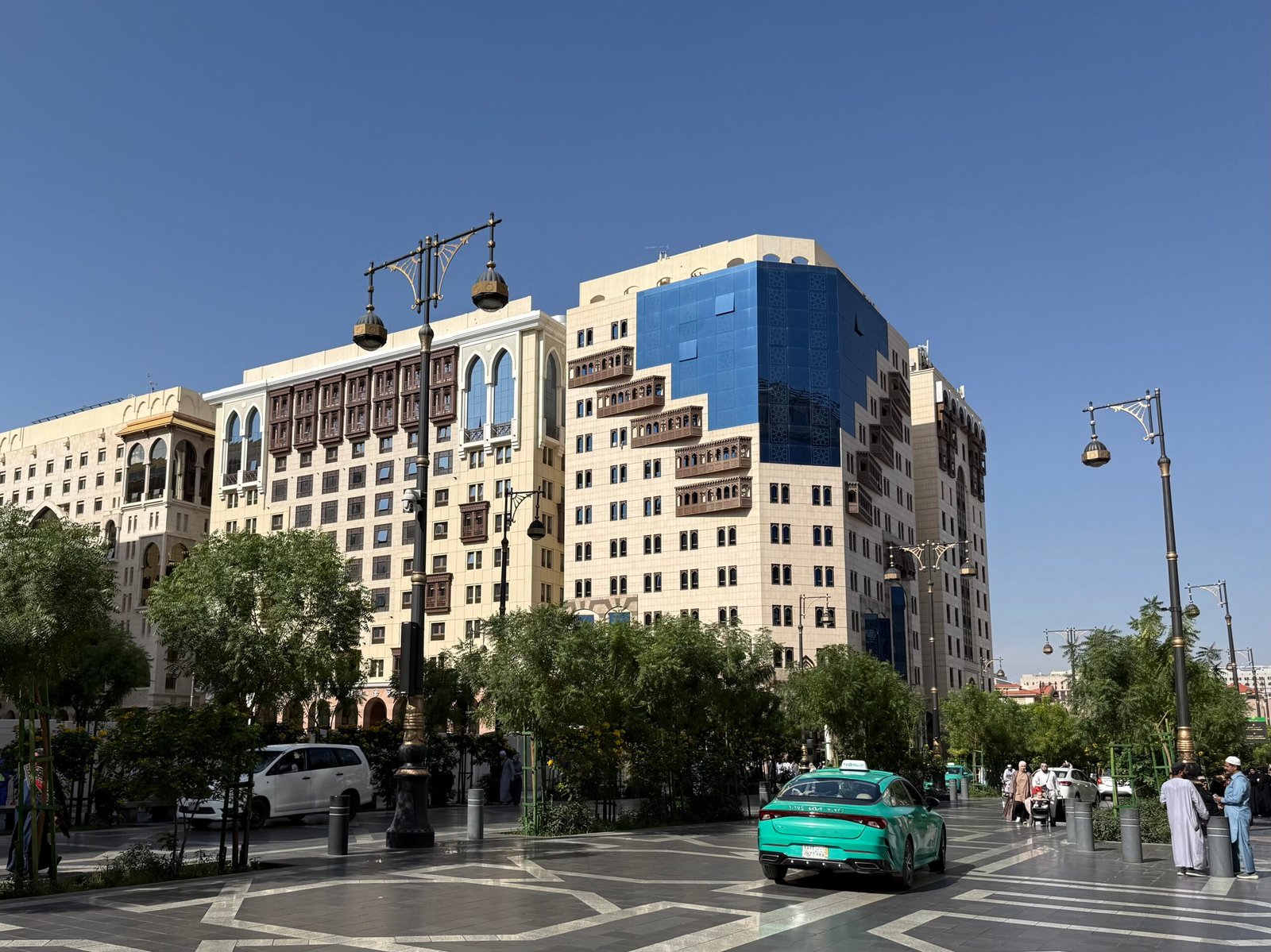
All of this is to say, while I have been writing mostly about its Islamic heritage, Medina is not just one extensive holy site. It is a fully functional modern city, complete with its own universities, shopping centres, entertainment venues, touristic sites, museums, date farms, airport, and so on. While you can spend an entire day doing the most religious of activities, without ever leaving the early Islamic heritage sites of Medina, you can just easily spend a day tasting excellent food from around the world, doing some decent shopping, and relaxing in lush date farms. You have many options, Medina is quite flexible in that sense.
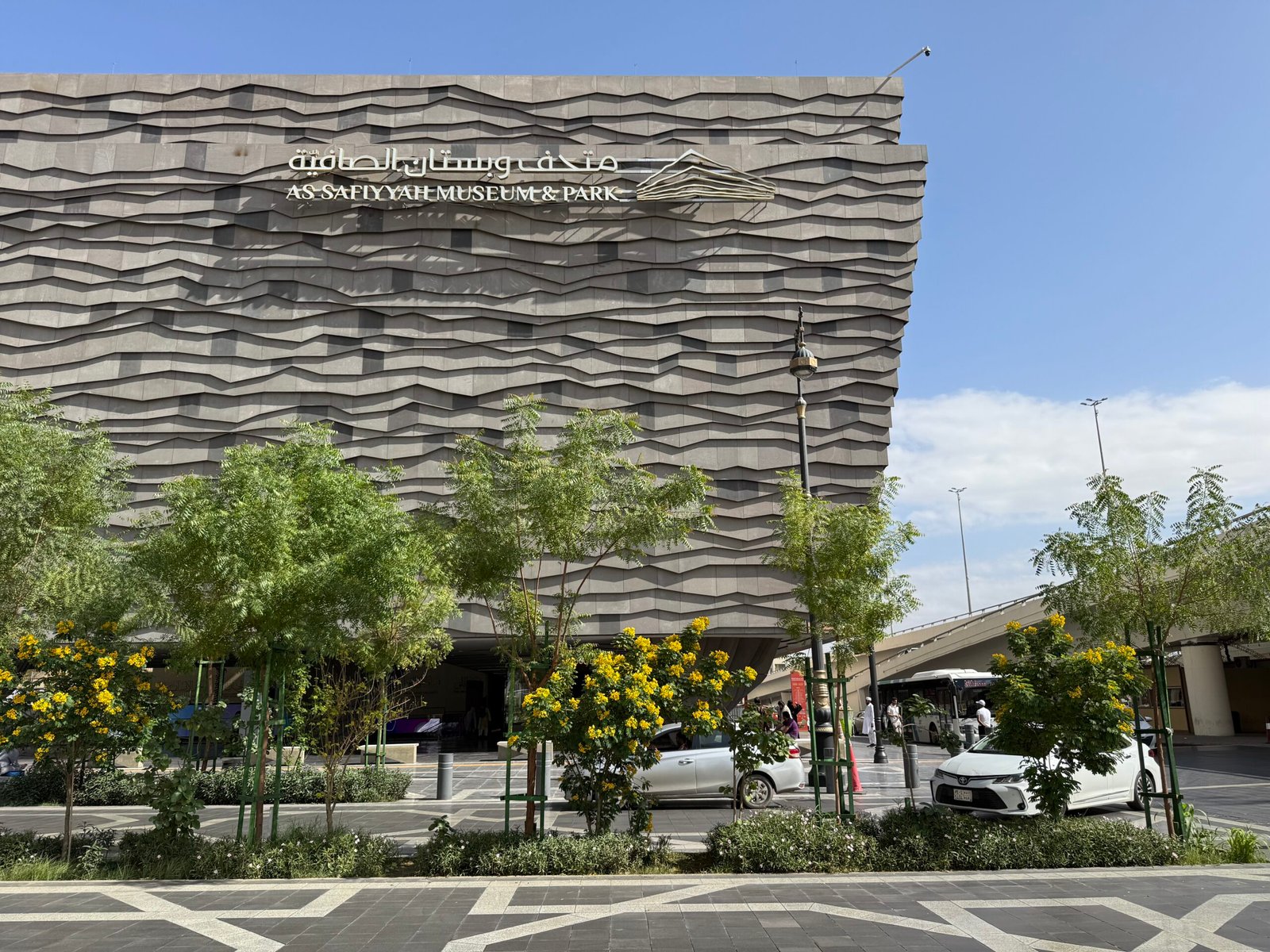
Furthermore, Medina is a rapidly developing town that is most likely going to be on the top of most people’s Saudi itineraries in the coming years. As far as I know, there are already tourists who visit this town as part of cruises that dock at the nearby port of Yanbu, and with increasing rail and road connections to Mecca and Jeddah, it continues to invite more and more visitors to rest in its calm parks and stroll in its relaxing streets every year. Of course, for some, this new development is problematic, as it risks turning what is a devoutly religious town into a tourist destination, but I beg to differ. Despite being open to all sorts of travellers, and offering many non-religious activities, frankly speaking, I, my mother, and my uncle all came to agree that Medina felt holier than any other city we visited up until that point, a feeling that is particularly difficult to explain in writing, and arguably even harder to change by just introducing some modern amenities to this city.
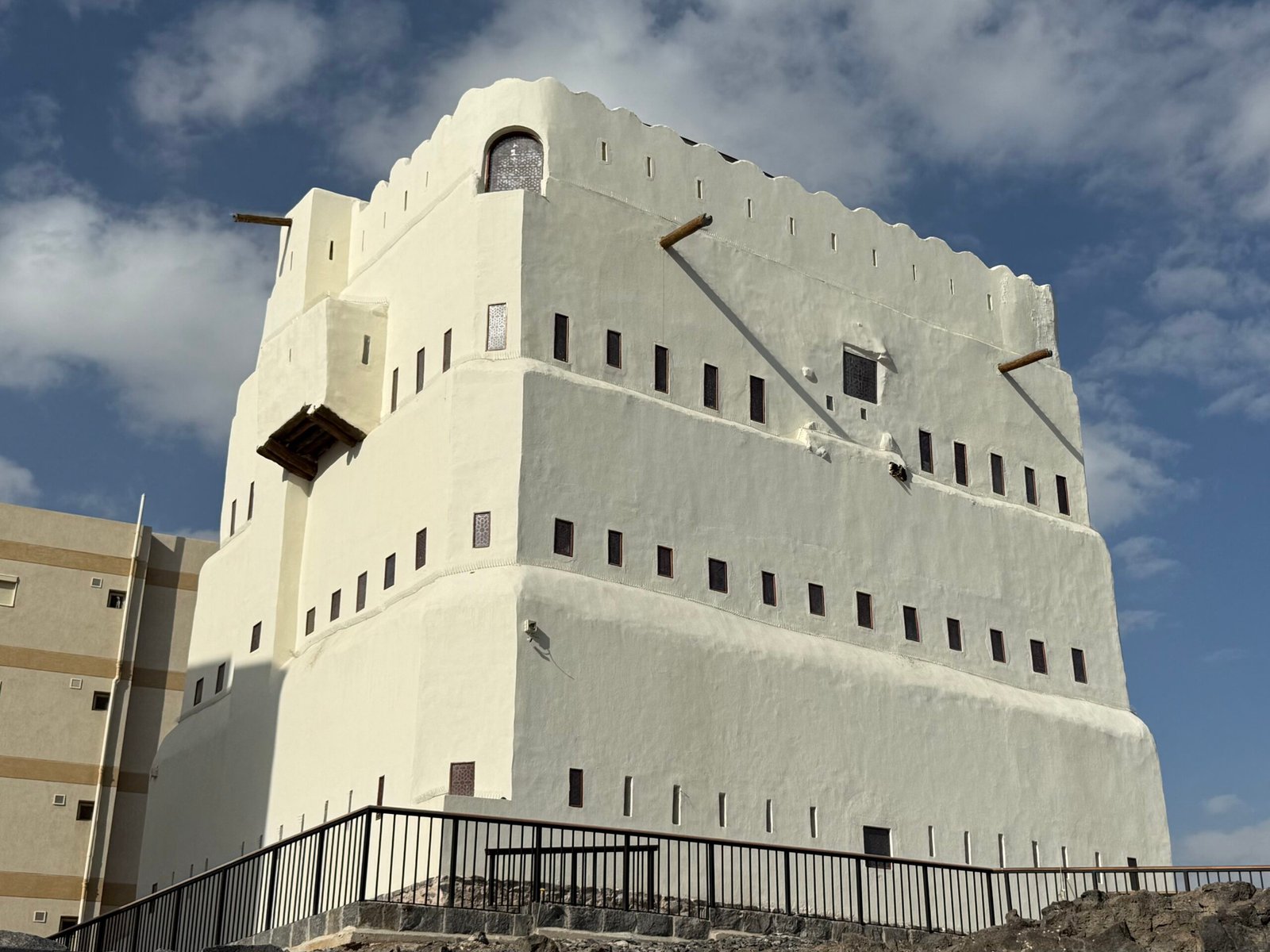
Let us now get back to what else one can see in this lovely town. This is Quba Castle, an old Ottoman garrison that was under renovation when I visited Medina. I could not take a sneak peek inside at the time, though the workers certainly had a field day watching me trying to do so. It was so nice to see them smile like that as they were hard at work preserving a piece of history, and I hope to appreciate their labour from up close when I am back in Medina. I know that I will be returning here numerous times as time and health permits me.
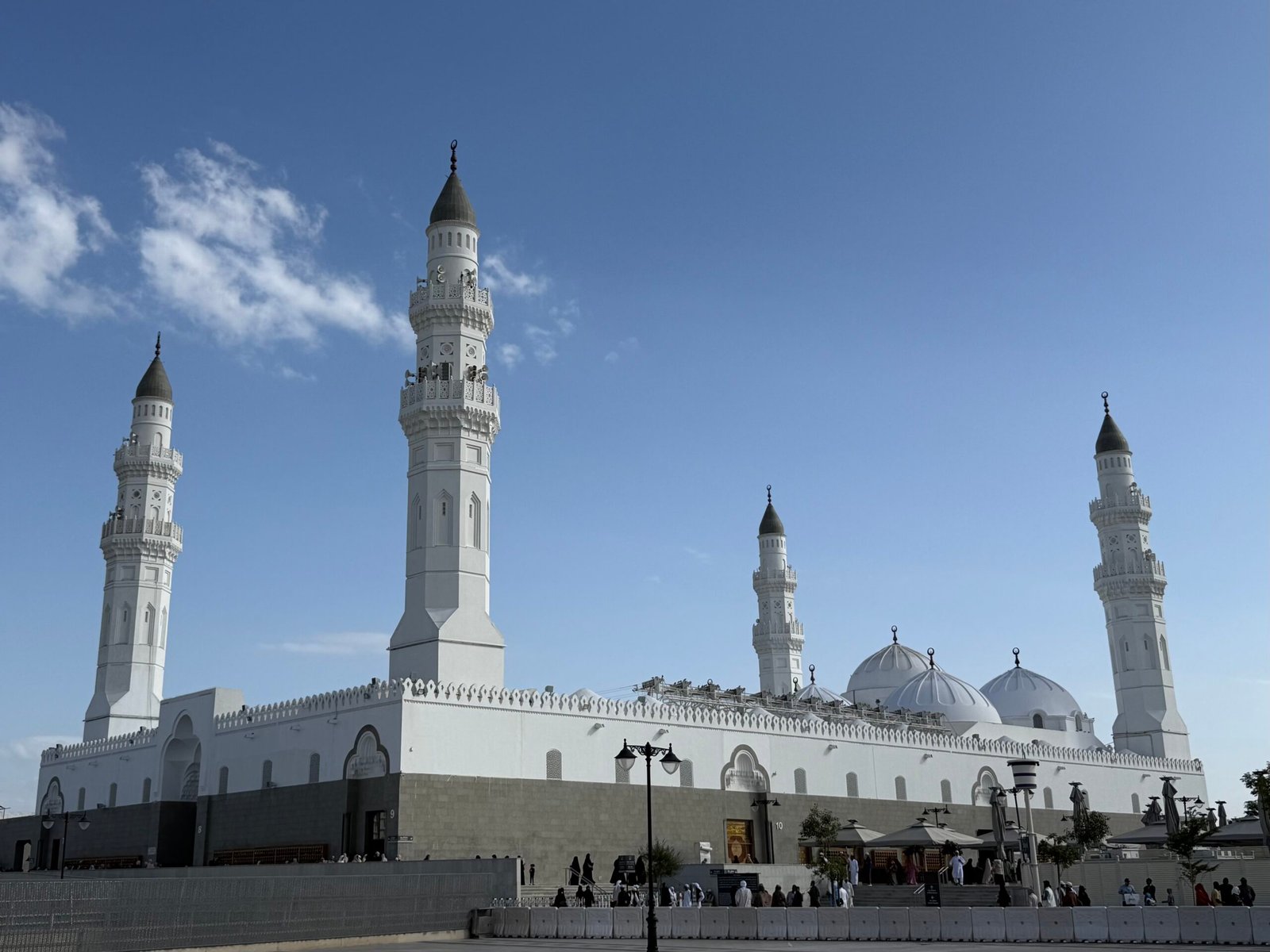
If you keep walking south from this Ottoman fort, you will soon come across the Quba Mosque, which is the oldest mosque in existence. It was built in 622, shortly after the Hijrah, though this behemoth of a mosque that you see today is the result of centuries of expansion and refinement.
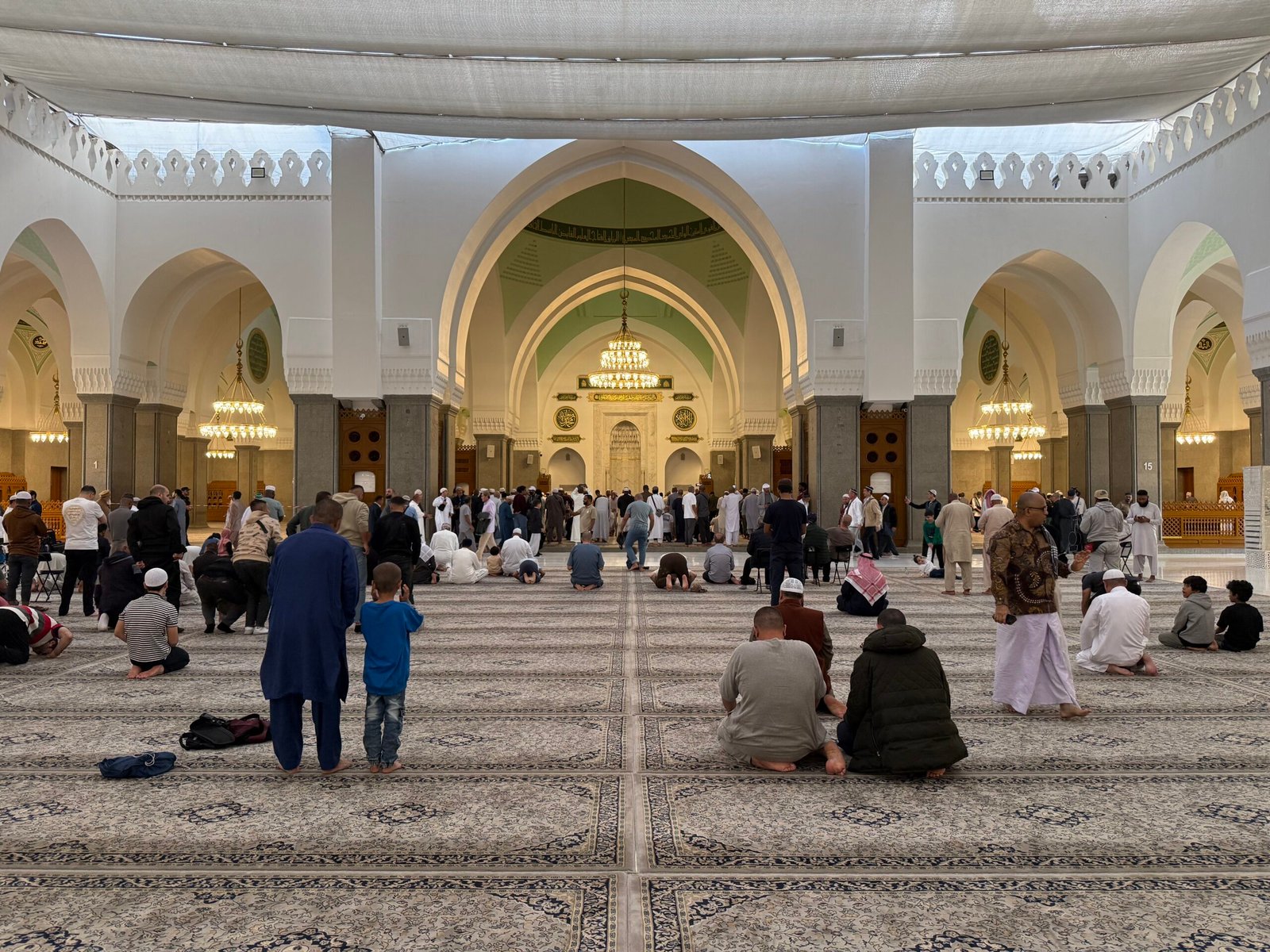
The interior of the mosque is somewhat humbler than most others I visited in Medina, probably in an effort to keep it as original as possible. I for one appreciated how simple layers of fabric were used to protect worshippers from the wrath of the sun, rather than an actual roof as is the case with most other mosques today.
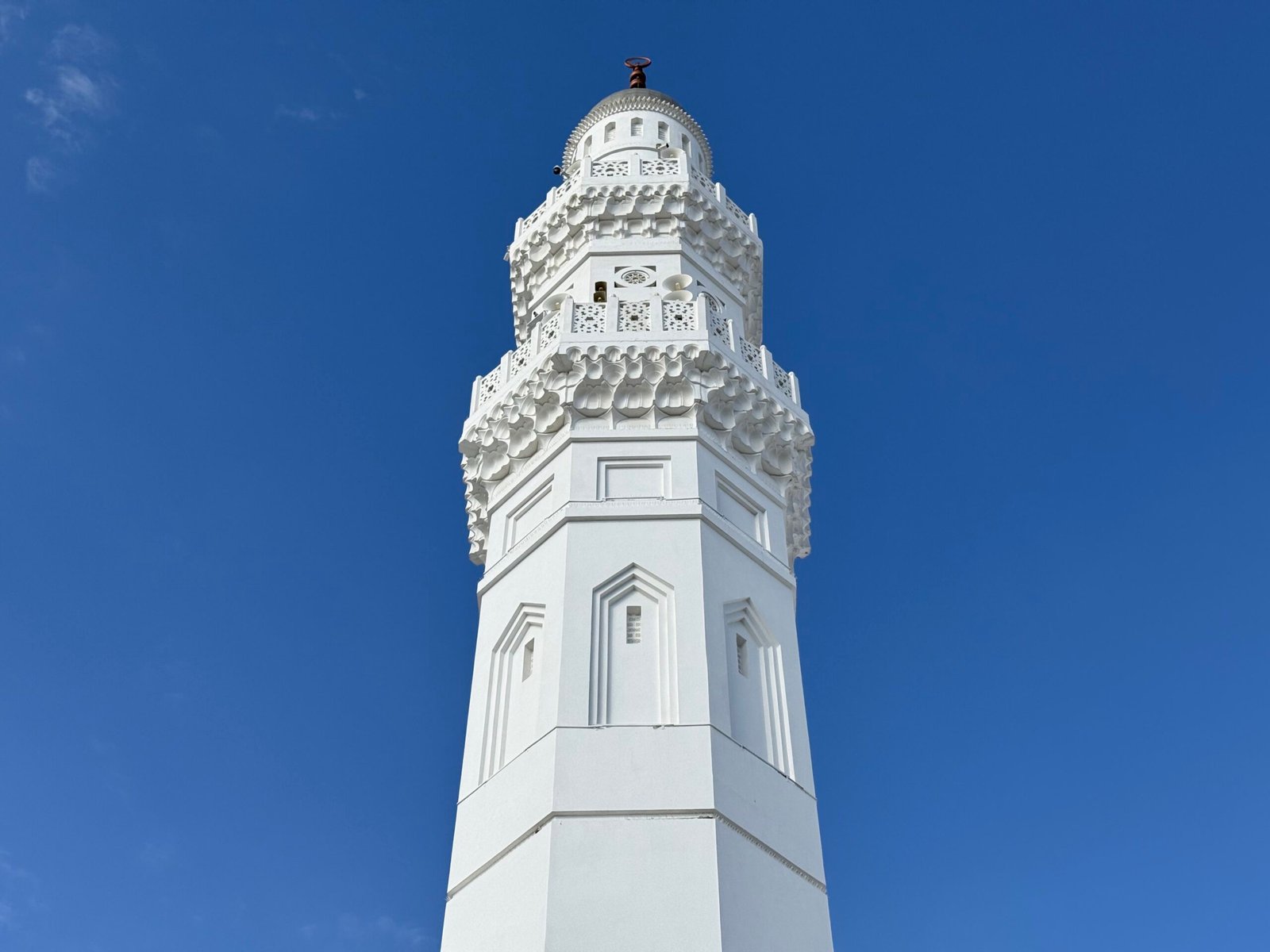
The minarets of this mosque were also quite noteworthy, simply because despite being monochromic, they looked significantly more ornate and imposing than most other minarets in town, with the exception of the ones one could find in Al Masjid-e-Nabawi.
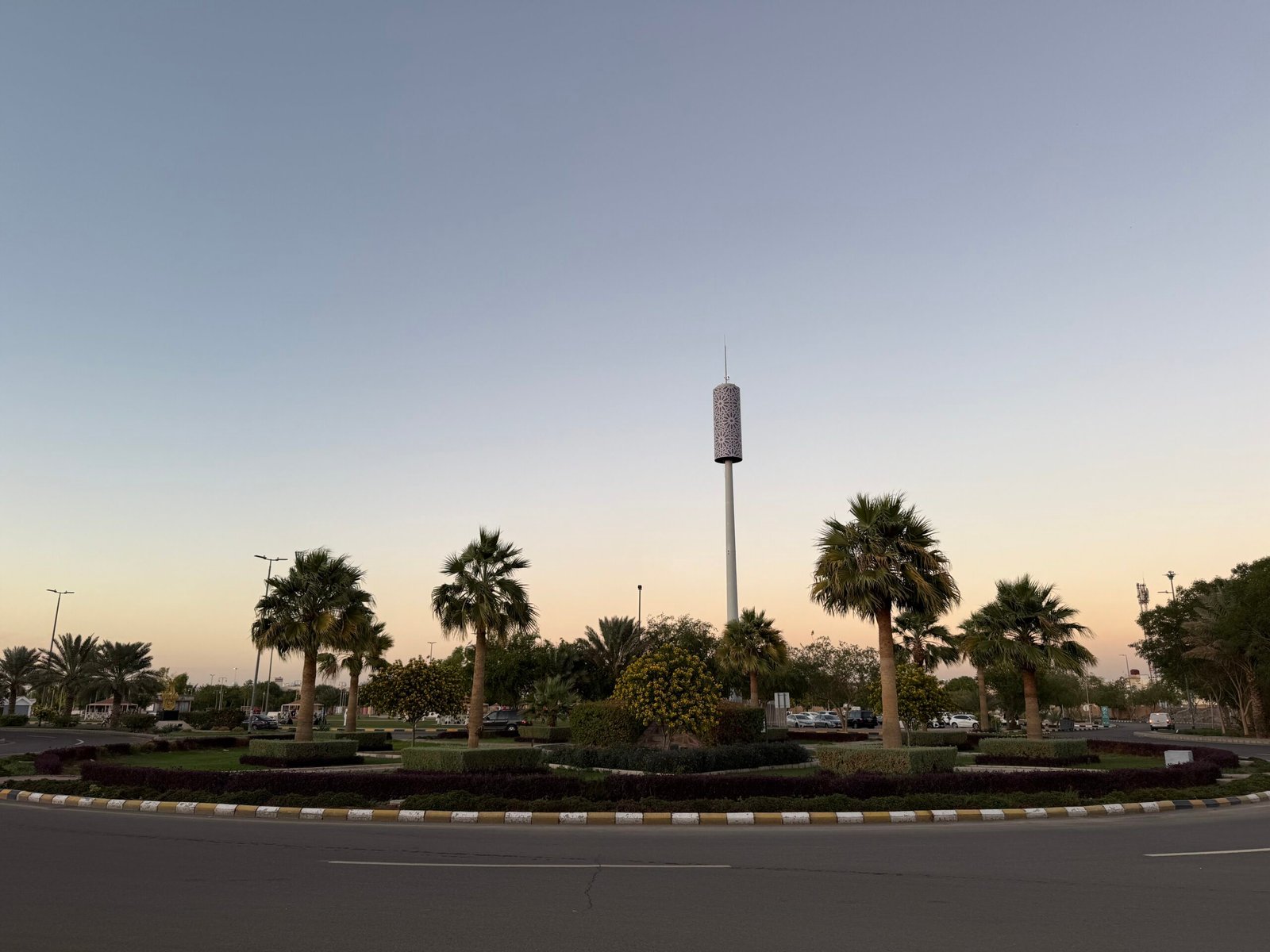
I managed to spend five full days in Medina, which allowed me to explore even its seldom visited parts, well, seldom visited for visitors of the city that is. For example, when I really yearned for some greenery on a random Thursday, I went south to enjoy King Fahad Central Park. This one is an enormous park; there is no doubt about that. The photograph above does not do it justice, and since I was there at night (when you actually want to walk around in Saudi Arabia, since the scorching sun will make you regret your life decisions otherwise), I could not take any clear shots of the place after this one.
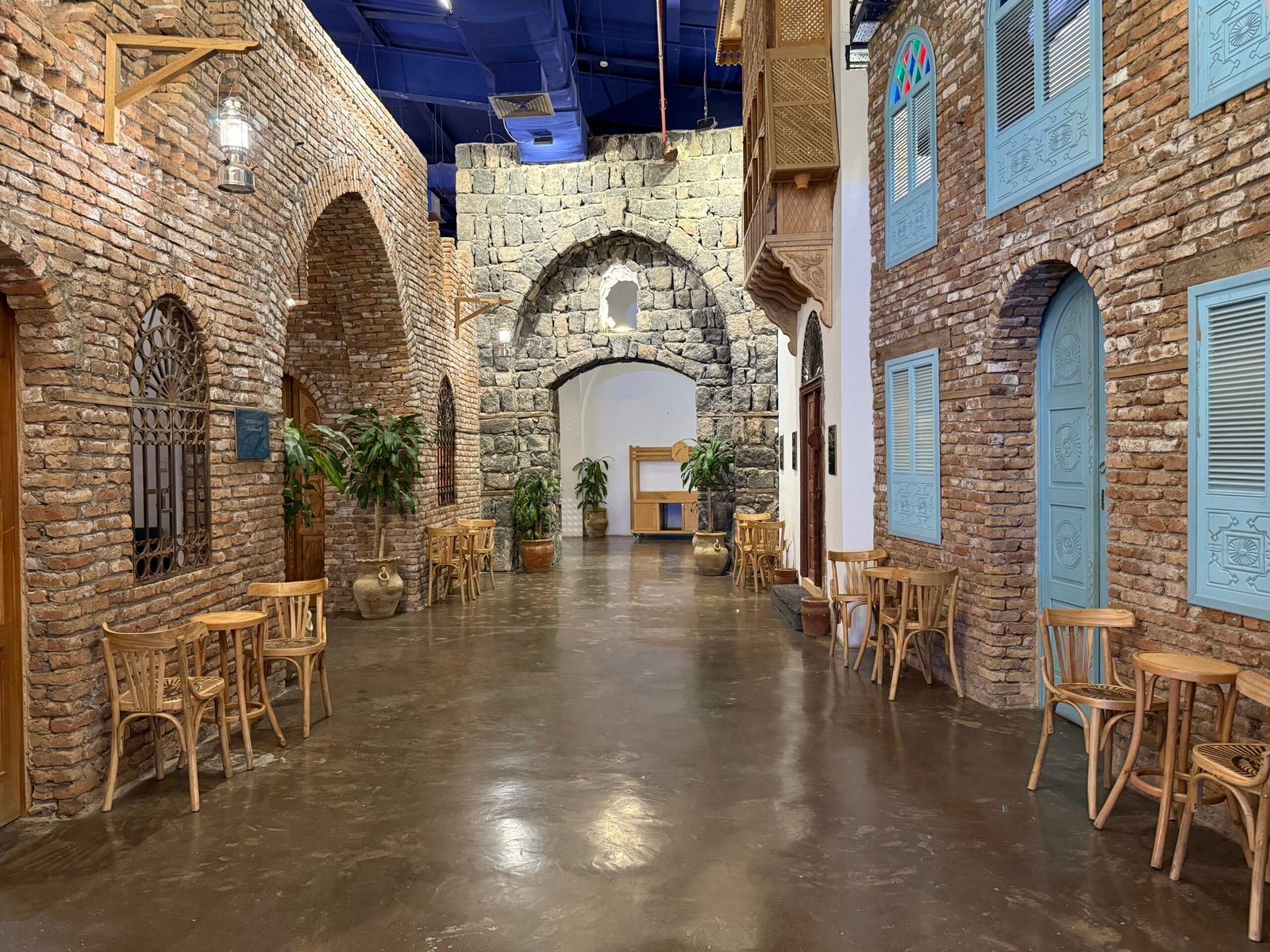
The park had playgrounds for children, a ton of greenery on which Saudi families were enjoying a picnic after the evening prayer, and sports facilities that were full of young players. There were also a ton of other areas that were under construction. Newly finished and often empty venues such as this one will presumably be part of a heritage site or perhaps an entertainment center at some point. Admittedly, this area deserved more of my time, alas I did not have the luxury of spending more of it then.
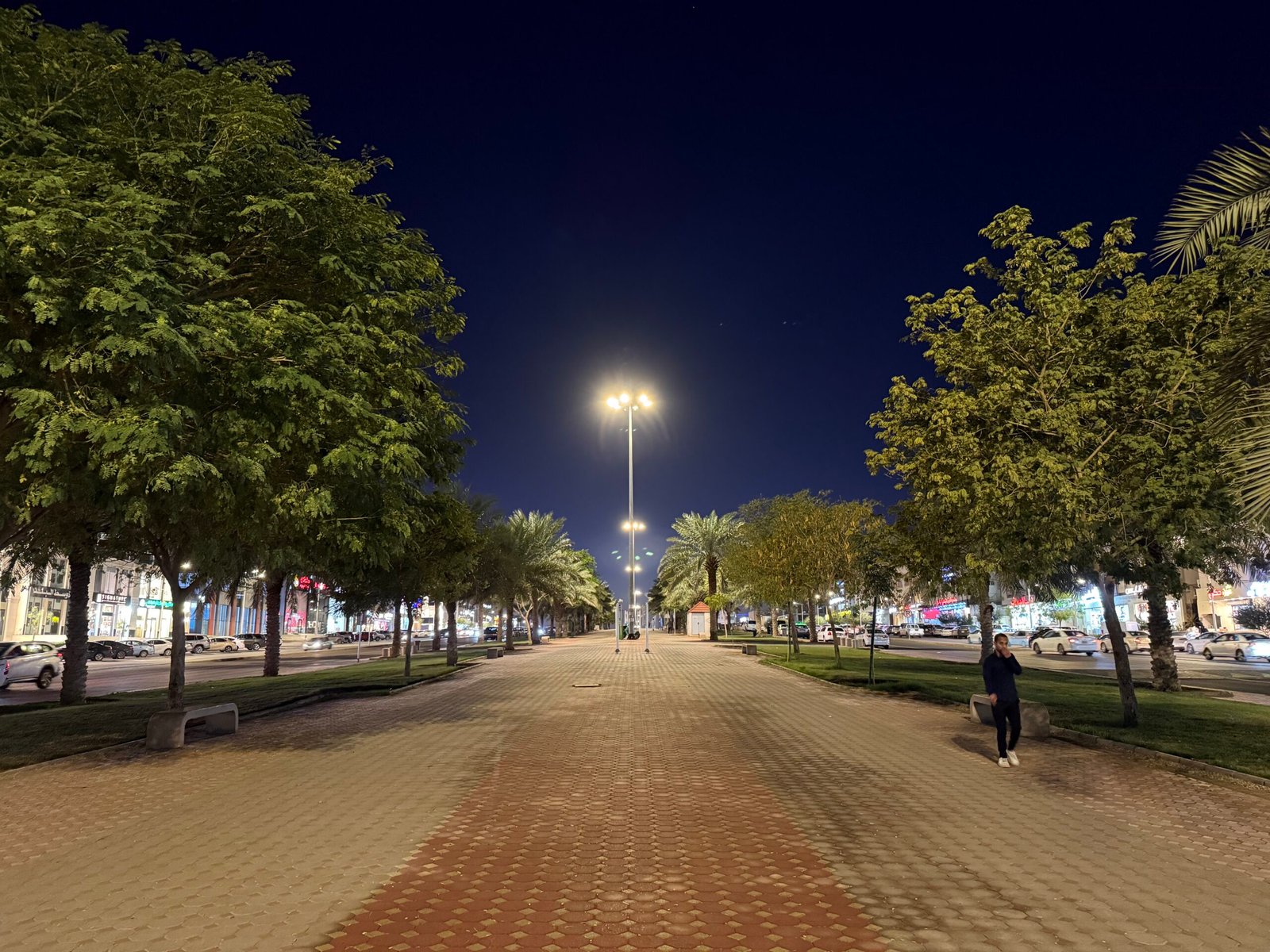
Nevertheless, I also managed to quickly visit the nearby Al Hijrah Walkway. It is a long pedestrian friendly road that is sandwiched between two car lanes. Some nice smelling trees, a few strategically placed banks, and a decent number of good eateries on either side of the walkway turned this otherwise humble looking project into a very joyful spot for a proper night walk. As far as I understand, such projects aim to get Saudis out of their homes and push them into doing sports daily. I did see many doing just that when I was there (and also back when I was in Riyadh), so such developments might just help the Kingdom have a healthier population in due time.
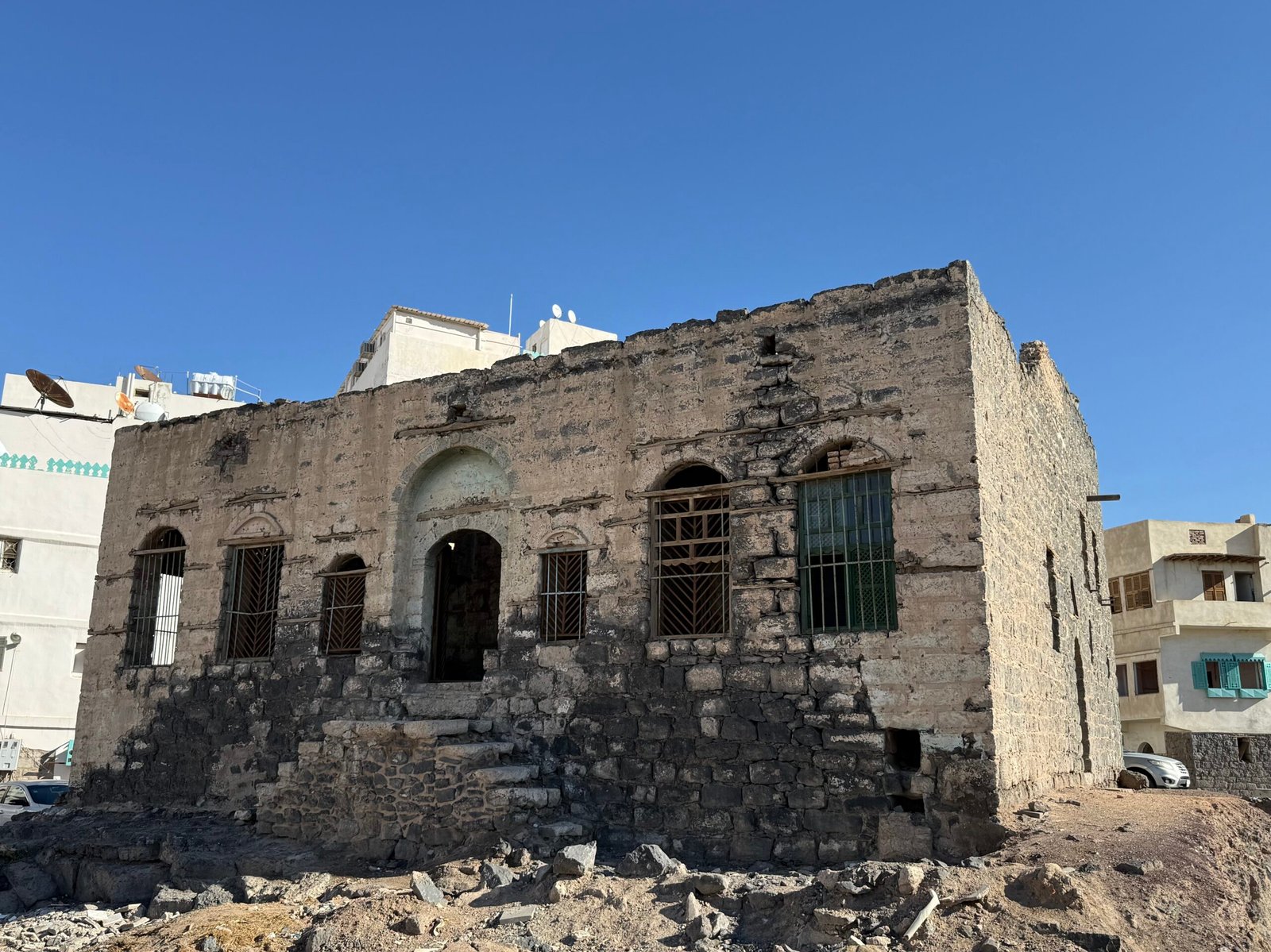
And yet while the city keeps being developed, you can still easily enjoy some of its older charm as structures like these are now scattered around its many winding streets. To be fair, this is a theme in all the Saudi towns that I visited thus far. Apparently, sometimes some families get rich and move to newer accommodations, leaving their ancient family homes in disrepair, some other times people simply move on, migrate to other countries, once again leaving massive older houses like this one fully unoccupied. Regardless of the reason, you may come across some such pieces of history during your travels in Medina, so make sure to keep your eyes peeled as you walk around the town if you want to see the sort of buildings people of this lovely town once lived in.
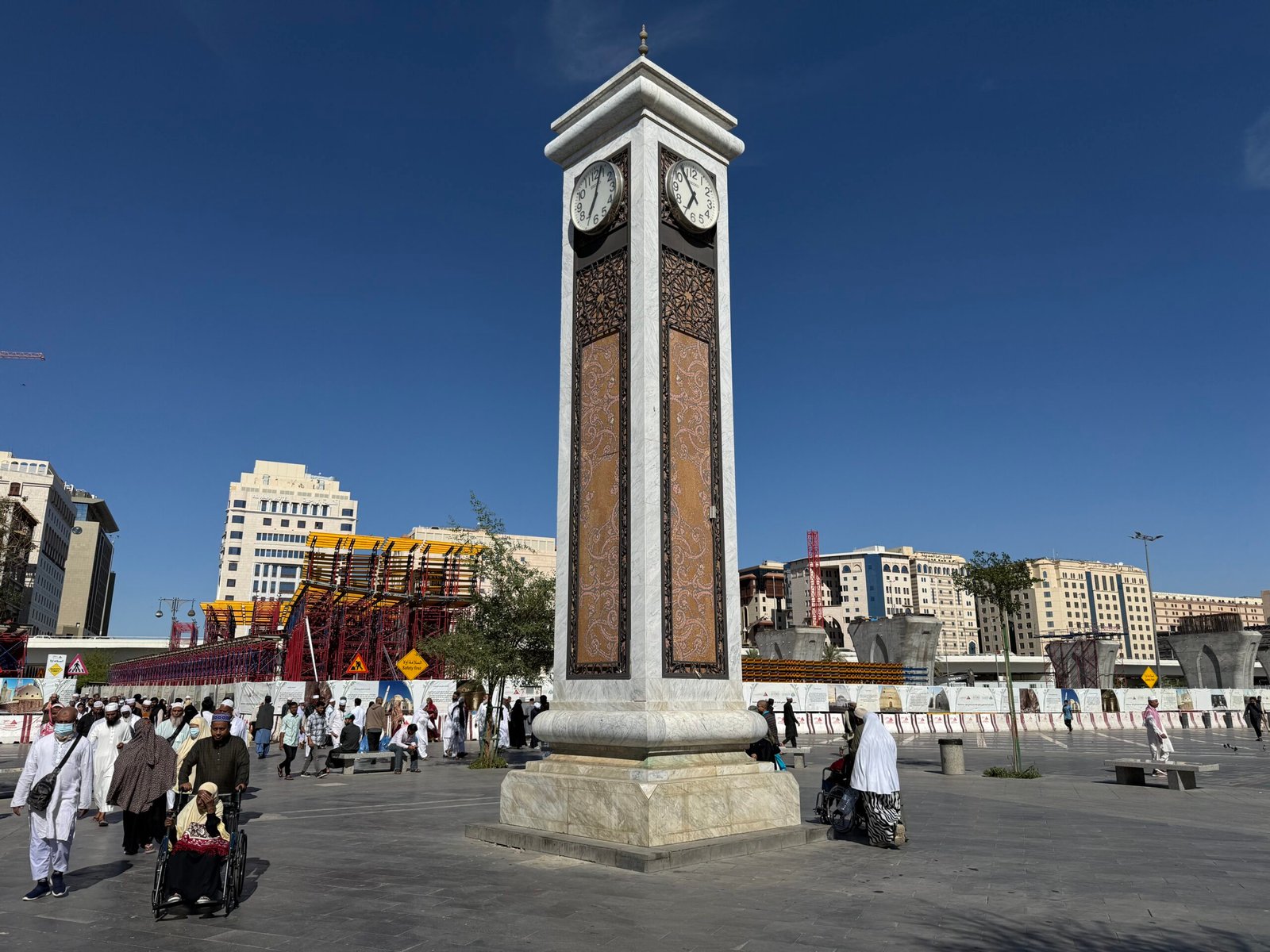
Well, this is where we must conclude our tour of Medina, the humble clock tower in the middle of the old center of the town. Unfortunately, no matter how much I write about Medina, visiting it is an experience that must be, well, experienced on your own. What makes this city unique is all these things that I mentioned up until now, sure, but it is also the vendors that warm your heart with their smiles and hospitality. It is the little children who run around gleefully. It is the pilgrims that cry ever so gracefully at seeing the site of Prophet Mohammad’s burial site. It is the ever-relaxing silence that engulfs you the moment you walk just a few meters away from the hustle and bustle of Al Masjid-e-Nabawi. Well, speaking of, next week, we will take a closer look into just that!