
There are two sides to Dubai, the flashy one that you are familiar with from Instagram, and a lesser known side that is significantly more laid back, historical, and dare I say as a historian, a bit more interesting. Well, what else did you expect me to say? That the admittedly wonderful looking skyscrapers full of luxury shops is more interesting than a harbour full of old dhows? I will obviously go with the latter any time of the day. Today, I am here to show you that Dubai has that more historical and cultural side to it that goes unnoticed by some tourists, which is akin to a sin for me. Let us see what this city has to offer to those who are more interested in the old Dubai, or as some of the locals that I met put it, the real Dubai.
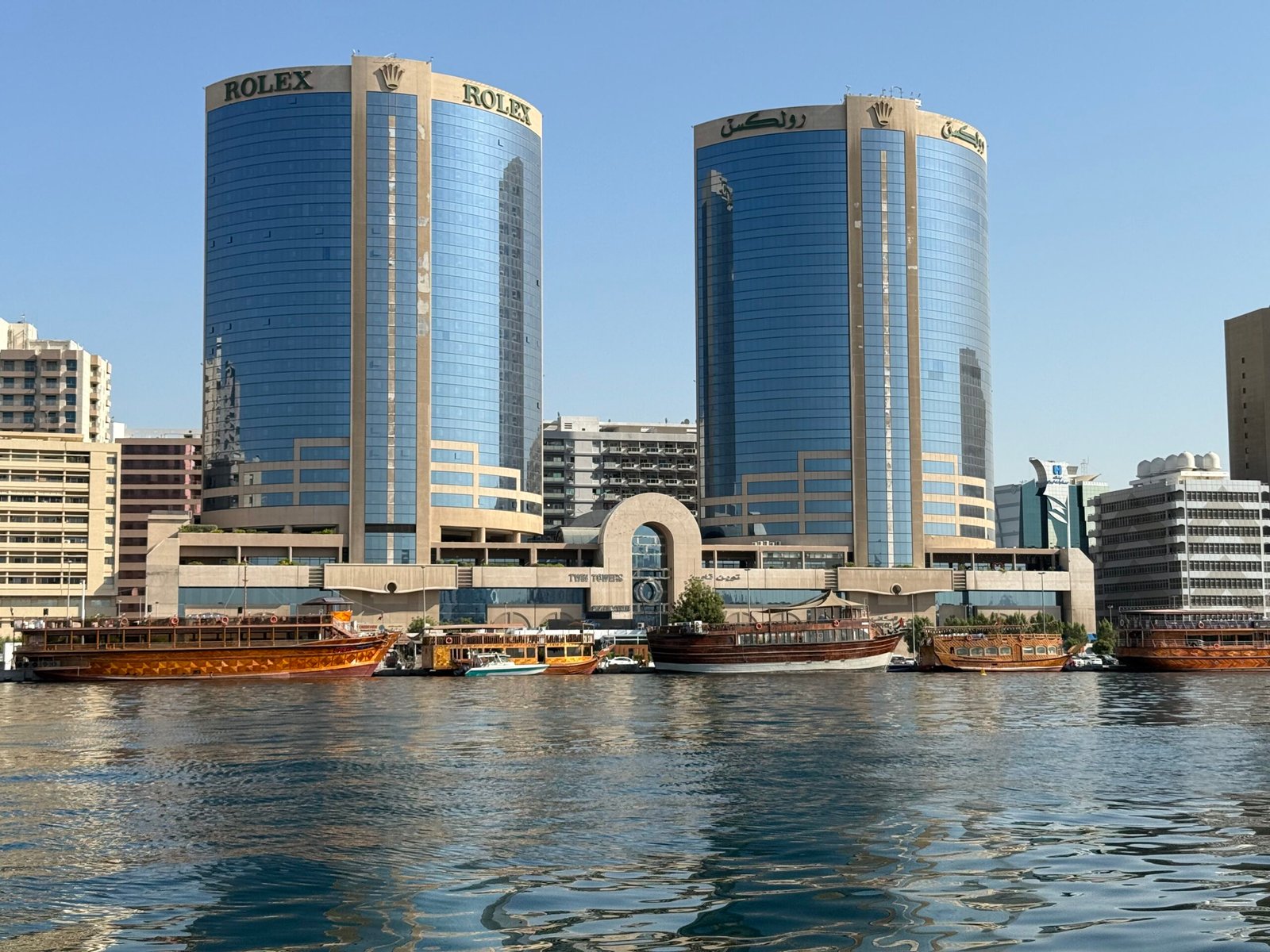
The old Dubai can be found along the banks of the Dubai Creek, which acts like the city’s connection to the rest of the world, especially after it was dredged in the 1960s and 1970s. Today you can find an interesting mix of both admirably old and brand new ships resting on either side of the Creek, often to the backdrop of buildings that are themselves either quite modern, or somewhat older looking.
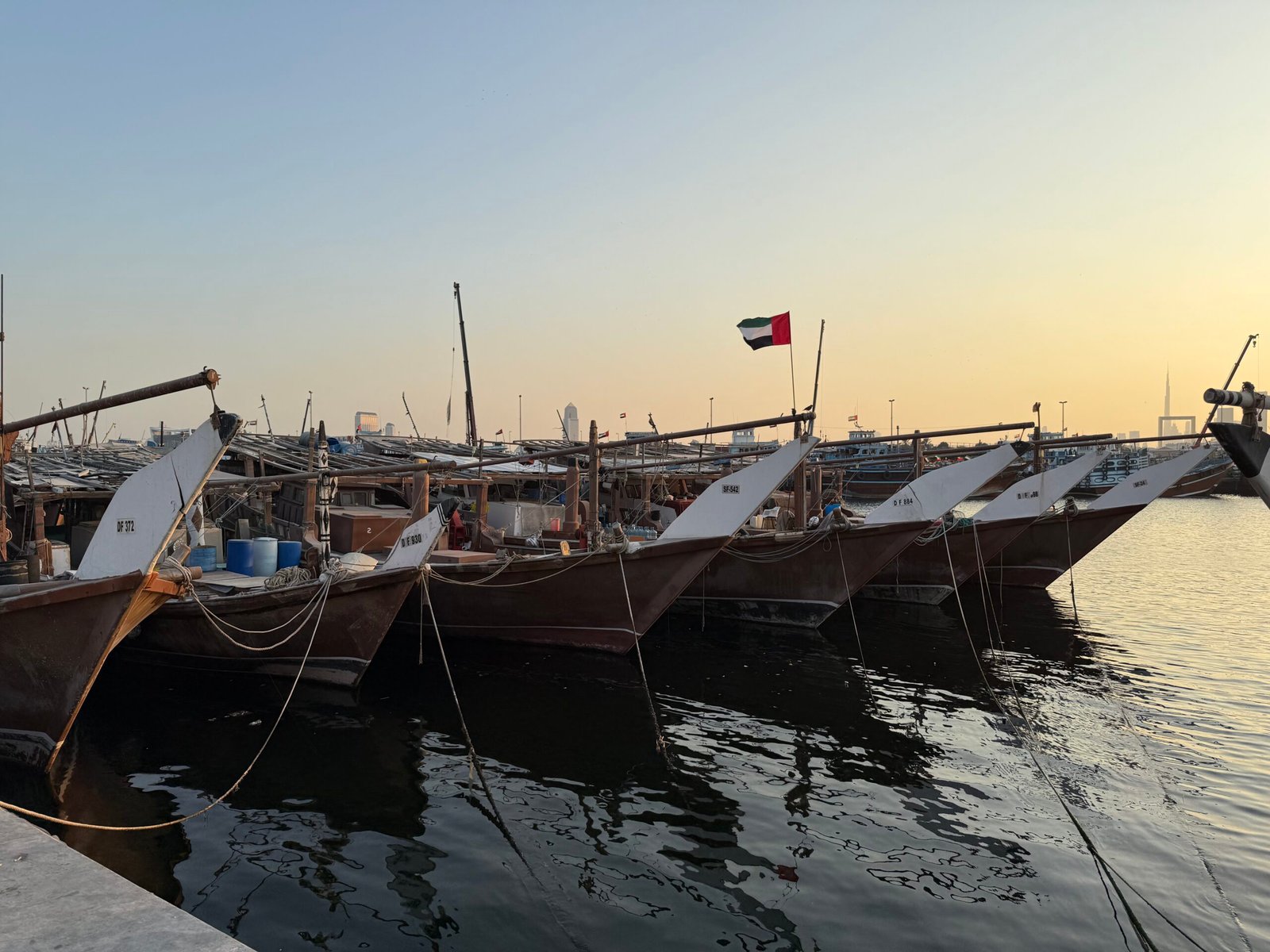
One of my favourite spots in all of Dubai can be found on the eastern bank of the Creek. On Google Maps this place is simply tagged as Dhow Wharfage, though there is more to it than that. There are tons of dhows here, that is true, but there are also a lot of other ships, cargo freighters, small fish tugs and so on. On a side note, you can see the Burj Khalifa peeking above the Dubai Frame on the background in the photo above.
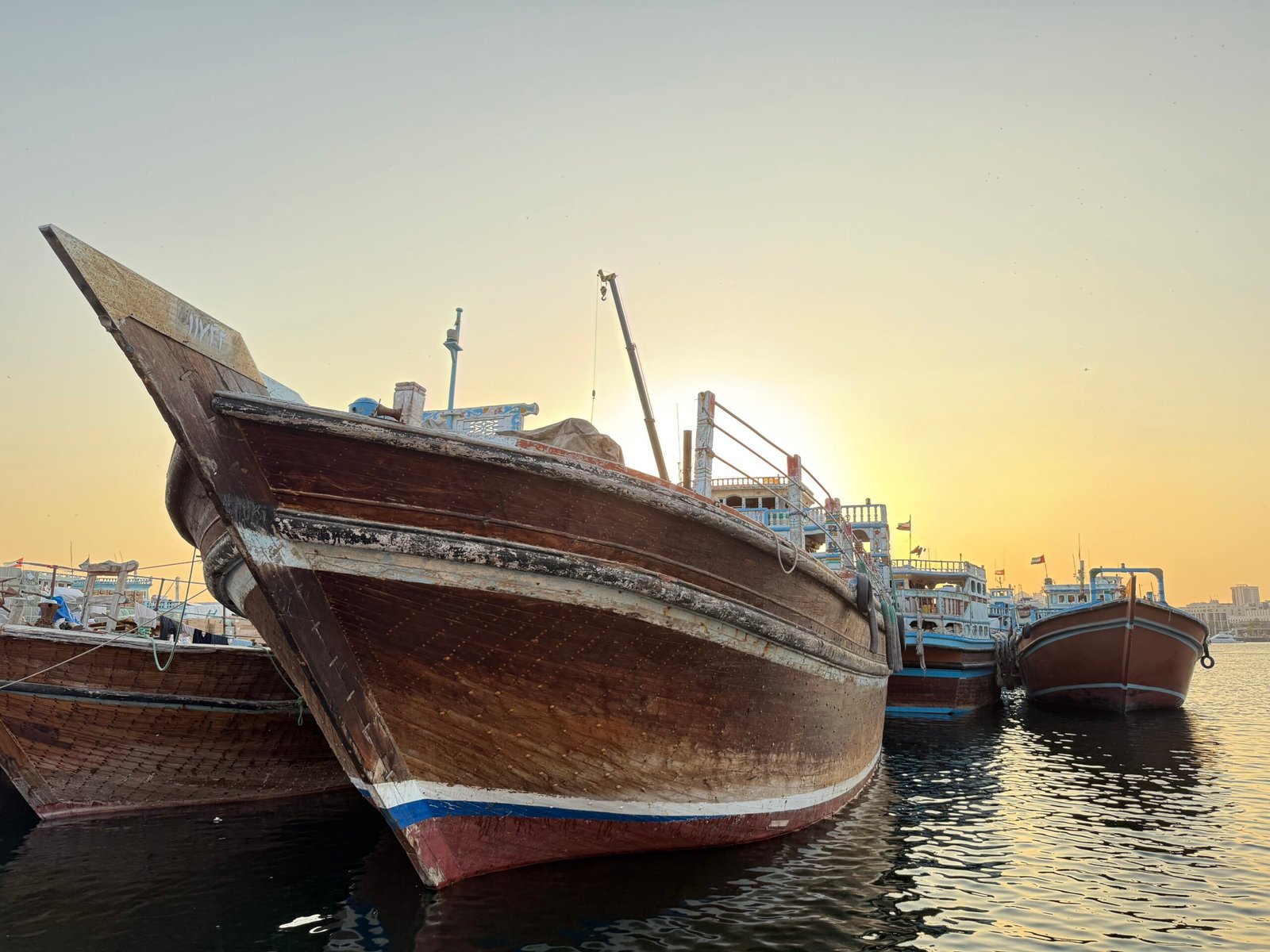
I was at the wharfage by the time the sun was setting, not on purpose, I just got lucky with my timing. It was fantastic to walk around this place, and to observe the dock workers carrying cargo of one sort or another all around me.
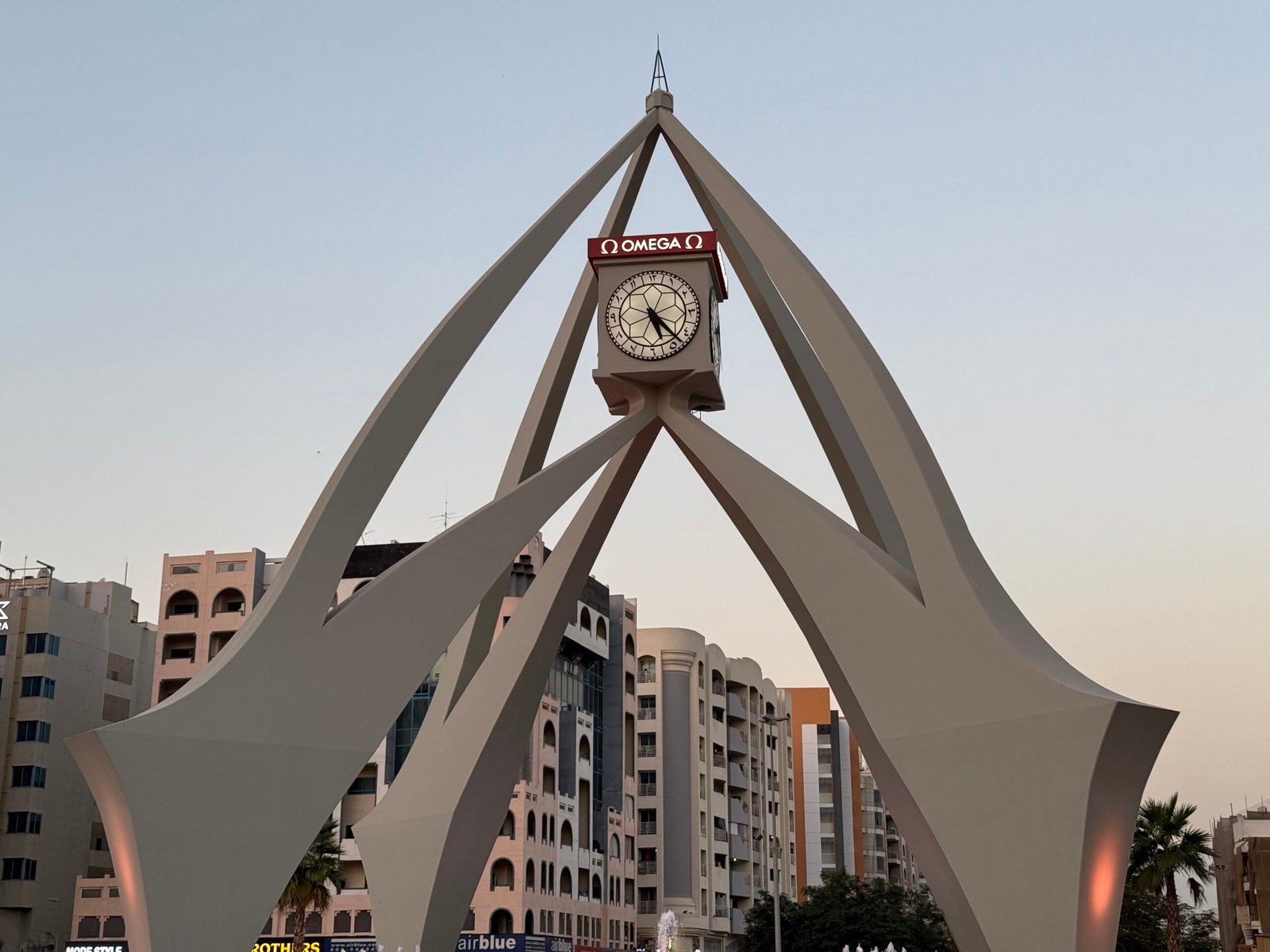
If you are visiting the wharfage, I recommend you visit the nearby Deira Clocktower as well. This was one of the earliest landmarks that Dubai had. I did not manage to get a good photo of it, because it is found on a busy roundabout, but this older area in general is well worth seeing with your own eyes to better understand the origins of the urban phenomenon that is Dubai today.
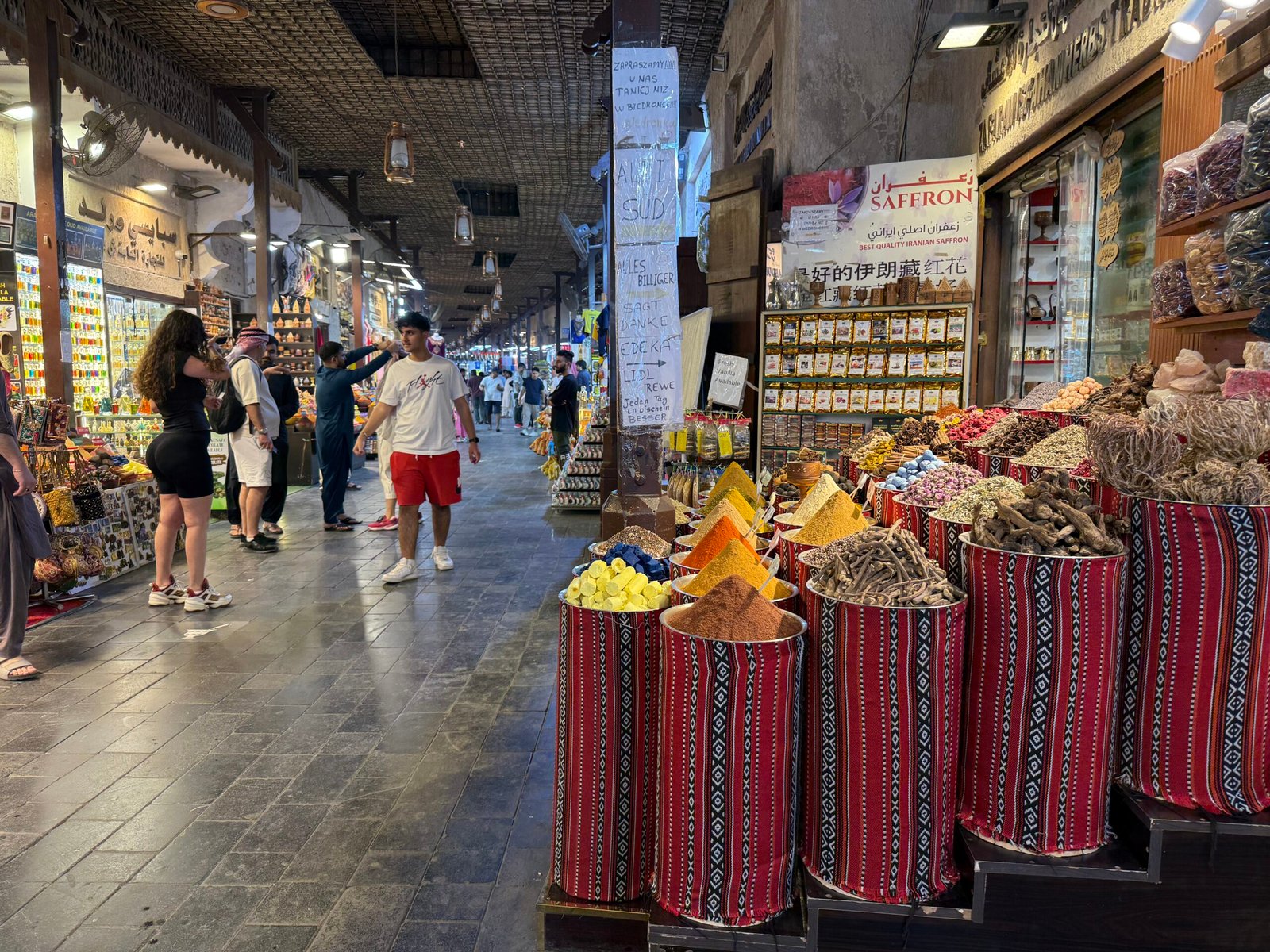
On this side of the Creek, one can also find the Gold Souk, which is likely the most popular of all the old souks in Dubai. However, I do prefer the spice souk myself, probably because I can at least afford some stuff that are being sold here. Nevertheless, both of these souks, or any souk in town for that matter, are full of colorful displays, friendly vendors, reasonable prices, and best of all, an excellent smell thanks to the use of ouds by various shopkeepers along their winding streets.
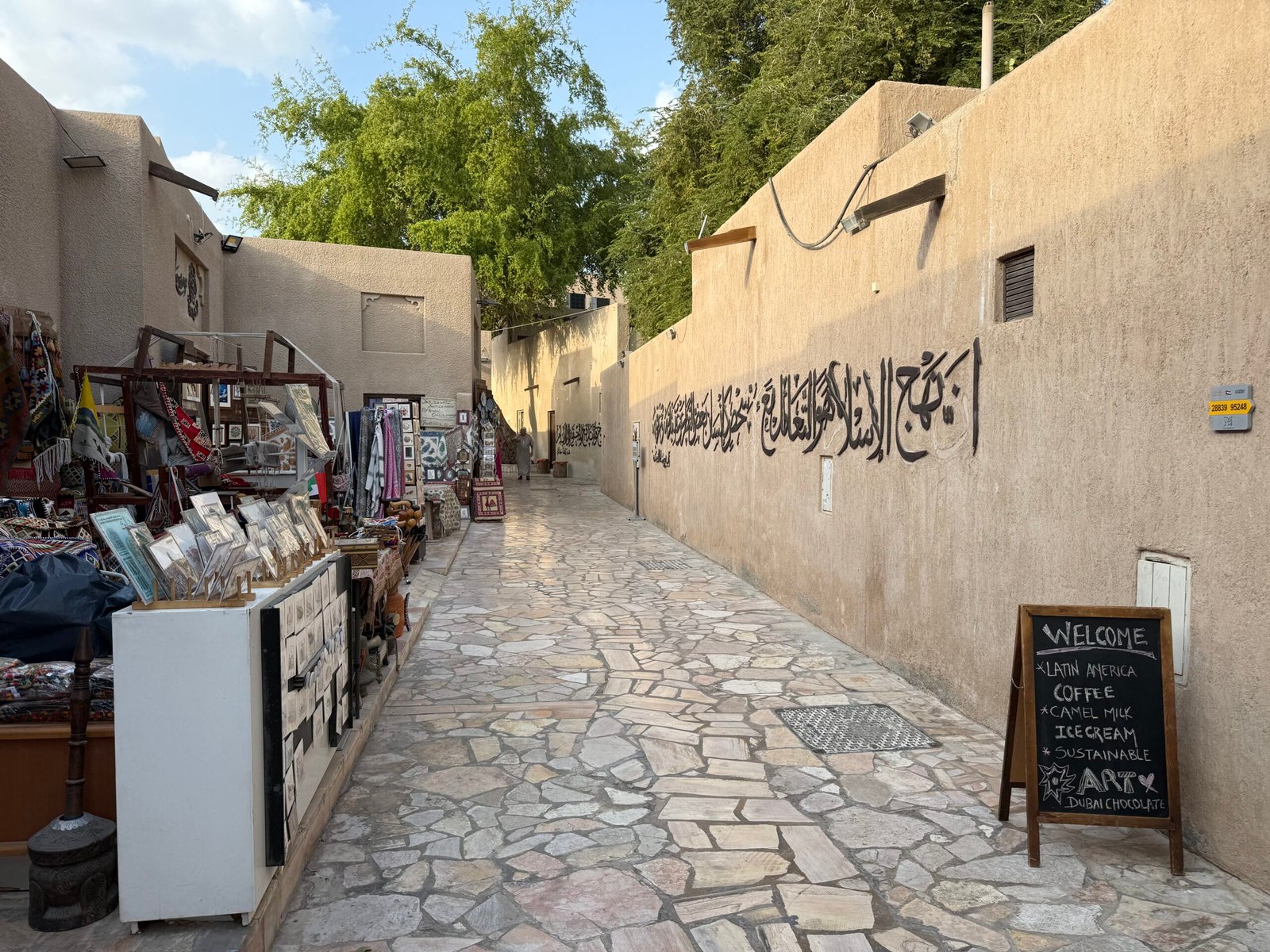
On the other side of the Creek, the side that I actually stayed in, one can find the Al Fahidi Historical Neighbourhood, which you can see above. This small area is full to the brim with souvenir shops and some cafes, so it did feel a bit more touristic, and it was frequented by numerous solo travelers such as myself and tourist groups alike.
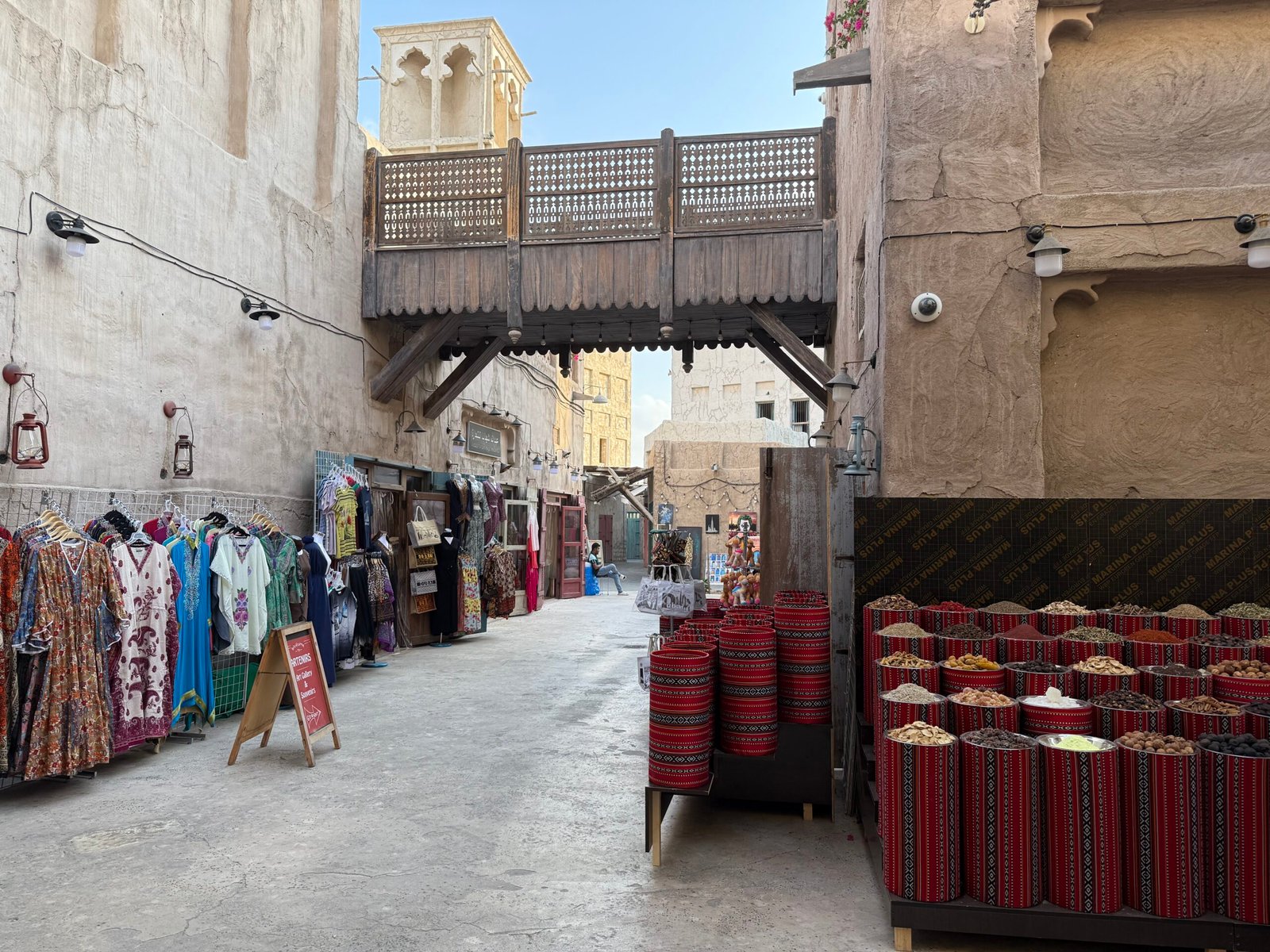
Nearby one can find the Dubai Old City, the loveliest of pedestrian friendly coastal heritage centers in town. It is true that there are many cafes and souvenir shops in this part of the town as well, but these are spread around more evenly, and thus you have more room to roam around freely. Furthermore, seeing these towers all around, which are windcatchers that, as their name suggests, catch the wind to ventilate the air indoors, adds so much to the atmosphere, and in my opinion, makes walking around Dubai Old City a bit more enjoyable than wandering around in other parts of Old Dubai.
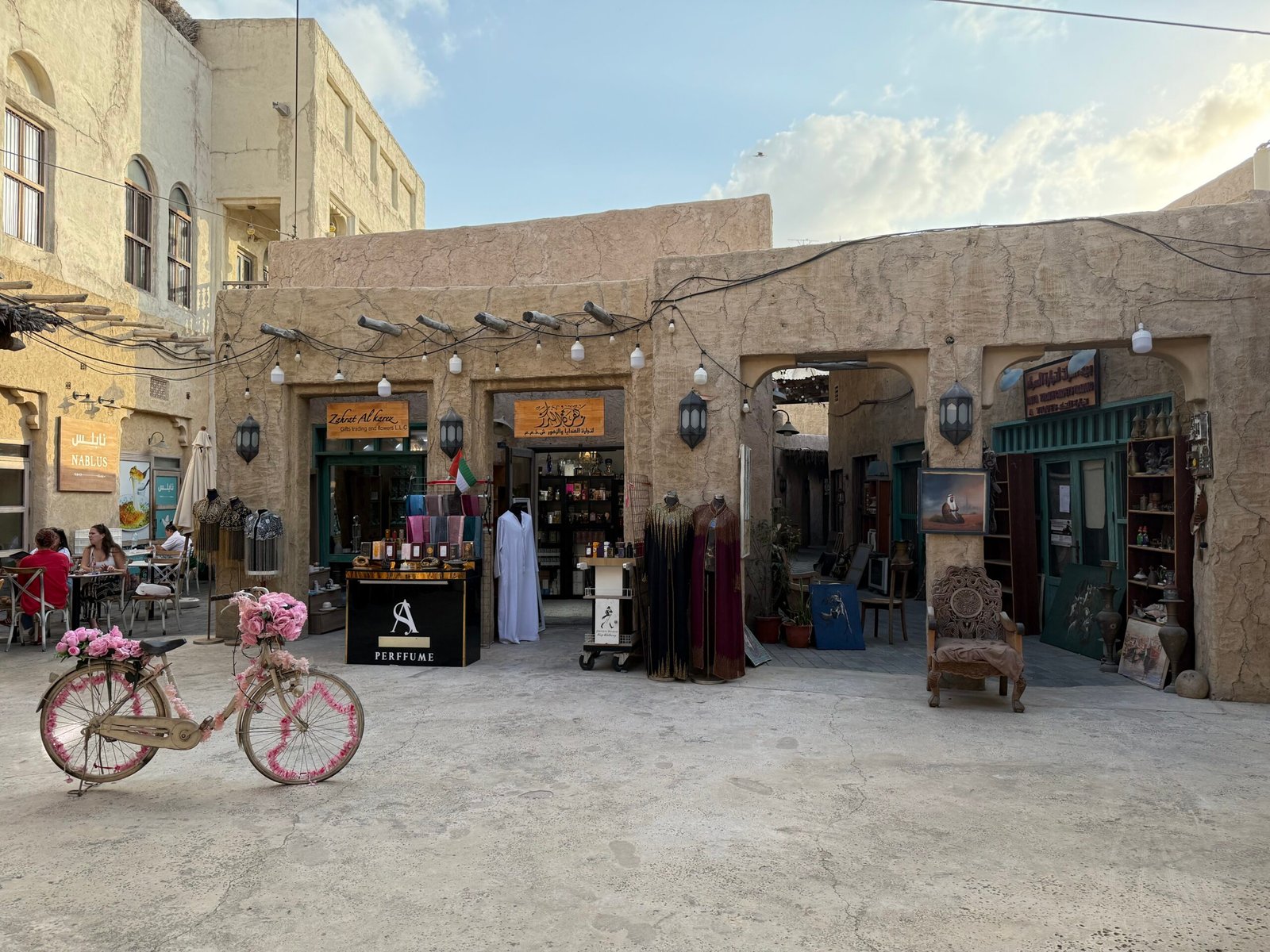
Being a relatively new project, this is not necessarily the most authentic part of the old town, but then again, it is one of those things that make you question what authentic truly is. In a city like Dubai, where cash flowed in like crazy in the last few decades, and where security is a priority, it would be absurd to find some decrepit buildings and outright unsafe looking parts anywhere in town, let alone in its center. Besides, it is not like all of these buildings were built from scratch. Some of them were reportedly already there, and yet they were renovated to look the part of the project. The end result allows you to enjoy what it may have felt like to take a stroll along the streets of Old Dubai, while making sure that the entire experience is accessible to all and safe, and even enhanced with modern amenities.
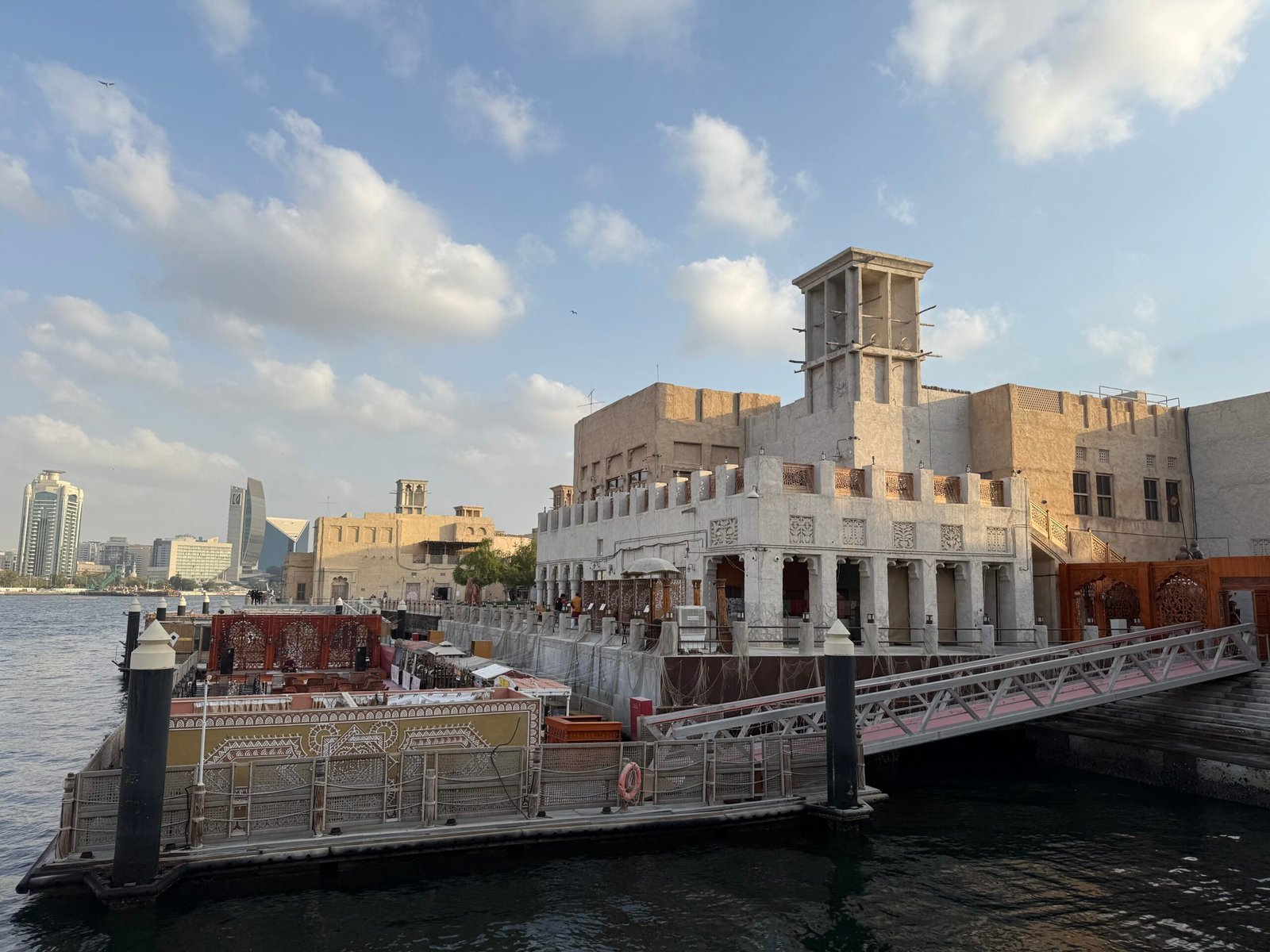
Speaking of amenities, other than restrooms, garages, and shops for all sorts of goods, there is an abundance of restaurants and dessert shops in this part of the town. Alas, I actually never dined here, not because the prices were outrageous but because it was just a bit out of the way from where I stayed, near the Al Ghubaiba bus station. It is not like I lived on the other side of the city, but there are just too many interesting options (especially Indian ones) in between where my hostel was, and where all these windcatchers were. Next time I am around town, I will surely be dining by the Creek in one of these restaurants.
If you enjoyed the Dubai Old City, then you may be happy to hear that just a few minutes up north, you can find the Al Shindagha Historic District. It felt like a mix of Al Fahidi Historical Neighbourhood and Dubai Old City, but quite refreshingly, it was significantly less crowded.
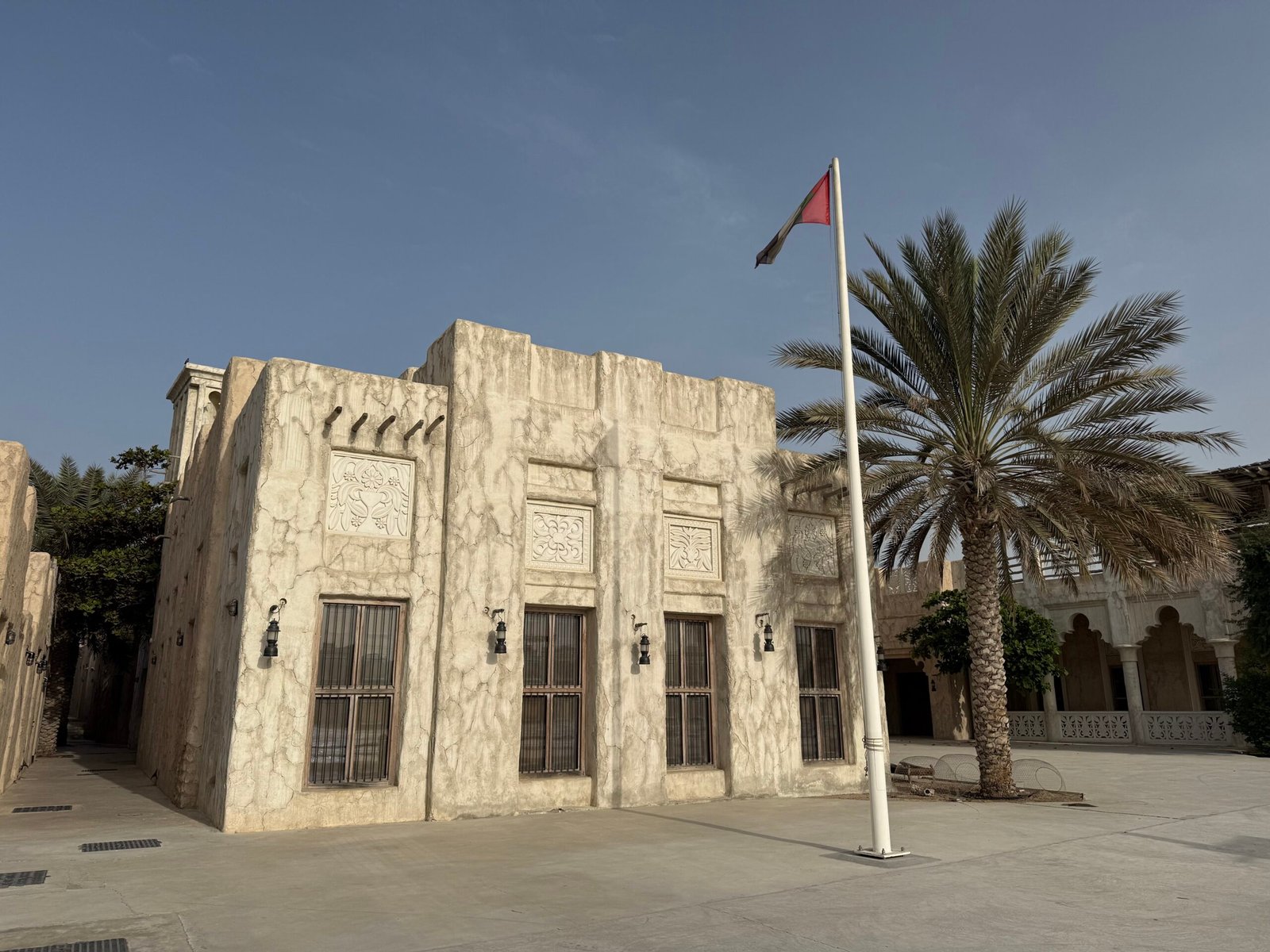
It turned out that this area is actually one massive complex of museums, housing almost twenty of them, and possibly more. You can get a day ticket that costs 50 AED to get into most of these buildings and enjoy what they have to offer. I did that, but you can just enjoy the premises as is as well.
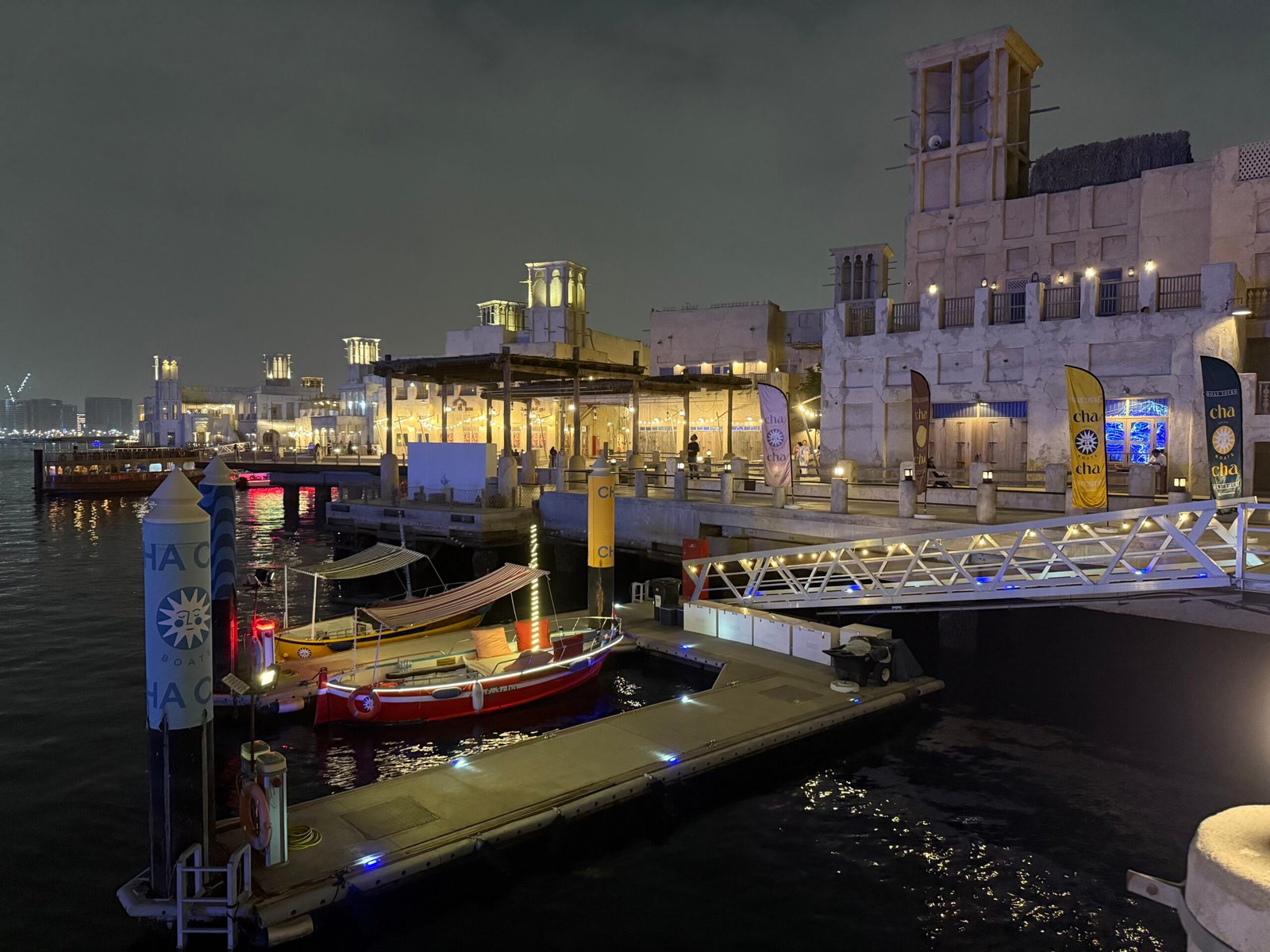
With that being said, in all honestly, I mostly found myself going back to the Dubai Old City, not only because I enjoyed its views better, but also because of its location. I could often combine an enjoyable meal in a night market on the other side of the Creek with an even more enjoyable late night walk to burn some of those calories thanks to the dhows that plied the route in between the two banks of the Creek here.
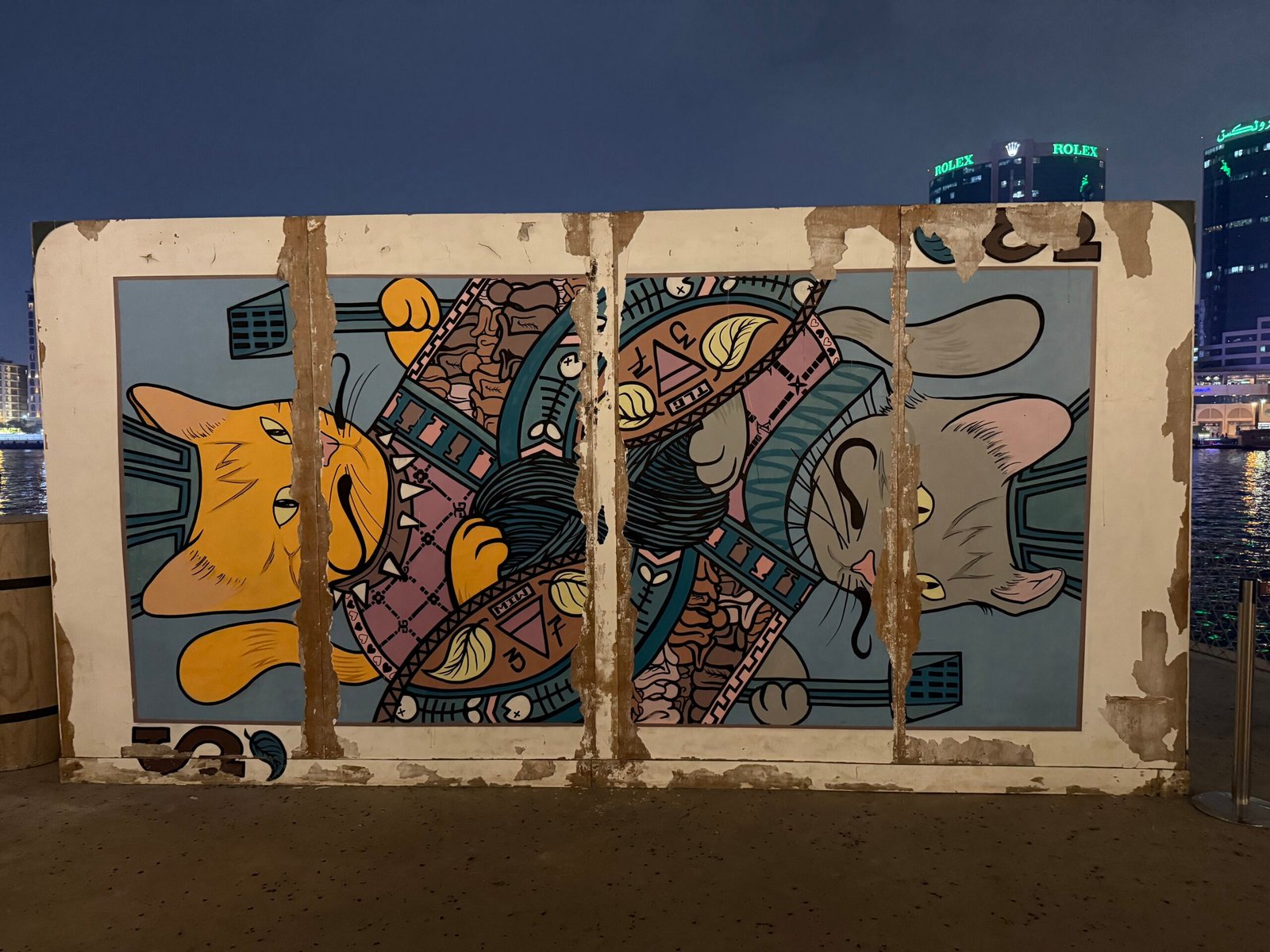
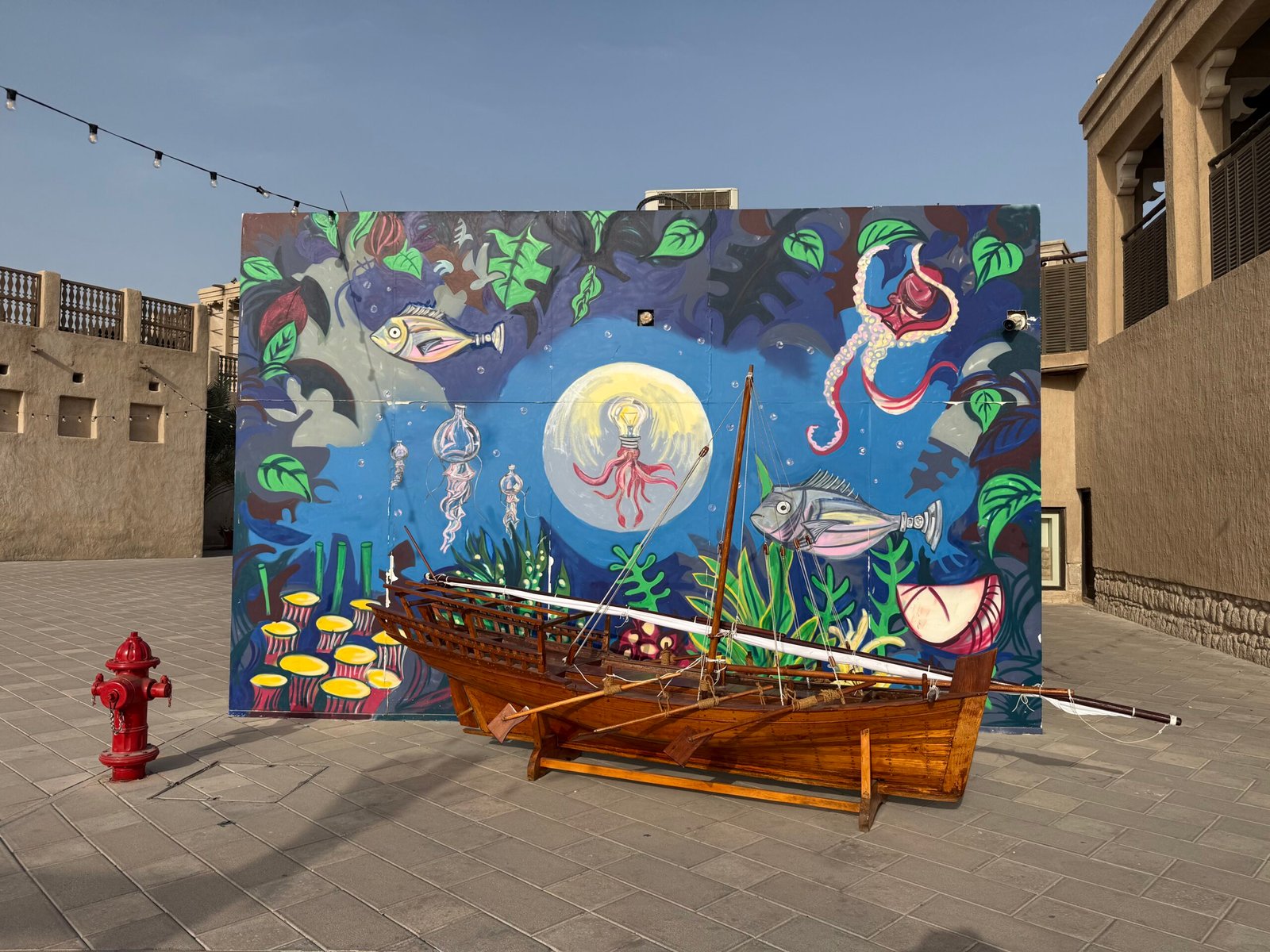
While this place is trying to mimic the old glamour of Dubai, it puts a modern spin on it as well. For example, some artistic displays like this livened up the place and made me explore all of its nooks and crannies. A similar tactic is used in the rapidly developing heritage district of Ajman, which I also enjoyed so dearly.
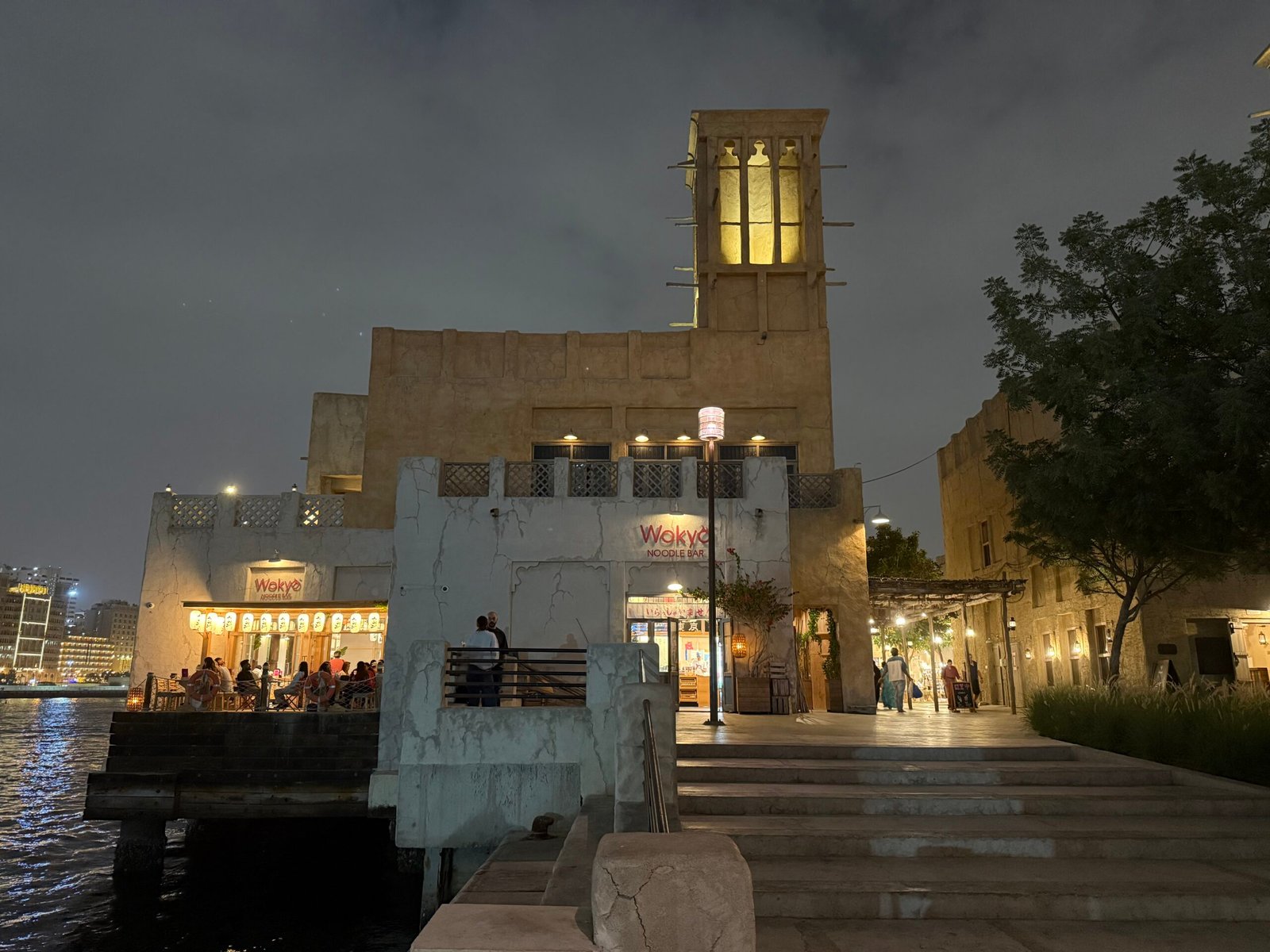
Moreover, you cannot really beat the lightning setup of this place, which really transforms the Old Dubai City into an outright magical landmark at night. I only really spent a single day here, as in, visiting it at daytime, and while it was fine, it was not anything special that would have me come back there regularly. Gladly, I first visited this spot at night, so I knew that it deserved numerous visits from the get go.
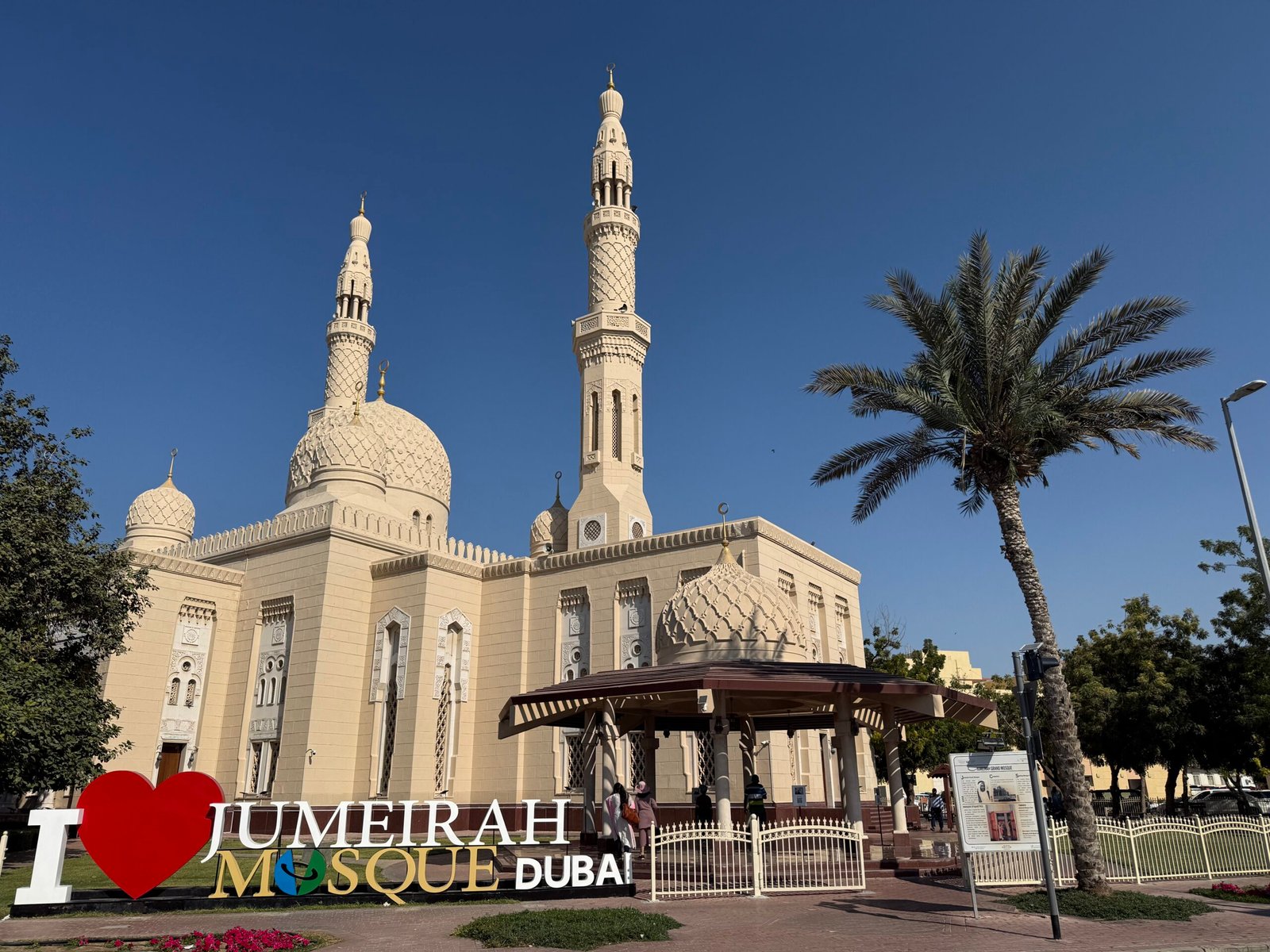
While most of the more historic sites that Dubai has to offer can be found on either side of the Creek, there are a few outliers elsewhere as well. For example, the Jumeirah Mosque was opened in 1979, and for the standards of this modern metropolis, it can be considered quite historic. It serves not only as a mosque today, but also as a religious and cultural center of sorts. As far as I could tell, they have some guided tours that teach non-Muslims about Islam, and possibly some other religions.
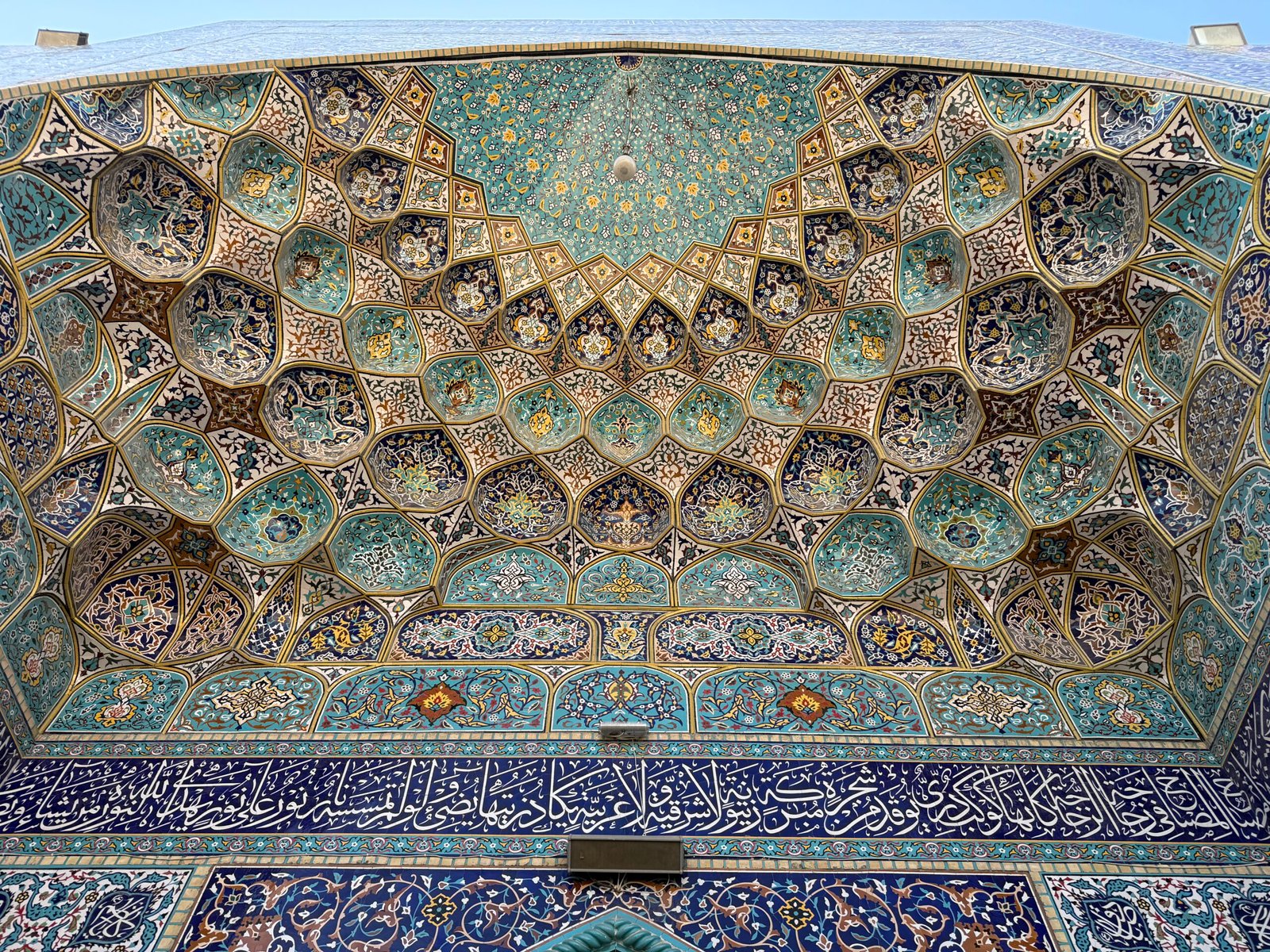
If you walk south for a few minutes from the Jumeirah Mosque, you will come across a sliver of Iran in Dubai. There is an Iranian Hospital here, with some colorful decorations all around it, and this Iranian Mosque, officially known as the Imam Hussein Mosque. When I visited it, there were some umbrellas on its courtyard which made it impossible for me to take a decent photo of it, alas, here goes my best attempt. It was similar in style to some of the mosques I saw in Uzbekistan, and in case you are interested in such colourful architecture, a quick visit to this area cannot hurt.
At the end, I cannot recommend a visit to the older parts of Dubai enough, as these spots are what makes Dubai special, giving it an identity that sets it apart from many other metropolises across the globe. You see, a mall in Istanbul may very well be in Dubai, or in Astana, or in Moscow, and the same goes for a shiny skyscraper. However, we certainly do not have those lovely windcatchers in Turkey, and they would be most out of place in Astana. While Dubai really does modern architecture justice, and is home to a plethora of modern sites that require a visit, you should nonetheless find the time to enjoy the heritage of the town as well, to reminiscent a time in which our world did not look as homogonized as it does today.