
Sarajevo is an enigma to me. Despite its small size and tiny population, this multilayered town offers far more than it meets the eye to those who are lucky enough to visit it. That is why, rather than writing a single guide for it, in the following four weeks, I will go over some of the more interesting aspects of this city chronologically. Once read together, these pieces should work as an extended guide for especially curious travellers. We will start our journey with a look into the Ottoman and Austro-Hungarian heritage in Sarajevo, of which there is plenty.
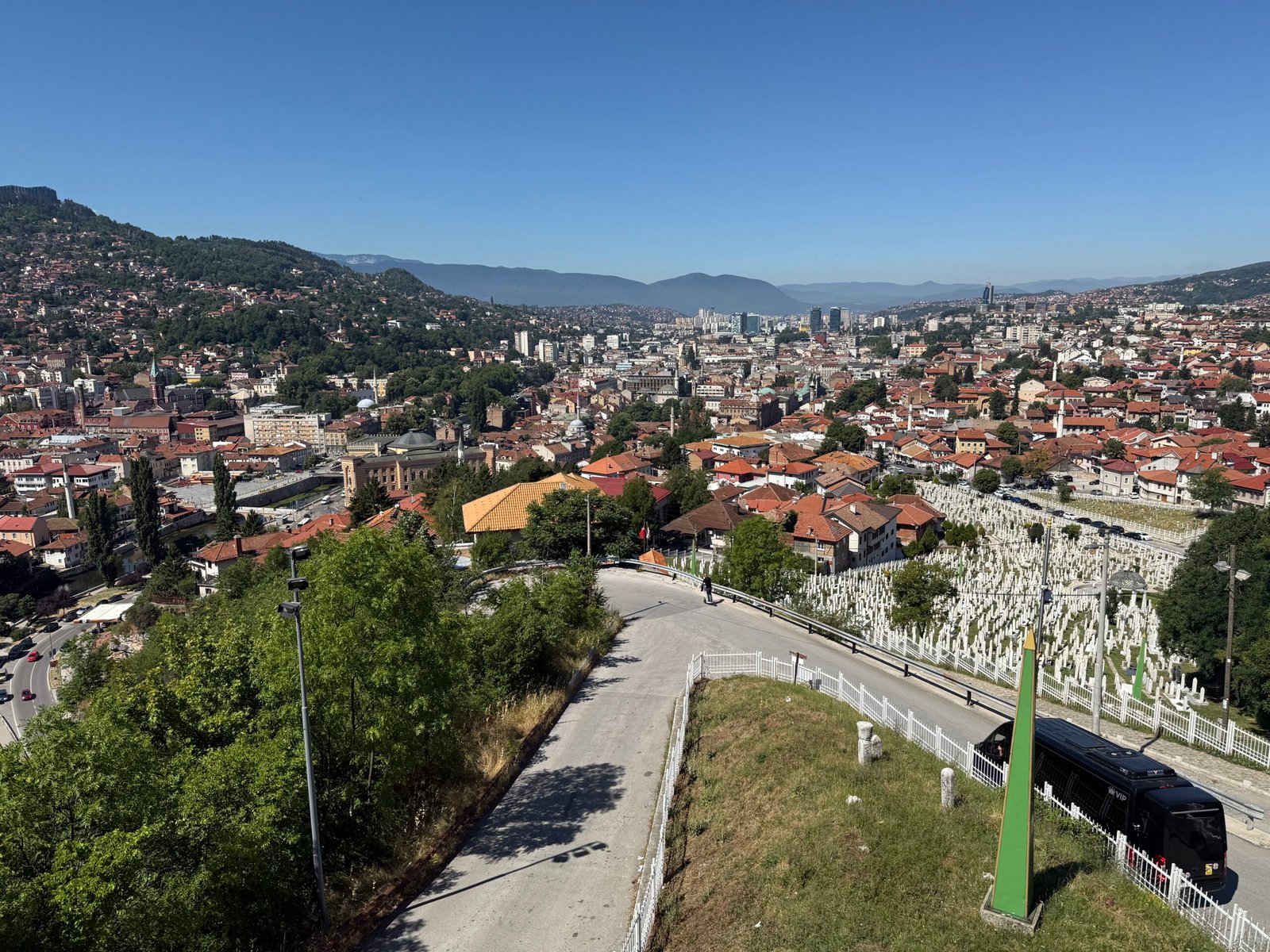
I think it is best to start one’s visit to Sarajevo by hiking up to the Yellow Fortress to take in the view of the city from atop. This will show you just how diverse the architecture in Sarajevo can be. You will notice many mosques, plenty of churches of all denominations, beautiful Ottoman houses, imposing Austrian state buildings, and a ton of quirky Yugoslav structures. You will also see an outright unreasonable number of cemeteries, once again belonging to people of all Abrahamic religions. You will come to realize that this is no simple town. Sarajevo is a melting pot.
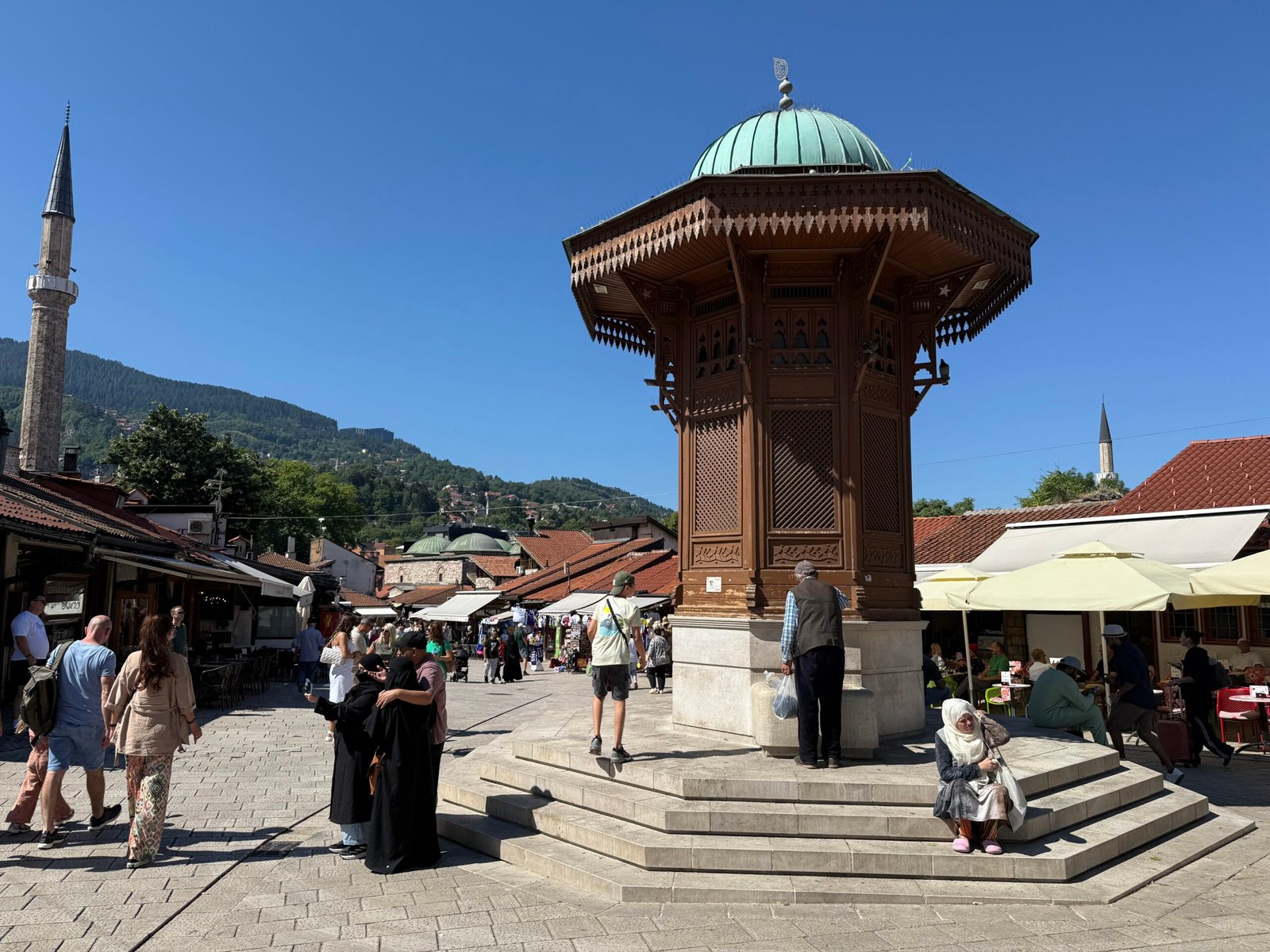
Being at the crossroads of empires, it was perhaps inevitable for Sarajevo to become the city that it is today. It was officially founded by the Ottoman Empire in 1461, though there were those that lived in the area for many millennia before that. Still, the Ottoman impact, especially at the old center of the town, is extremely visible to this day. For example, this Ottoman style fountain, known as Sebilj, functions as one of the landmarks of the town today. It is not the original one, since that one was burned down in late 19th century. Interestingly, it was the Austrians that rebuilt the fountain later on in 1891, remaining rather loyal to the original design.
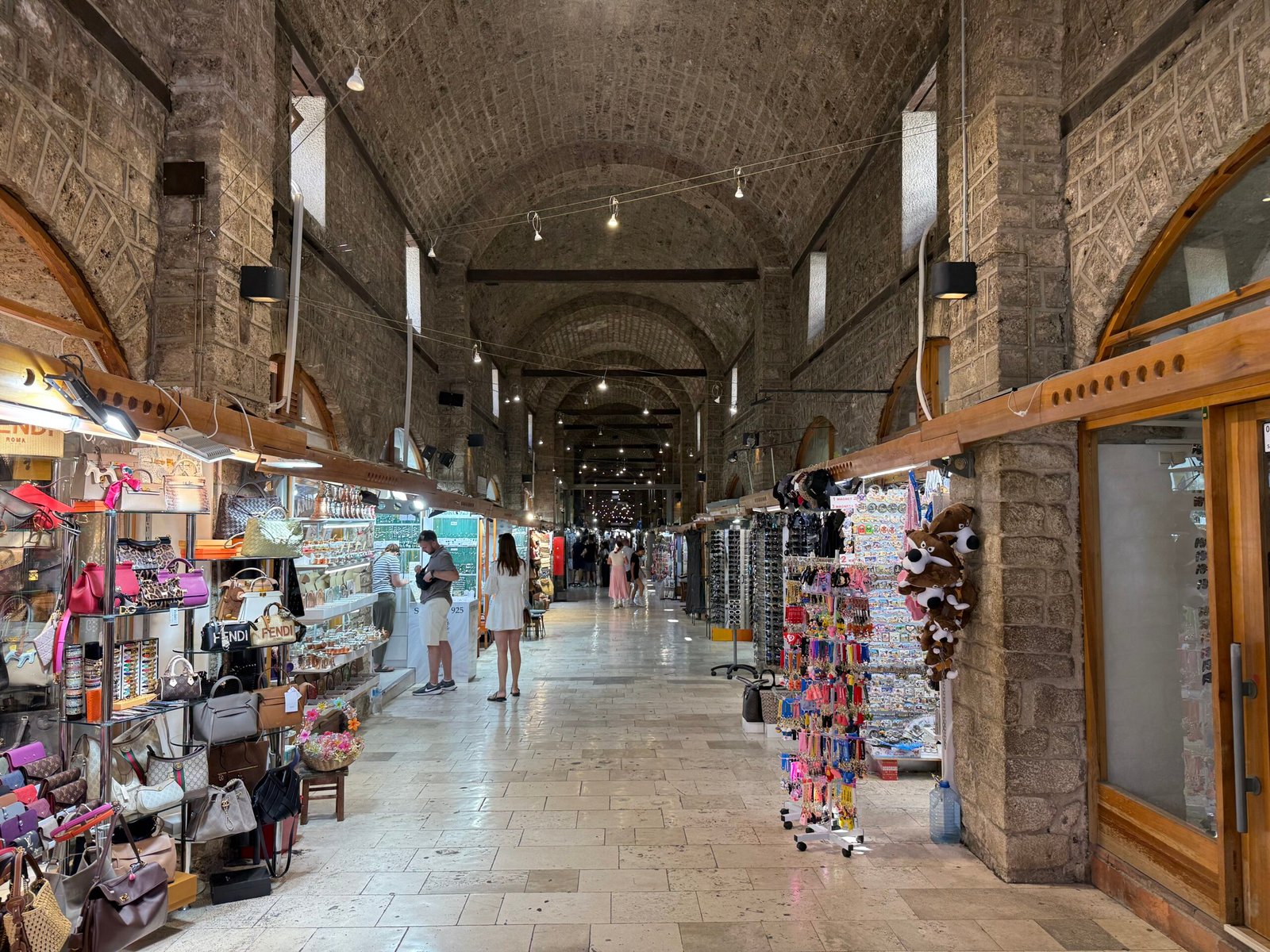
If you are familiar with the Grand Bazaar in Istanbul, you may be happy to hear that it is not the only one of its kind. Such closed bazaars were commonplace across the Ottoman Empire, and you can find a rather small one in Sarajevo’s old center as well, which is known as Baščaršija in the local language.
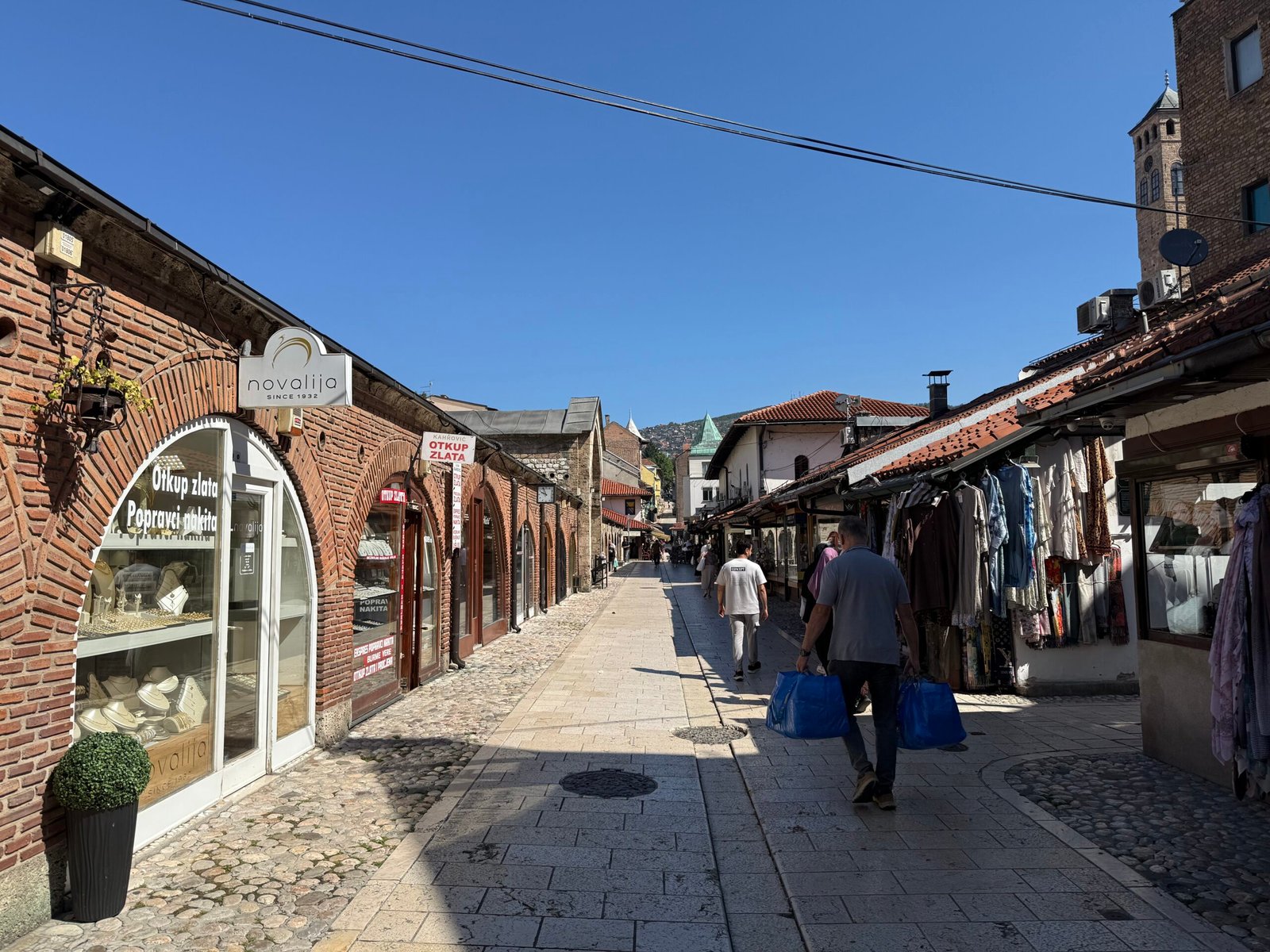
Visiting Baščaršija in July, I could not help but wish that the entire area was covered. Nevertheless, it is a joy to explore the tiny alleyways left and right and see the remnants of Ottoman and Austro-Hungarian Empires alike.
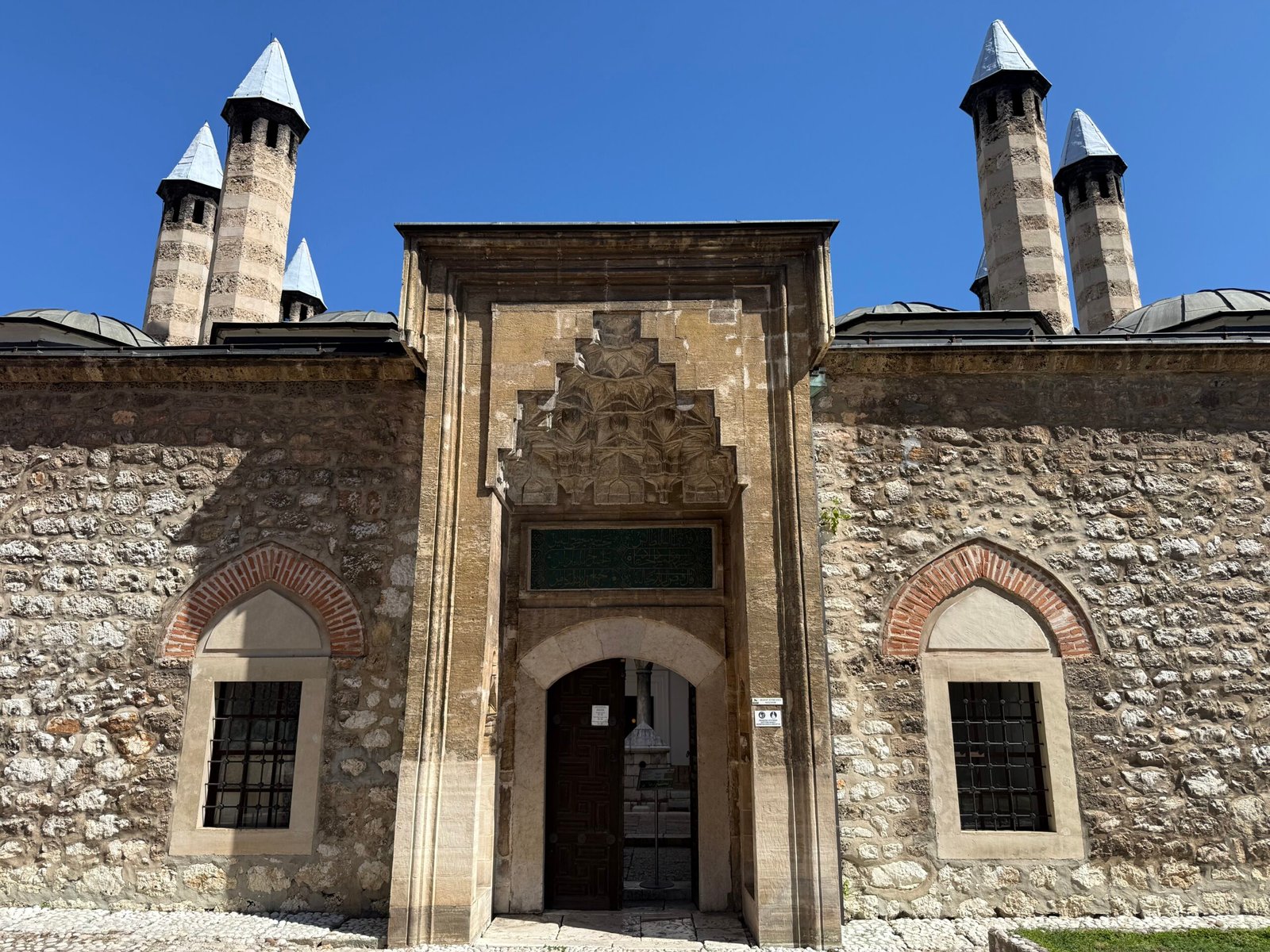
However, truthfully, the Ottoman stuff did not excite me all that much. For example, most tourists seem to be most interested in structures like this one, the Madrasa of Gazi Husrev-beg. Unfortunately, as a Turk, I have seen my fair share of madrasas, caravansaries, mosques, bazaars, and so on. If you noticed a severe lack of these landmarks in my writings so far, this is the reason for that. I do go out of my way to do and experience more during my travels, so that these articles can be as extensive as possible. However, I will not force myself to spend time and money in doing stuff I am absolutely not interested in.
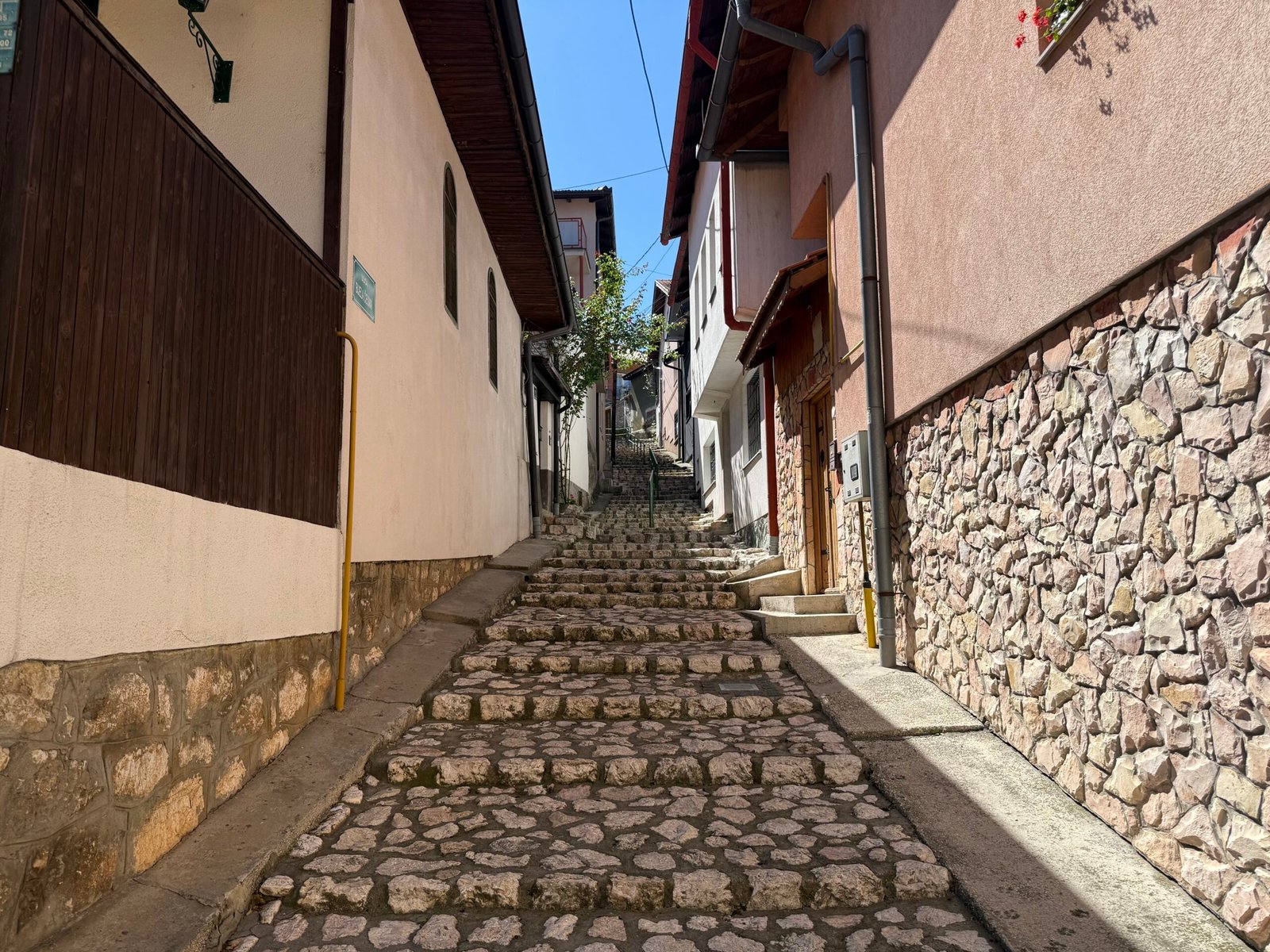
Besides, the Wondering Voyager was never meant to be just any other travel blog that pretends to share a comprehensive list of things to do and eat in any single destination. It aims to show the lesser seen parts of the countries that I end up visiting instead. Wandering through seldom visited alleyways like this is much more exhilarating to me than visiting the busy mosques in the city center. If you are a long time reader of mine, I suspect that is the case for you as well.
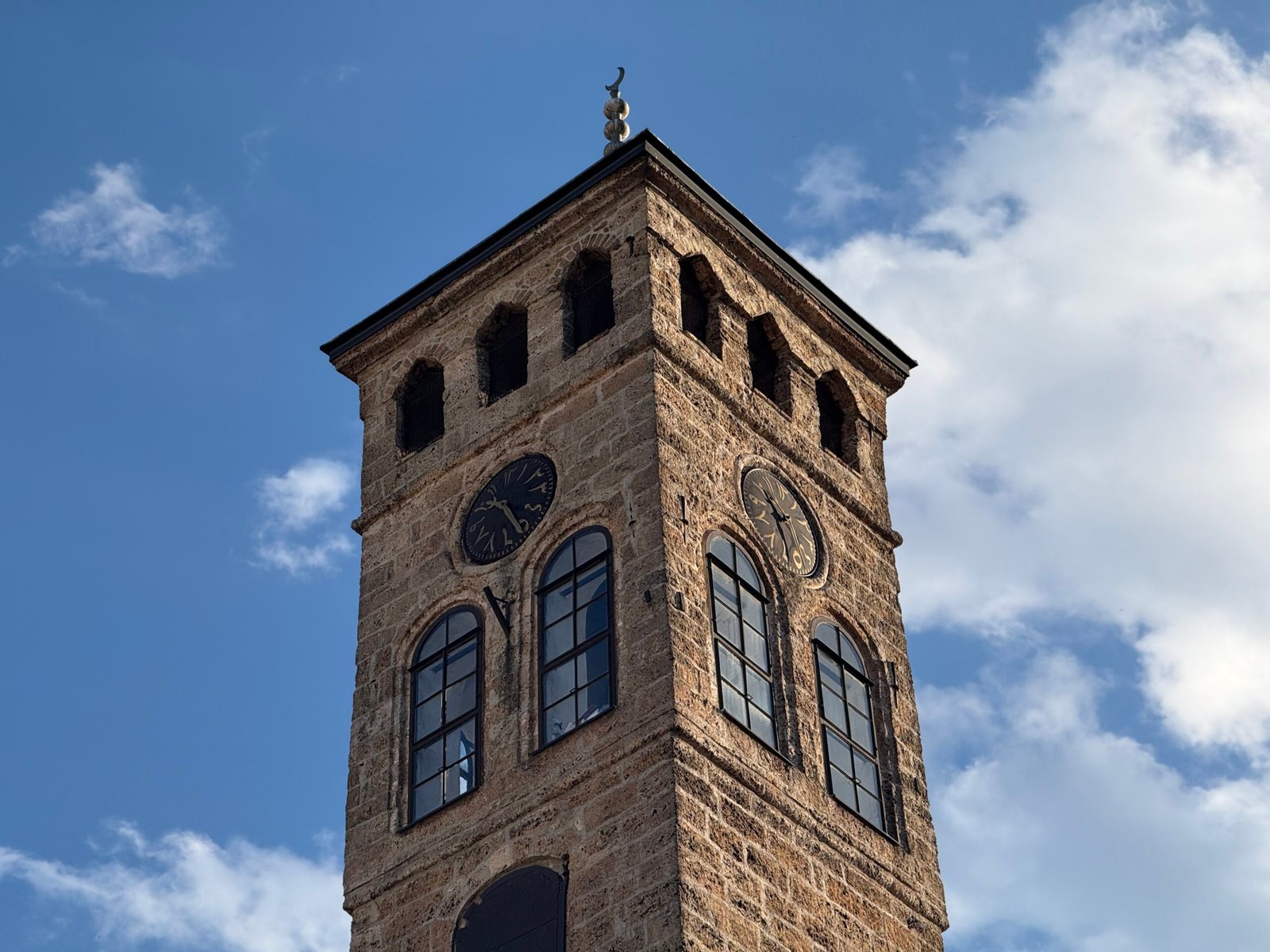
Regardless, it does not hurt to check out some of the landmarks once in a while. For example, you can enjoy some decent water from the Sebilj, and this Ottoman-era lunar clock near the Gazi Husrev-beg Mosque offers a much more interesting sight to see than that much more popular mosque. You can see the Arabic numerals on display, which is quite unique to say the least. That is unless you were born in the Arab World, I guess.
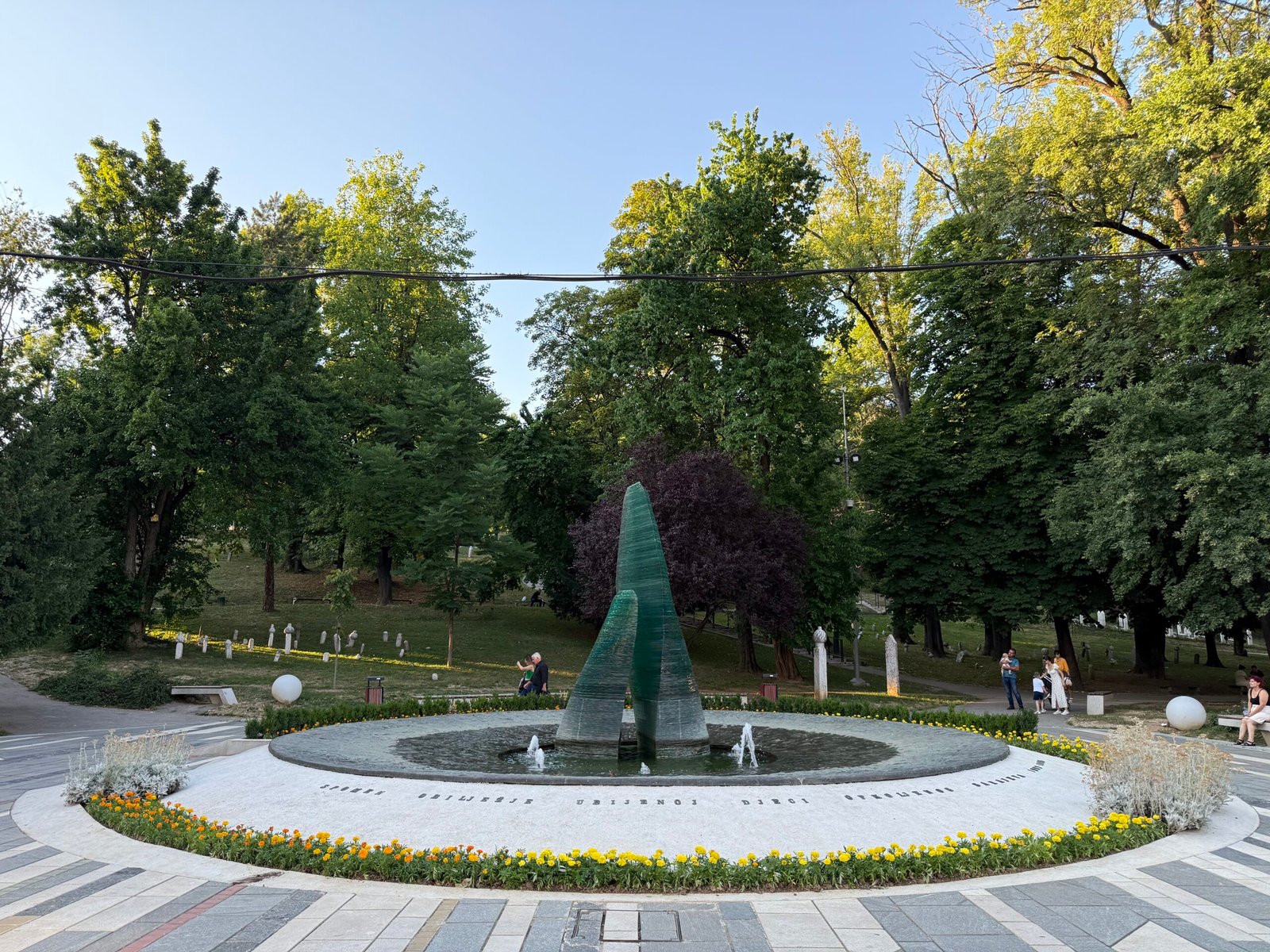
There is something even more interesting on the outskirts of the centre, in the so-called Big Park, which just happens to be next to the Small Park. Ironically, none of these parks are particularly big or small, but that is not why we are here anyways. This memorial dedicated to the causalities of the war that took place in the 1990s is also not why we are here.
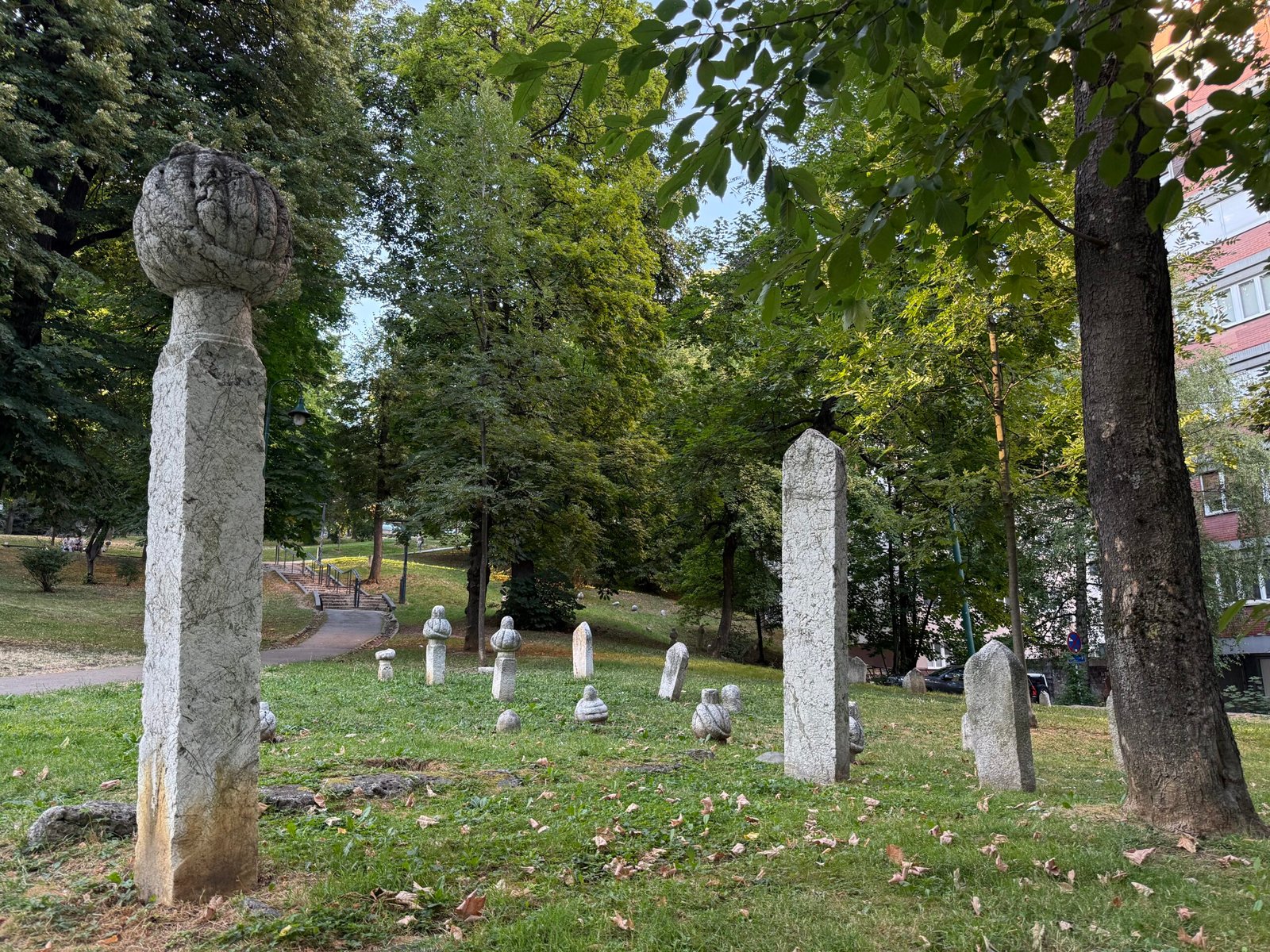
We are here to look at these Ottoman-era tombs that were partially left alone as the Austro-Hungarian Empire decided to build a ‘big’ park in the middle of the town that they annexed recently. As far as I am told there used to be a much bigger Muslim cemetery here, and Austrians built a park on top of that, keeping only some of the tombstones intact. If you are the superstitious kind, that alone may be a reason to stay away from (or check out) this fine park.
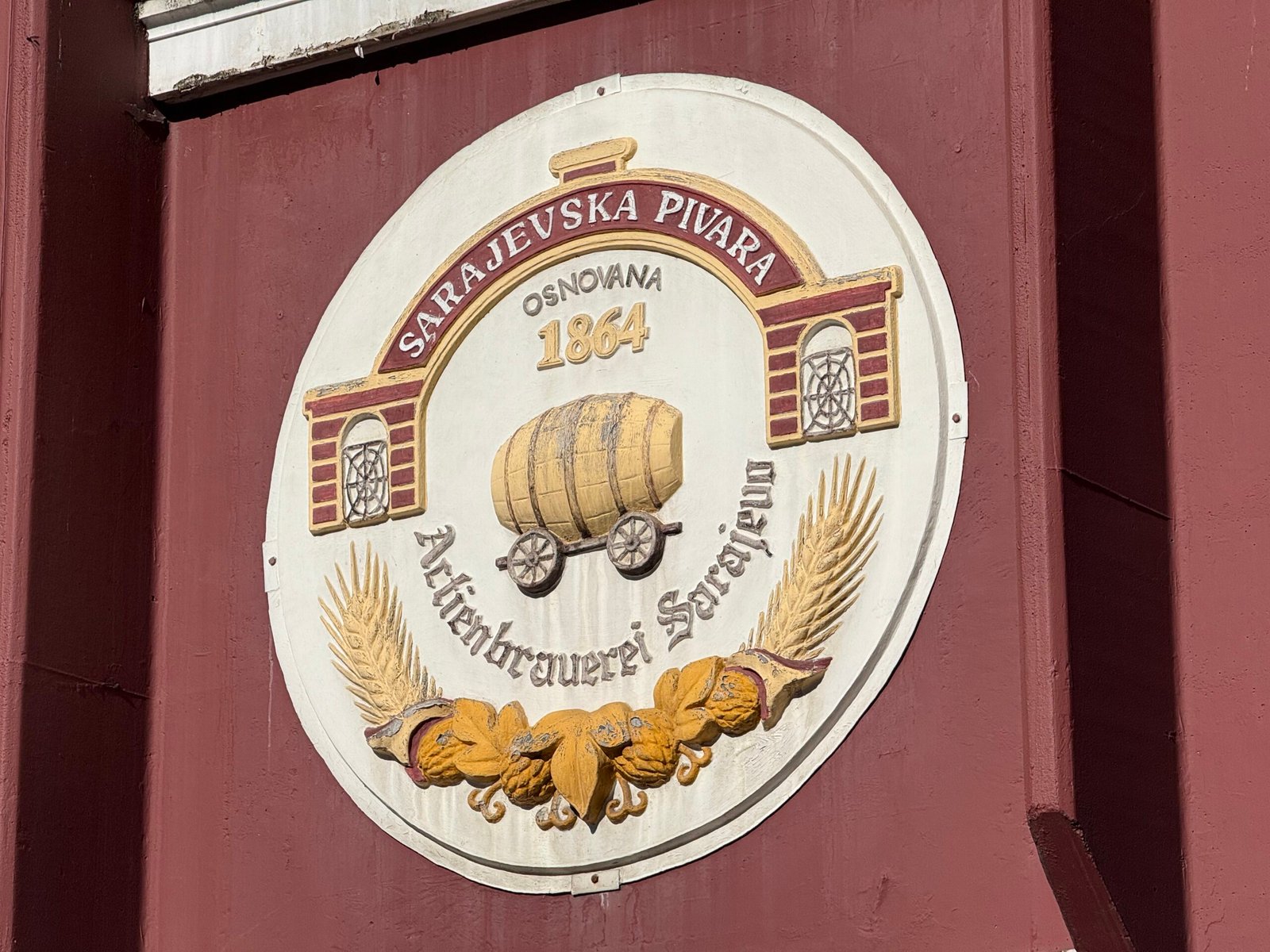
Of course, Austrians build more than just a few parks in Sarajevo. For example, while the Sarajevo Brewery was founded in 1864 when the Ottoman dynasty still ruled over Bosnia, the gorgeous production site that functions to this date was built in 1881, after the Austrian annexation of Sarajevo in 1878.
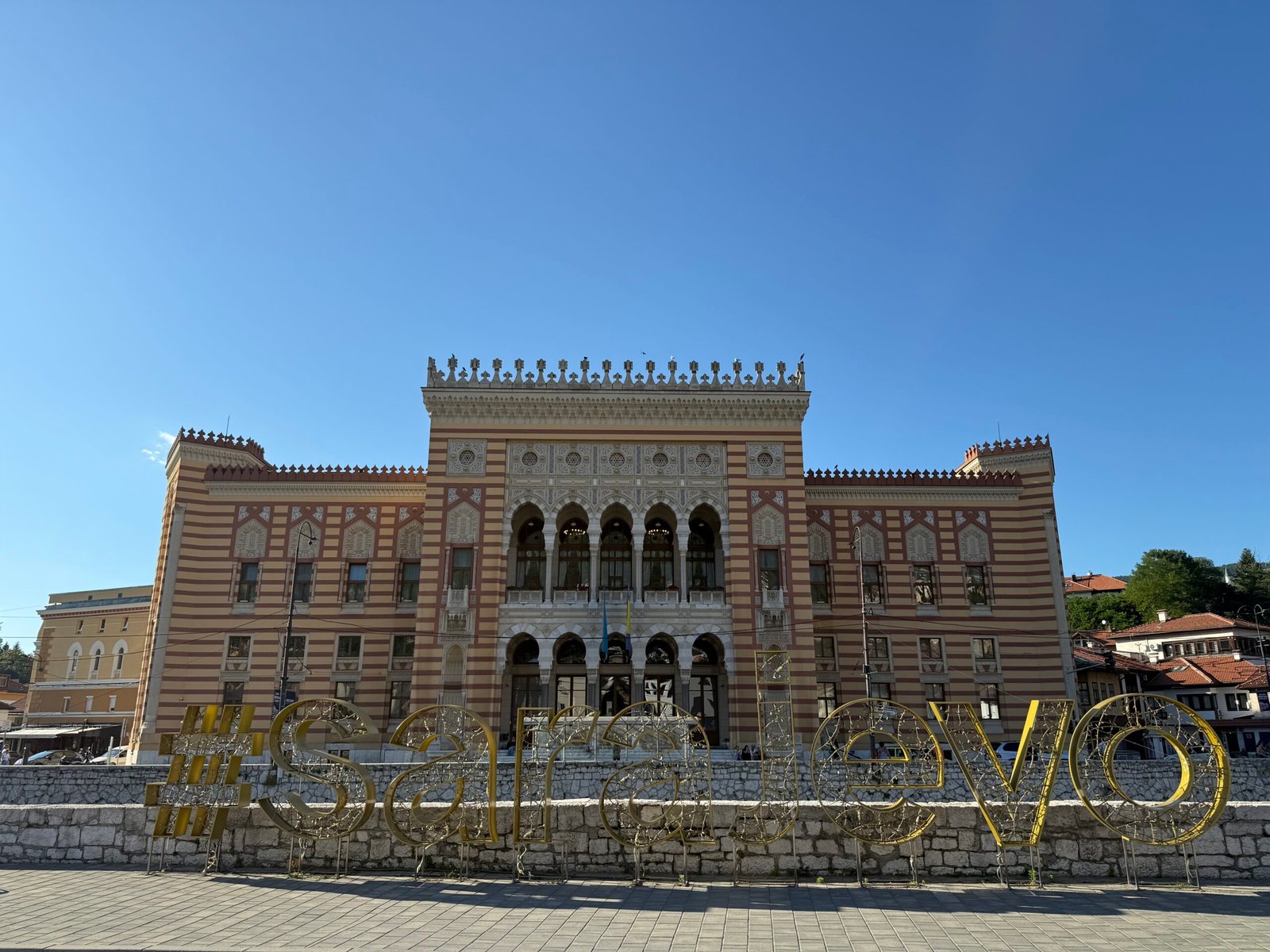
The rather unique looking Sarajevo City Hall was also built under the Austro-Hungarian rule, in 1896 to be exact. As I was told, it was built in a Moorish Revival style, which does not necessarily scream ‘Austrian’ to a layman like me, but that is just me. It just happens to be a reconstruction as well since the original was destroyed during the hostilities in 1990s.
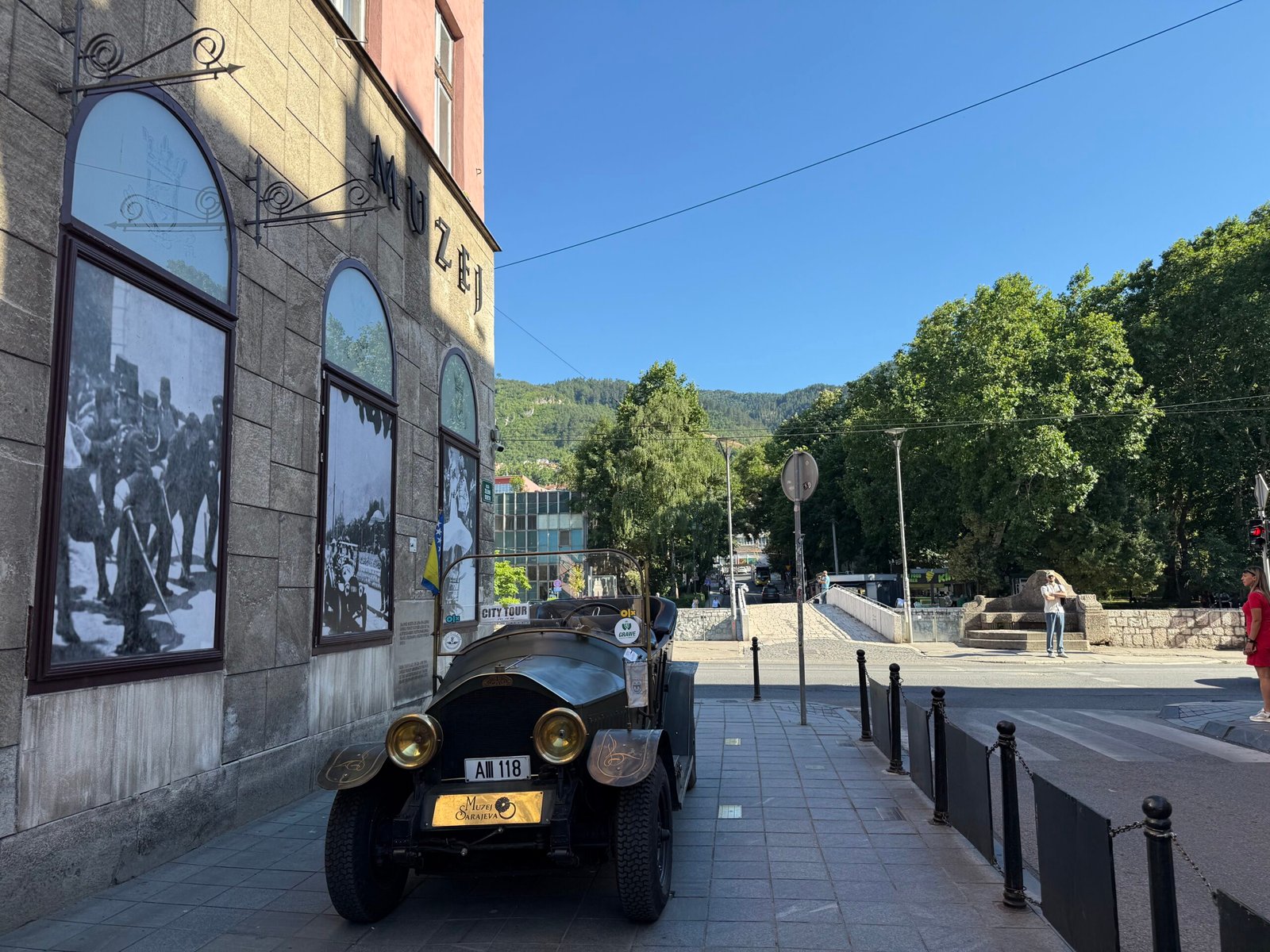
In fact, violence played a significant role in the history of Sarajevo for a rather long time by now. If you actually listened to your history teacher, you may remember this town from a particularly bloody part of human history. An assassination that took place in this exact vicinity was the de facto reason that started the First World War, though frankly, something else would have been the scapegoat for that bloodbath if this assassination failed.
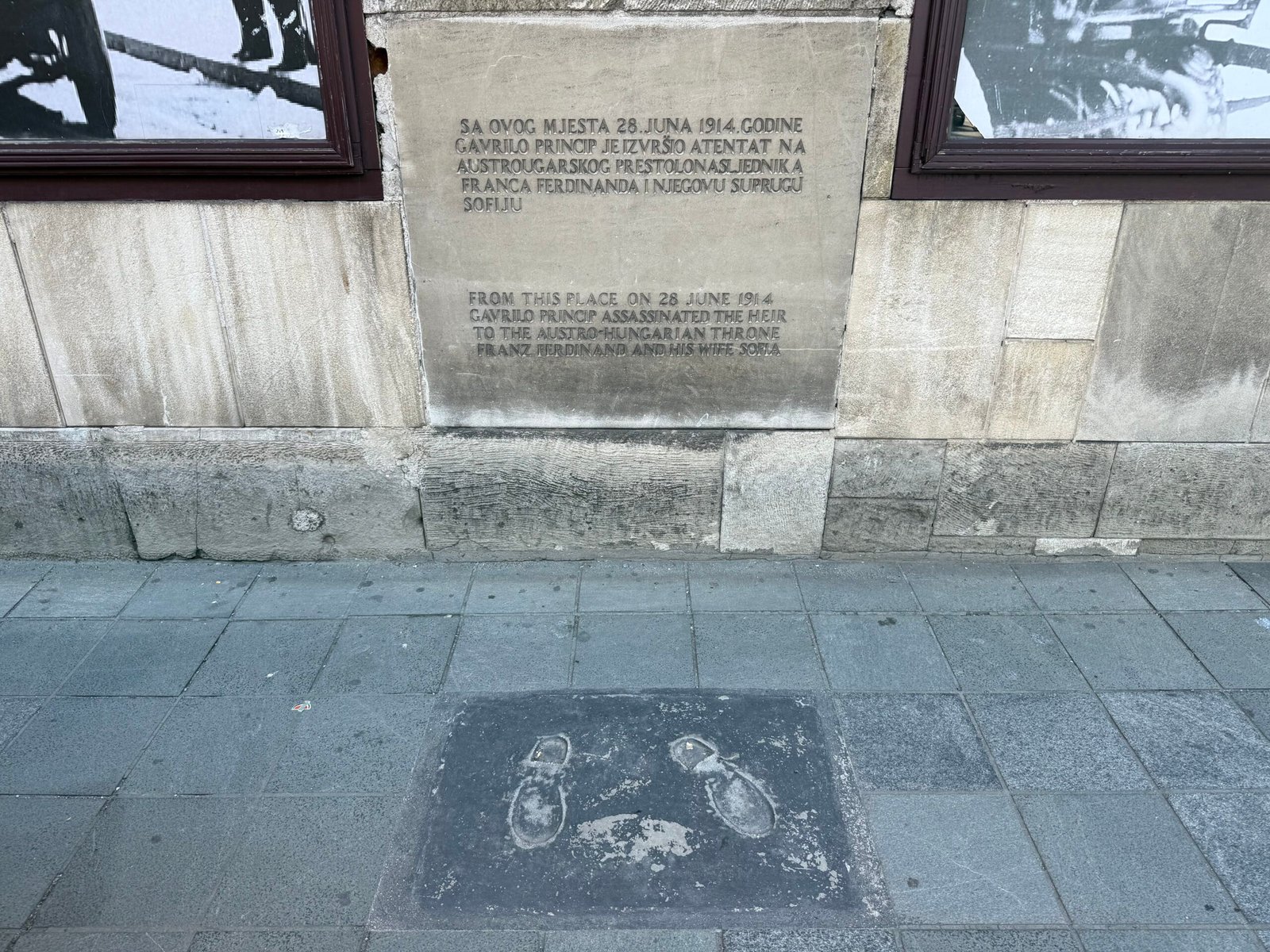
To be more specific, this was where a particularly nationalist Serbian teenager, Gavrilo Princip, shot Franz Ferdinand and his wife, the couple that would have become the rulers of the Austro-Hungarian Empire. This was used as an excuse by the Austro-Hungarian Empire to invade the Kingdom of Serbia, which just happened to enjoy the protection of the Russian Tsardom. The rest is history.
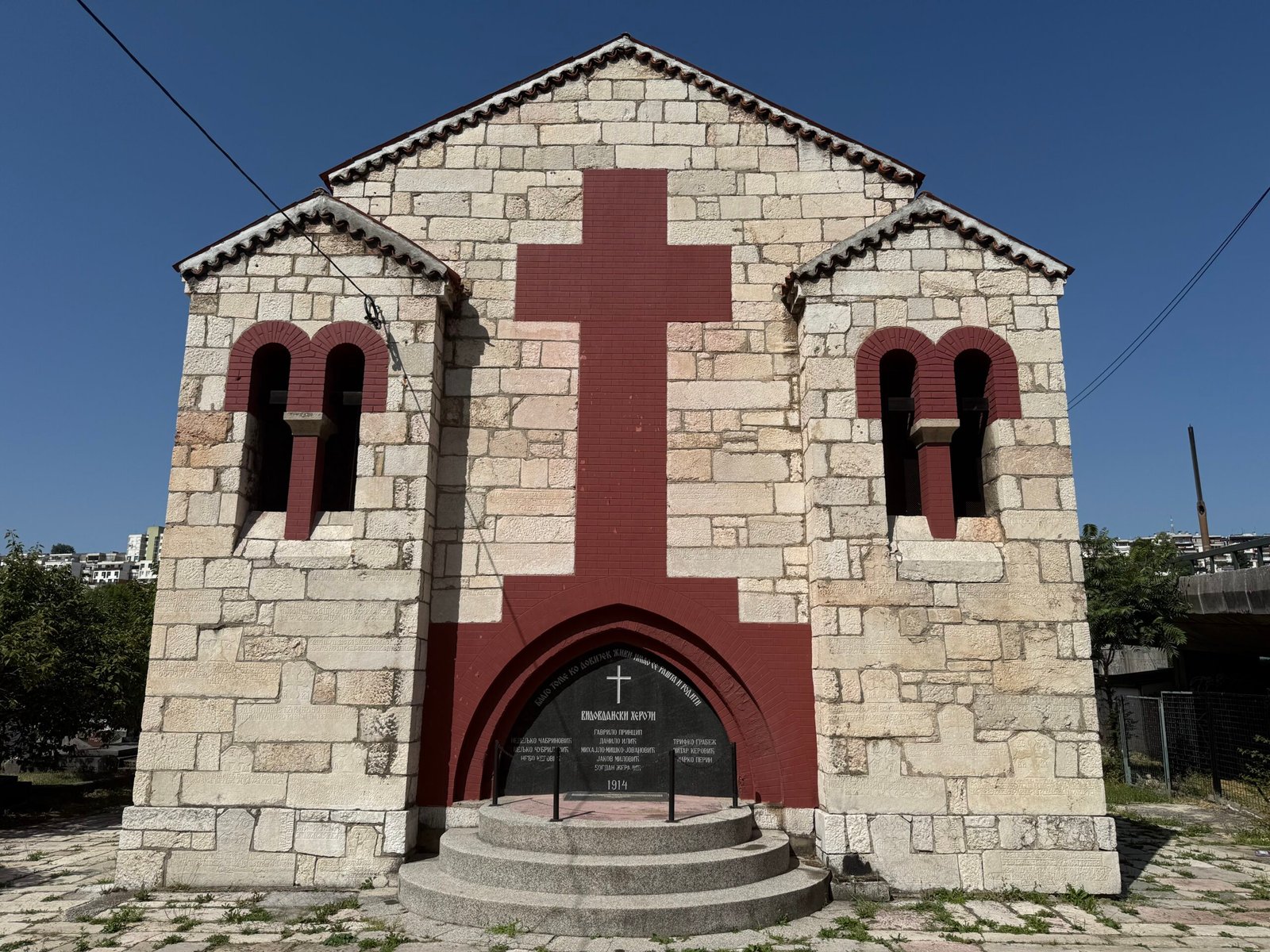
On paper, Gavrilo Princip’s actions led to the downfall of the Austro-Hungarian, German, Ottoman, and Russian Empires, and he himself died of tuberculosis in prison as well. In reality, a war of this magnitude was brewing for a while, for economic and political reasons that are too deep to tackle in a short article like this.
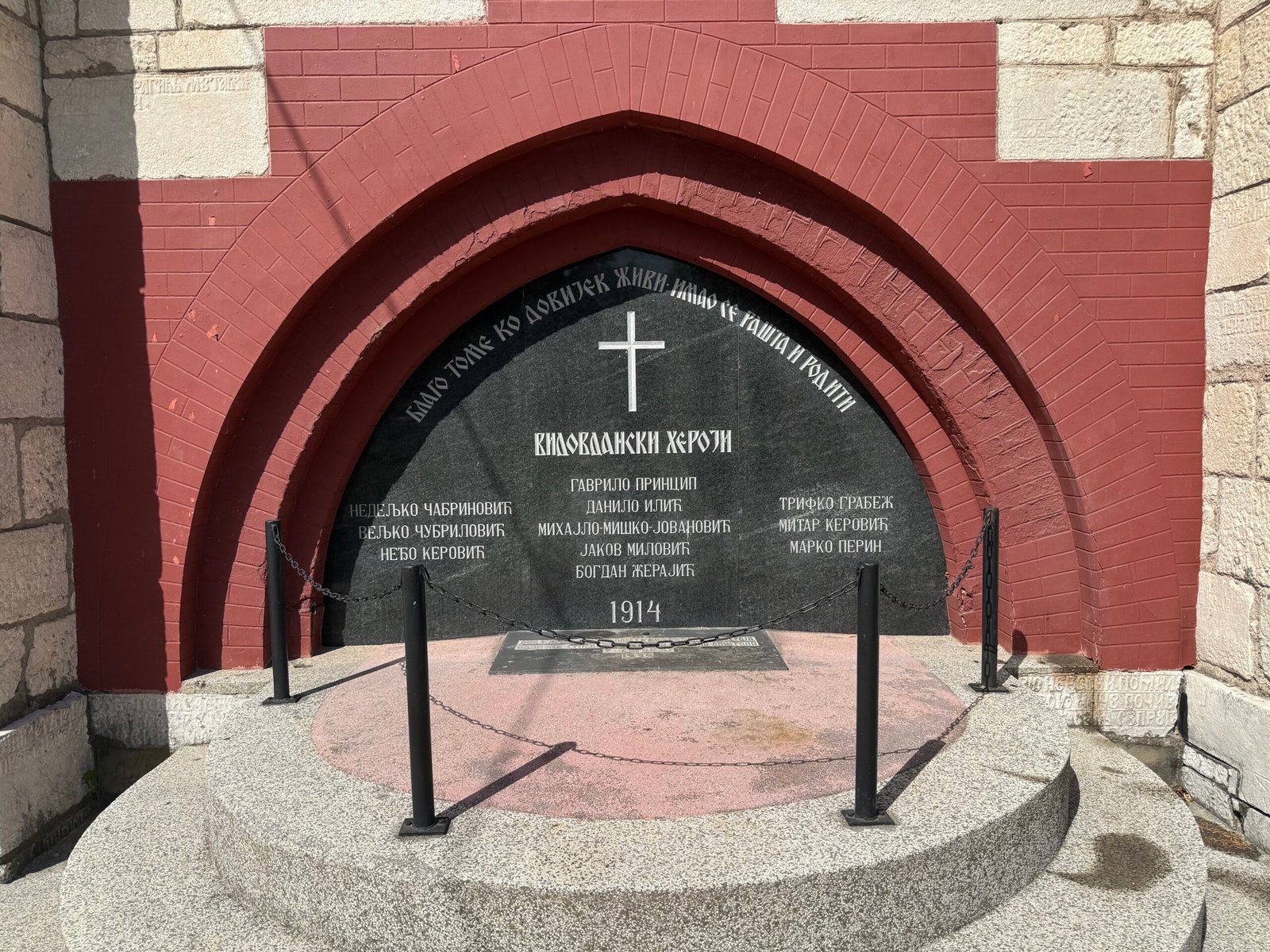
Perhaps unsurprisingly, Gavrilo Princip is revered by Serbians to this day as a national hero. In fact, one can find his burial place, where he is laid to rest alongside many other ‘Serbian Heroes,’ in a small chapel known as Kapela Vidovdanskih Heroja in Sarajevo. A good friend of mine did mention that he is a figure that is beloved across the religious division that plagues Bosnia and Herzegovina today, that is to say, both Bosniaks and Orthodox Serbs seem to like Gavrilo Princip and see him as a heroic figure to this day.
As you can already see, Sarajevo is a multilayered city with a complicated history. There is simply too much to unpack here in one short article. Next week, we will cover the Yugoslav history of the city, and see just what sort of a lasting impact it had on the Bosnian capital today.