
The aftermath of the First World War was not particularly exhilarating for the people of the Balkan peninsula. While nationalism was all the rage in the post-1918 world, one cannot find a ton of nation states in this part of the globe. Instead, what we do find is the Kingdom of Serbs, Croats and Slovenes. This was a mouthful, but thankfully King Alexander I changed the name of the country to Kingdom of Yugoslavia in 1929. Now this should be more familiar for all.
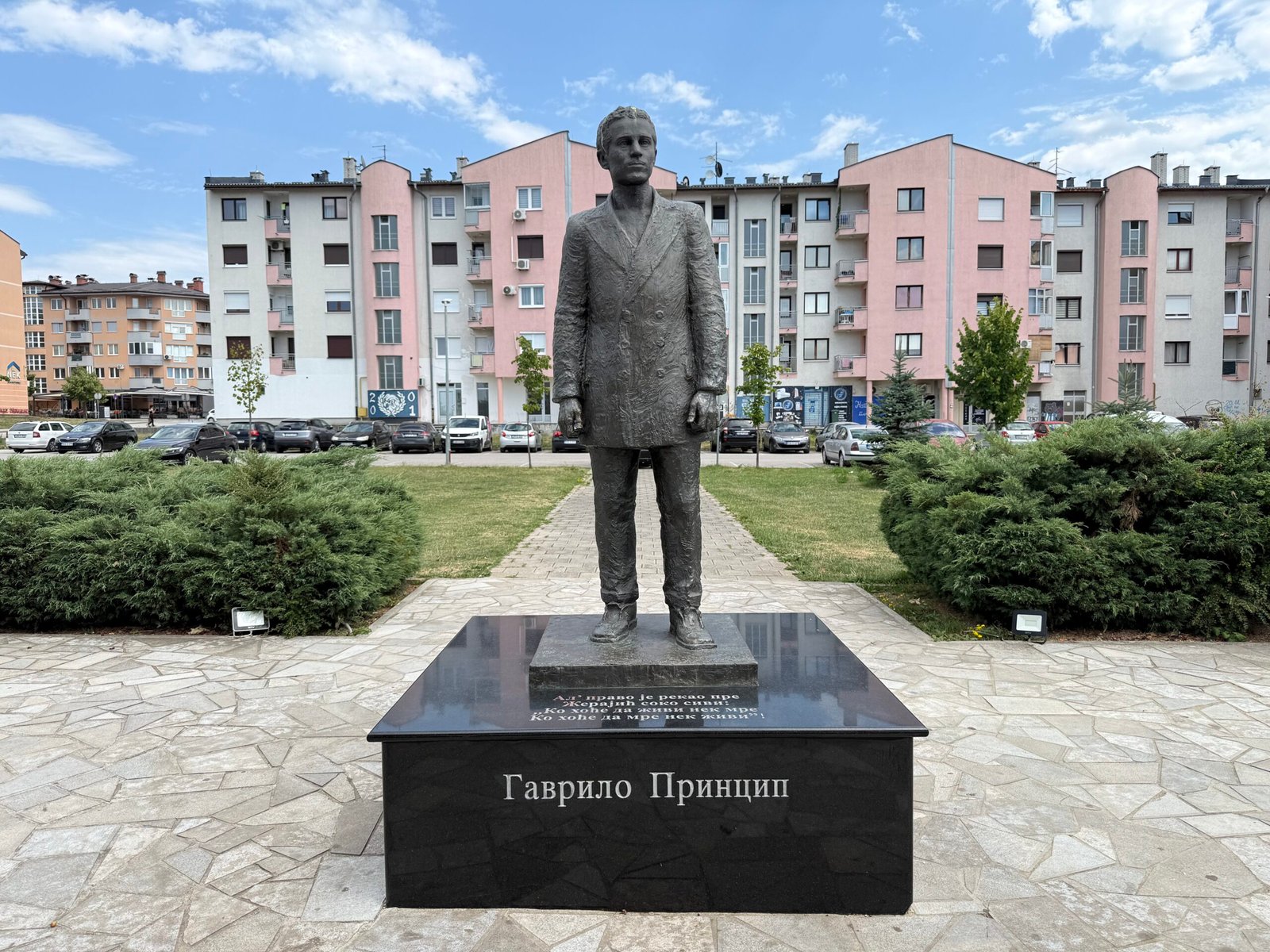
Unfortunately, in this article, I will not be covering the monarchist period of the region. The Kingdom of Yugoslavia, however interesting of a polity it may be, is not something I am knowledgeable about in the slightest. Besides, it did not seem to leave lasting marks on the city itself, which is still filled to the brim with memorials dedicated to pre-Yugoslav figures, such as Gavrilo Princip.
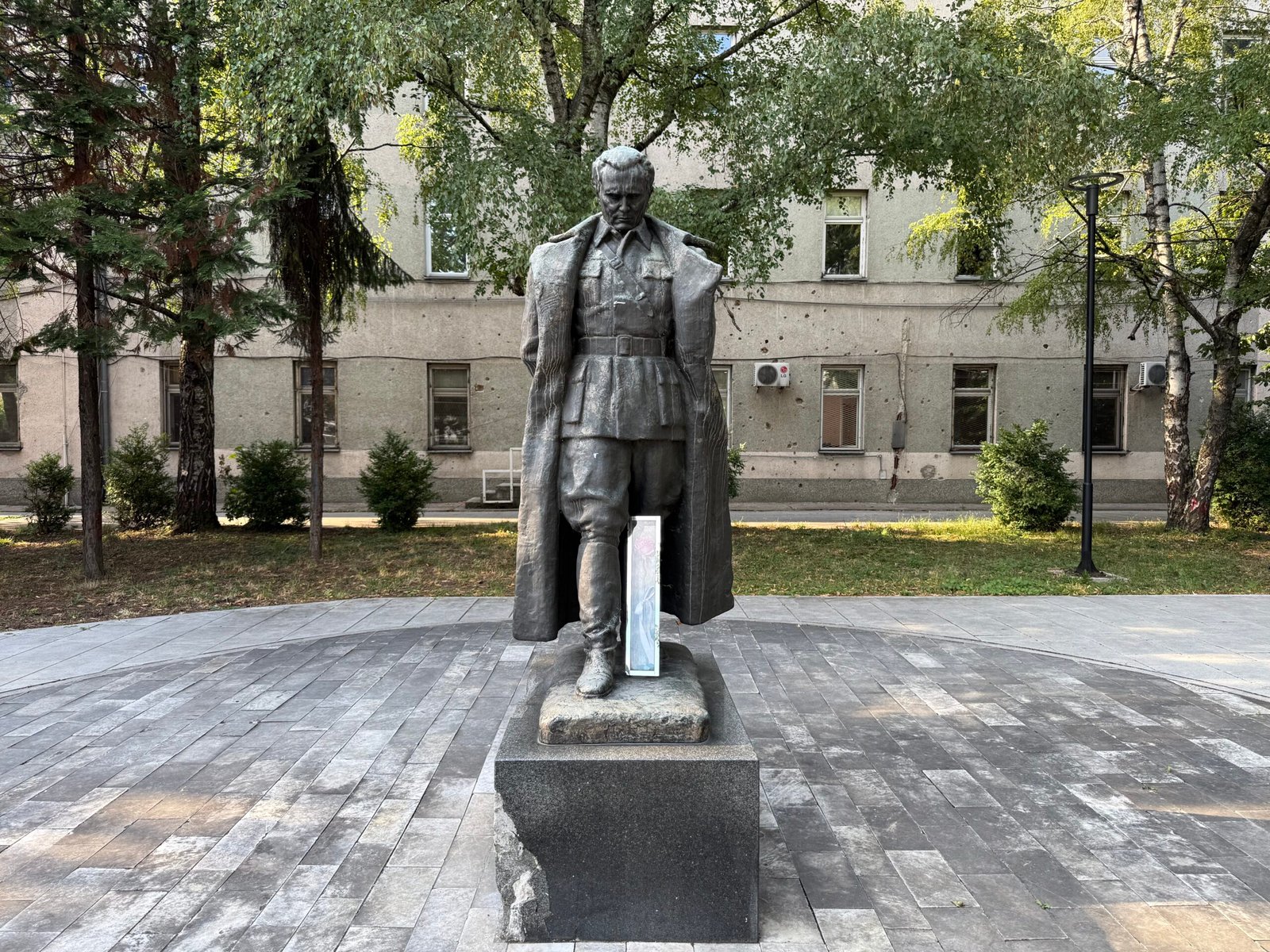
With that being said, it is not only those that came before the Kingdom of Yugoslavia that are worth a spot in public memory today. In fact, if anything, the period that came right after the end of the Kingdom happened to generate the majority of cultural heritage in the Bosnian capital. Marshall Tito remains the name of one of the more important streets in town, and his statue stands proudly in the campus of Sarajevo University, albeit it has been damaged alongside with the university buildings that surround it, during the recent Bosnian War.
This continued respect for figures like Tito is likely because, in many ways, the Socialist Yugoslavia was the only recent period in the history of the region when there was a resemblance of stability. Local partisans, under the leadership of Tito, defeated the invading Nazi forces by 1945 and then went on to create a socialist state in the heart of the Balkan peninsula. This polity ended up becoming one of the leading powers of the so called Third World, staying away from the power struggle in between the capitalist first world, and the Moscow-dominated Communist world at large. This resulted in Yugoslavia developing in its own unique was, being a socialist nation with its own characteristics. It also meant that despite being a socialist country, Yugoslavia ended up hosting the Winter Olympics in 1984. Frankly, Soviet Union did host the 1980 Summer Olympics four years earlier, so this was not unthinkable, alas, it was still a novelty for such international events to take place outside of the so called “free world.”
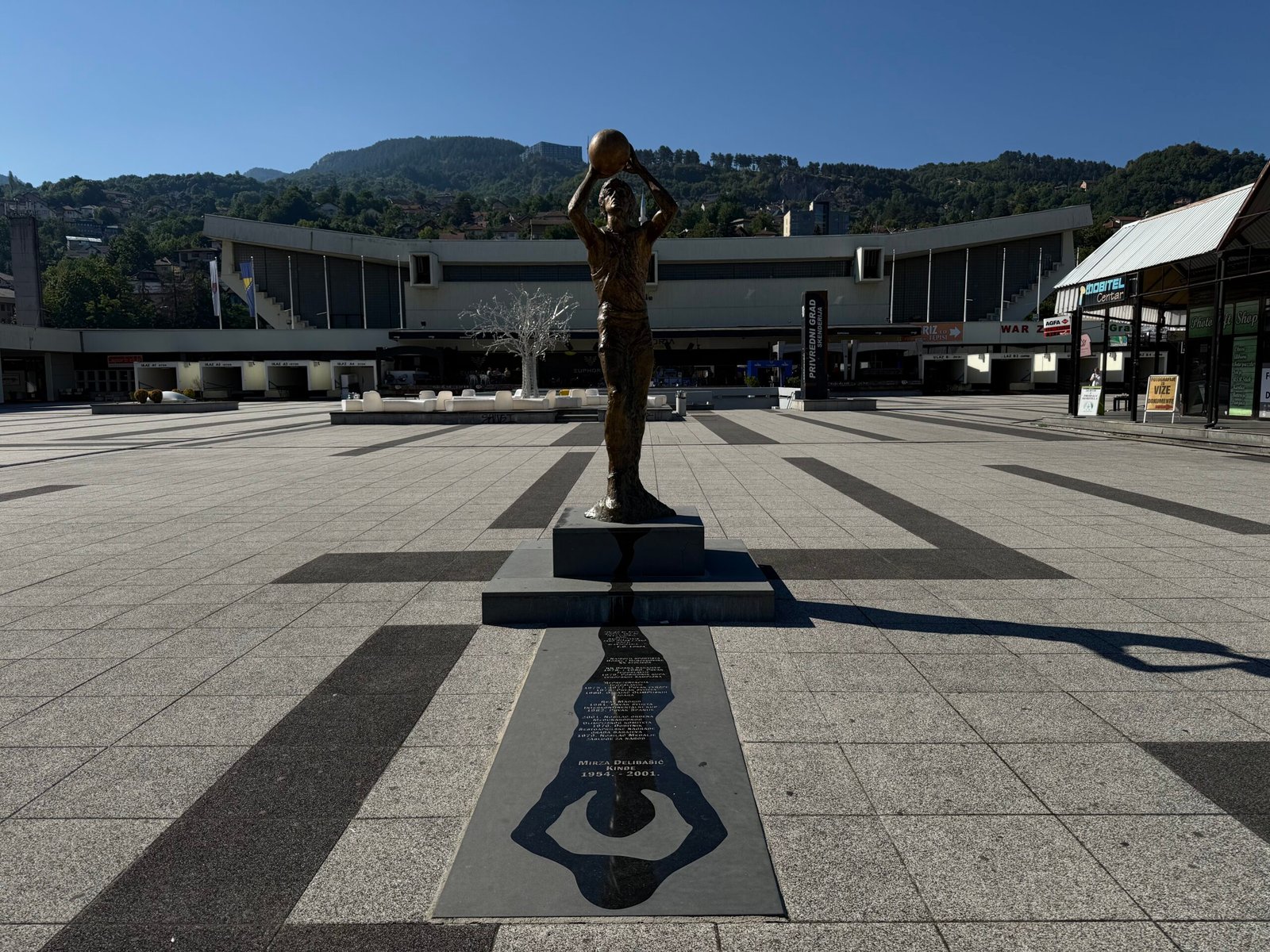
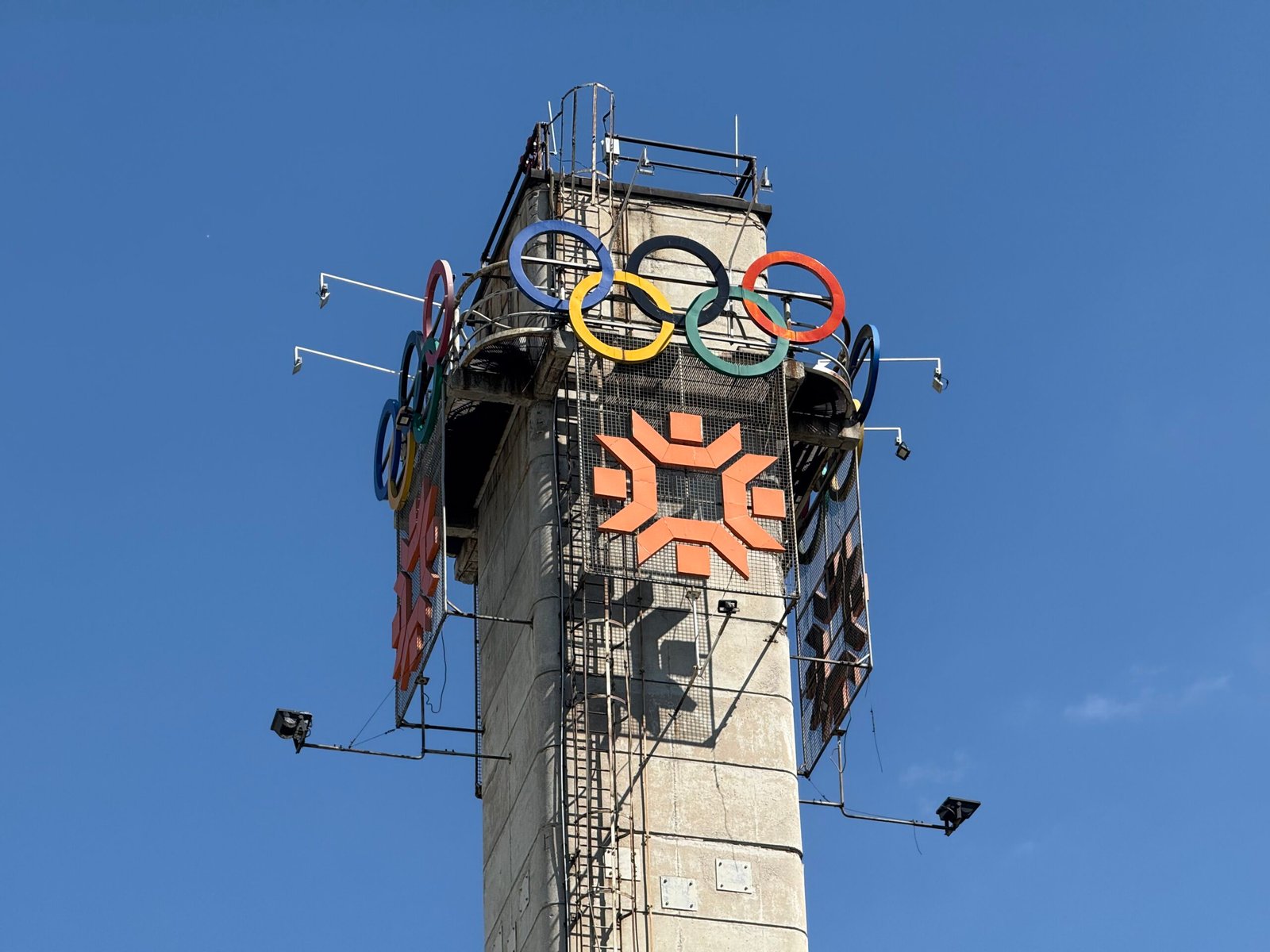
Sarajevo, due to its fitting geography, was chosen to host the games, which is why, in a manner of speaking, it is stuck in 1984 to this day. You see, Sarajevo is tiny. While at one point it had up to half a million people living there, today the population hovers around half of that. Huge chunks of the city were designed with the 1984 Olympics in mind, that is to say designed for a surge in visitors, and it shows. You will find stadiums like the Skanderja Olympic Center, which just seems out of proportion for a city of this size. You will also find a ton of Olympic Rings and depictions of the local Olympic mascot, Vučko, scattered around town. In many cases, these will be damaged by the recent war, though they still stand to this day.
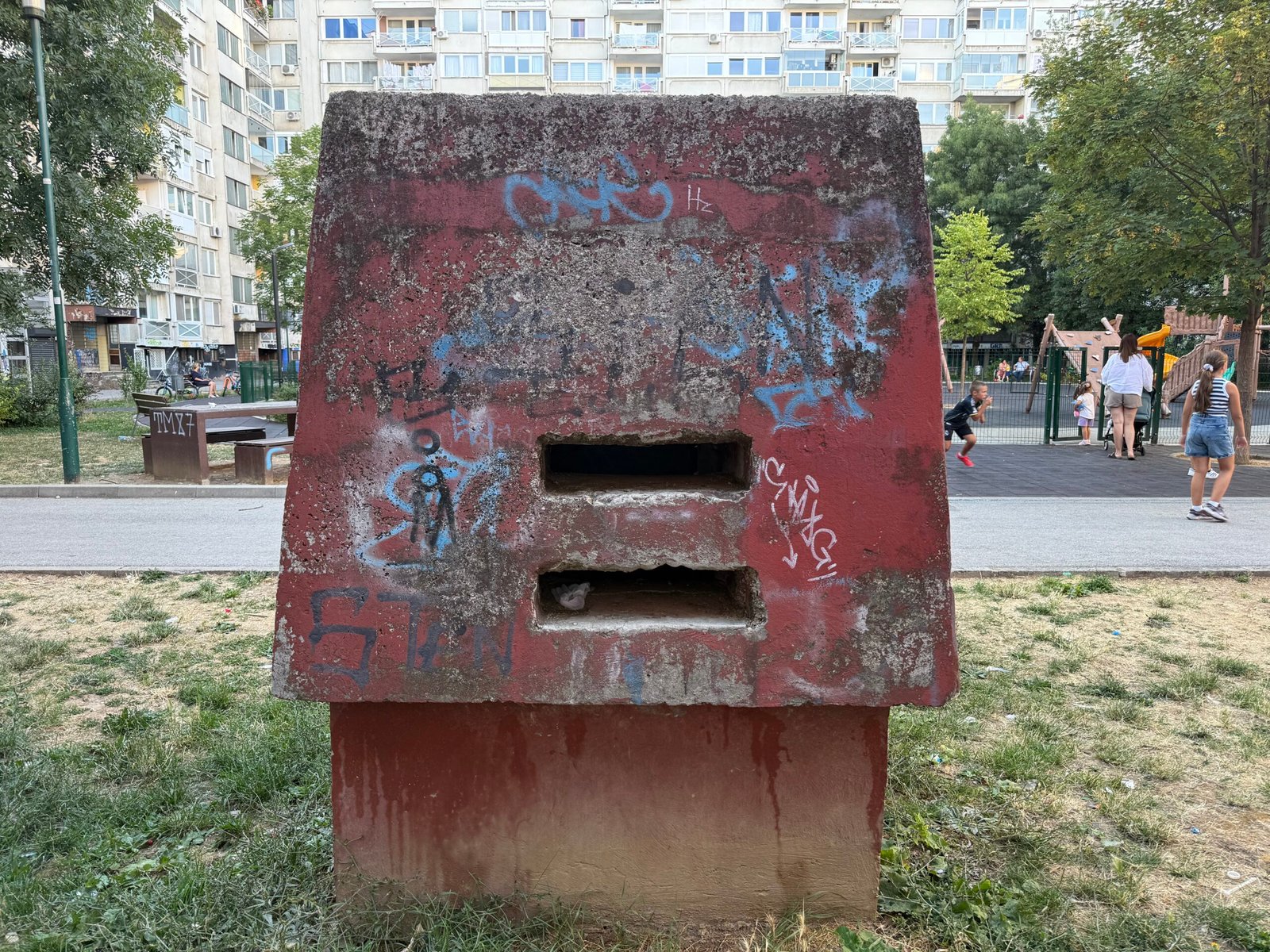
Unfortunately, not all Yugoslav remnants in Sarajevo tell such uplifting tales. Some are outright morbid, much like the bunkers of Albania. If you are lucky, you may come across a few structures like this around the more ‘communist’ looking blocks on the outskirts of the city. These are bunkers, tiny ones, but bunkers, nonetheless. Seeing them next to playgrounds was an especially sombre experience to say the least, though I am glad that these were, at the very least, not had to be used during any actual nuclear exchanges.
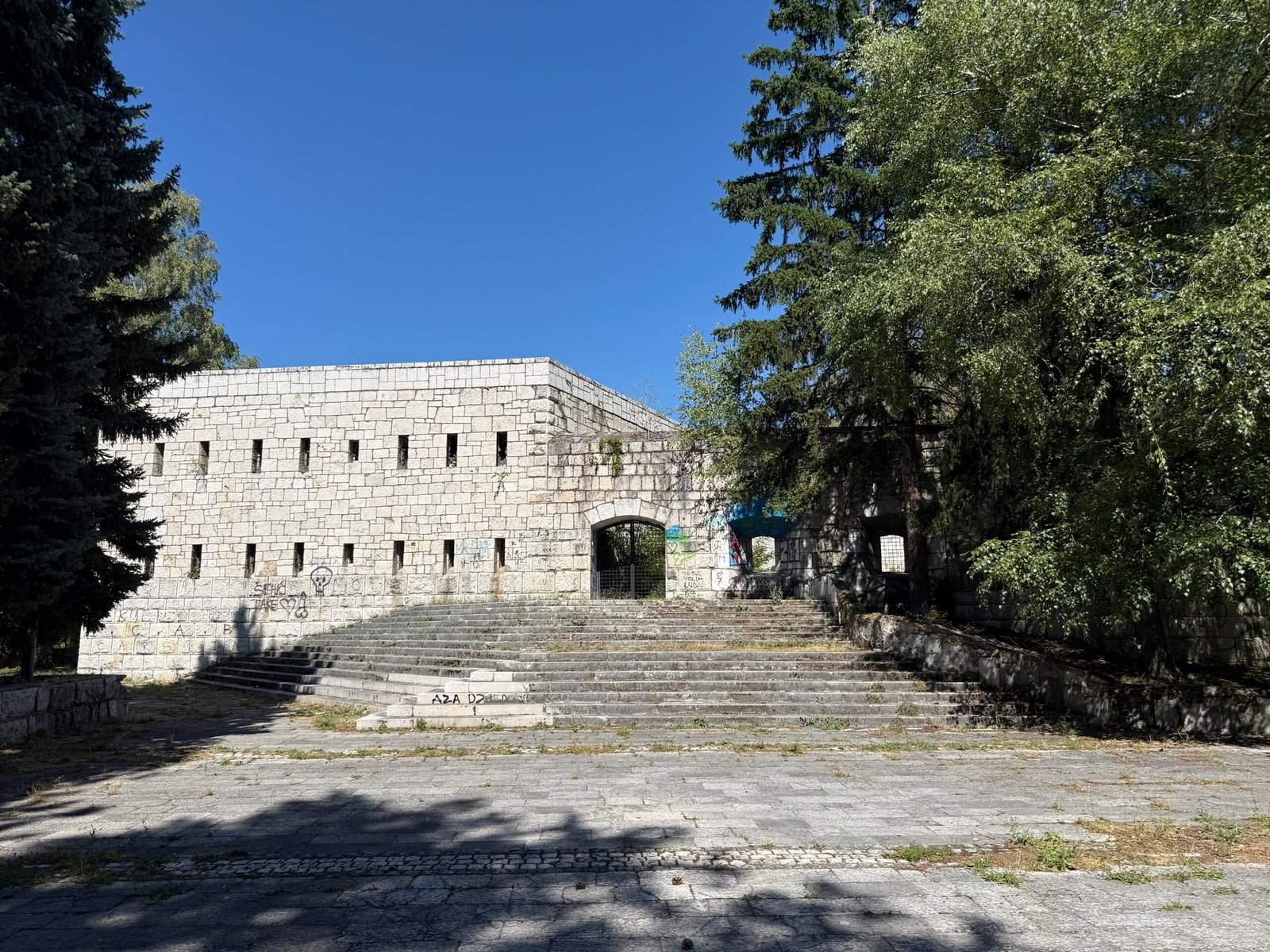
While remnants of Socialist Yugoslavia are all around, I must admit that some of them are not necessarily looked after. If something does not have all that much to do with the Winter Olympics of 1984, there is a good chance that they are left to their own devices. Case in point is the Vraca Memorial Park. You can hike up to this location pretty easily from the city centre, you just need to be ready to climb up a ton of stairs.
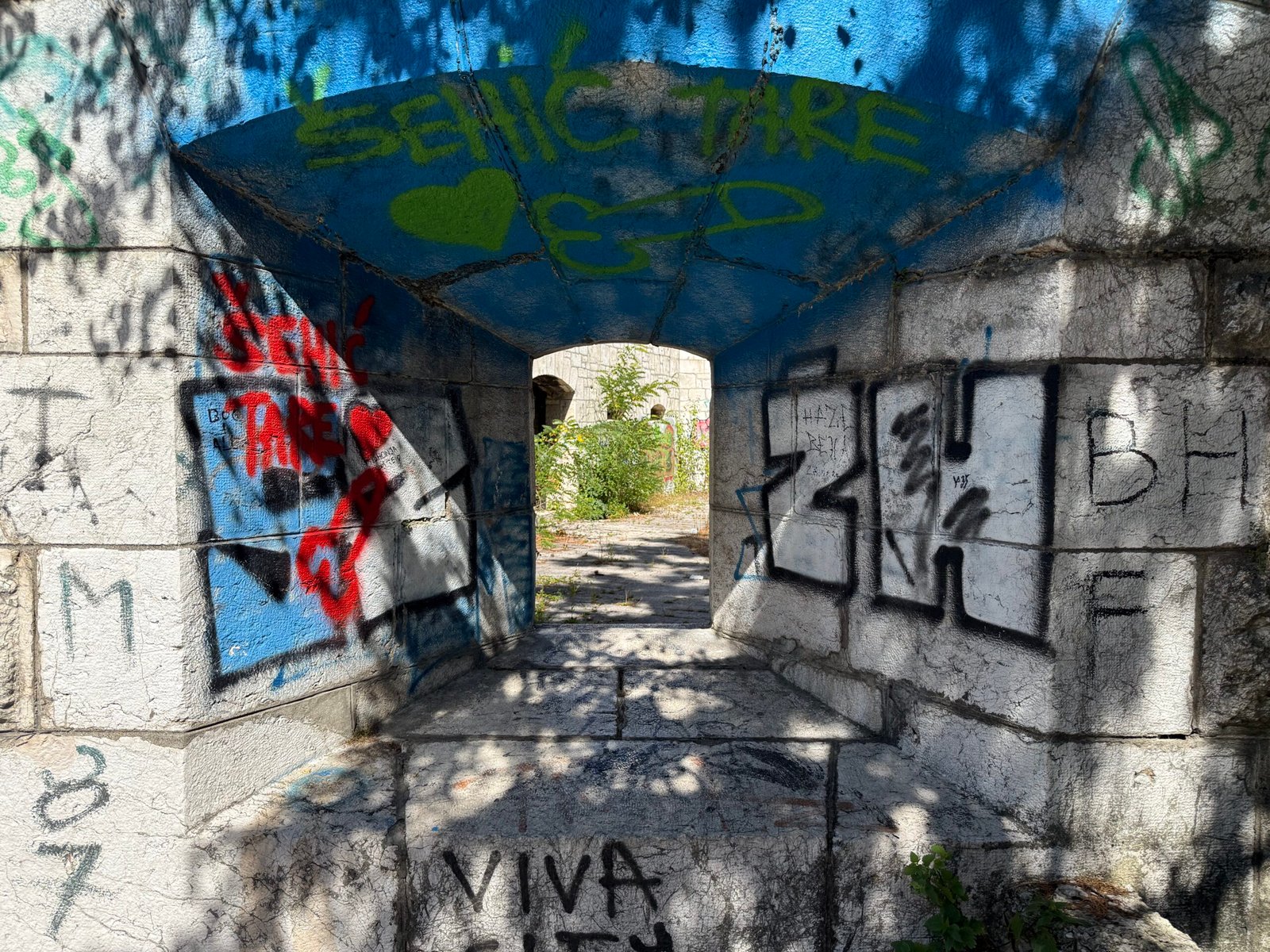
Sadly, today, this area seems deserted. This does give it an exceptional atmosphere, but with its gate being closed off and the worst quality of graffiti imaginable covering most of its walls, one cannot help but wonder whether that is the end a memorial that is dedicated to the victims of the Second World War truly deserved.
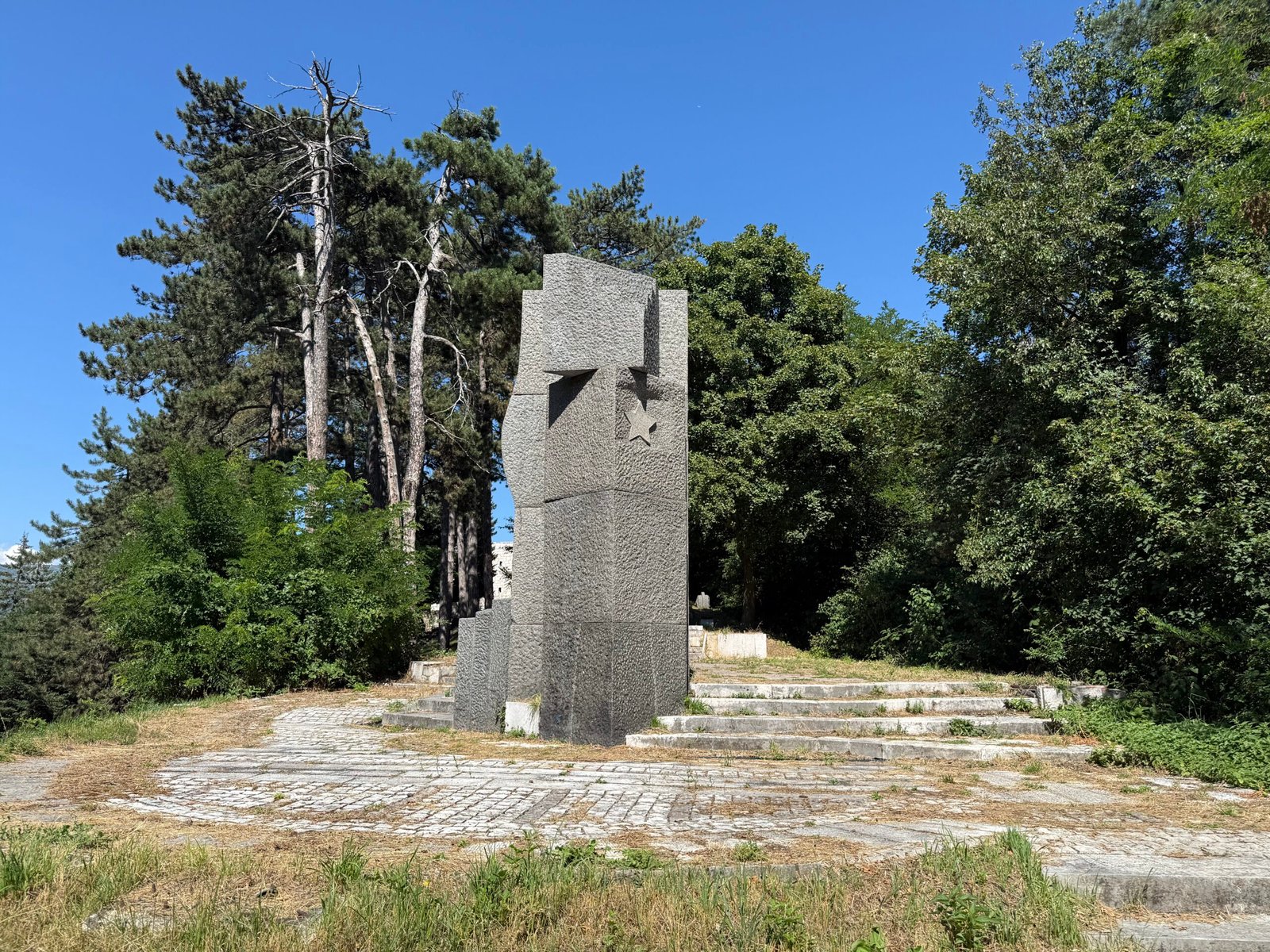
You can, of course, get inside the structure itself. You do not need me to tell you that there is an opening or two to see what is inside. I did not. There was no point. The area is closed off for a reason, it is not maintained in any way and there is nothing left to see inside. Most interesting remnants can be found nearby, such as this tiny monument with a solitary communist star etched on its side.
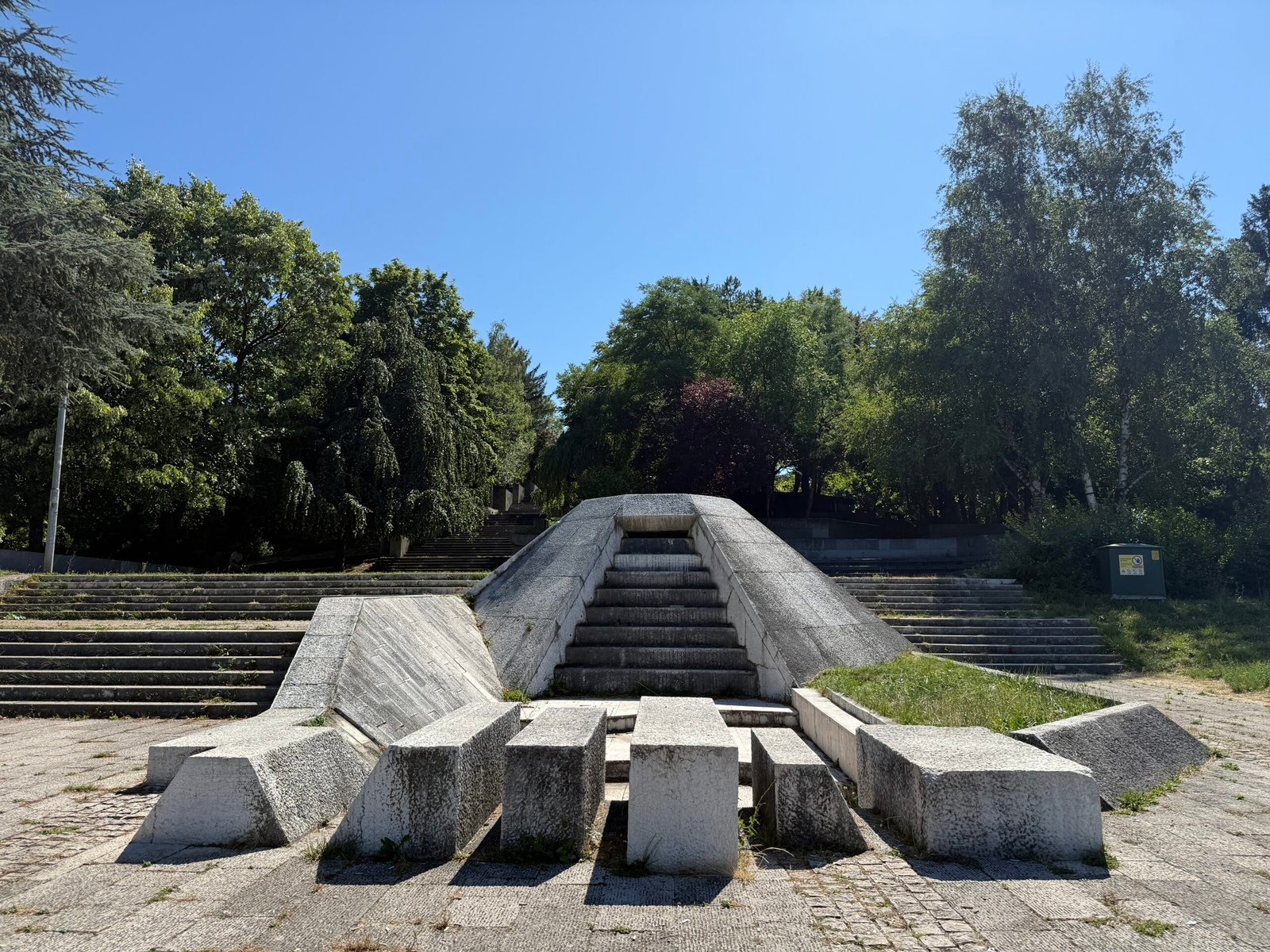
Once you do go down the stairs, you will come across a few quirky design elements like this one, which might have functioned as a fountain back when this place was, well, actually maintained. Ironically, in a manner of speaking, this area is probably more alive today than it was a few decades ago. You can come across cats, squirrels, and a ton of birds as you explore the site today, as nature reclaimed parts of the monument already.
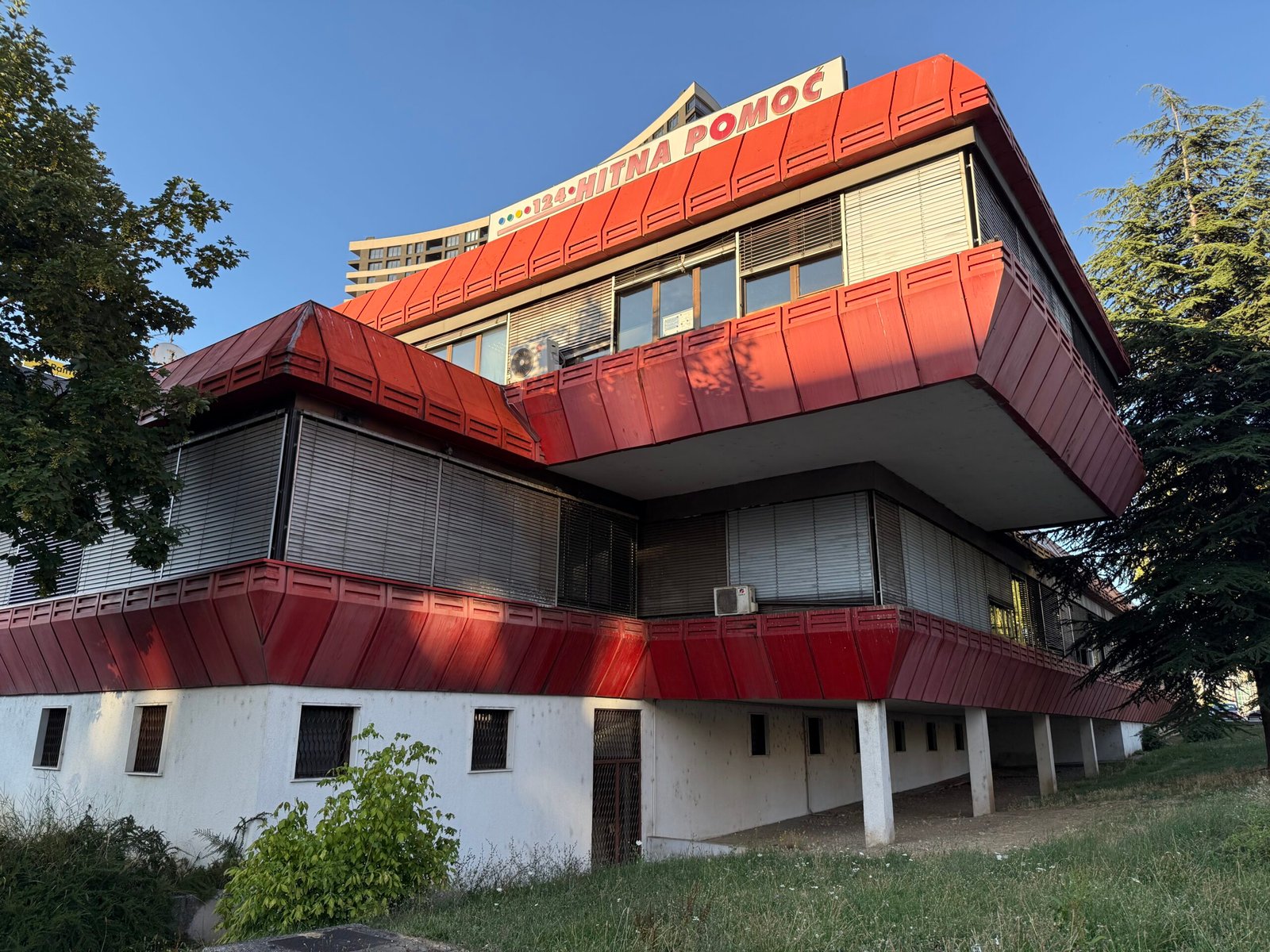
Thankfully, not all Yugoslav structures are left to the mercy of the nature. While scenes that look like they could be used in any post-apocalyptic movie do pique my curiosity, it physically hurts to think that the results of all that labour have been put into disuse in recent years. That is why I am happy to report that despite the shrinking population of the Bosnian capital, plenty of Yugoslav era buildings do remain functional, albeit at times in questionable capacity. For example, we stayed in a rather tall building with almost twenty floors, however, in most nights, at around 10pm, only a handful of its hundreds of windows were actually lit up.
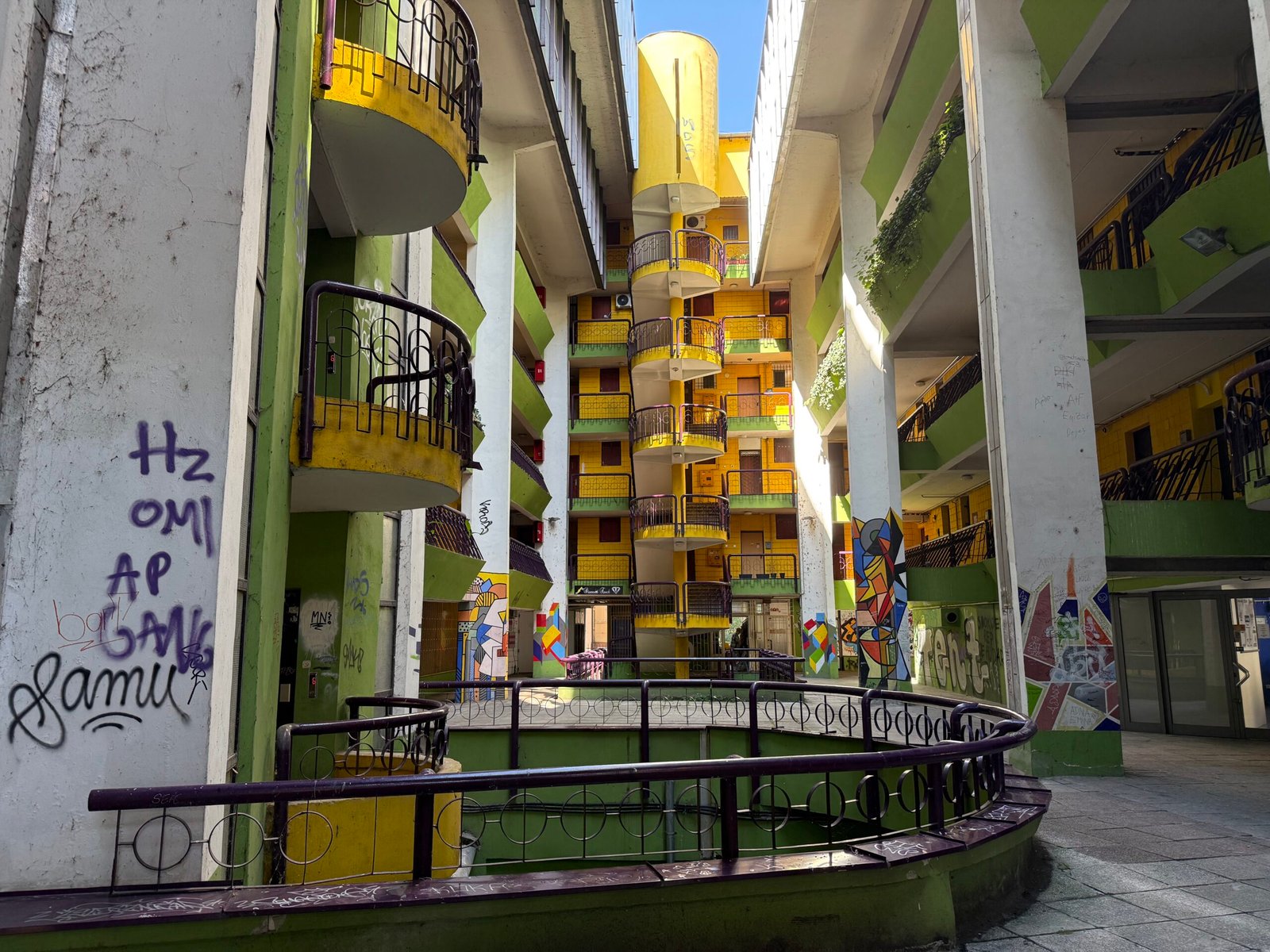
Even some of the more interesting looking apartments, like this one, can remain somewhat empty during day and night alike, which is a shame to say the least. I cannot speak for this apartment complex specifically, as being particularly close to the center (next to the Ashkenazi Synagogue to be more specific), it must see some decent traffic, but you will notice plenty of ghost apartments as you stroll around Sarajevo, especially as you move away from its more touristic center.
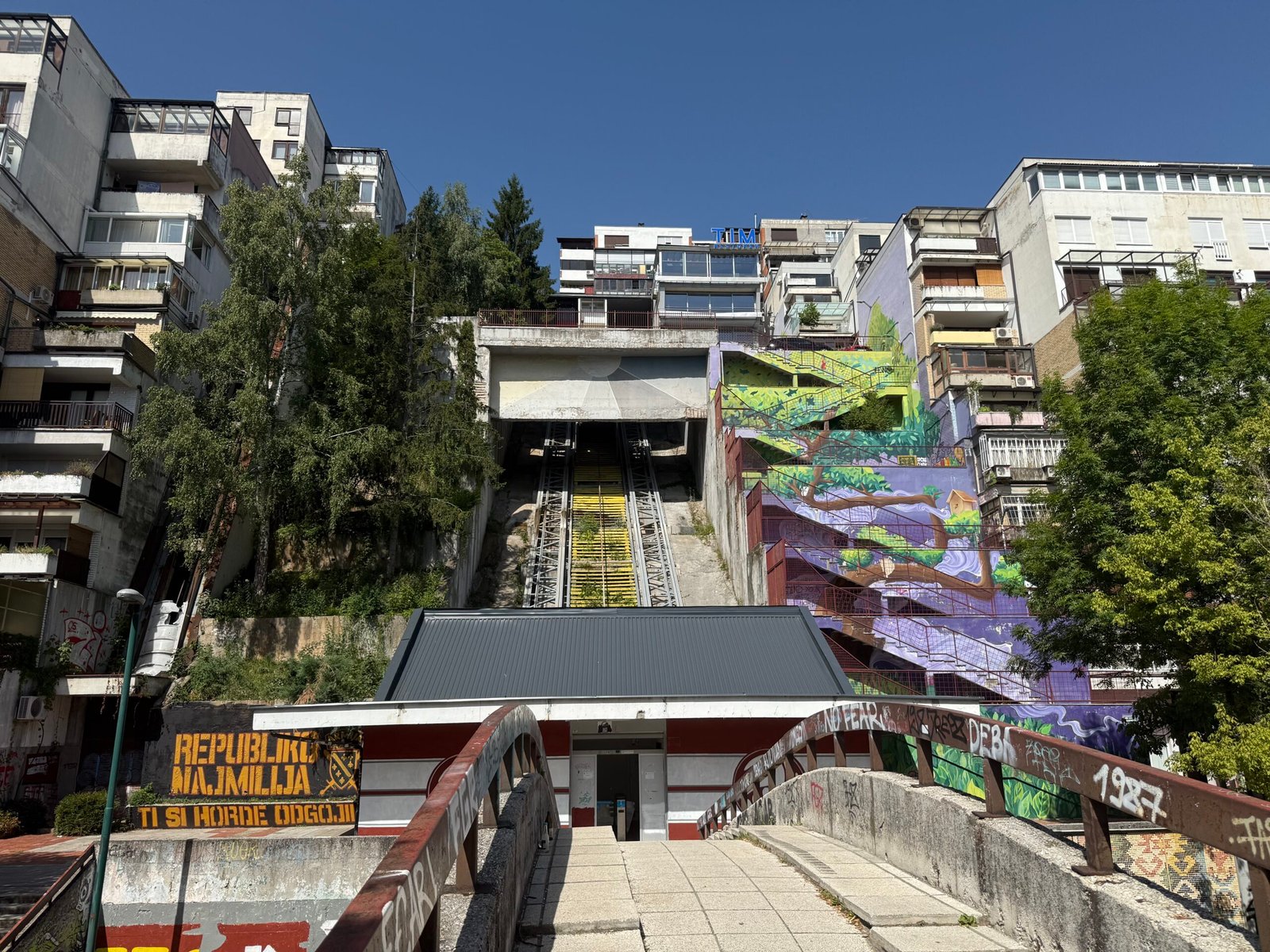
And you should explore the less touristic parts of Sarajevo, preferably on foot. This city is a treasure trove, if there is nothing manmade in sight, you are probably looking at some gorgeous natural scenery. If there is a building or two, there is a good chance they are quite quirky. For example, this is the tiny funicular that serves the Ciglane neighbourhood. Sarajevo in general is rather hilly, but this part alone has the only remaining funicular line that serves it to this day. It costs only half a BAM to ride it, though due to my time constrains I chose not to.
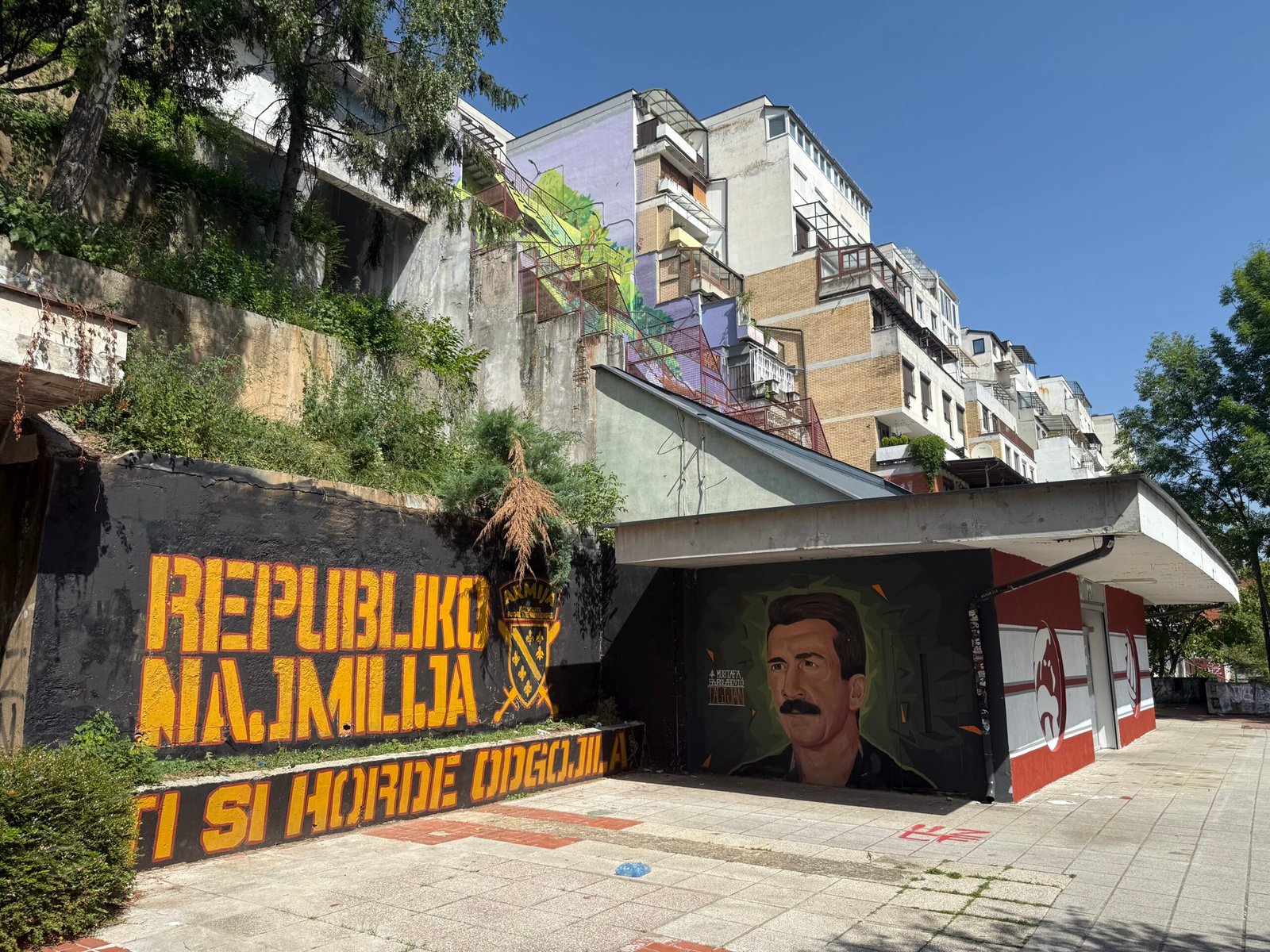
As I took these photos, a few people did take the funicular up to the apartments above, and a few others walked down the stairs on the side. This is to stay, thankfully, this area, which is home to some of the more interesting examples of Yugoslav architecture and post-Yugoslav graffiti remains rather populated to this day.
Suffice to say, Socialist Yugoslavia impacted the cityscape of modern Sarajevo the most. While its landmarks are often Ottoman or Austro-Hungarian in origin, most people live in Yugoslav apartments and often refer to Tito’s utopian experiment when they reminiscent about the past. Unfortunately, this experiment did not end peacefully. The dissolution of the Socialist Federal Republic of Yugoslavia gave birth to a decade of violence that lasted from 1991 to 2001. Next week, we will cover how this breakup impacted Sarajevo today, and how the city is marked by the horrors of the 1990s.