
Last week, we explored the religious sites and cemeteries of Sarajevo, concluding that the city is, in fact, the Jerusalem of the Balkans. However, in my article, I did mention how quite a few of these places of worship charged an entry fee, which is not ideal to say the least. Unfortunately, the exploitation of the city’s religious heritage is nothing compared to the exploitation of the cultural heritage and the recent traumas of Bosnia and Herzegovina by the capital’s entrepreneurial curators. This week, we will go over all the museums I visited in Sarajevo and see whether they are worth a visit or not. Moreover, at the end of this article, I will also explain the reason why this piece does not have that many museums listed in it, and why that is a good thing.
The National Museum of Bosnia and Herzegovina
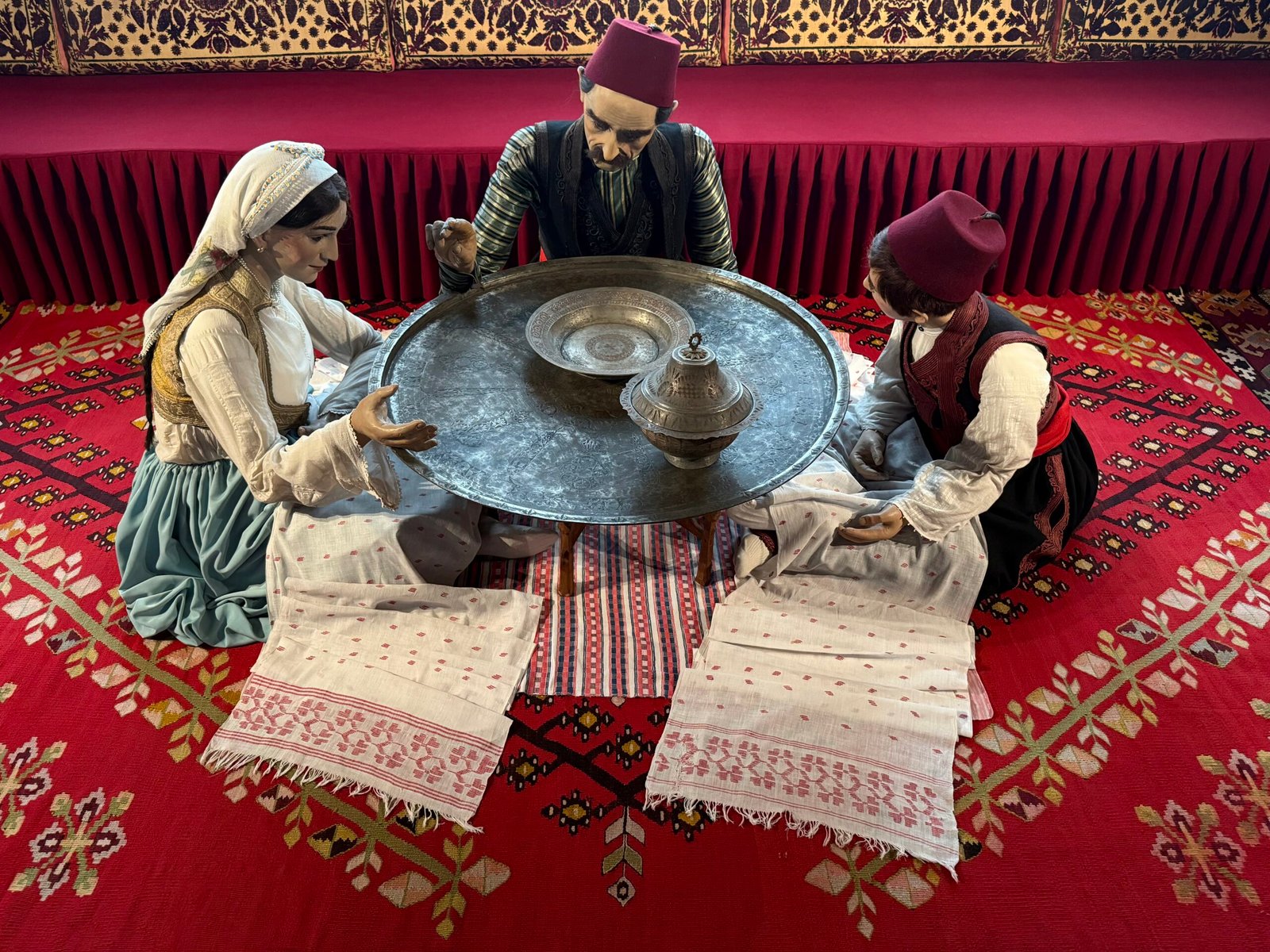
If you want to visit only one museum in Sarajevo, make sure that it is this one. While the National Museum of Bosnia and Herzegovina is not the biggest nor the fanciest museum I visited, it has some of the kindest staff members, and it is extensive enough to spend an hour or two in. That last point is not something that I can say for any other museum in Sarajevo. The entry fee is 20 BAM, but for that price you will be admitted to multiple exhibits across three separate buildings, all of which are individually significantly bigger than most other museums in this country. This is to say, if you just want to see a cost friendly museum which has a little something about everything from zoology to history, you cannot go wrong with a visit to the National Museum of Bosnia and Herzegovina.
Small Museum Bosnia & Herzegovina
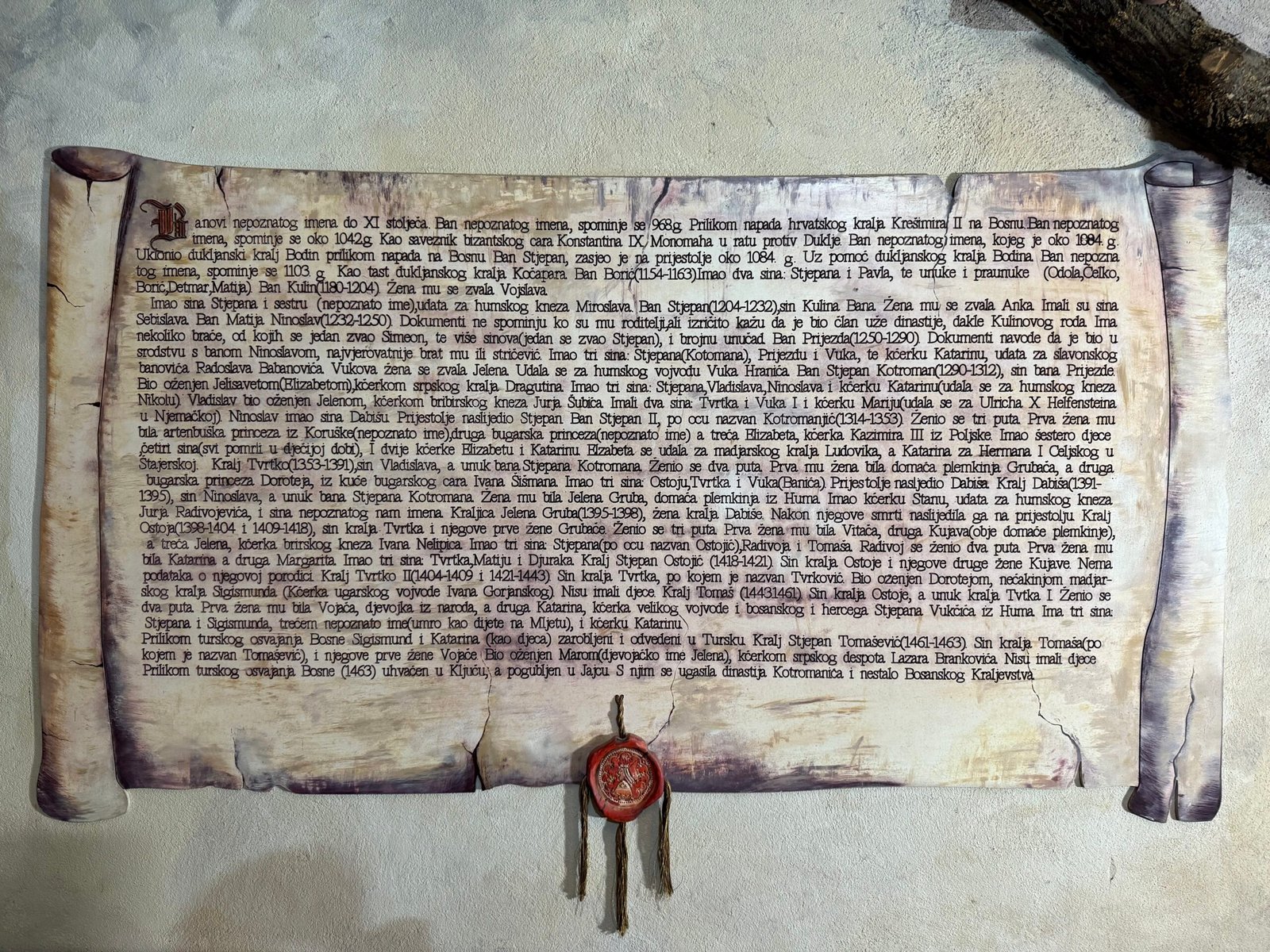
While most museums in Sarajevo ask for an entry fee, at least one chose not to. That is most likely because this place is not really a museum, but a labour of love dedicated to medieval Bosnia. The lovely gentleman that seemed to be working on improving the Small Museum Bosnia & Herzegovina when I visited it was kind enough to tell me what each piece was and implored me to stay as much as I like. This is a pretty cool project to say the least. You can see the family tree of the Bosnian royal family, a few crucial historical documents, and some well-made posts that inform you about the old Bosnian alphabet and the surrounding area. It is not much, but it is honest work. It is free so there is really no reason not to visit it, especially when the scenic walk to this museum alone is well worth your time!
Tunnel of Salvation Museum
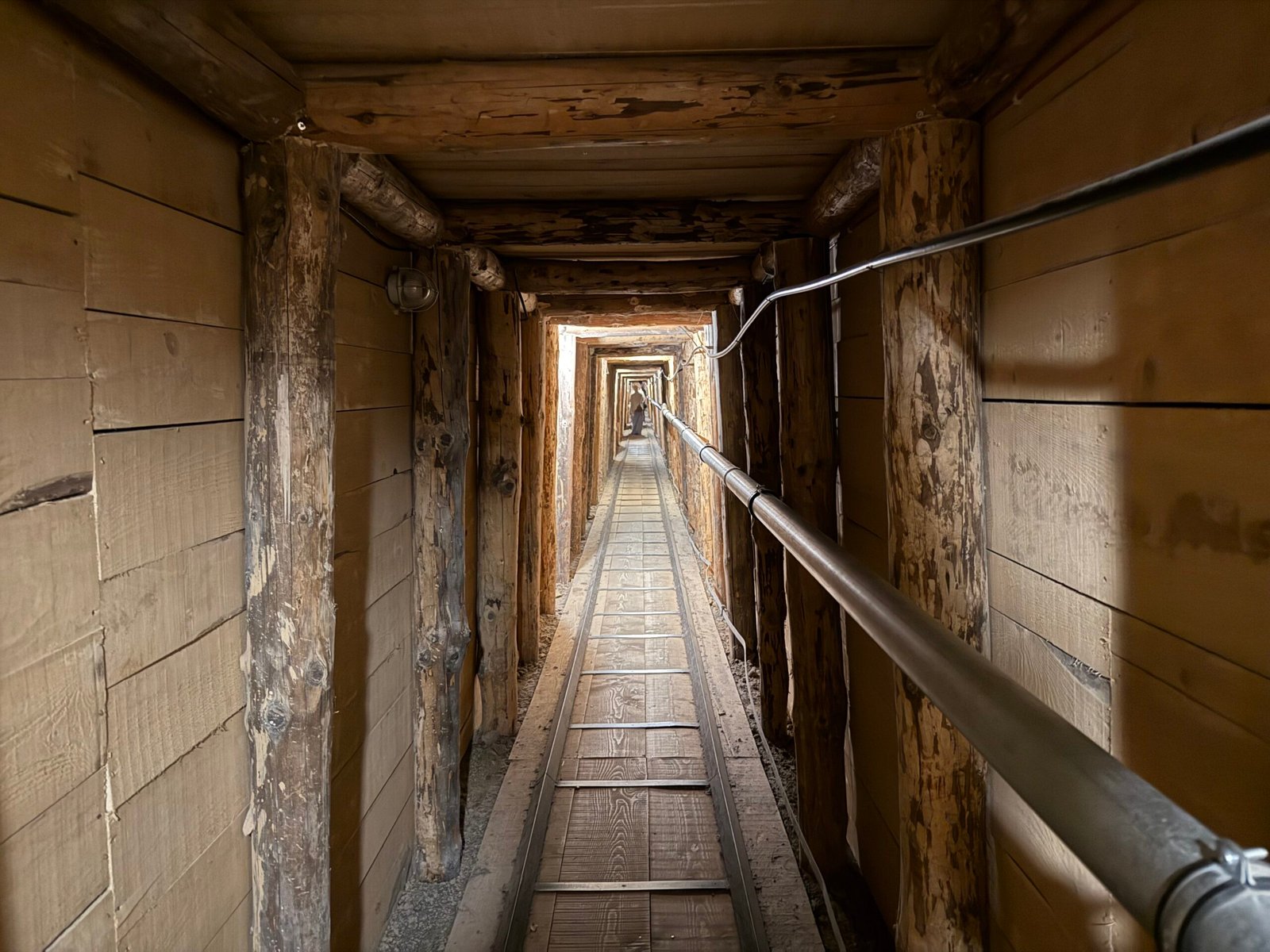
What is definitely not worth your time, or money, is the Tunnel of Salvation Museum. This place is a perfect combination of all that is wrong with museums across the globe today, well, the poorly designed museums anyways. In short, you have to pay 20 BAM to see a short recreation of a tunnel that used to connect the two separated Bosniak communities during the siege of Sarajevo in early 1990s, as you are pushed around by hundreds of other tourists who are brought there by tour operators.
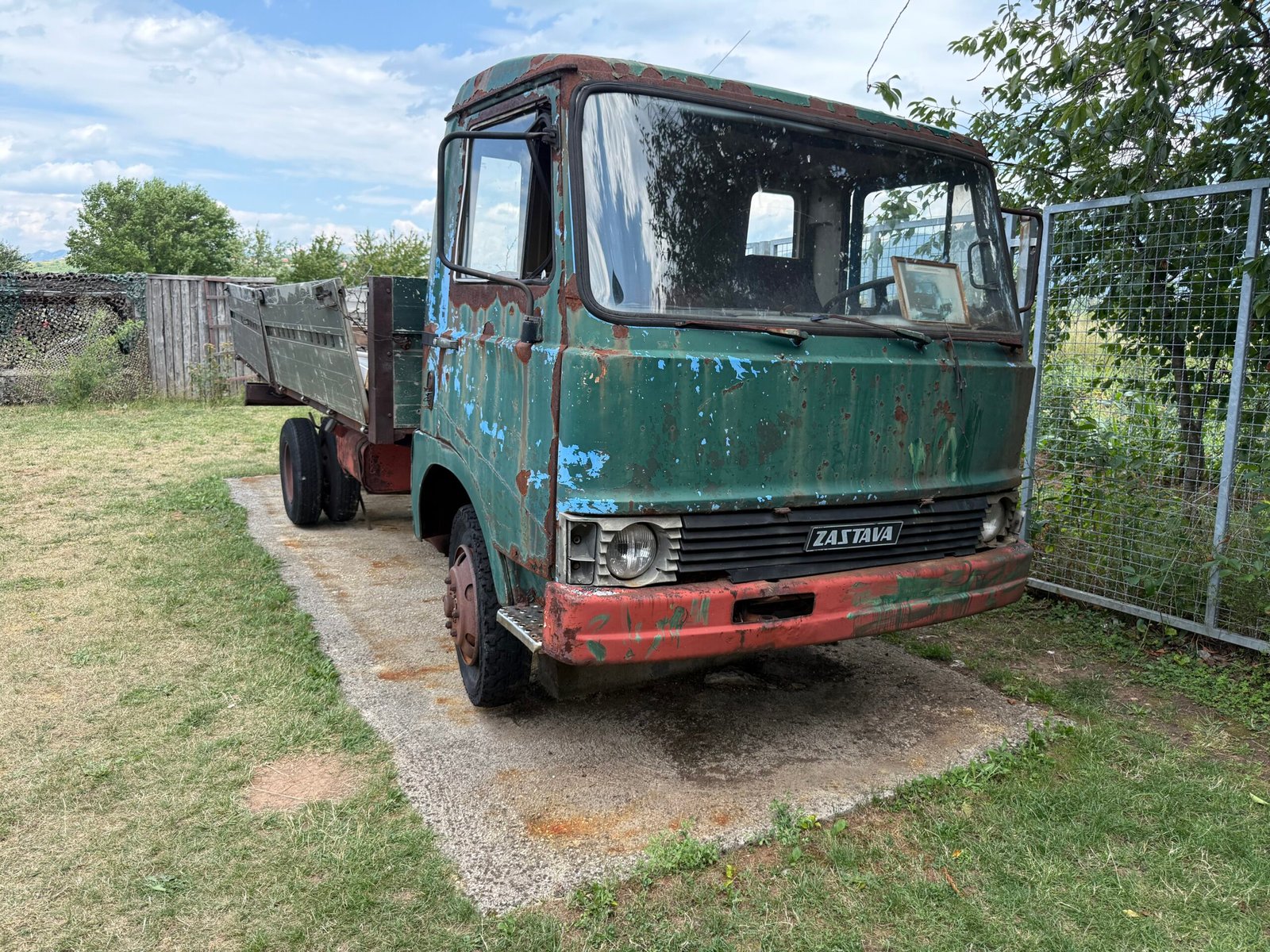
Thankfully, there is more to this museum than that one tunnel, but not much, and given the naming of the project, you do expect a bit more from that tunnel than just being shoved around and walking in a straight line for about twenty seconds, especially since you know very well that practically nothing you see down there is original. This truck outside, which was reportedly used during the construction of the tunnel was one of the very few original items that we could see on display in this museum.
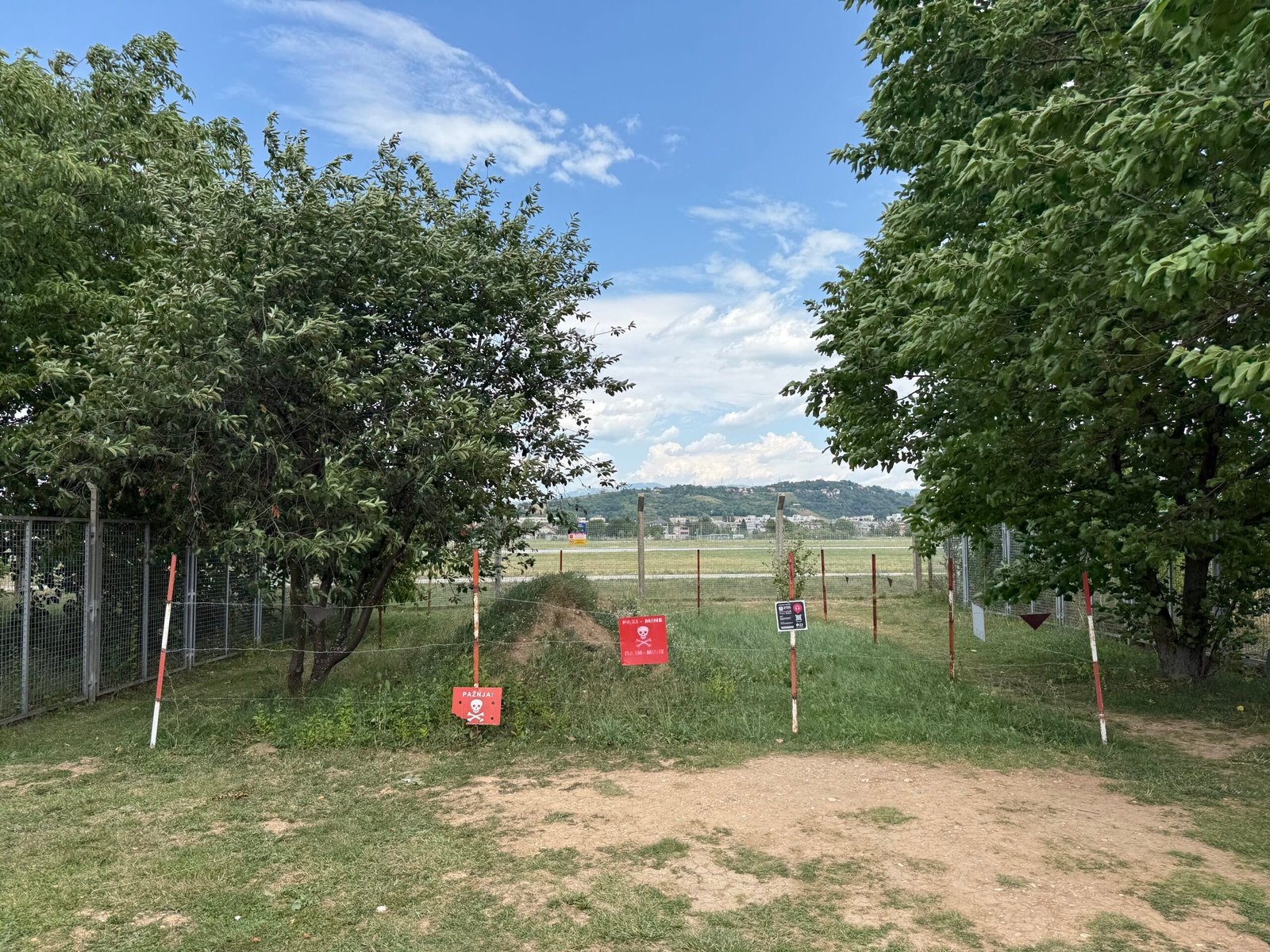
Frankly, the best and only good thing about this museum is the fact that it gets you pretty close to the local airport’s runway. You can see some planes taking off just a few meters away from you, if you are lucky. I made sure to stick around so that I could see at least three planes taking off right in front of my eyes.
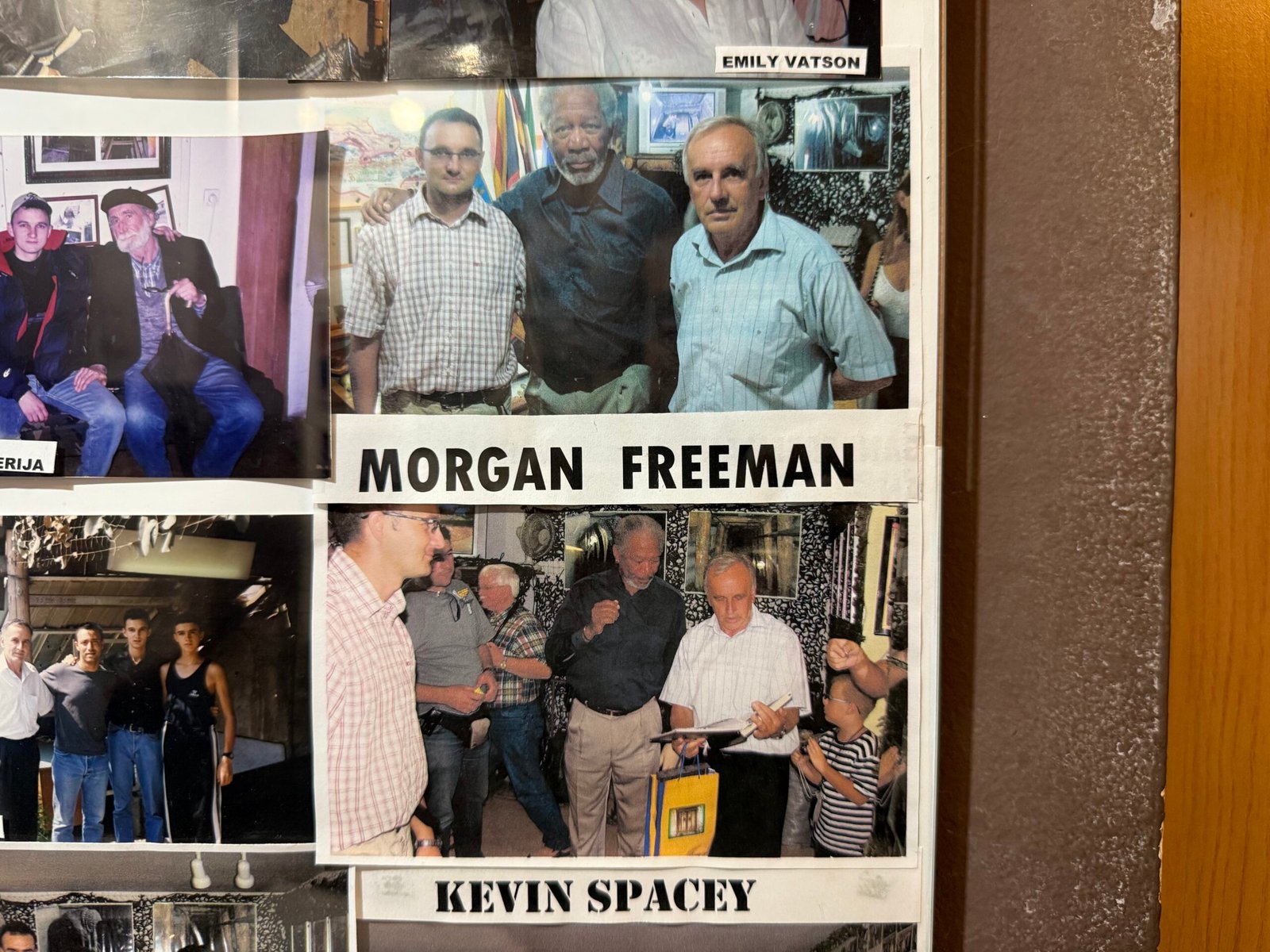
My Bosnian brothers and sisters will hopefully understand my reasoning when I say that this place, as it stands today, does not do justice to the extremely difficult history of Sarajevo. Tourists should not be asked to pay 20 BAM (in cash only to make things even more difficult) to see a haphazardly rebuilt and extremely short tunnel with little to no context provided, only to be ‘taught’ about what that tunnel was supposed to be with a long but uninspired video that constantly loops at the end of the exhibition. There must have been more original items on display, more information provided on site without relying on audio guides or a video on loop, more helpful museum staff rather than ones that tell you not to photograph recreated bits of the tunnel, and just more care put into presenting this tragic part of the city’s recent past. Unfortunately, at the moment, this museum is not worth four portions of the best burek on this planet, which is what you can get for 20 BAM in the heart of Sarajevo.
Tito Museum
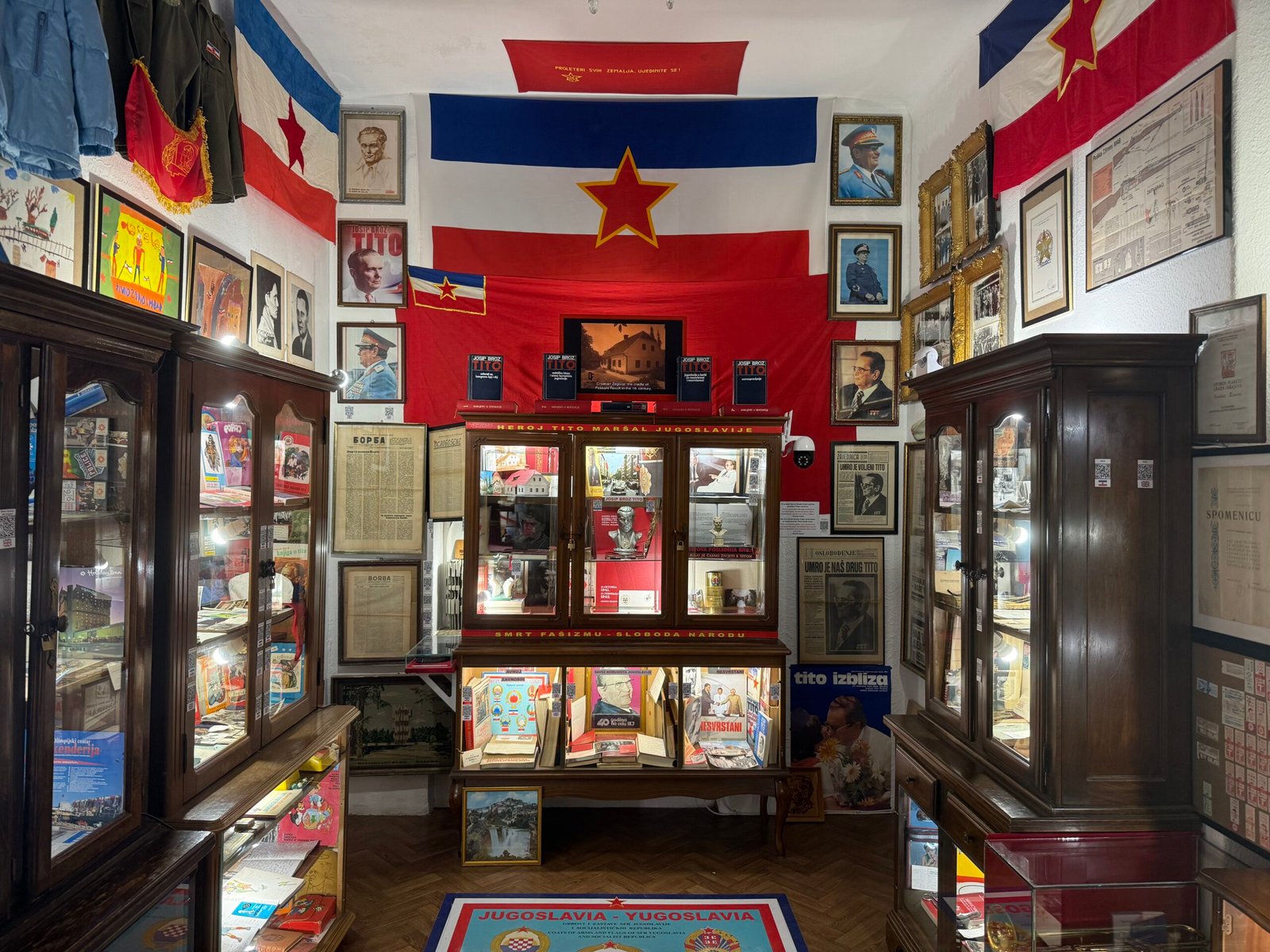
Allow me to finish this short list on a positive note. The Tito Museum is, in many ways, what a modern museum should strive to be, and it is thus worth every single penny. This extremely tiny museum, which is smaller than the smallest apartment I ever stayed in, is home to hundreds of original items on display, mostly material that highlight different aspects of Yugoslav lifestyle. While this museum feels like a shrine dedicated to Tito, which I have no problem with whatsoever, it also managed to tell a ton of interesting stories regarding Yugoslavia at large in its three tiny rooms. I paid 10 BAM to see this place and genuinely had the lowest expectations as I entered through its door, only to end up spending well over an hour by checking out every single item on exhibit here. This is a private museum, yet another labour of love, and it does worth the two portions of the best spinach filled burek on the planet to see it.
The Serdarian Manifesto: Curators of the World, Behold!
Let us briefly go back to my childhood. As a kid I enjoyed visiting museums. How could not I? They were full of interesting displays and at times even interactive elements. I also felt like I was learning ‘something’ whenever I visited a museum.
However, when I finally started to study history at the university, I noticed an issue with the museums that I was visiting. Over time, they did not seem like places one can visit to get any sort of reliable information. The narrative presented in most museums, and the way that it is presented, was highly political and at times factually wrong, which started to bother me. However, this was not enough to keep me away from museums. On the contrary, I started to visit them more zealously, trying to understand how different states used them for their own nation-making strategies, as is often the case with museums of a more cultural and historical variety.
However, lately, I started to doubt whether museums can even function in that manner anymore. There likely was a time period in which some people had to rely on the likes of national museums to find clues about their heritage, question their past, and come to conclusions about their identity. We no longer live in such a time period. For better or worse, the actual or perceived importance of museums in shaping societies came to an end, and they are certainly not the best place to visit to learn anything efficiently these days. This begs to question, why do we have so many museums today?
At this point, I must admit that I am not against the idea of museums. If curated properly, these can be valuable institutions that can still introduce some crucial topics to the general public, especially the children, in a more approachable and innovative way. They can an interesting attraction to many travelers as well. After all, who can hate a history museum with miniatures, interactive assets, engaging talks given by the staff and so on? I do not have an issue with museums with a teaching mission, as long as they do justice to their mission.
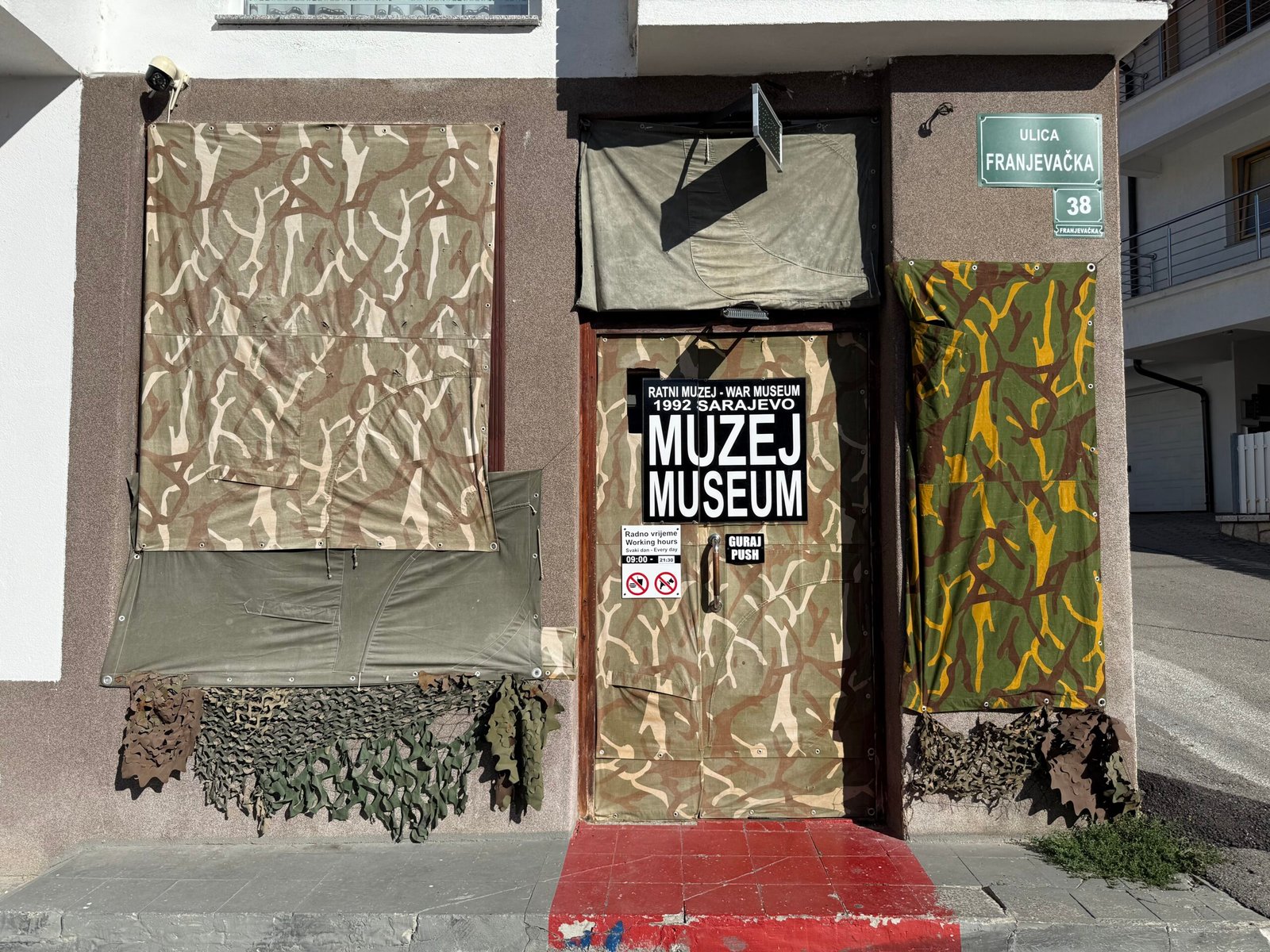
I do, however, have a problem with the proliferation of museums that exploit the goodwill of travelers in heavily touristic towns across the globe. Sarajevo is, unfortunately, one such town. The recent Bosnian past is painful, which is frankly an understatement. Unfortunately, some individuals realized that you could make a living out of this painful past by opening up these smaller private museums that exploit it freely. While many tourists will leave dishonest reviews, so as not to sound insensitive, plenty of highly ‘praised’ museums in Sarajevo are in fact ethically questionable. Without naming any names, I humbly think that you should not charge people relatively high fees so that they can look at photos of dead civilians with the supposed assumption that this helps us remember the atrocities of the past, which supposedly keeps the new ones from happening. There are far too many weak presumptions at play here and yet the only thing these museums truly offer to their visitors is nothing more than tragedy porn.
This is why this article on the museums of Sarajevo is cut short, considering the number of museums in Sarajevo that is. However, there is no progress without change, and my standards must change, if need be, as well. To me, museums are not as attractive of attractions as they used to be anymore. You can take my little manifesto at its face value, or you may think that I am just cheap, or that I just became pickier over time. Regardless, moving on, there will be fewer dedicated posts to museums on Wondering Voyager, and possibly fewer museum recommendations in the articles that I end up penning down.
As I conclude this article, I cannot help but hope that there will come a time when Sarajevo has an excellent state museum that is dedicated to its recent past, specifically to the Bosnian War, to its prelude, and to its aftermath. It should collect what little material one can see in many of the city’s new and often overpriced tourist attractions that I have a difficult time calling museums, and try to curate it in a way that not only shares a crucial bit of history, but also does it in a respectful way.