
While I was already blown away by the quality of the museums in Abu Dhabi, I was shocked by what I found in Dubai, since the latter just might be the proud owner of the best museum scene in the UAE, at least until Abu Dhabi’s Saadiyat Island is fully built up. Without much introduction, let us go straight into just how good some of Dubai’s museums are, and just why you should give them a go.
Al Shindagha Historic District
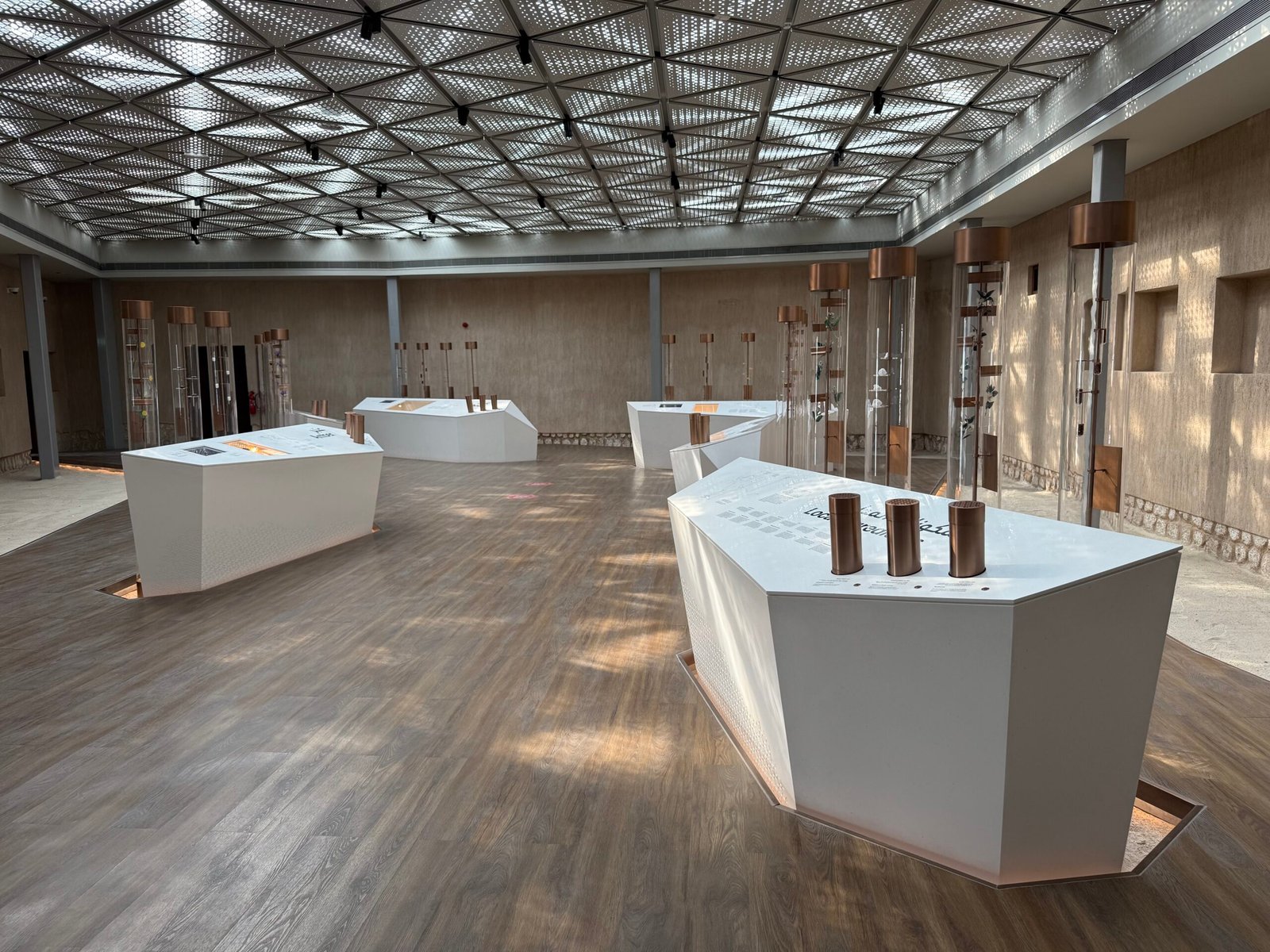
I want to start this list with the best museum that Dubai has to offer, its exceptional Al Shindagha Historic District. At first, I did not even know what this complex was all about. It seemed like a nice place to walk around after sunset, which I did many times, but one of those days, I actually wanted to visit the perfume museum in it. This is when I found out that I needed to get a 50 AED day ticket to be able to visit that museum and almost twenty others in the area. I bit the bullet and dedicated the rest of my day to exploring this complex, without doing any research on the other museums that it contained, and I was in for a ride beyond my wildest expectations. I ended up visiting around ten museums that day, all focusing on a particular theme, all managing to satisfy my endless appetite for well curated exhibits sufficiently. This is why, while the initial asking price may seem steep at first, it is quite reasonable for museum lovers like me. I will share some of the highlights from that day below, but you should know that this is barely scratching the surface of what this complex has to offer.
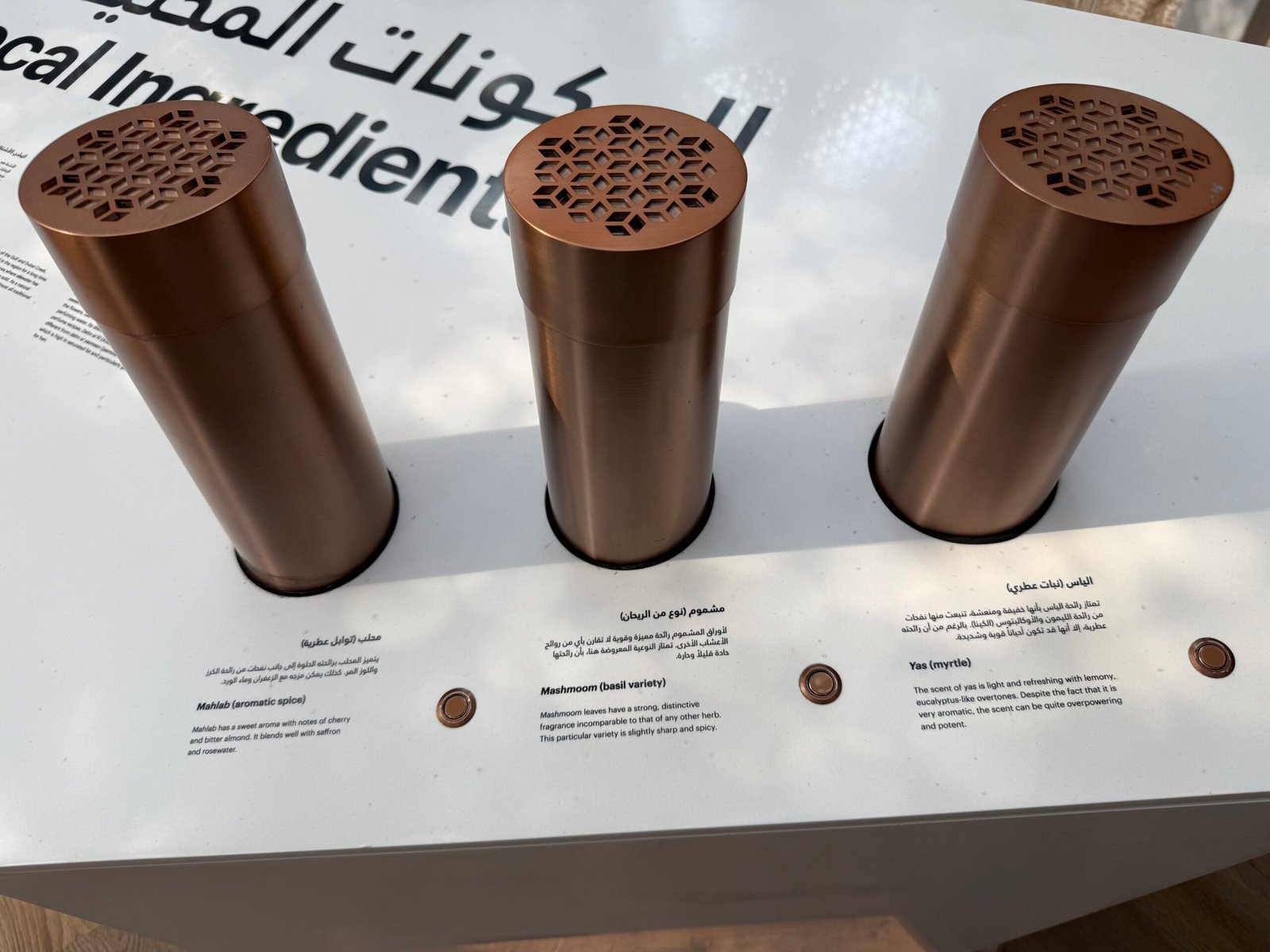
In the perfume museum, where my journey started, the guide was excellent, you could actually smell a ton of beautiful essences, and there were a few interactive exhibits that showed you how to make a perfume. Apparently, they also some have workshops every now and then. Despite being the first museum I visited here, and being one of the smaller ones, I must admit that I may have enjoyed my time here the most compared to the others. This is not to say that the other museums were not as well curated, not at all…
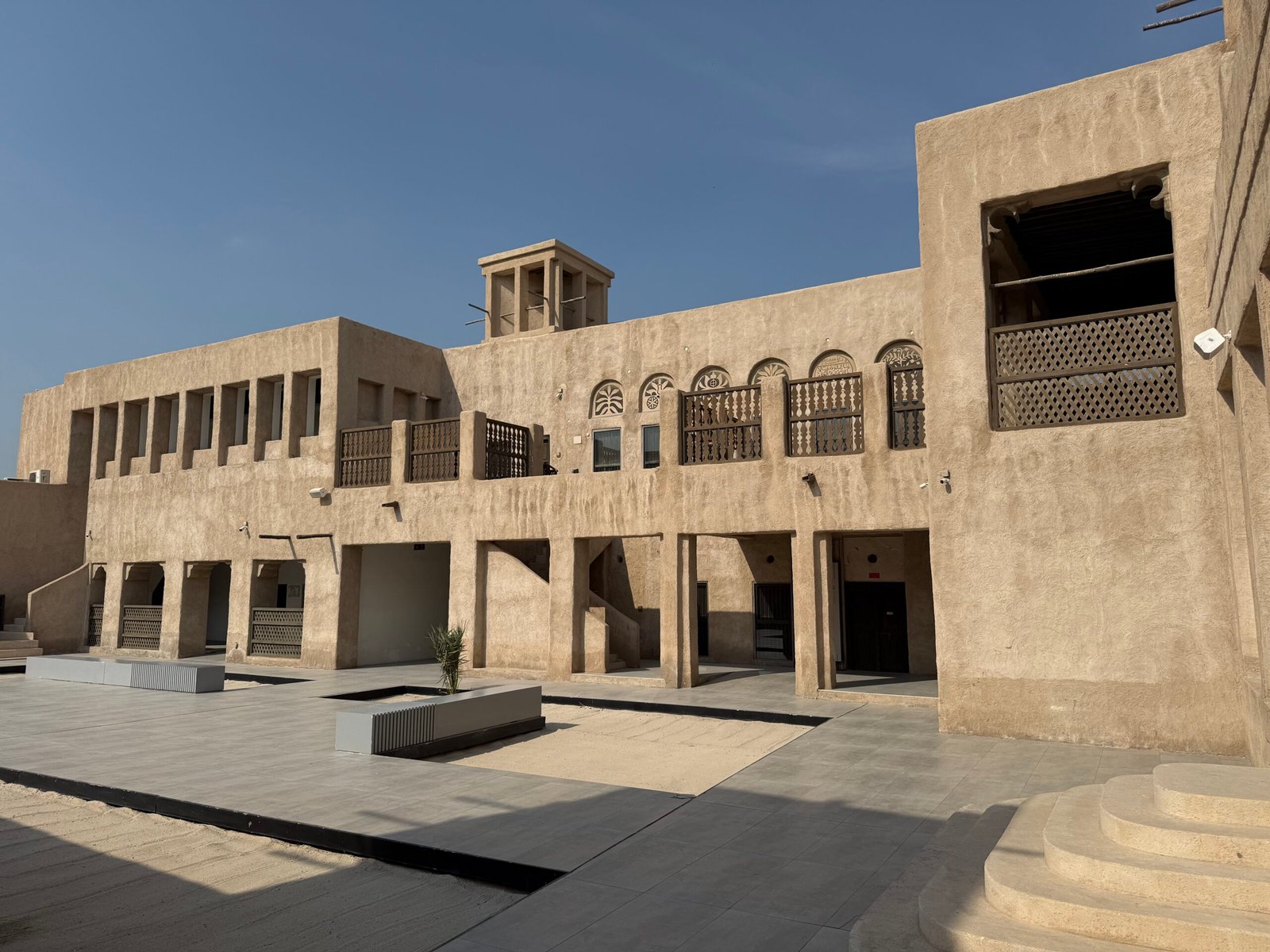
With some of those unique essences still dancing around in my nose, I made my way to the nearby Al Maktoum Residence. This is where the current ruling family of Dubai, the Al Maktoum dynasty, once lived in. It is renovated quite heavily, true, but it still keeps its charm to my layman eyes. Some of the rooms were dedicated to telling a bit about the history of Dubai, or particular members of the Al Maktoum family, and I for one loved watching and reading all the material presented here, which can take a bit of your time.
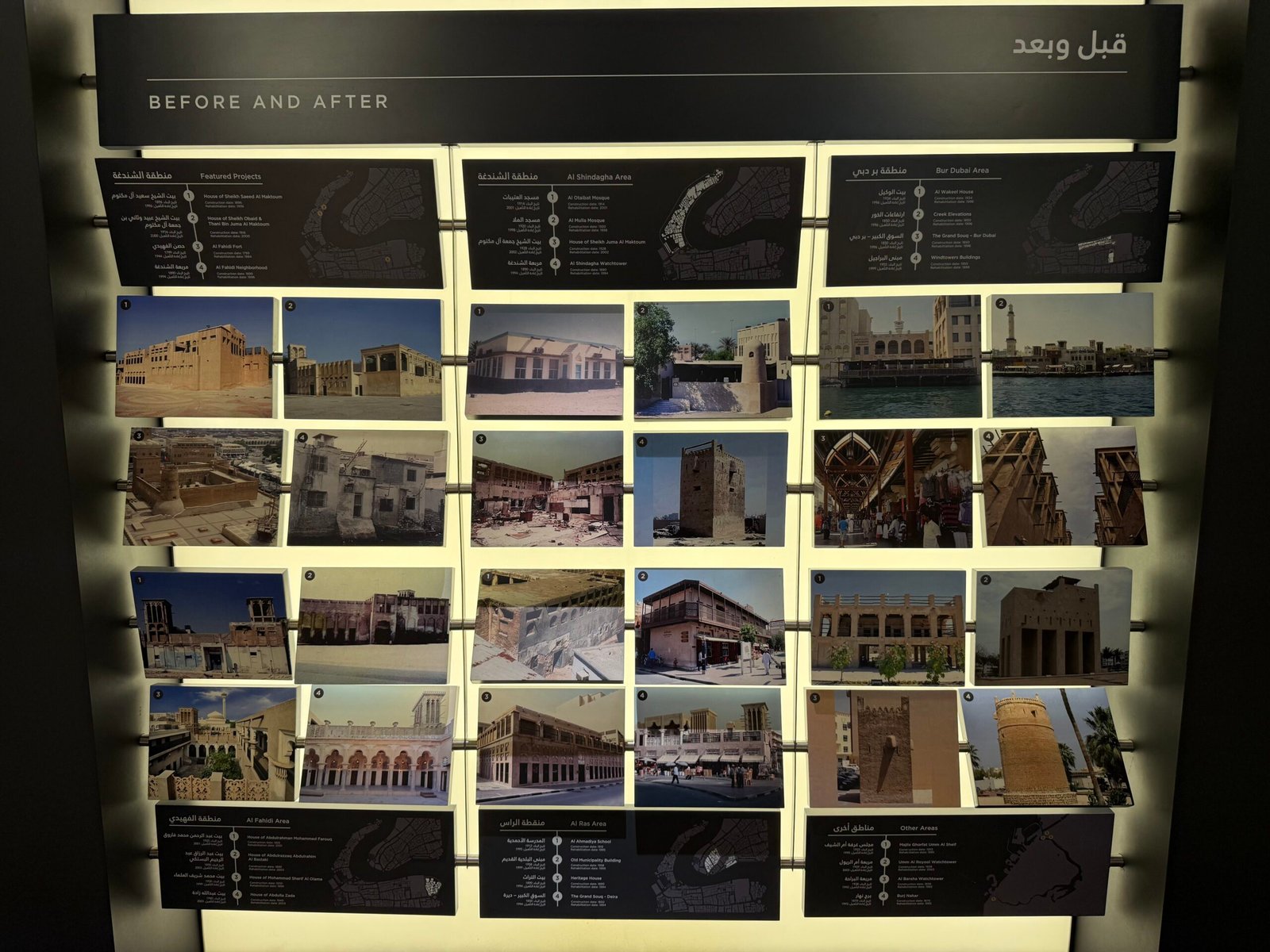
While my memory fails to serve me well on this occasion, either in the aforementioned residence, or in a nearby museum, you can find out a lot about the renovations that took place around older parts of Dubai. You could see how things really looked back in the days, and how the renovations impacted them. This gives you a clearer idea about the authentic old Dubai, something you cannot find out more about elsewhere this easily.
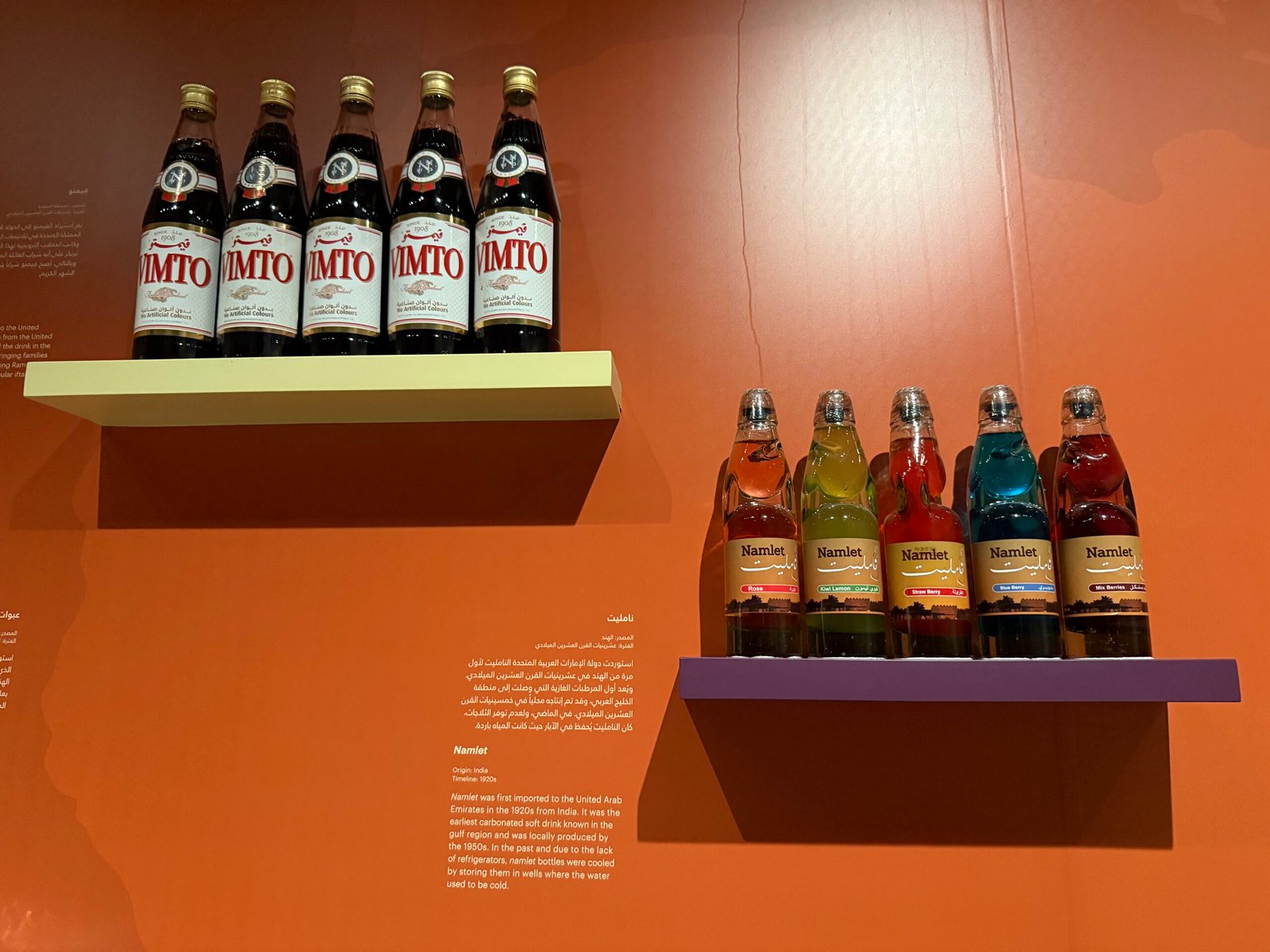
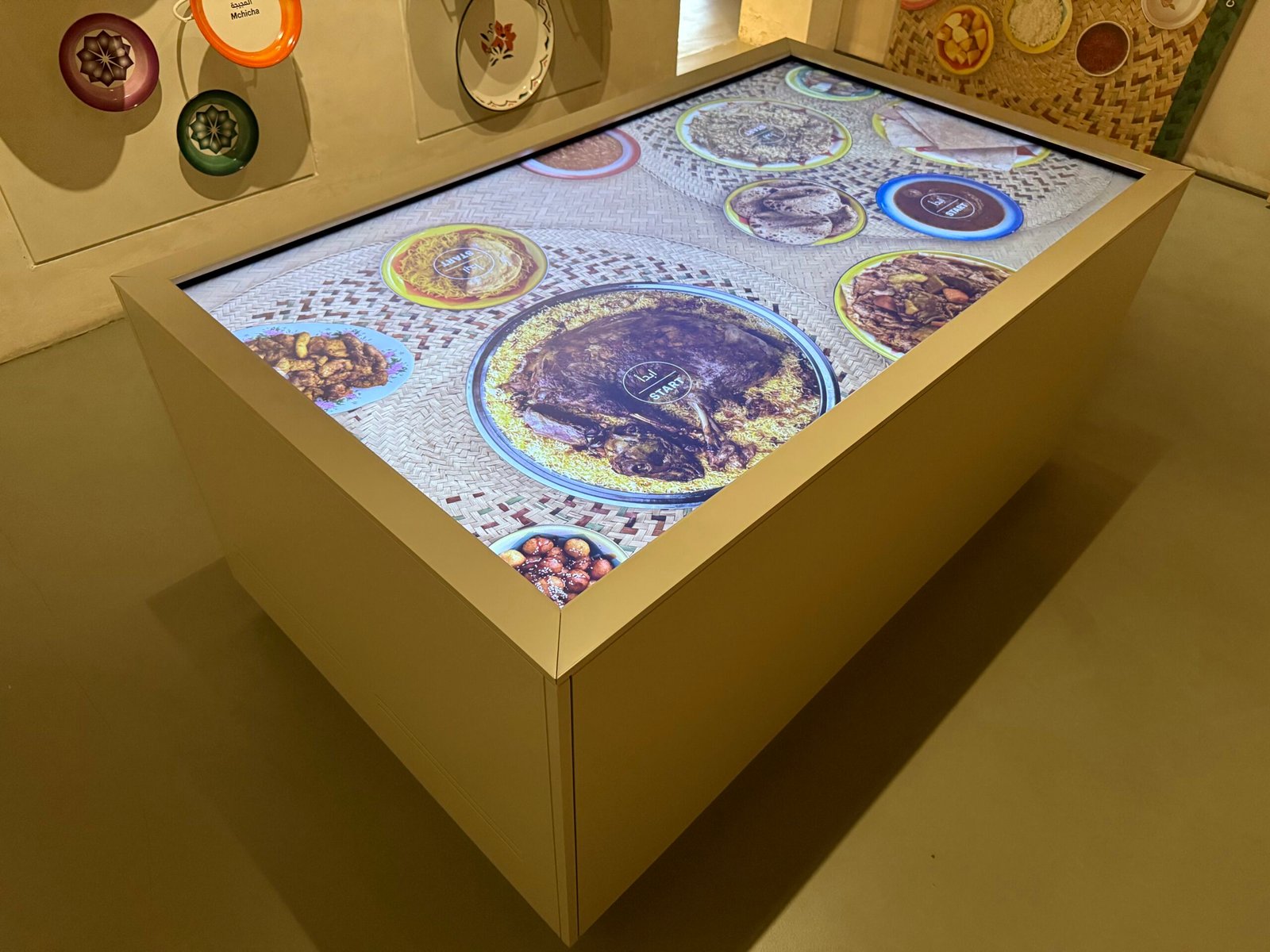
Some of the museums in this district were truly unique, such as this one that was dedicated to food. A part of the exhibition went over the local ingredients and cuisine, and another part told the story of how foreign food products eventually found their way into the Emirates and became a part of everyday life. As a lover of anything food related, you should not be surprised to hear that I ended up reading and listening to everything this humbly sized museum had to offer as well.
On a side note, one of the best parts of this district for me was how it seemed like I was the only one in these museums almost all the time. This is a luxury that one cannot have so easily in many other decent museums, and while I hope that more people will end up visiting the Al Shindagha Historic District over time, due to its size, I do believe that this complex will remain rather quiet and thus relaxing for the unforeseeable future.
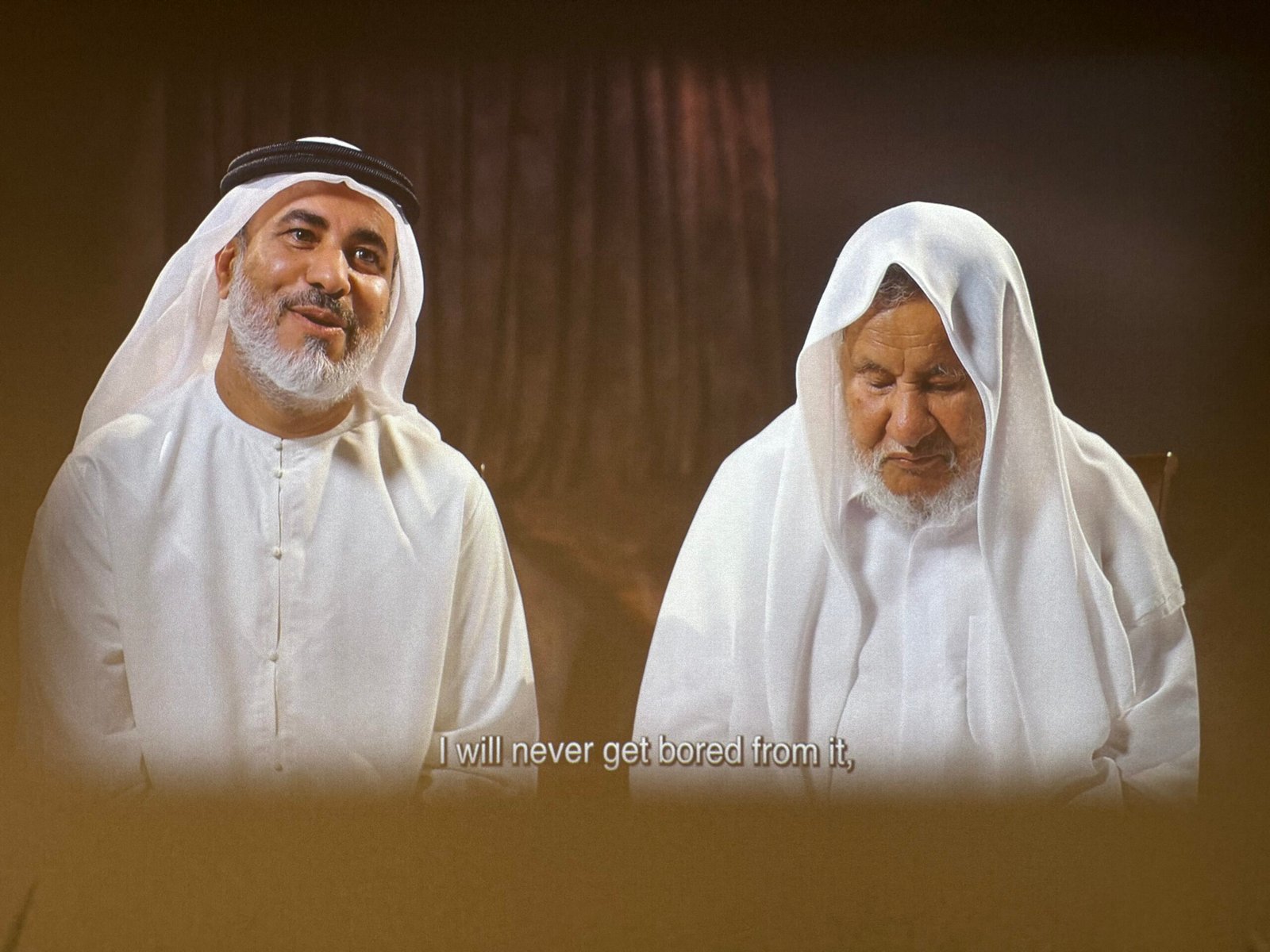
The Culture of the Sea Pavillion was one of the bigger exhibitions that the district had to offer, and one of the most interesting ones as well. It had all sorts of displays utilizing a rich selection of modern technologies, and it also had some simpler tricks up its sleevy such as this projected movie which told the tale of a father and son duo, with a focus on their seafaring lives.
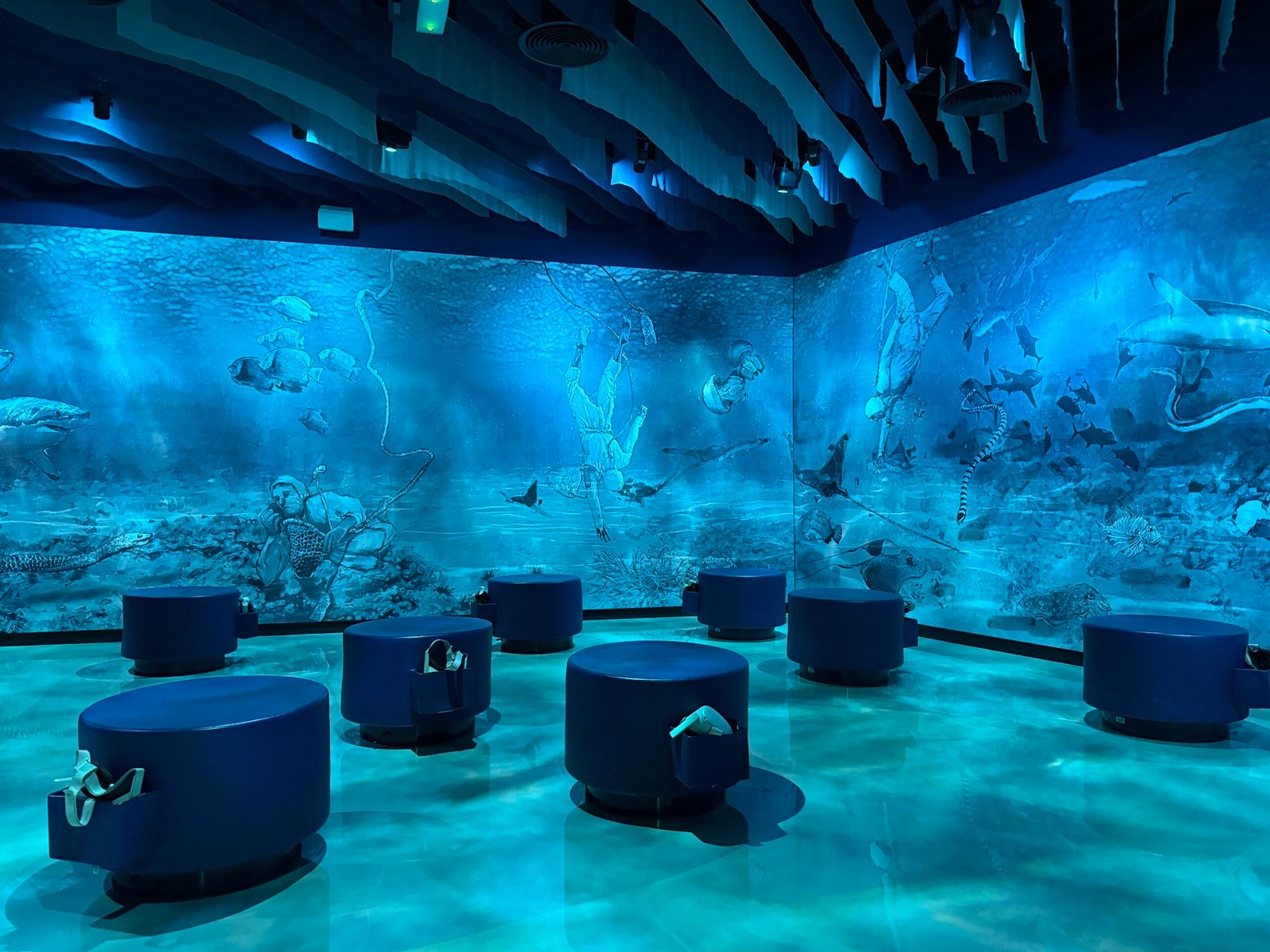
However, it was really the more advanced exhibits that this place had to offer which stole the show. For example, there was a room where you were surrounded by about ten screens, which showed an experimental movie that utilized these screens in different manners, and expected you to move around in your seats, which could, of course, turn around freely. Then there was this other room, one that you can see above. Here, you could become a part of a pearling crew in the virtual world thanks to the provided VR sets, and that too was a very well crafted experience to say the least.
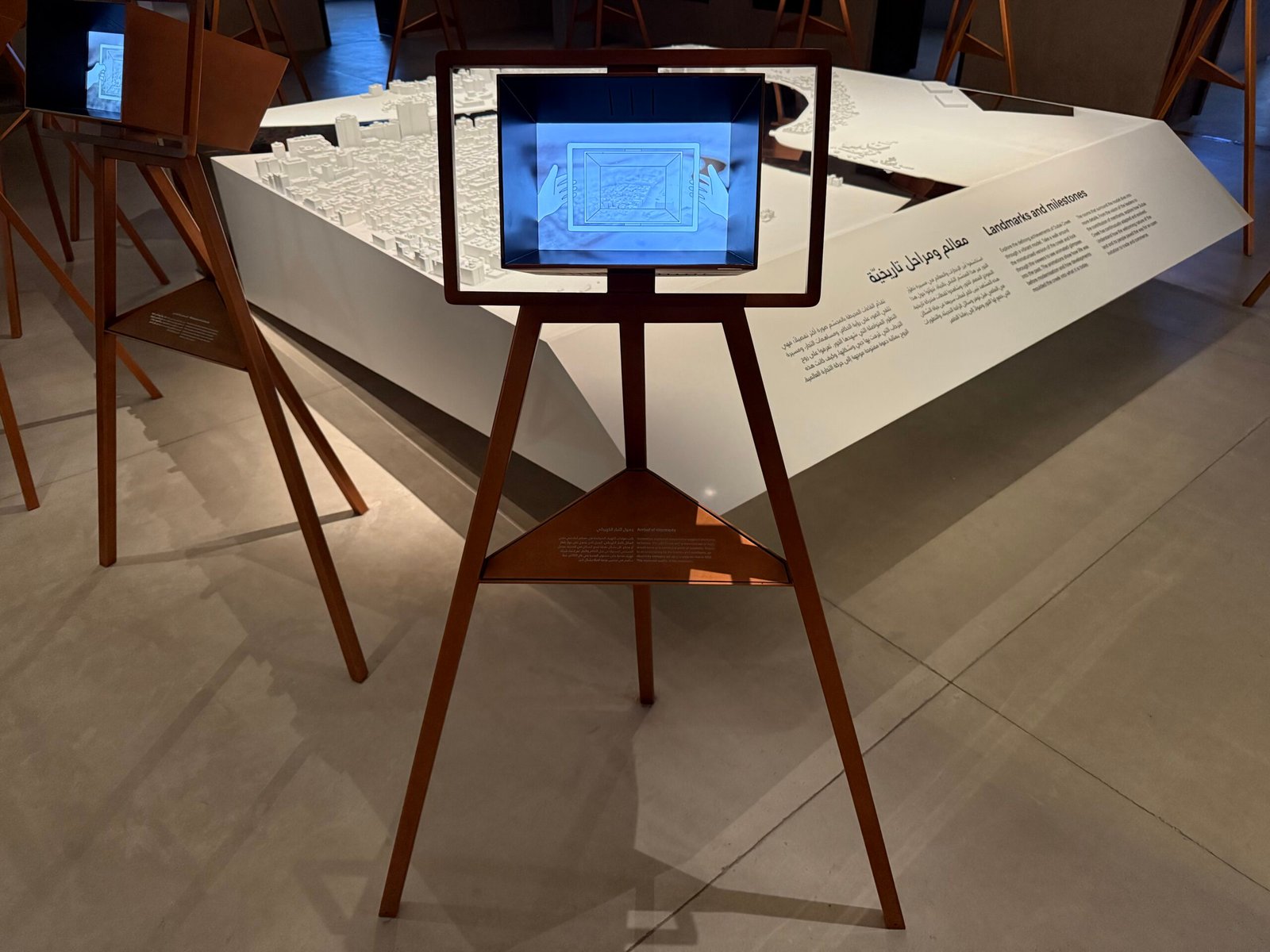
I simply cannot finish this section without writing about a final museum: Dubai Creek: The Birth of a City. This museum or I should say art installation proved to be a lecture in museum design. As its name clearly suggests, it tells you the story of Dubai becoming the city that we know it as today. There are a ton of interactive parts like this one all around it, but it is really one great show that it does on a schedule that turned this visit into a highly memorable one, not something I can say about all the hundreds of other museums I visited to date.
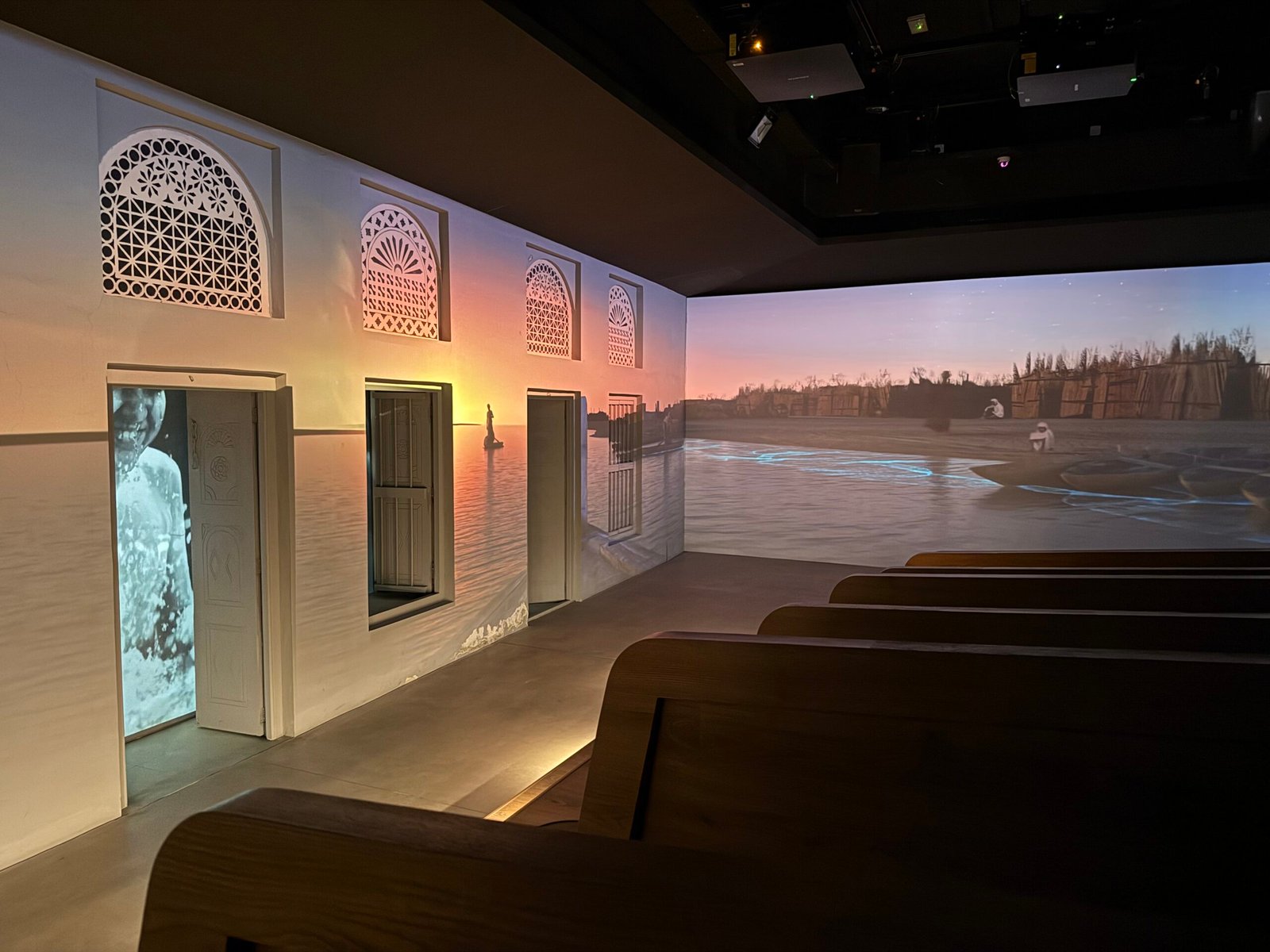
You see, they have a unique exhibition hall that shows you the evolution of the city by using a generous number of projectors, and a ton of moving parts on both sides of the room. At some point you look to the left and see the insides of a dhow used as a cargo freighter, a minute later you look to the right and the doors on the wall are opened to reveal the insides of an Emirati house that existed some decades ago. This is how museums should be. A visit to this district felt more like a glimpse into the future of museums than anything else and made me realize why they charge 50 AED to experience it, and many others like it. This is quite literally a day long activity, that will keep you hooked with its innovative use of technology, and engaging narrative on themes ranging from history to shipbuilding, and local cuisine to modernization. Al Shindagha Historic District is a must visit if you are in Dubai, much more so than any other museum in this list with the exception of the Etihad Museum. I can only hope that one day it will be as recognized as the more touristic museums that Dubai has to offer.
Coin Museum
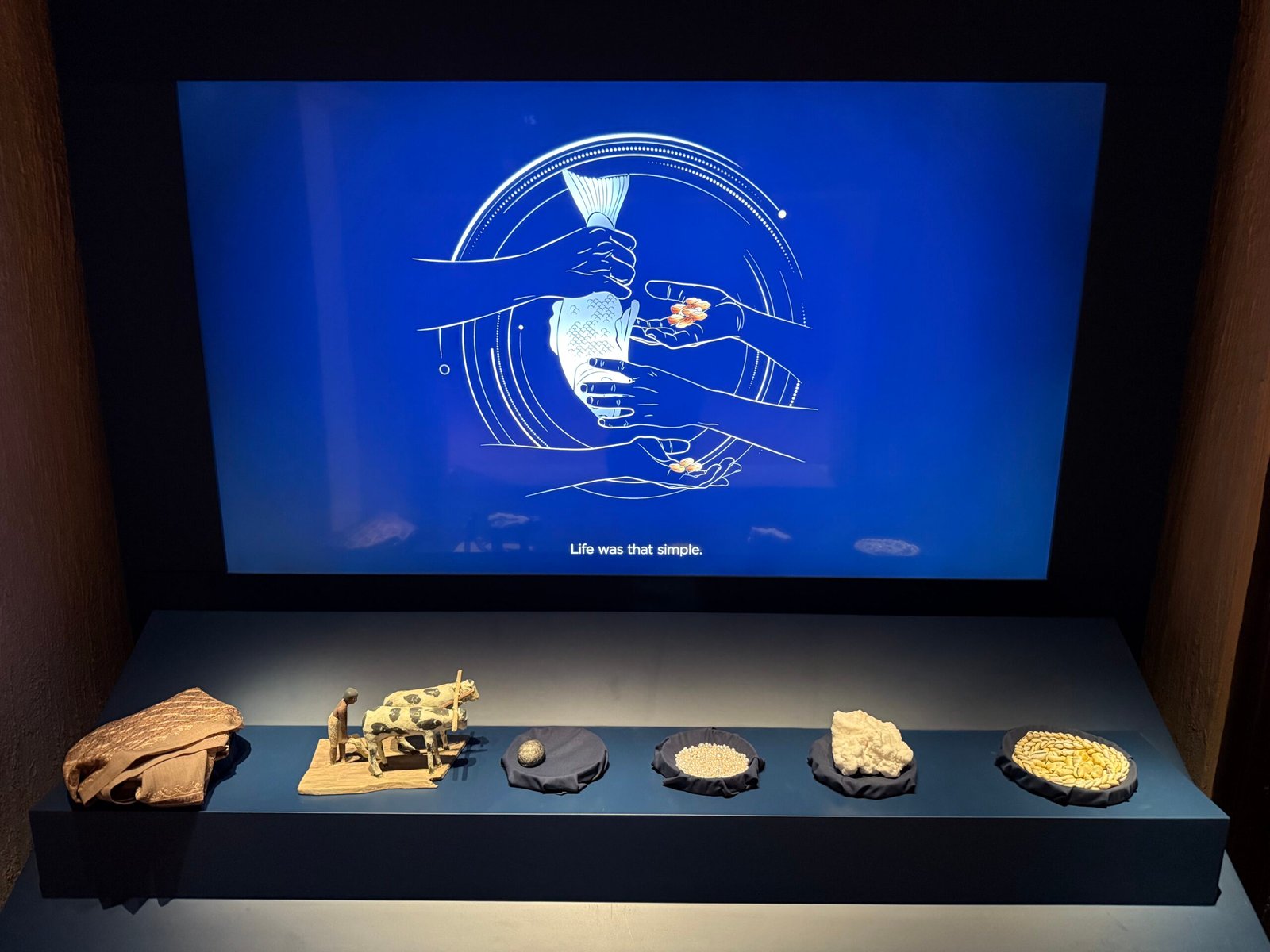
If 50 AED is truly out of budget, you may be happy to hear that not all museums in Dubai are paid. Coin museum is one of the better free museums that the city has to offer, especially if you are interested in numismatics. It can be found inside Al Fahidi Historical Neighbourhood, which in itself is a small cultural site of sort that is well worth your time.
Dubai Municipality Museum
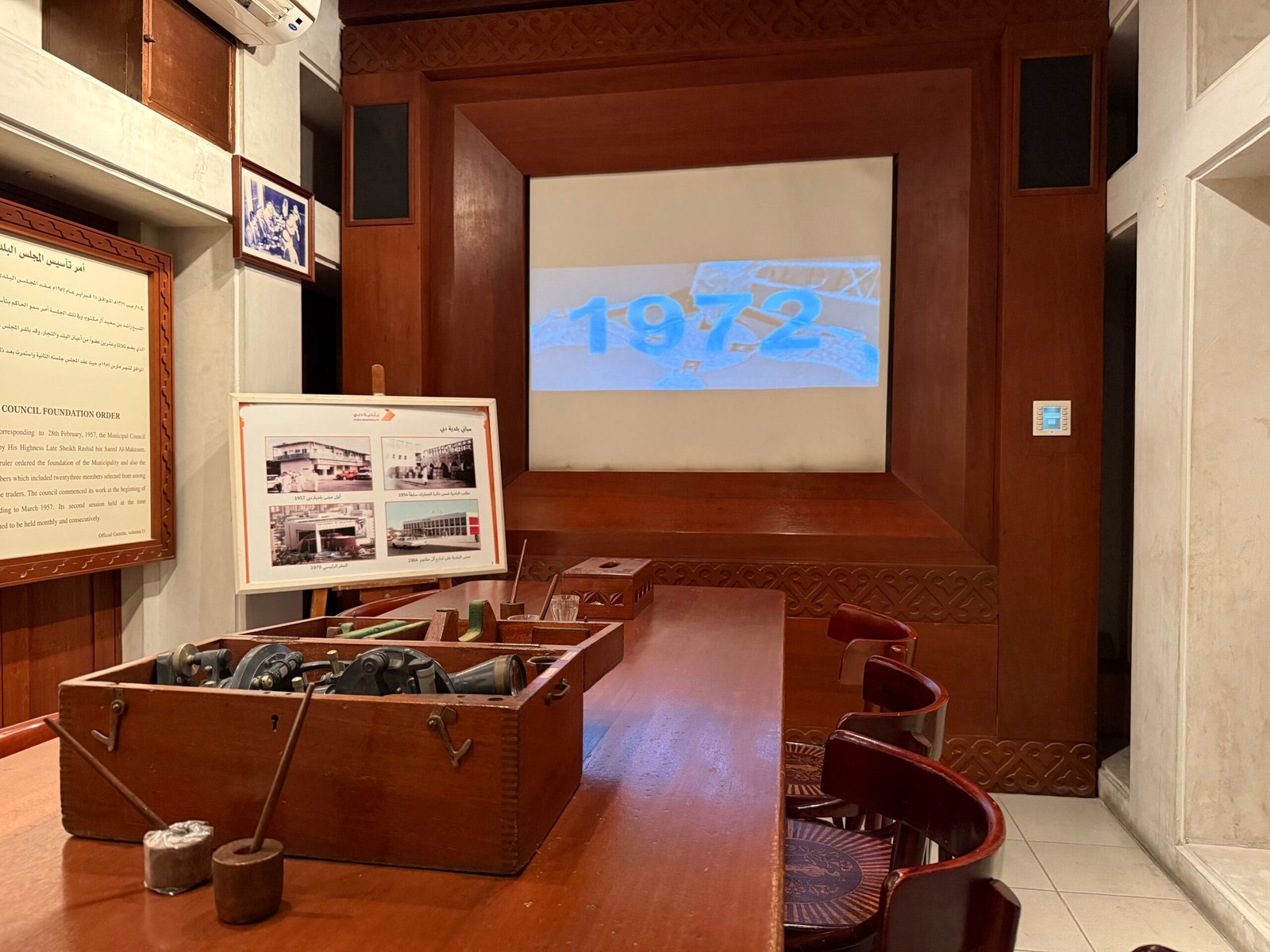
Yet another interesting free museum can be found on the other side of the Creek. This one really only has two tiny rooms, one of which has an interesting documentary about the development projects completed by the Dubai municipality since its inception. It is not a must visit per se, but it literally is on the path that leads from the harbour where the dhows dock at to the Dubai’s famous Gold Souk, so you cannot really lose much by paying it a cheeky visit.
Etihad Museum
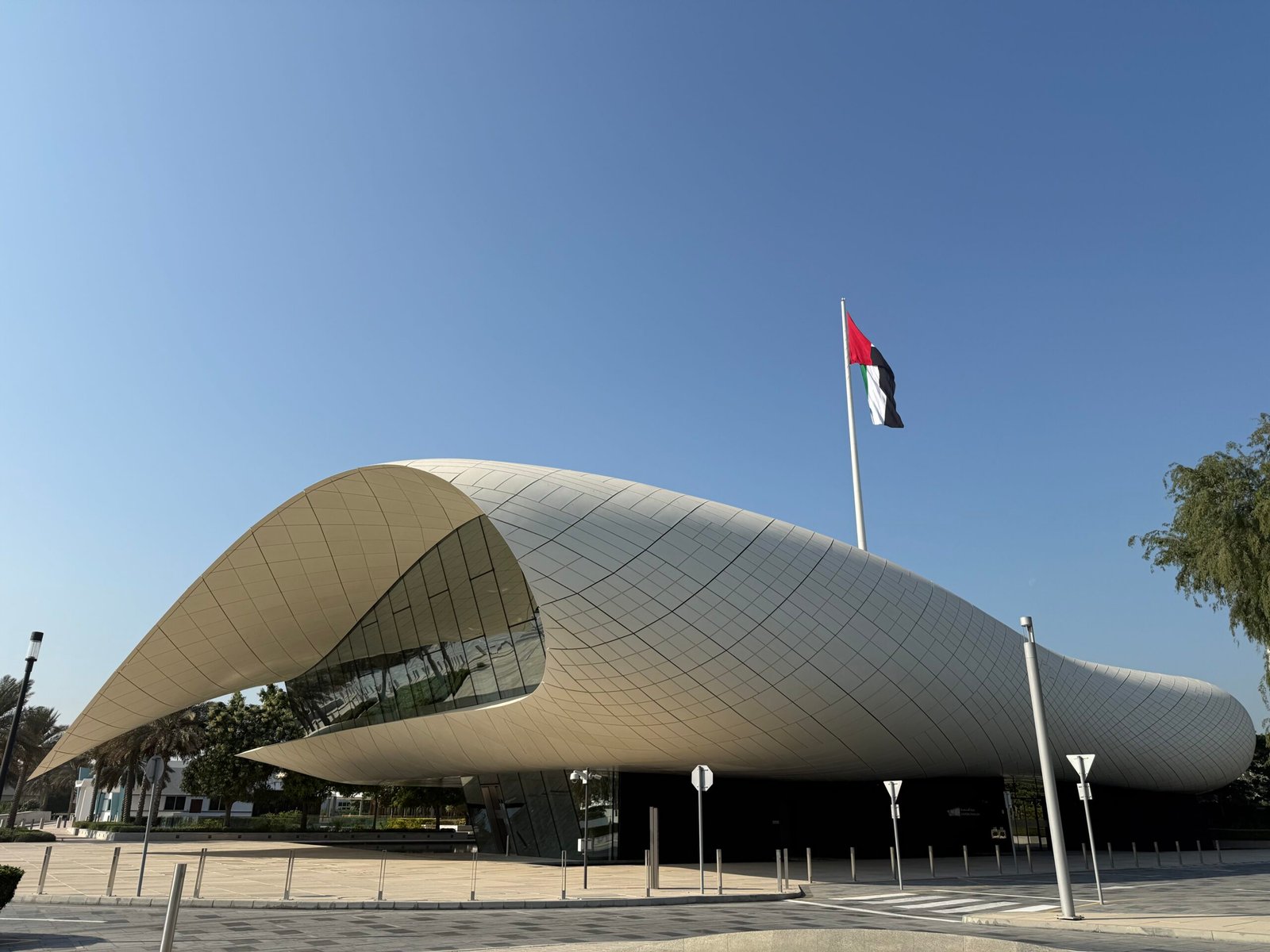
Yet another museum you most certainly cannot go wrong with a visit is the Etihad Museum. This is where the UAE was founded in 1971. Today, a modern complex on the premises serves as a museum to tell the tale of that unification.
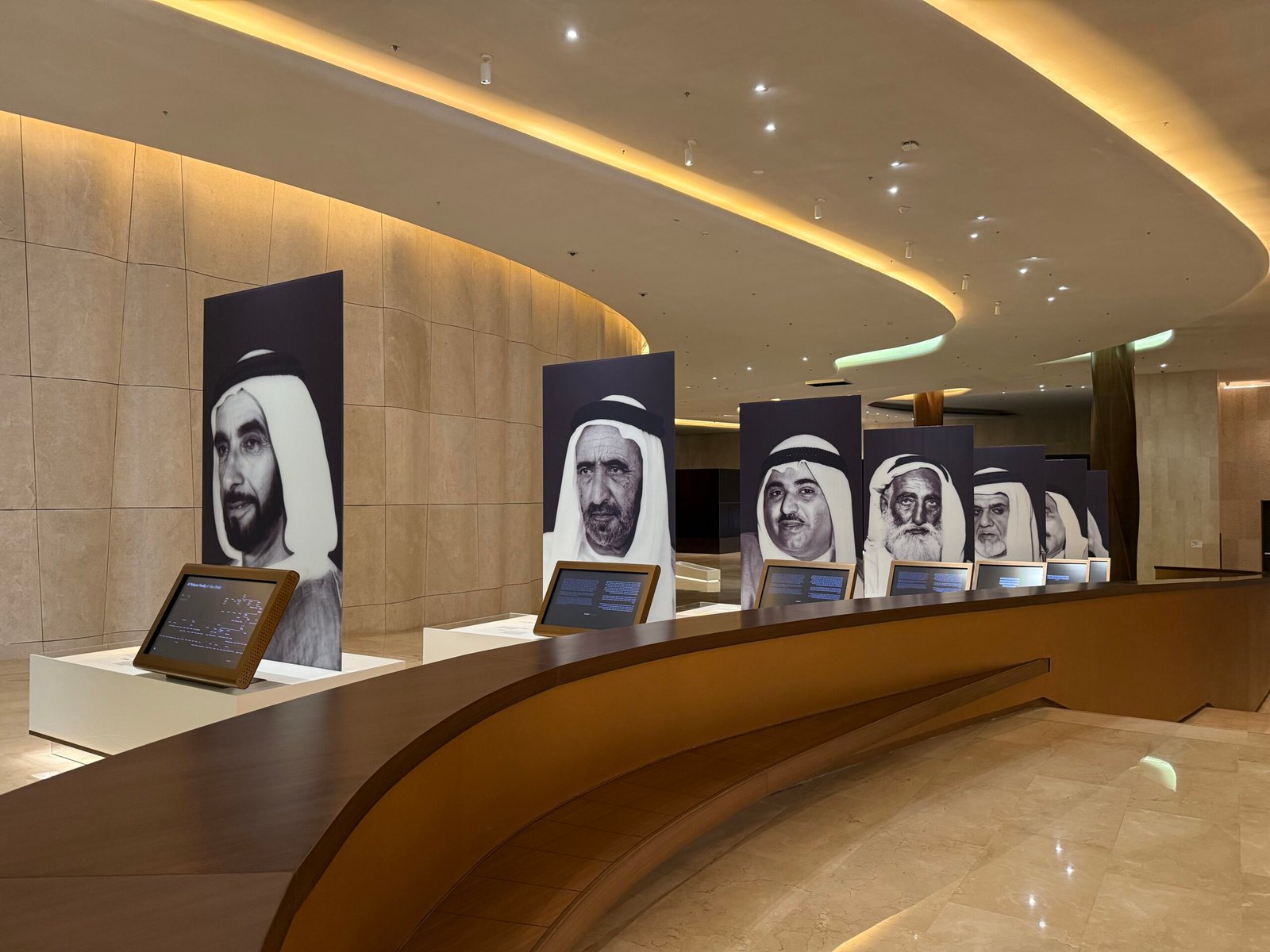
The founding fathers, seven sheikhs that ruled the seven Emirates that eventually formed the United Arab Emirates are at the centrepiece of the narrative here. These men decided that there was much strength in unity, “gambled” according to some contemporary observers, and most certainly won as a result of their bold political experimentation.
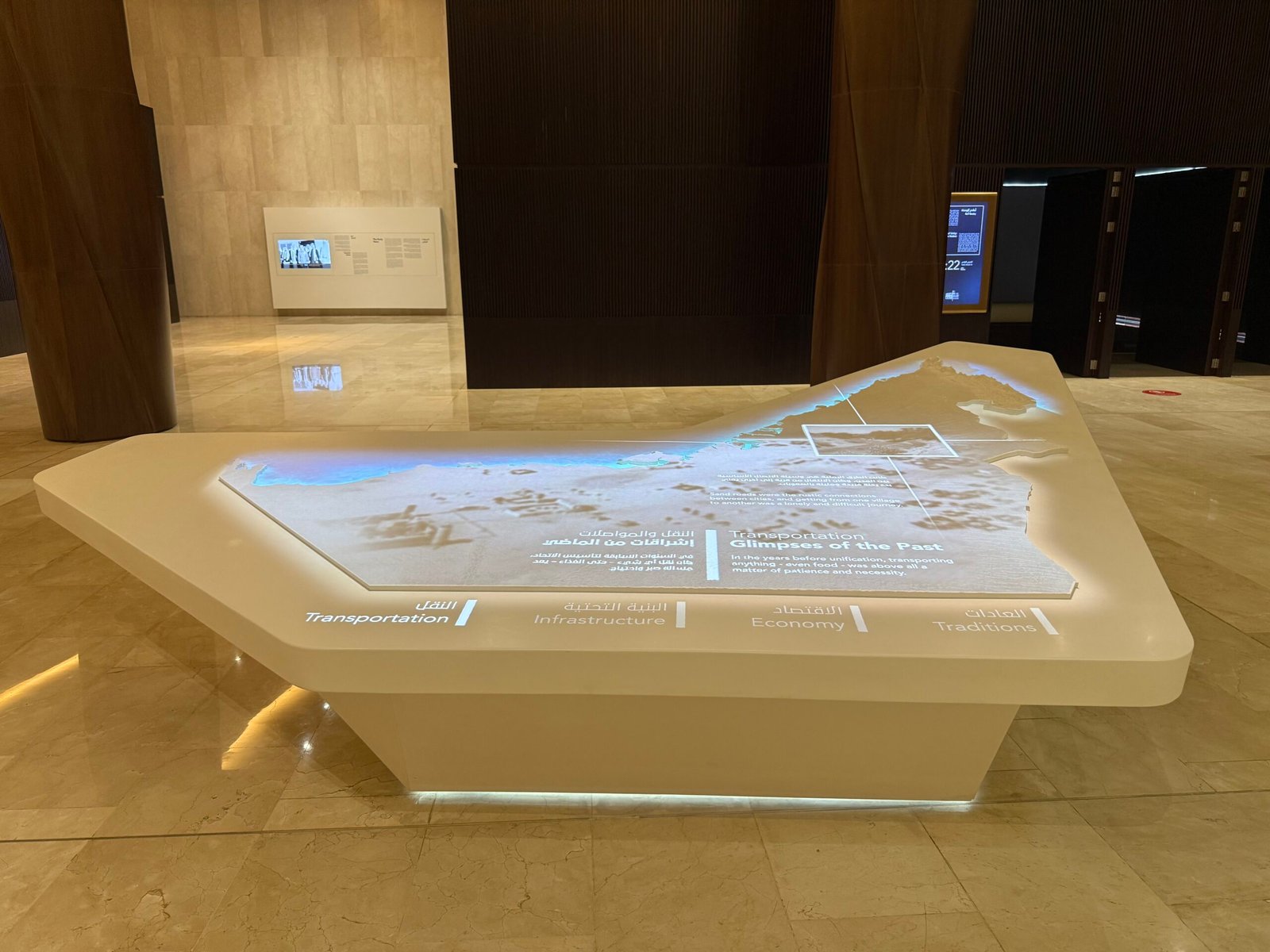
This is not a massive museum per se, but the amount of content housed within its walls is quite mind boggling. You can spend a considerable amount of time with this display alone, which shows the incredible transformation that the country saw after the unification, by focusing on four crucial themes.

There are two documentaries to enjoy here as well, one of which even has some holographic elements in it. It is, of course, nigh impossible to capture that on camera, alas I tried my best.
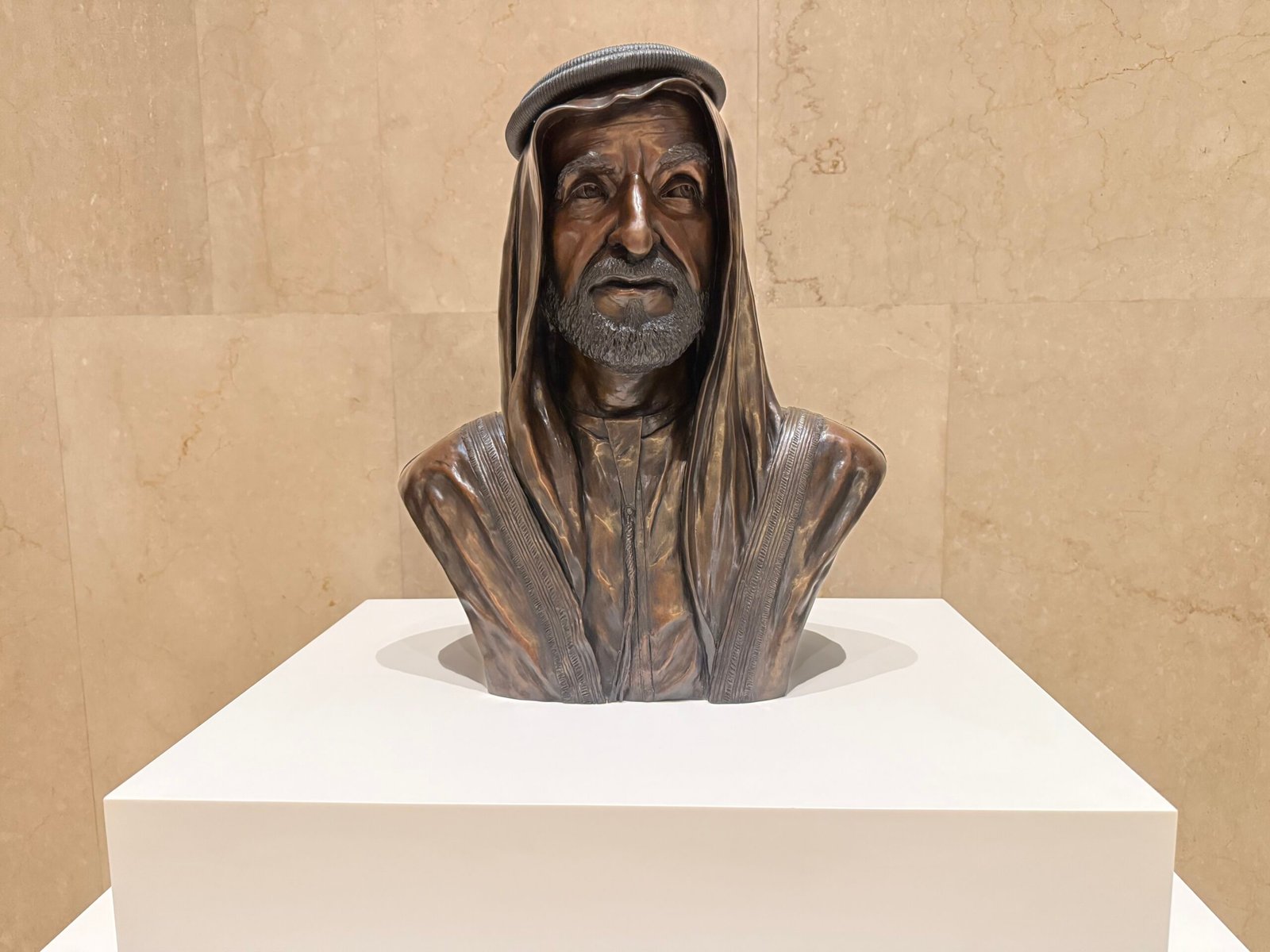
While all sheikhs receive some limelight in this museum, I have to say that, for reasons that are clear to all that actually read anything that was presented here, it is really Sheikh Zayed bin Sultan Al Nahyan that is under the spotlight, the man who first envisioned this political project.
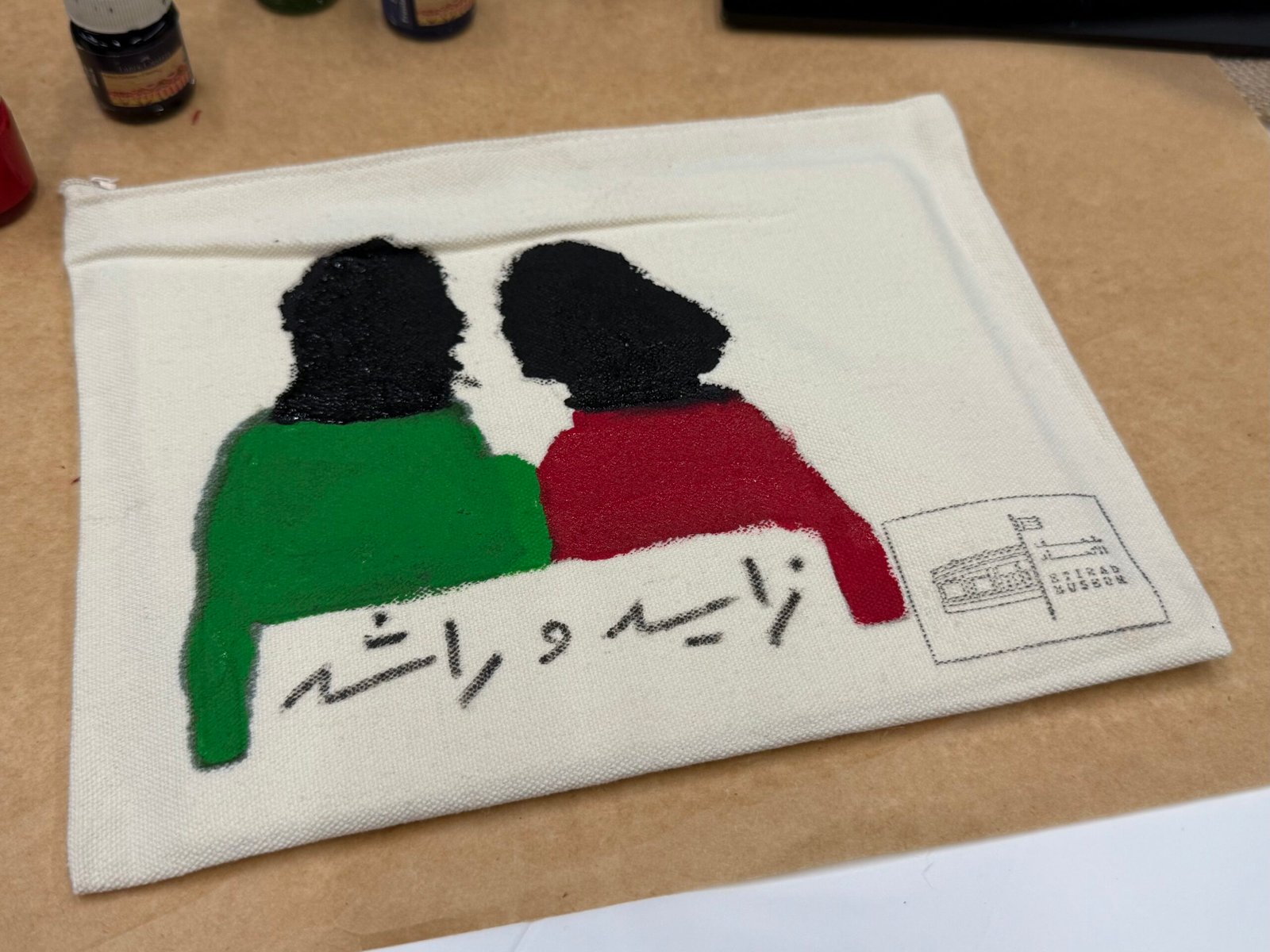
In fact, if you are interested in doing some crafts, the workshop that is offered here lets you draw a few different scenes from the unification of the Emirates, almost all of which contain Sheikh Zayed bin Sultan Al Nahyan. I have to say, while my artistic skills are most questionable to say the least, this was a rather enjoyable half an hour. You also get to keep your “masterwork” freely. Well, you do pay 25 AED to visit the museum itself, but still, that money is more than justified to see its well curated exhibit.
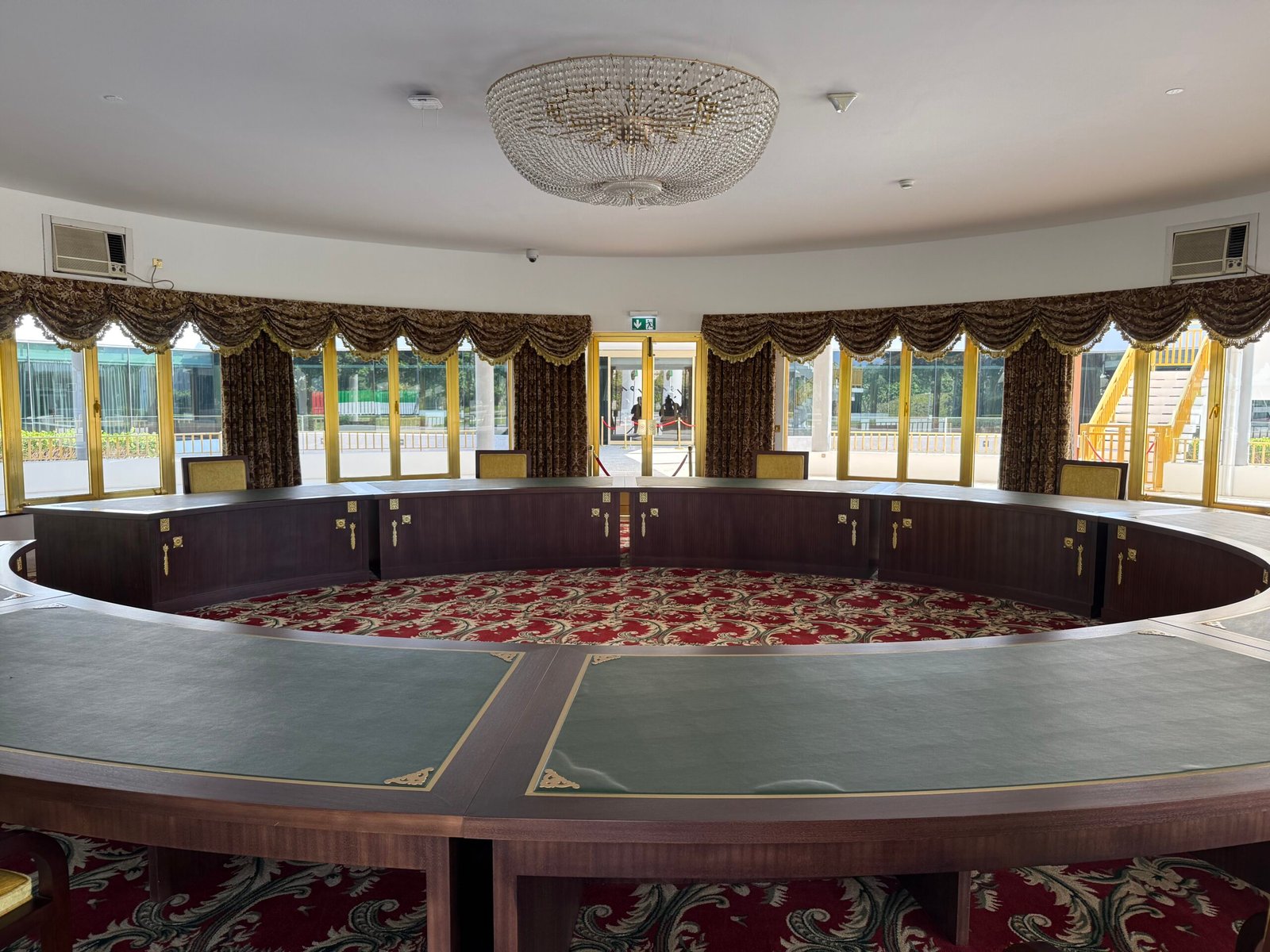
Besides, that entrance fee includes a visit to the very room in which the treaty to form the federation was signed. Before I even asked, the guide told me that the air conditioners you see are in fact the original ones, and that they are maintained almost daily so that they can keep working as if they are brand new. In fact, everything in this room is reportedly the very original. If it was not for the few modern amenities, like the sensors up top, you really do feel like you are sent back to those simpler times during your short visit here.
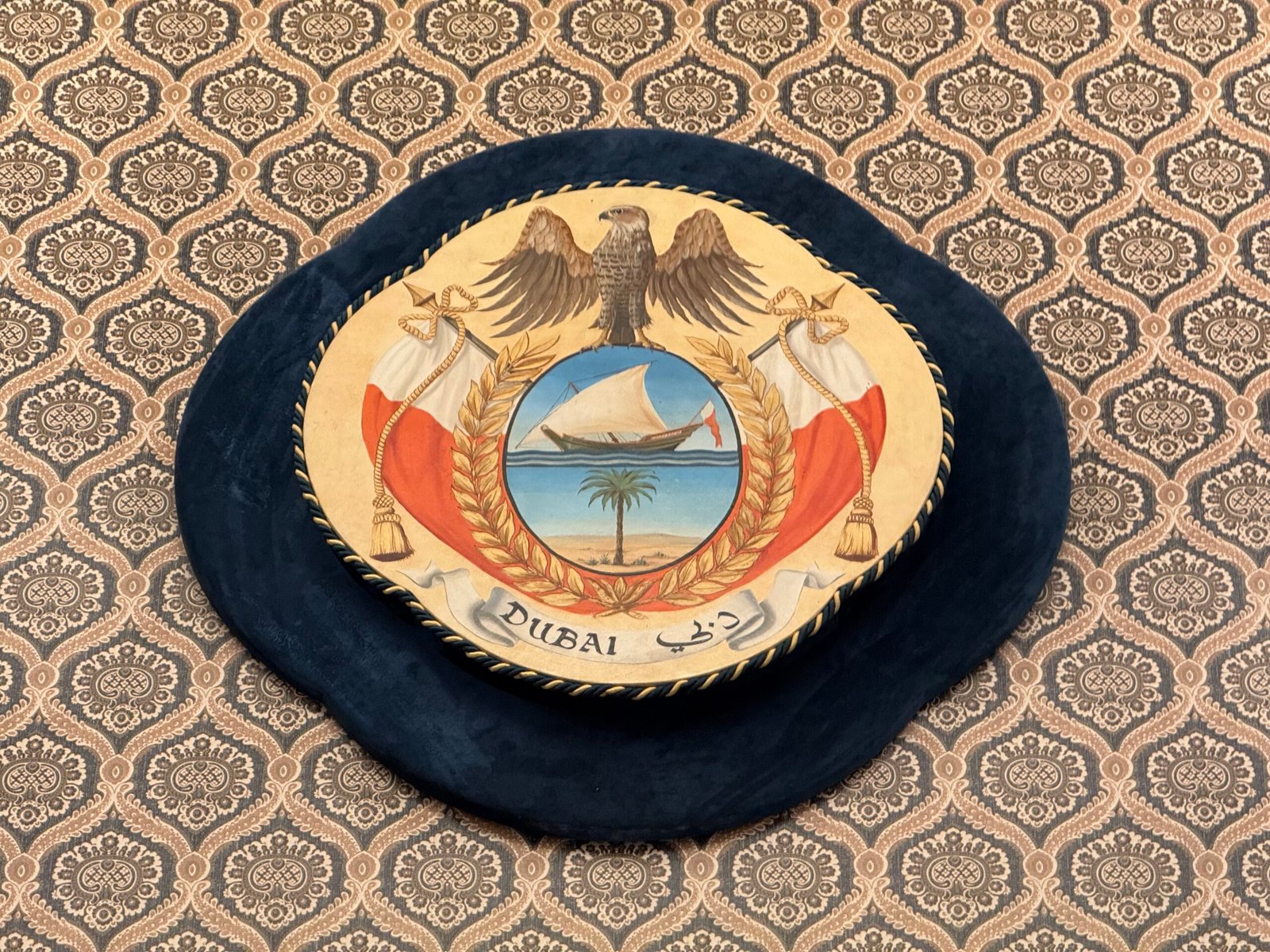
Right next to that small circular building, one can also visit the former palace of the sheikhs of Dubai, which was used to host the banquet to celebrate the unification of the emirates back in 1971. Here, I saw one of the older crests of Dubai, and looking at that humble dhow on it, could not help but be shocked at being reminded that in just around five decades this rather sleepy coastal town turned into one of the most renowned and richest metropolises in the whole world. While the role of the black gold cannot be underestimated, not all natural resource rich countries diversified their economies to this degree, and hopefully, avoid the Dutch disease.
This list is nowhere near an exhaustive one that goes over all the museums Dubai has to offer, but it nonetheless notes some of the finest examples that does not break the bank. When I am back in town, I would love to continue my explorations in other museums that the city has to offer, and who knows, maybe even update this article one day.