
Pharaonism is a particularly interesting concept, but if you are neither Egyptian nor into Egypt yourself, and have not heard this term yet, I would not blame you. This term refers to an early 20th-century ideology that can simply be described as Egypt’s own version of nationalism. It more or less argued that one can trace the roots of the current Egyptian nation all the way back to the time of the pharaohs and pyramids. Some argue that a resurgence of this ideology, at times referred to as Neo-Pharaonism, can be observed in the Egypt of today. The current Egyptian administration does seem to try to bring many Ancient Egyptian elements into how they represent the country on the global stage, and there are even rumours that the New Administrative Capital may be renamed Memphis. This would, of course, make it a namesake of the very first capital of the first unified Ancient Egyptian state.
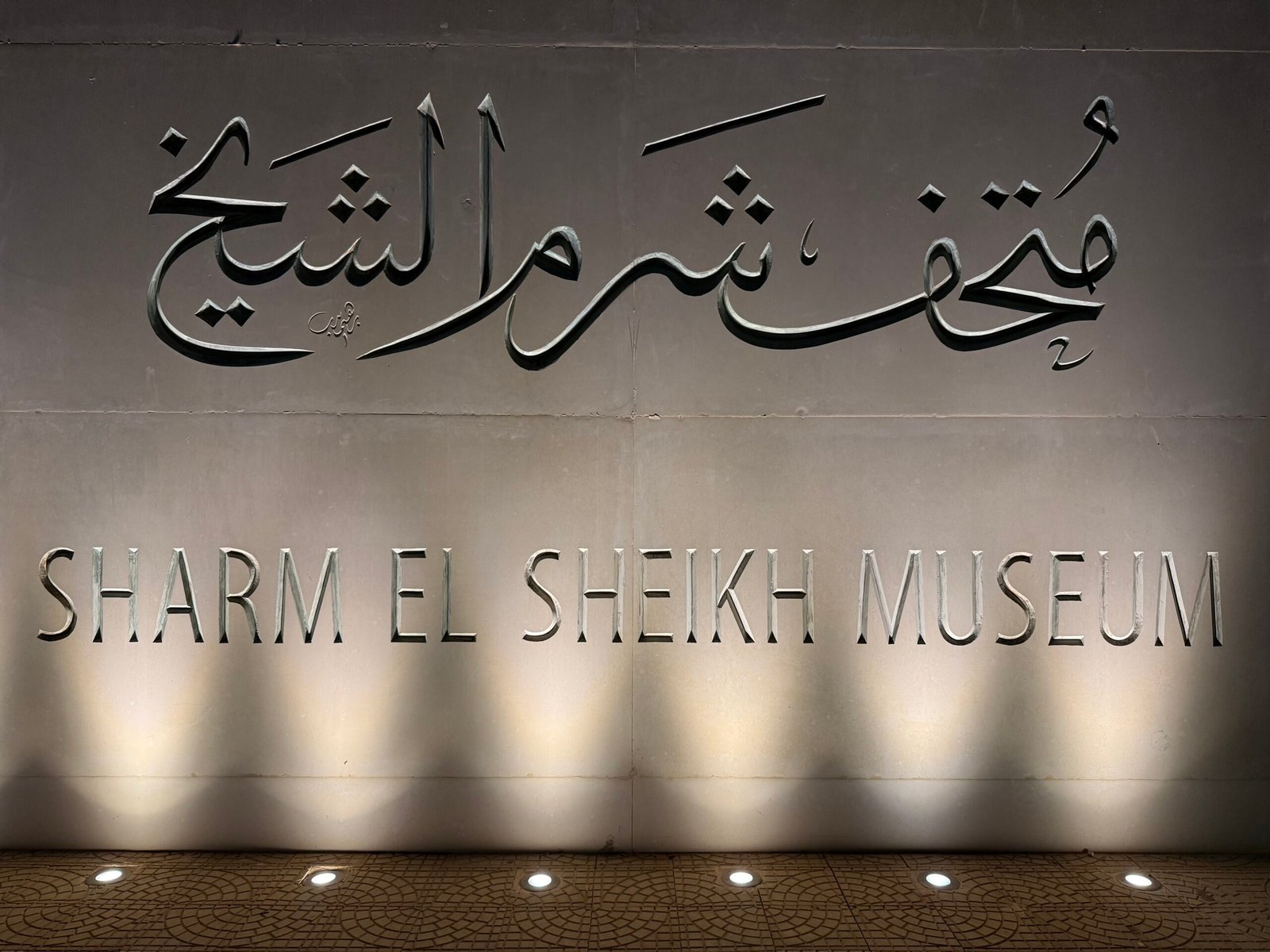
This ideology is quite fascinating in many ways, some of which I will cover in this article. However, it is especially interesting to see this sort of national framing in Sharm El-Sheikh of all places. After all, the Ancient Egyptian civilization did not have any significant presence in this part of the country. Keeping that in mind, let us now start our exploration of the Sharm El-Sheikh Museum, which inspired me to write this article in the first place.
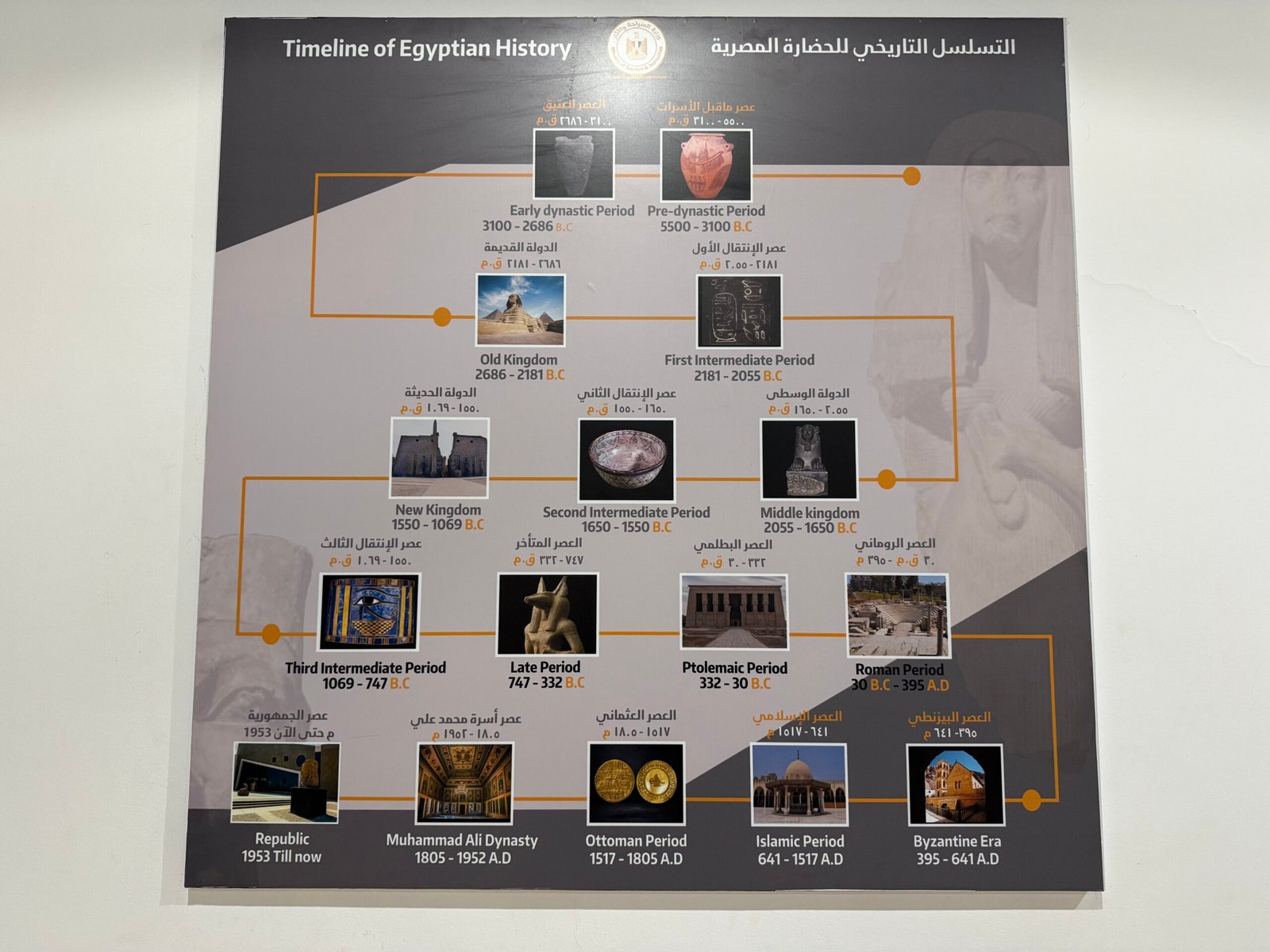
The entry fee for this museum is 200 EGP per person, and they only accept card payments. Once you start your visit properly, you immediately see a “timeline of Egyptian history.” In it, the entire history of Egypt is divided into sixteen periods. The first nine of these cover the history of ancient Egypt. The next five periods are when the Ancient Greeks, Romans, Byzantines (so Romans again), Arabs, and the Ottomans (some might even say that the “pesky” Romans are back) ruled the Egyptian lands instead. The last two are dedicated to modern Egypt, starting with its de facto (but not de jure) secession from the Ottoman Empire. Now, please try to keep this timeline in the back of your mind as we explore what is actually on display in the halls of this museum.
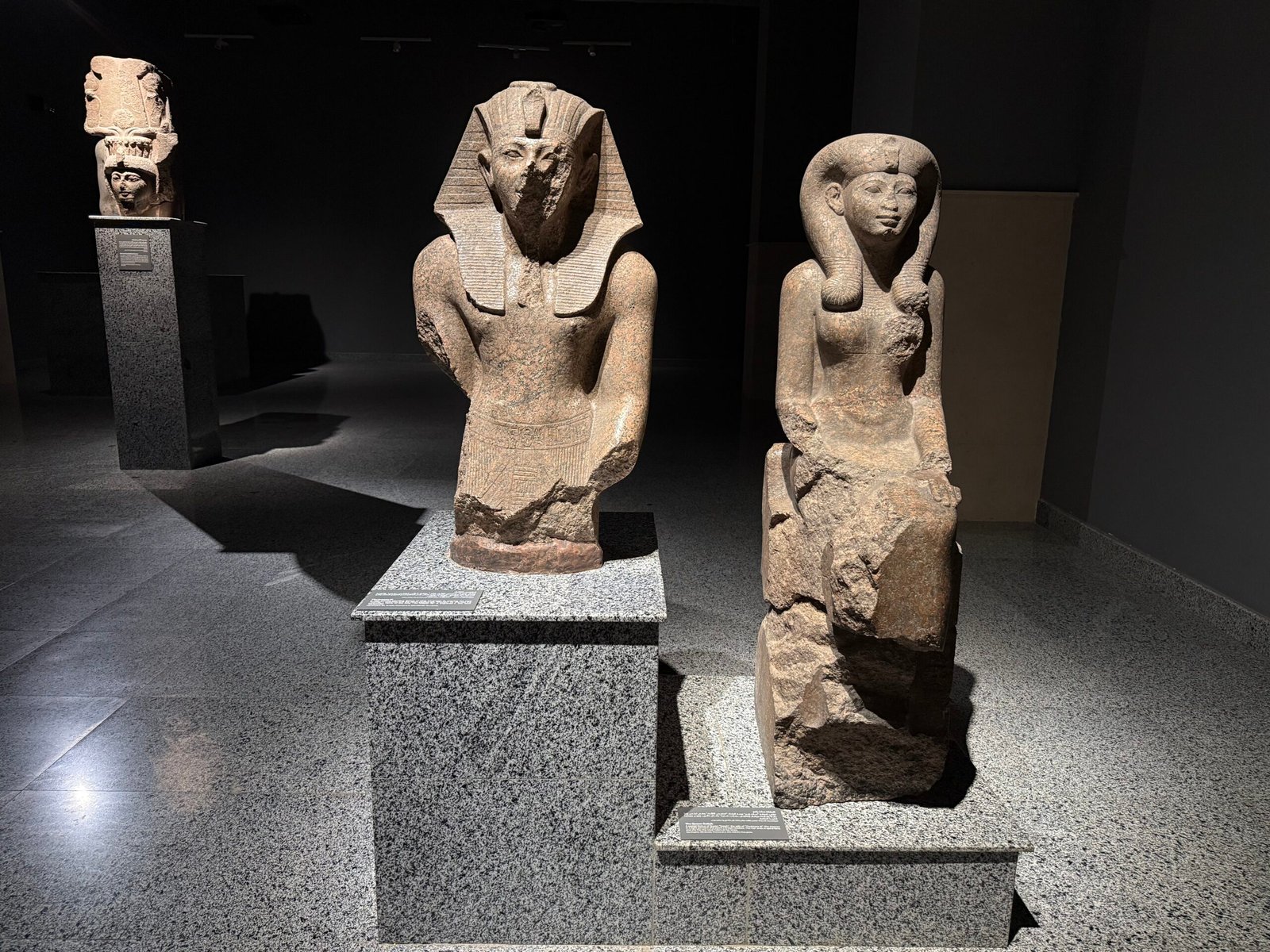
The first hall starts out strongly. You can find a lot of Ancient Egyptian sculptures here, often illuminated in the most dramatic way possible.
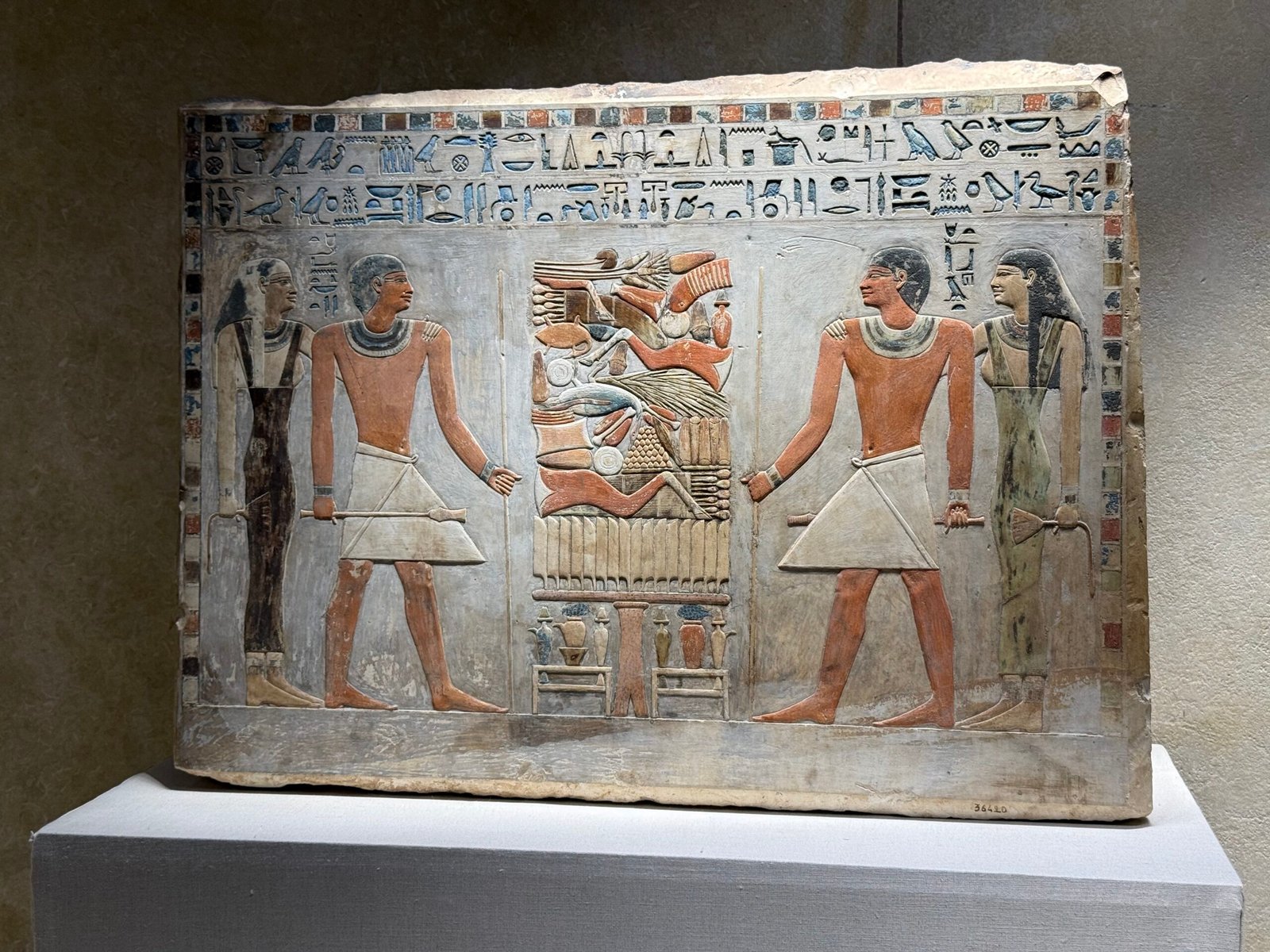
You can also find some presumably ancient depictions and hieroglyphs here, though it is nigh impossible to find out much about the items on display in most cases. You are usually given the name and date of the artifact, and that is it.
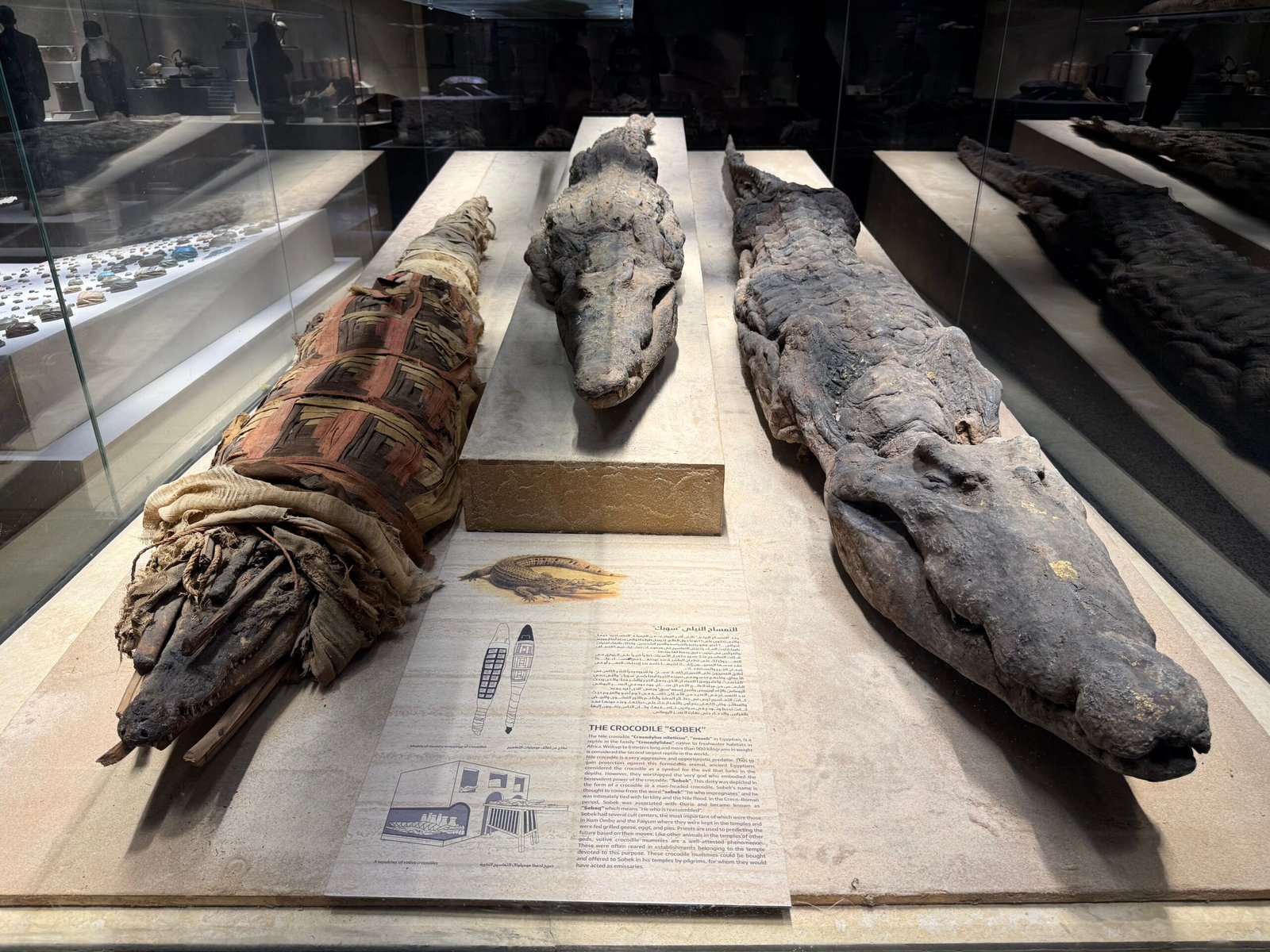
The second hall, to the right of the first one, changes this for the better. Here, you are given far more context about what you are looking at. I suppose you do not need someone to tell you that you are looking at some mummified crocodiles here, but nevertheless, it cannot hurt to err on the side of caution.
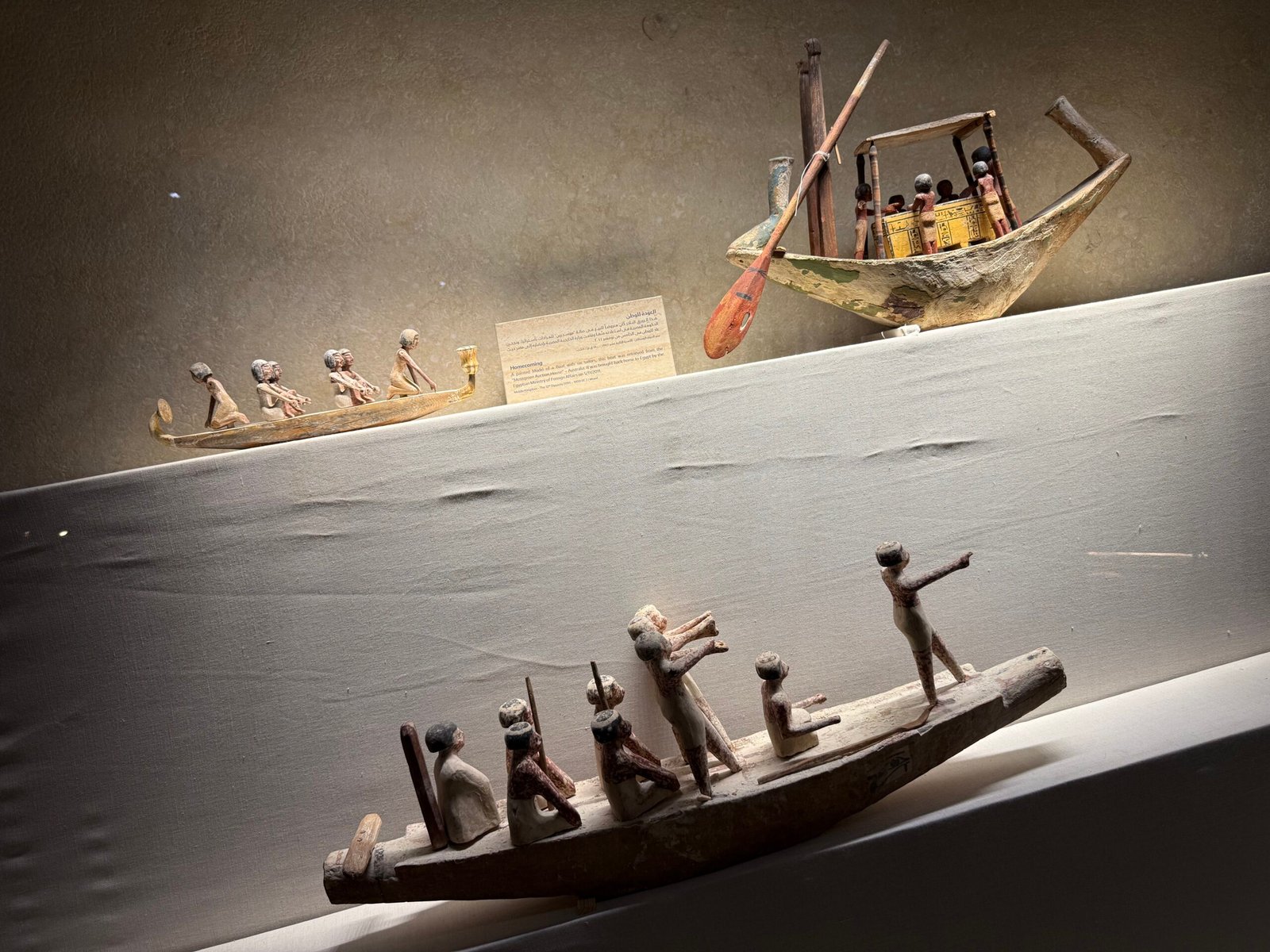
You can find a lot of smaller artifacts from Ancient Egypt in this second hall. These may not be as impressive as the often significantly bigger sculptures or quintessential mummies, but they are even more interesting to see for some of us. These more everyday-looking items are just much more relatable, if you ask me.
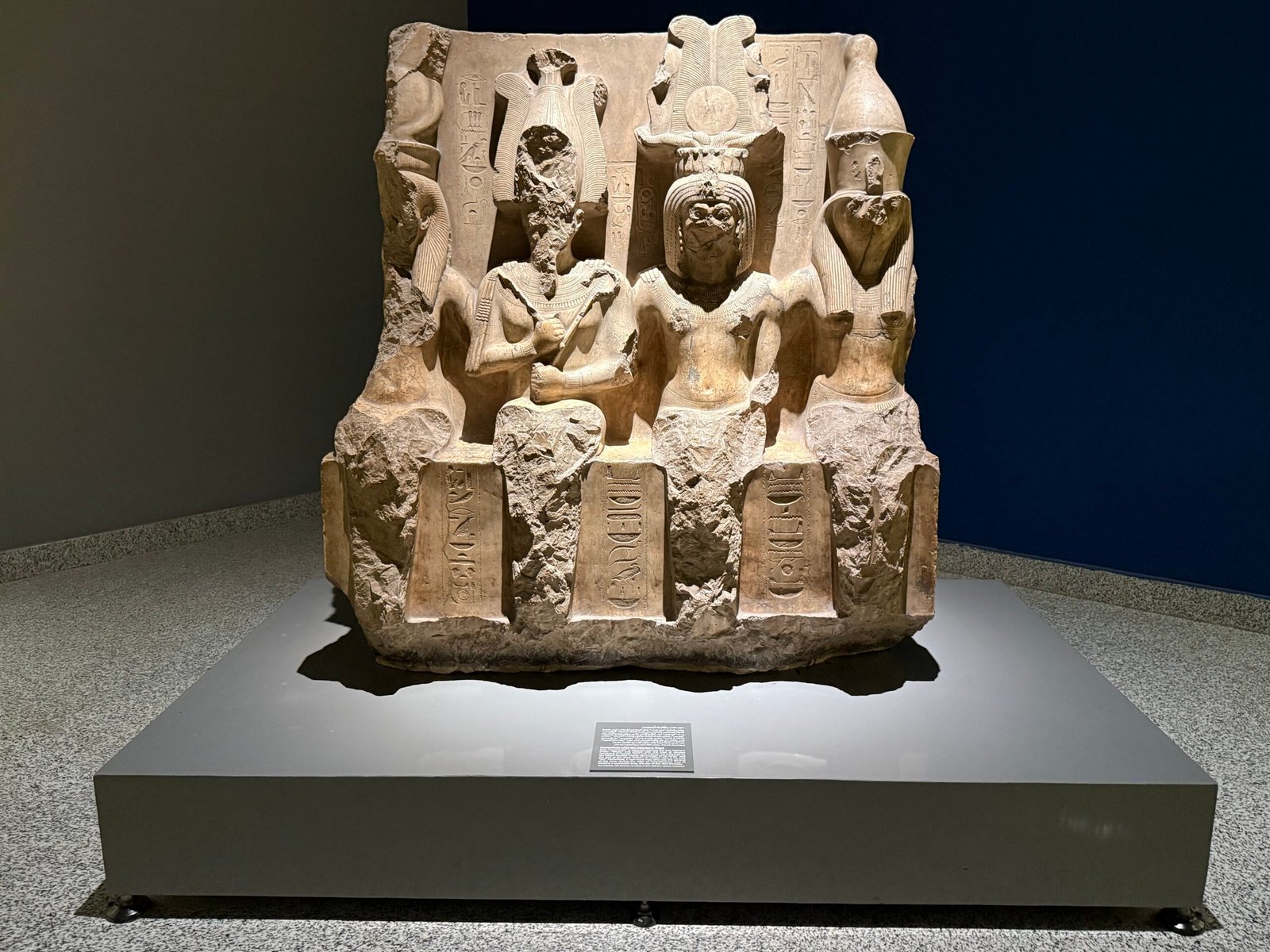
Of course, for those of you who prefer those sculptures, there are far too many of them to count here. However, I had had my fill of them at this point and wanted to check out the next hall instead.
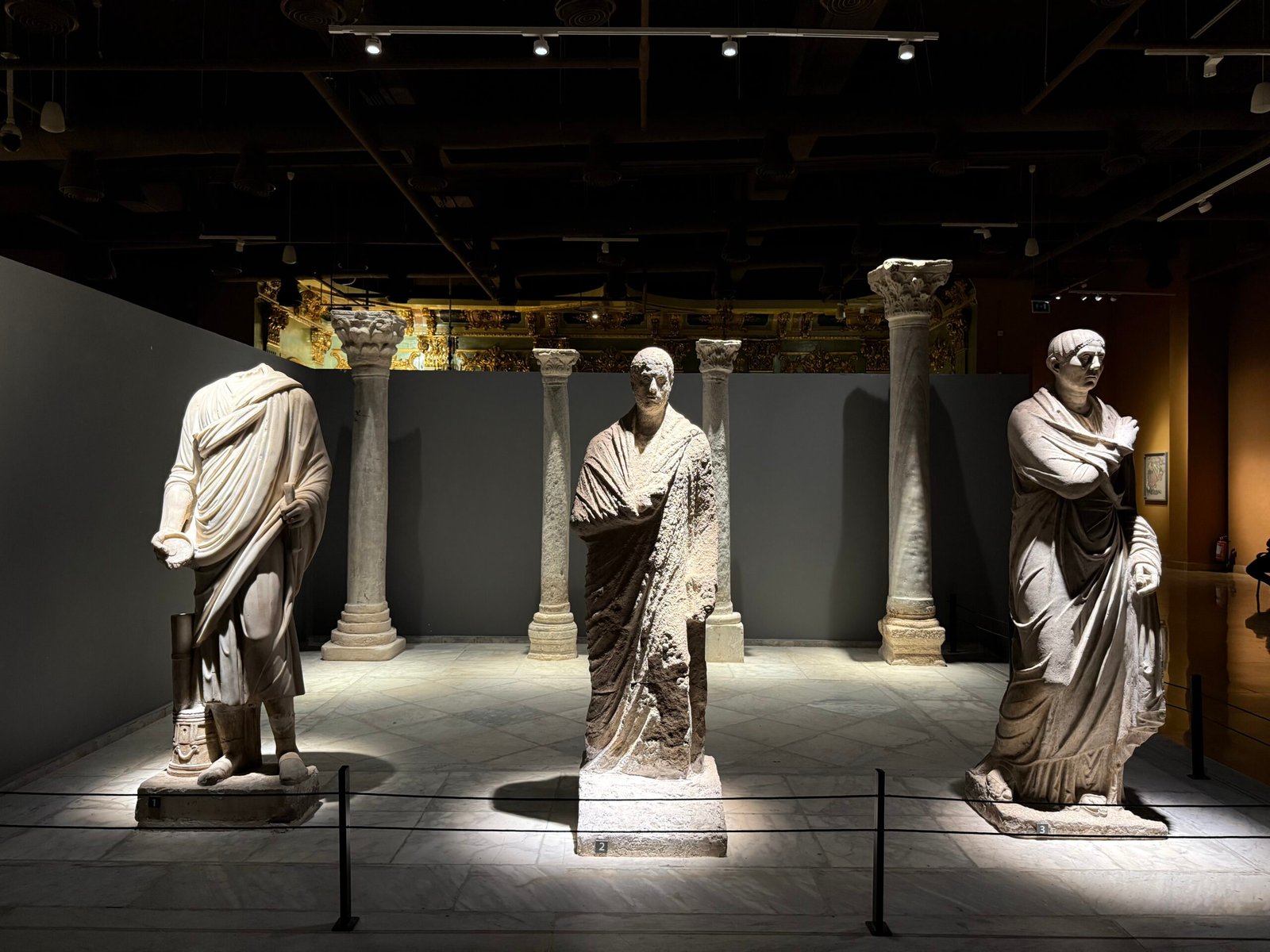
Here, I was at first surprised to find even more sculptures, but in hindsight, I should not have been surprised at all. After all, the Ancient Greek and Roman periods followed the Ancient Egyptian one in the timeline that they shared with us at the beginning. Those latter civilizations happened to produce sculptures like these, so it all made a lot of sense when you thought about it for a second. We were finally moving forward in time, into the future! Soon enough, we could even find out why the current population of Egypt is mostly Muslim and speaks Arabic.
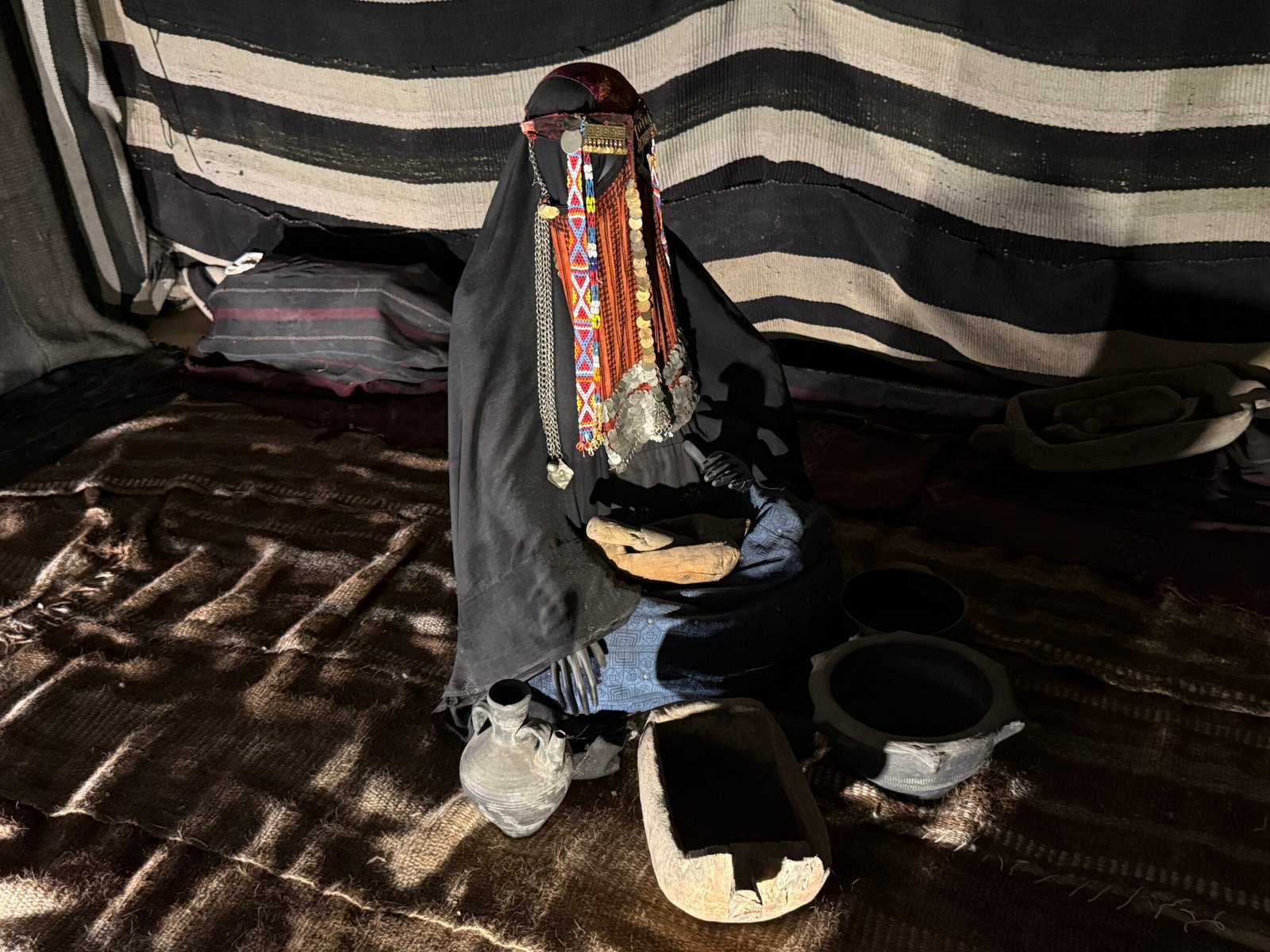
But answers to such questions never came. Because there never was a section, however small it might be, dedicated to the Arabization of Egypt, or to the Ottoman rule in the region. These later developments are arguably “foreign” and certainly not Ancient Egyptian, which is perhaps what made them so unworthy of discussion in the curator’s mind.
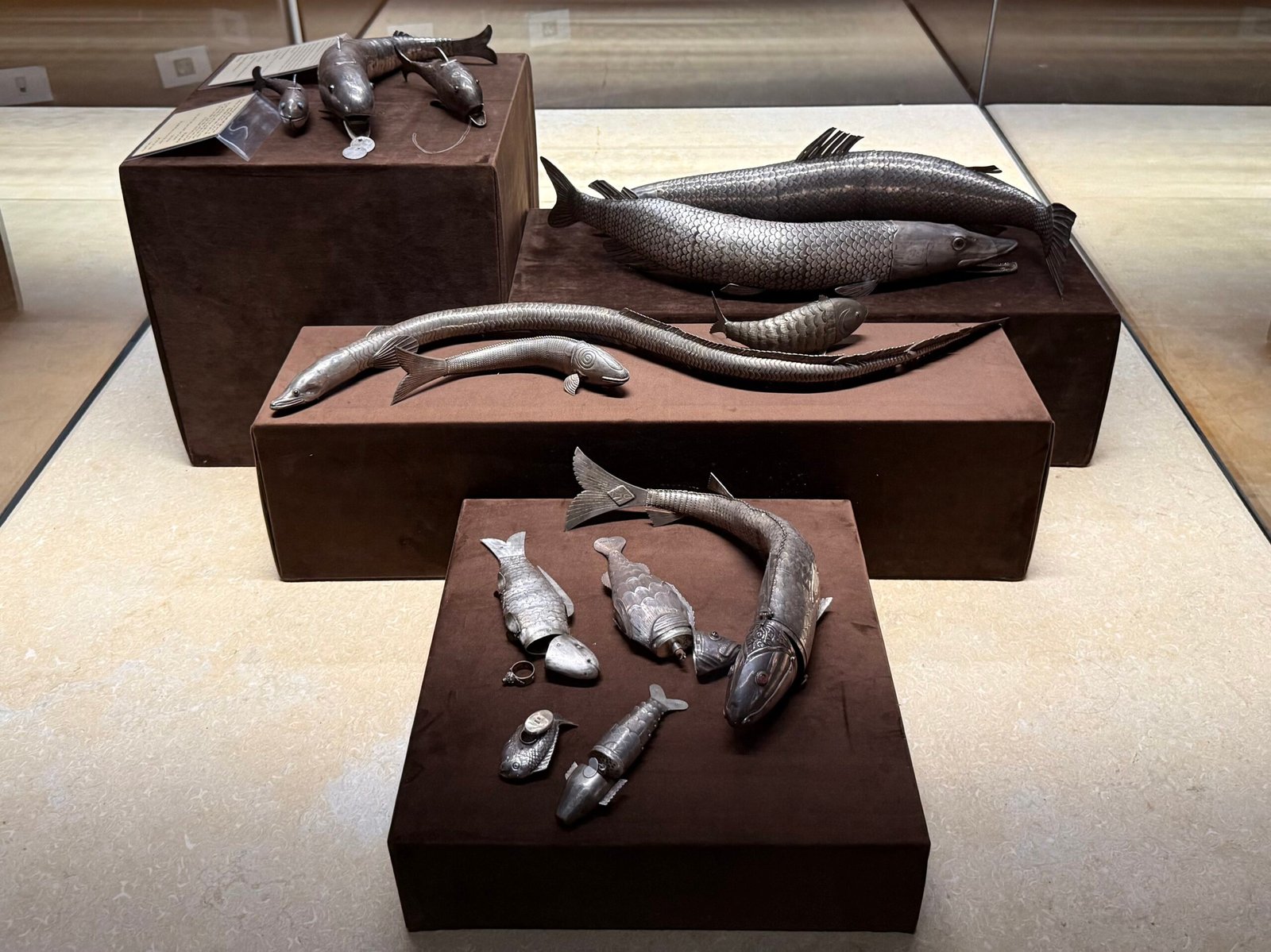
Ultimately, the exhibition ends unceremoniously, with some artistic representations of fish, and without mentioning anything about the Republican period that came after 1953. I prefer not to get too political in my writings, as I find it most uncouth to make judgements about other peoples’ administrations, ideologies, and so on. So, make what you will of this museum and its contents on your own.
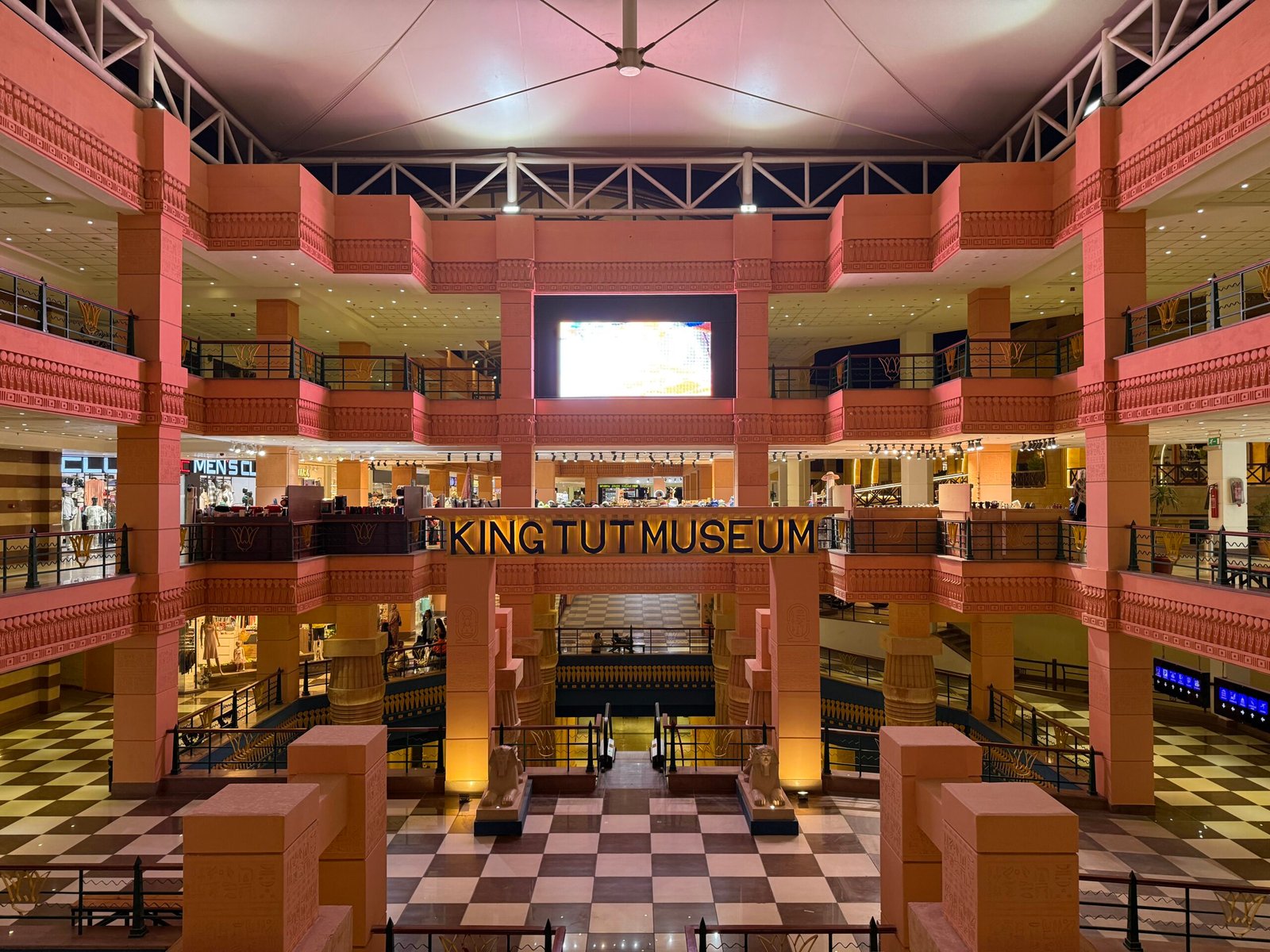
Because, at the end of the day, it is up to the Egyptians today, and the Egyptians alone, to create a historical-national framework that works for them. I can, however, point out some interesting details that genuinely amaze me as a historian, but that is all I will do as a foreigner. Case in point, let us consider this egregiously priced and private King Tut Museum in the Ancient Egyptian-themed mall called Genena City for a second. It is clear that this museum is there to capitalize on tourists who did not do their homework well enough. If you want to visit a museum in Sharm El-Sheikh, make sure that it is the official Sharm El-Sheikh Museum.
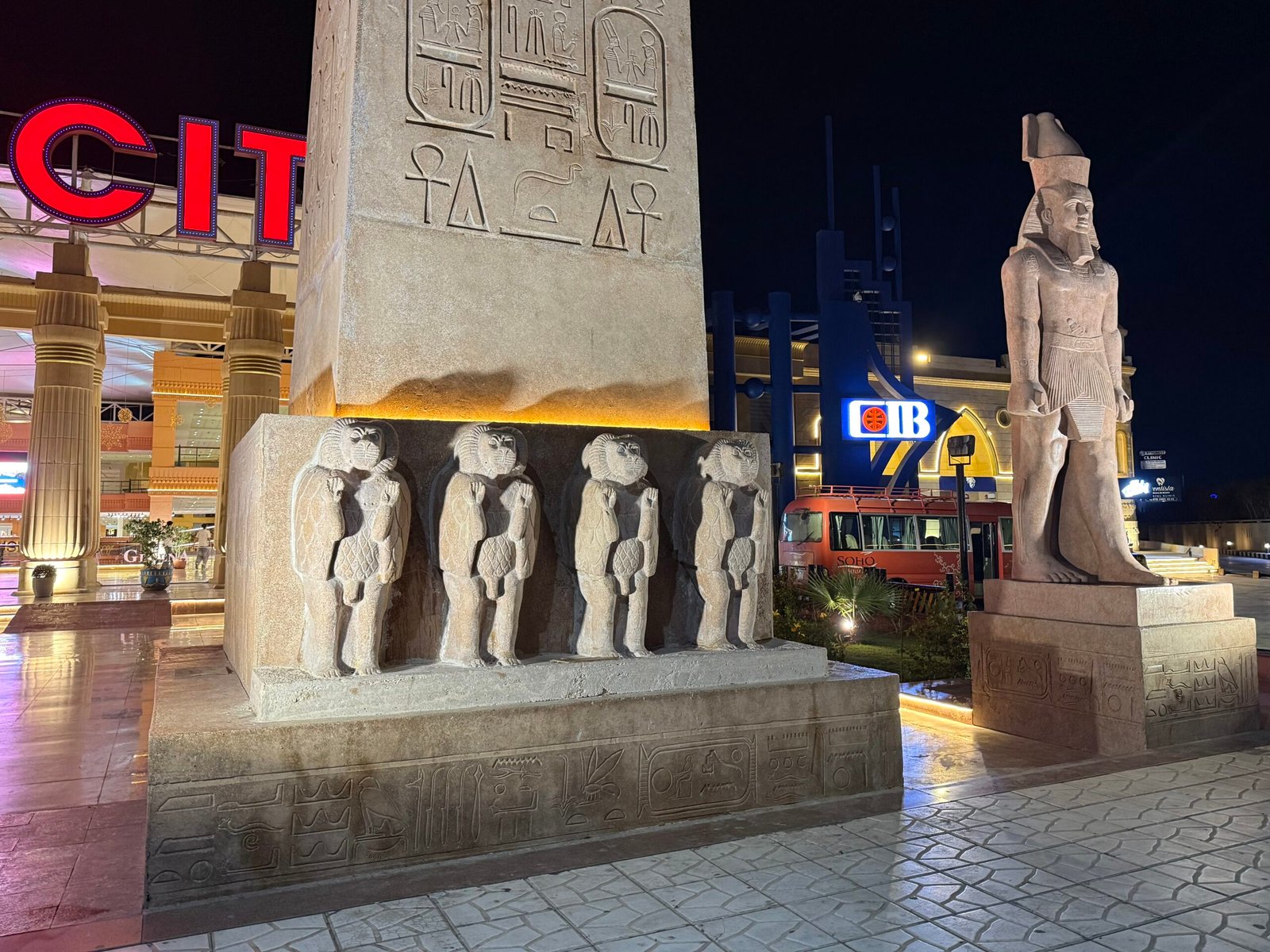
And to be fair, is it even unreasonable to try to capitalize on tourists in a dedicated resort town? Many people are (rightfully) fascinated by Ancient Egyptian mythology and history. This means that making Ancient Egyptian motifs and branding some sort of recurring theme within your resort town is not a bad idea after all. As long as you do not care about certain technicalities, such as how Sharm El-Sheikh is a very recent settlement that had almost nothing to do with the Ancient Egyptian civilization, this theming is admittedly quite enjoyable. I did have to ignore the historian in me during this trip, but that was hardly an issue for me at the time. In fact, I wanted to get as far away from my article revisions and dissertation writing during this holiday as possible, and one might say that my wishes were granted when I stopped thinking like a historian altogether.
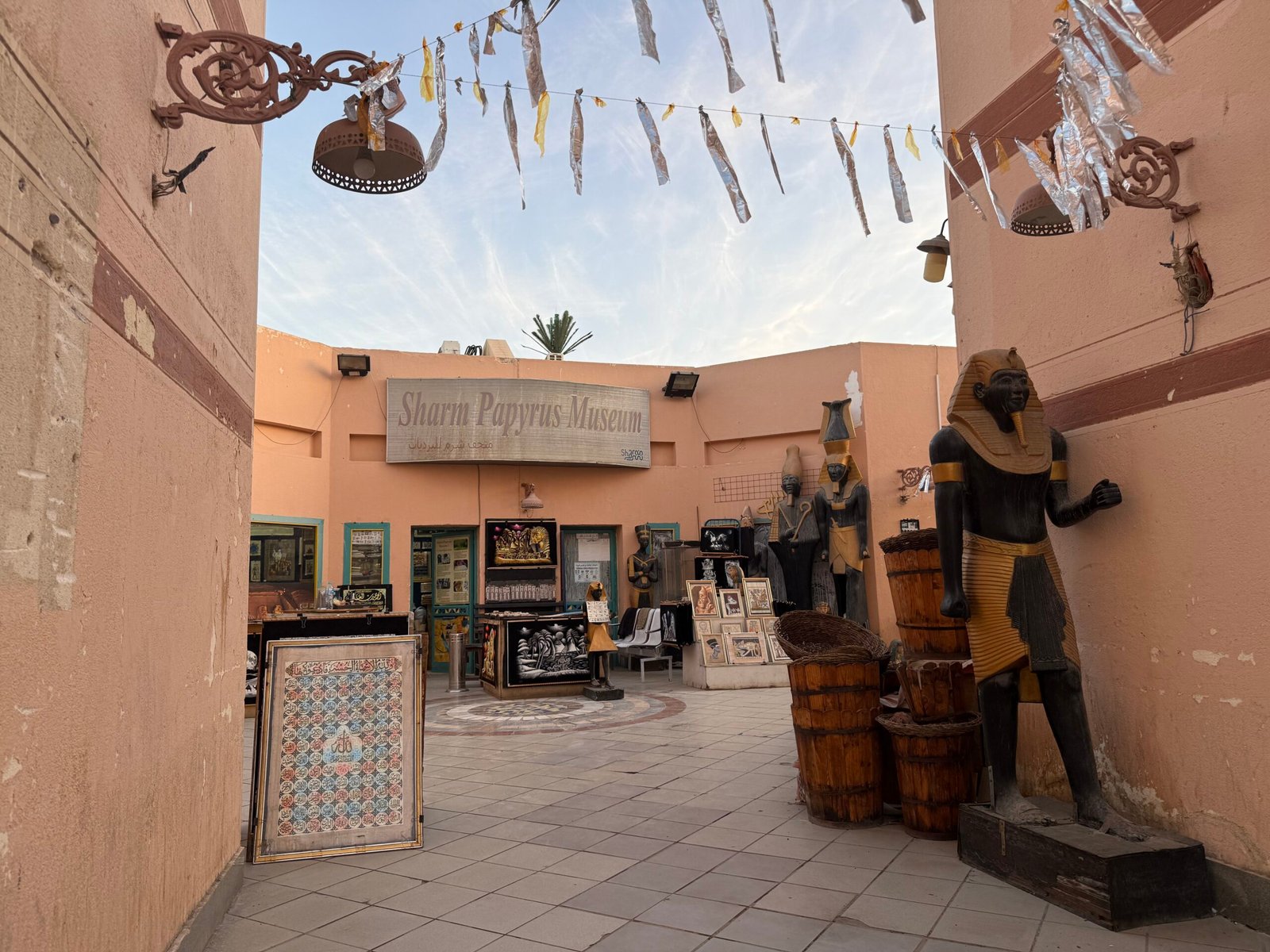
Eventually, I stopped worrying and started to enjoy all the Ancient Egyptian-themed shops, cafes, restaurants, hotels, pubs, beaches, and even a casino that can be found in this lovely resort town. These examples of Neo-Pharaonism stopped bothering me as ahistorical glitches in the matrix and instead started to fascinate me as some riveting instances of the reframing of history that could be caused either by an urge to maximize one’s profits or by genuine nationalist concerns. Either way, they add to the cityscape in my humble opinion, transforming it from just another resort town into one that at the very least has a somewhat recurring theme in its streets.
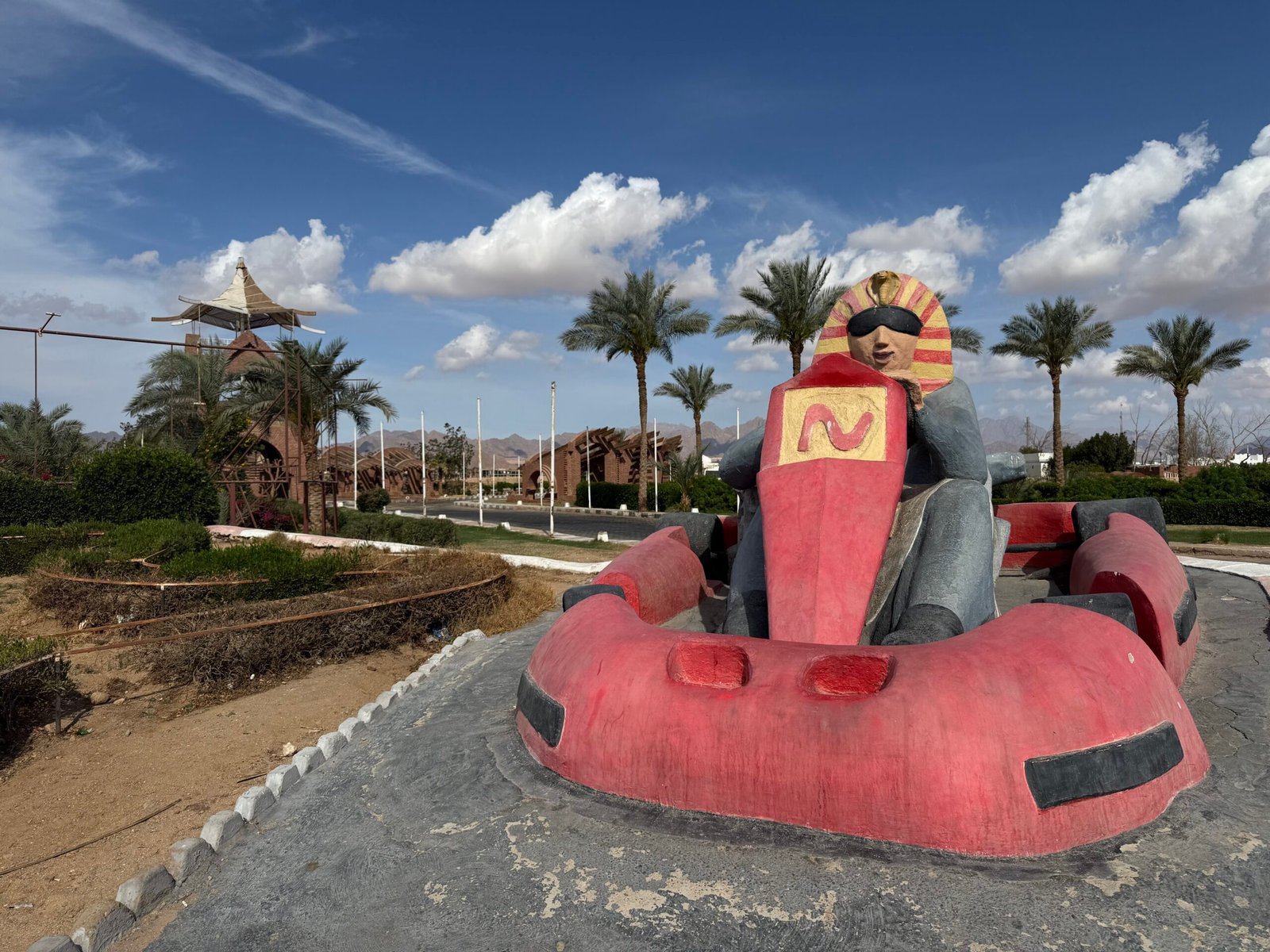
Besides, what sort of person would feel anything but joy when they see a pharaoh riding a go-kart? How could you possibly not like what you see here? For all intents and purposes, Neo-Pharaonism remains a part of politics in Egypt, with its roots stretching back into the last century. It is as peculiar an ideology as it can get, but then again, are not all ideologies somewhat quirky to those who are not that familiar with them? In this case, as a traveller who loves seeing something slightly different during each of his voyages, I must admit that it is the little things like a random go-kart-driving pharaoh that excite me the most these days. Seeing different takes on history, a new framework for old developments, practical uses of history that go beyond the realm of academics or even politics, and so on, are all interesting in their own ways. I for one cannot help but feel excited by the fact that when I eventually return to Egypt to visit its actual historical sites, I may be able to visit its new capital, and it may be called Memphis. Who knows, maybe one day I can even write about the finest eateries or the best museums in Memphis on the Wondering Voyager as well.