
We already established that the 1984 Winter Olympics were held in the Yugoslav Sarajevo and that such an intensive event certainly had an impact on the cityscape that survives to this day. While one can find remnants of the Olympics in Sarajevo’s city center quite commonly, it is best to leave the city entirely, and head for the Trebević mountain if you really wish to see some unique remains from this more positive period of the city. This week, we will take a closer look at Sarajevo’s Olympic Mountain and go on an enjoyable yet also somewhat sombre walk.
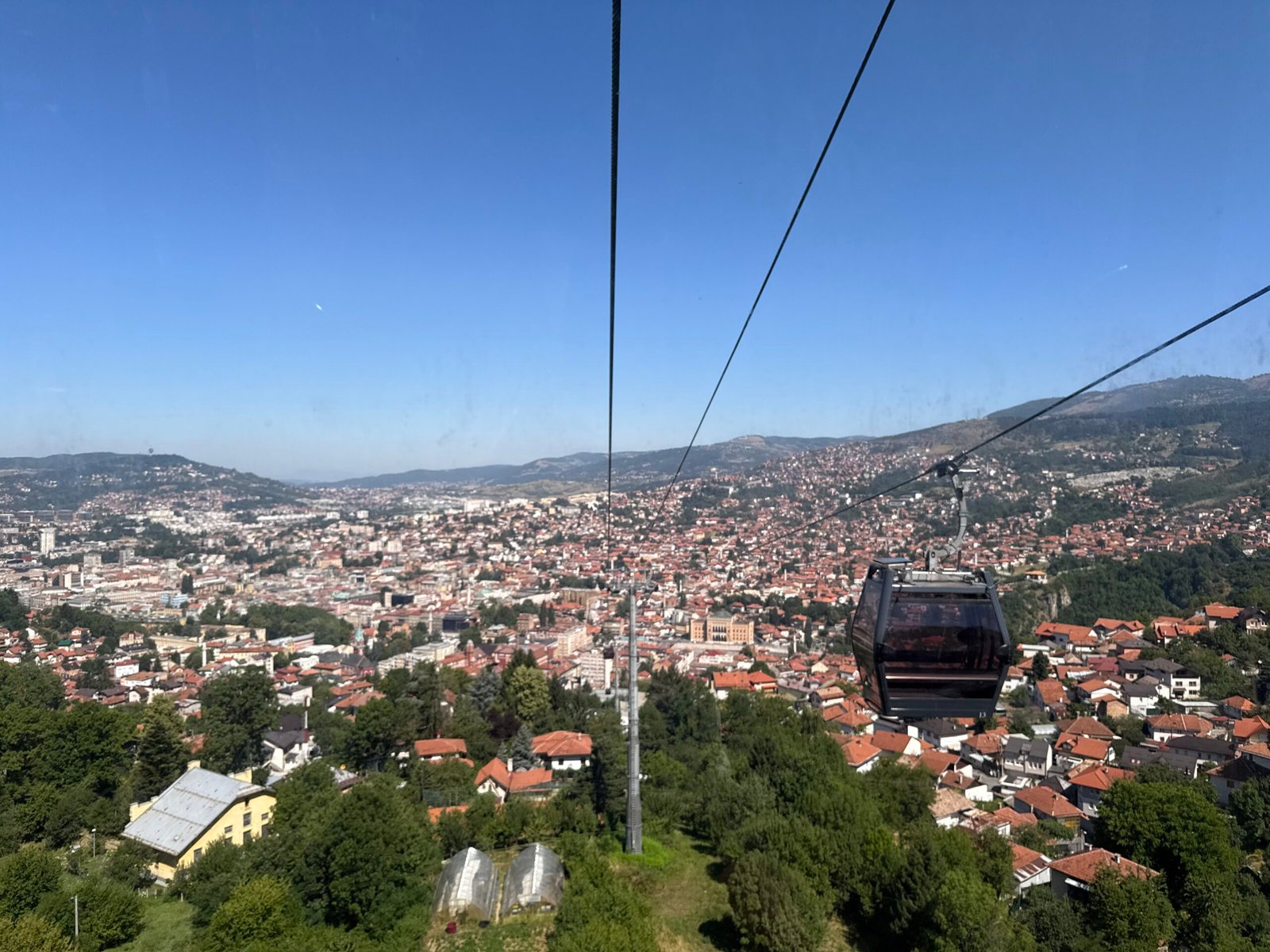
There are multiple ways to reach the Trebević Mountain. One can hike, cycle, or drive there. You can also use the city’s cable car system to reach the most touristic part of the mountain quickly and conveniently. Unfortunately, unlike the locals, you will be paying a rather hefty sum for this privilege, 20 BAM one way or a whopping 30 BAM for a return journey to be exact. Paying 20 BAM, enough to buy two entire tasty pizzas at any local bakery, to use the cable car one way was painful enough, but thankfully, I did not need a return ticket, as I had other plans for the way back.
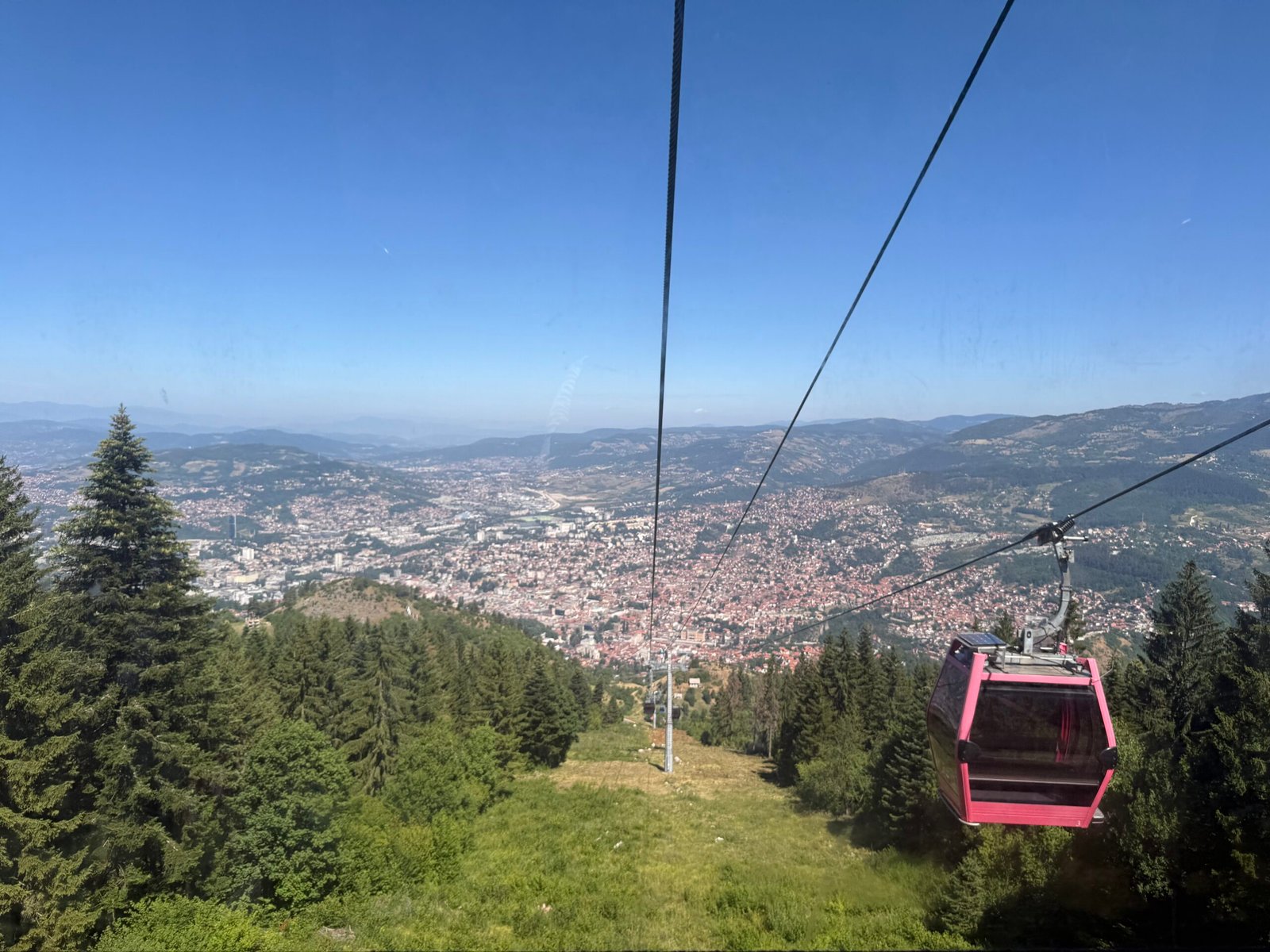
Truth be told, this cable car ride is a tourist trap. It is significantly more expensive for foreigners than locals, and while that practice in itself is quite problematic, what is truly bothersome is the fact that the windows of the cars are not even cleaned properly. So, while you may have the entire cable car to yourself like I did, it does not guarantee seeing some fascinating views of the city at all. Chances are, you will see a ton of smudges instead.
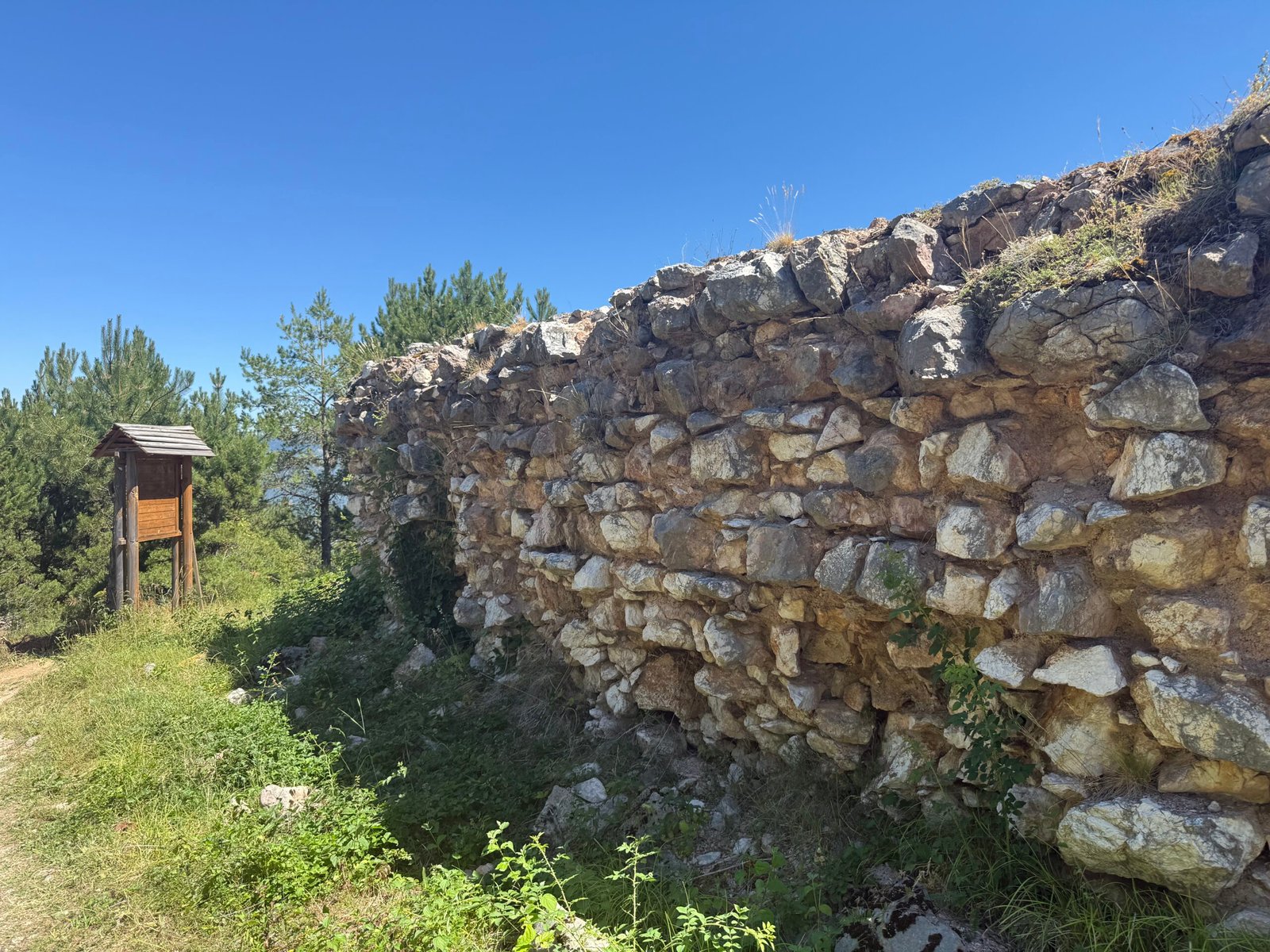
Thankfully, you will see a decent selection of wonderful views throughout your time atop Trebević Mountain. But before checking those views out, feel free to explore the area around the cable car station. There are some old Austro-Hungarian fortifications nearby, which already looked more ruinous than some ancient Roman forts I visited.
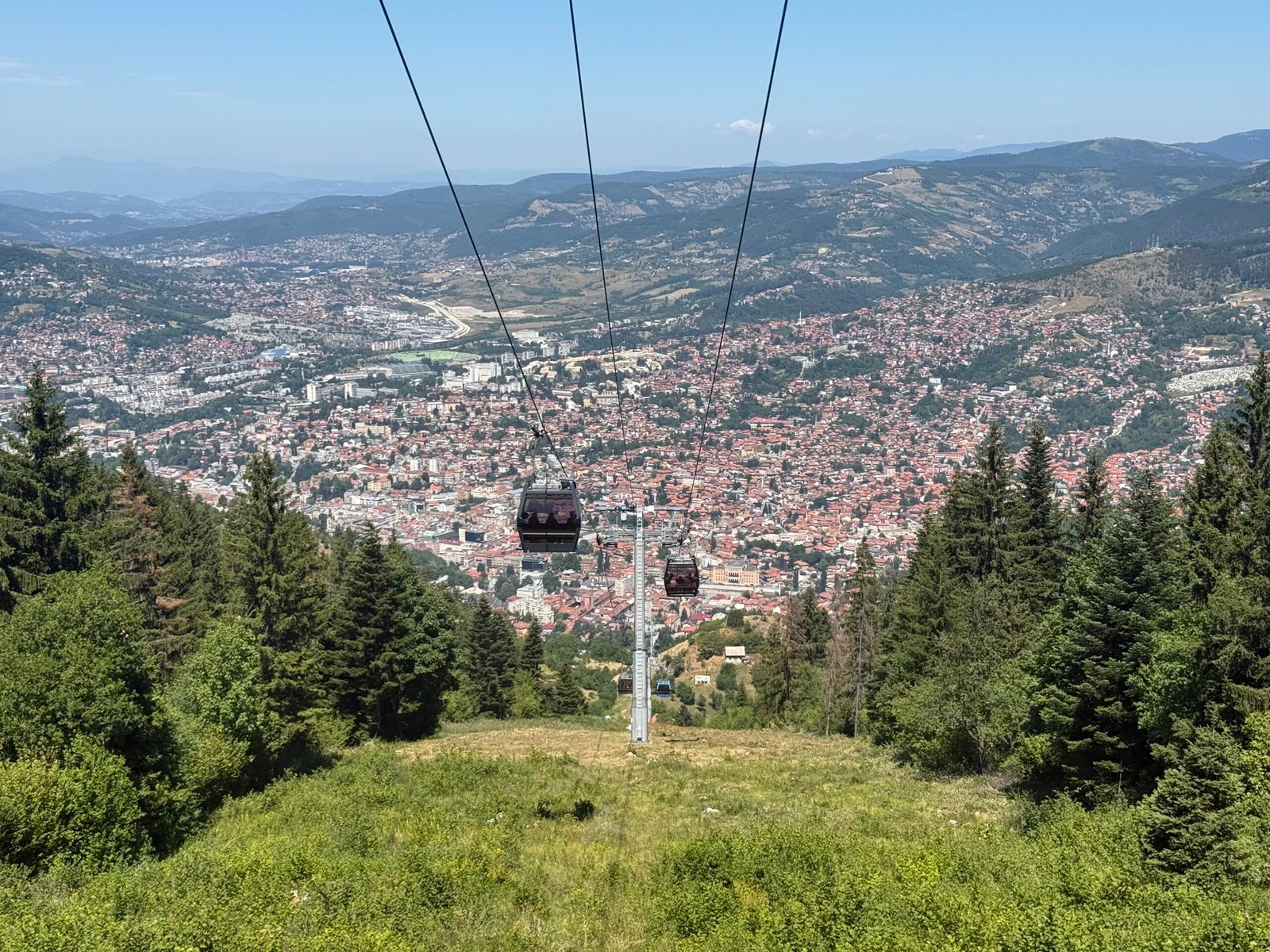
Once you are done with that short excursion, make sure you come back to the station so that you can enjoy views like this. To be more specific, there are two viewpoints that are found just beneath the actual station. Both of them offer vantage points and come with signs and billboards that make taking interesting photos of yourself more interesting, if you are into that sort of thing.
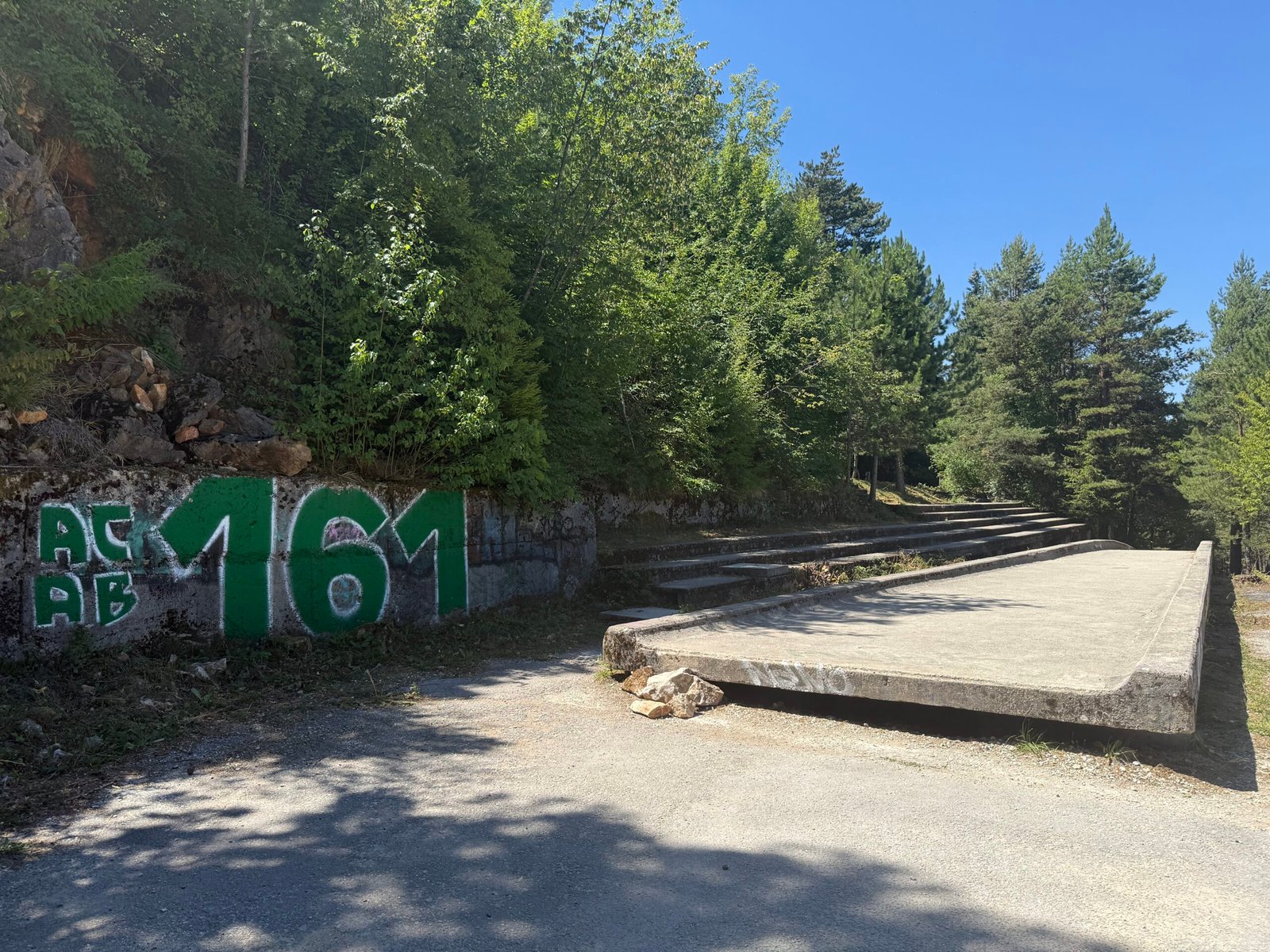
By this point in my trip, I had already met a Bosnian war veteran near the cable car station and chatted with him about the horrors of 1990s for about an hour. The depressing details of that conversation will stay with me forever. Suffice to say, people that were in Sarajevo during the siege did not have a good time, as would be expected by any sane person. However, we had to say goodbye to one another as it was already almost noon, a problem given the fact that I wanted to take my time exploring the mountain and still manage to get back to the city for lunch. That is why I rushed to see the abandoned bobsled track nearby, which is the main attraction for many who visits the Trebević.
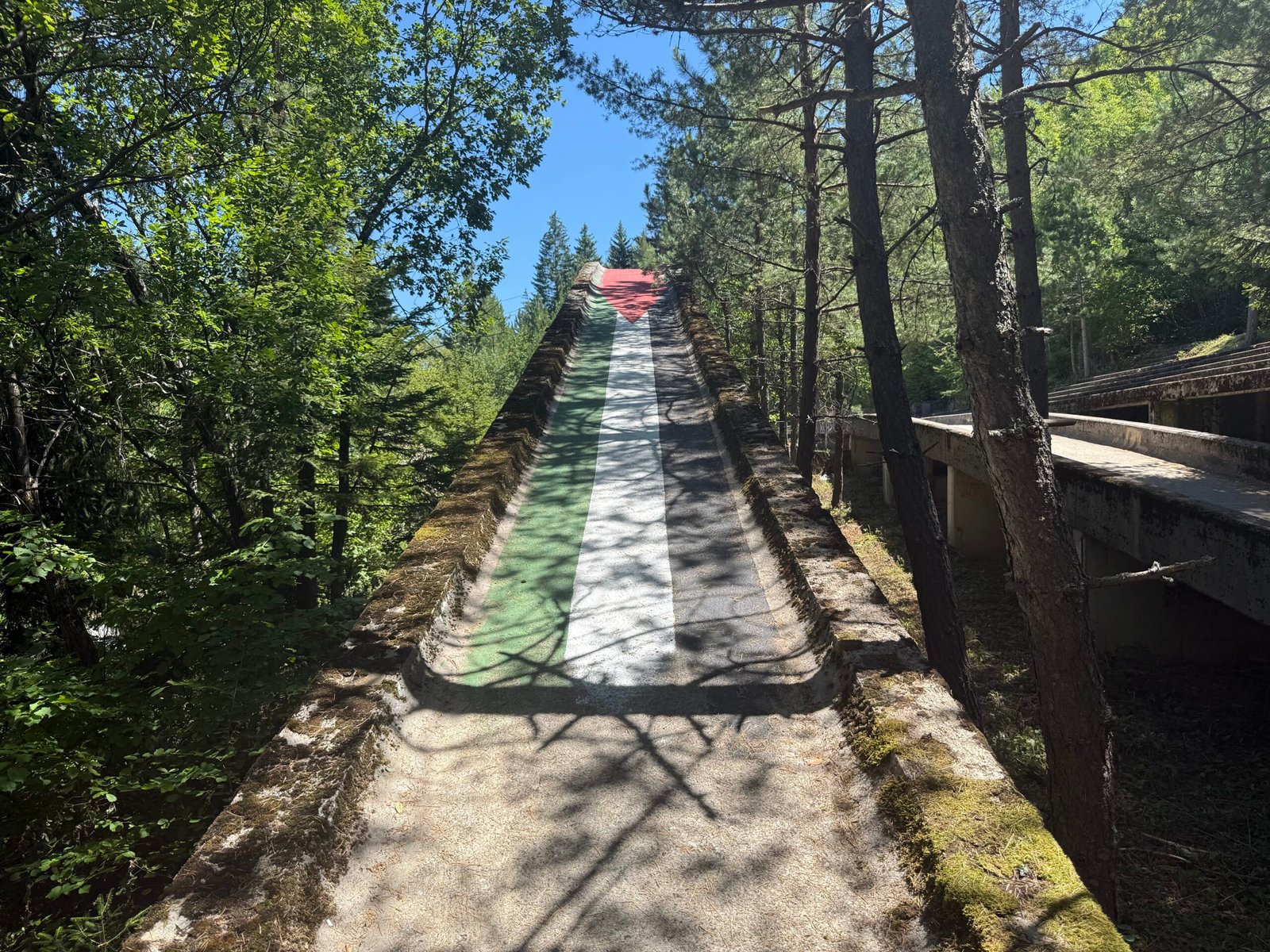
As is usual for Bosnia and Herzegovina, one can find a random Palestinian flag near the beginning of this tourist attraction. I do say tourist attraction because it really is one. This place was swarming with people when I was there, and it took me some time to capture these photos without bothering anyone else.
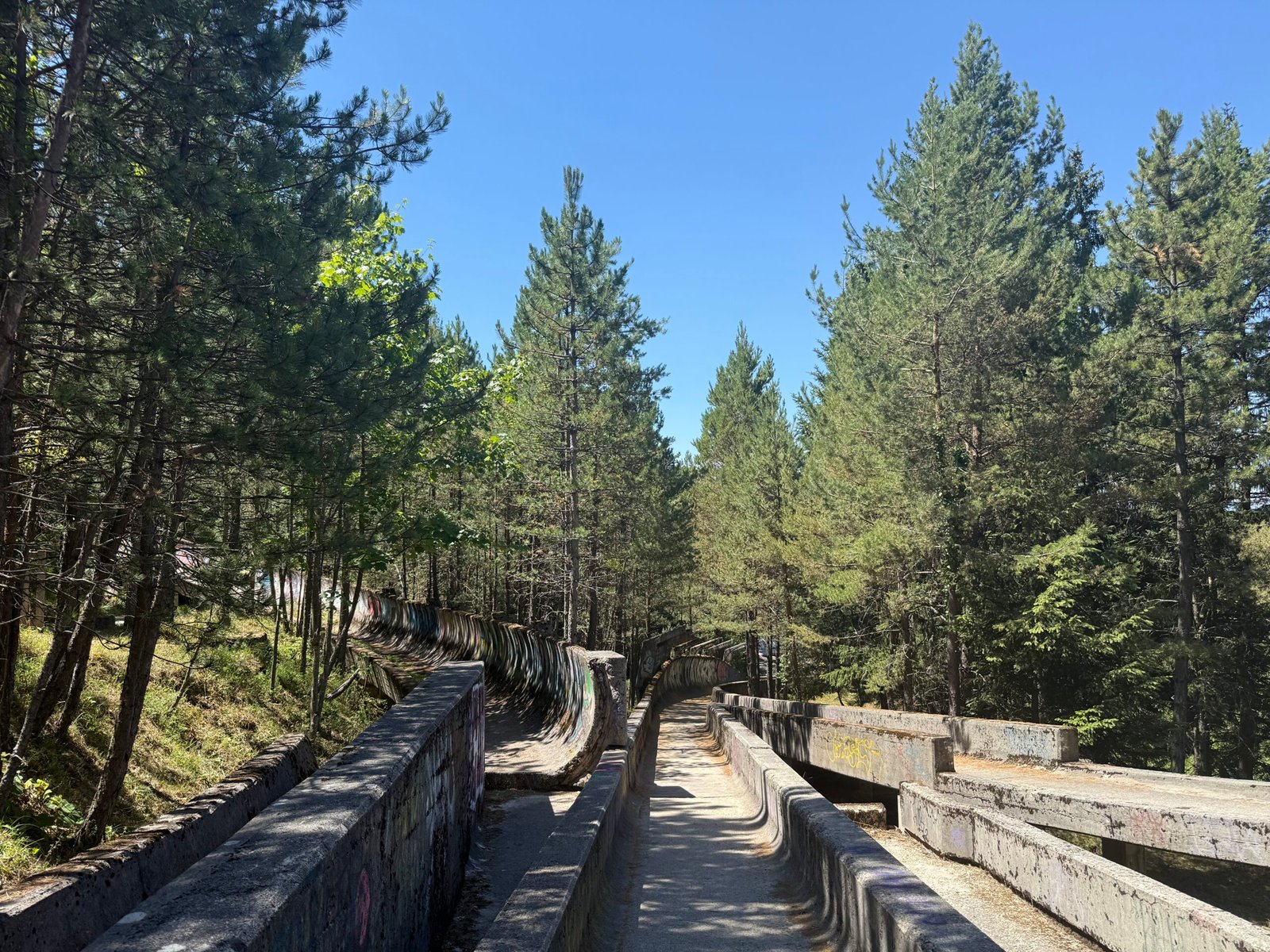
Do try to come here with the very first cable car and go straight for the abandoned bobsled track if you wish to enjoy it all by yourself. Tour companies often put this place on their itineraries, and you do not want to be caught off guard with a ton of tourists running around you in these narrow tracks.
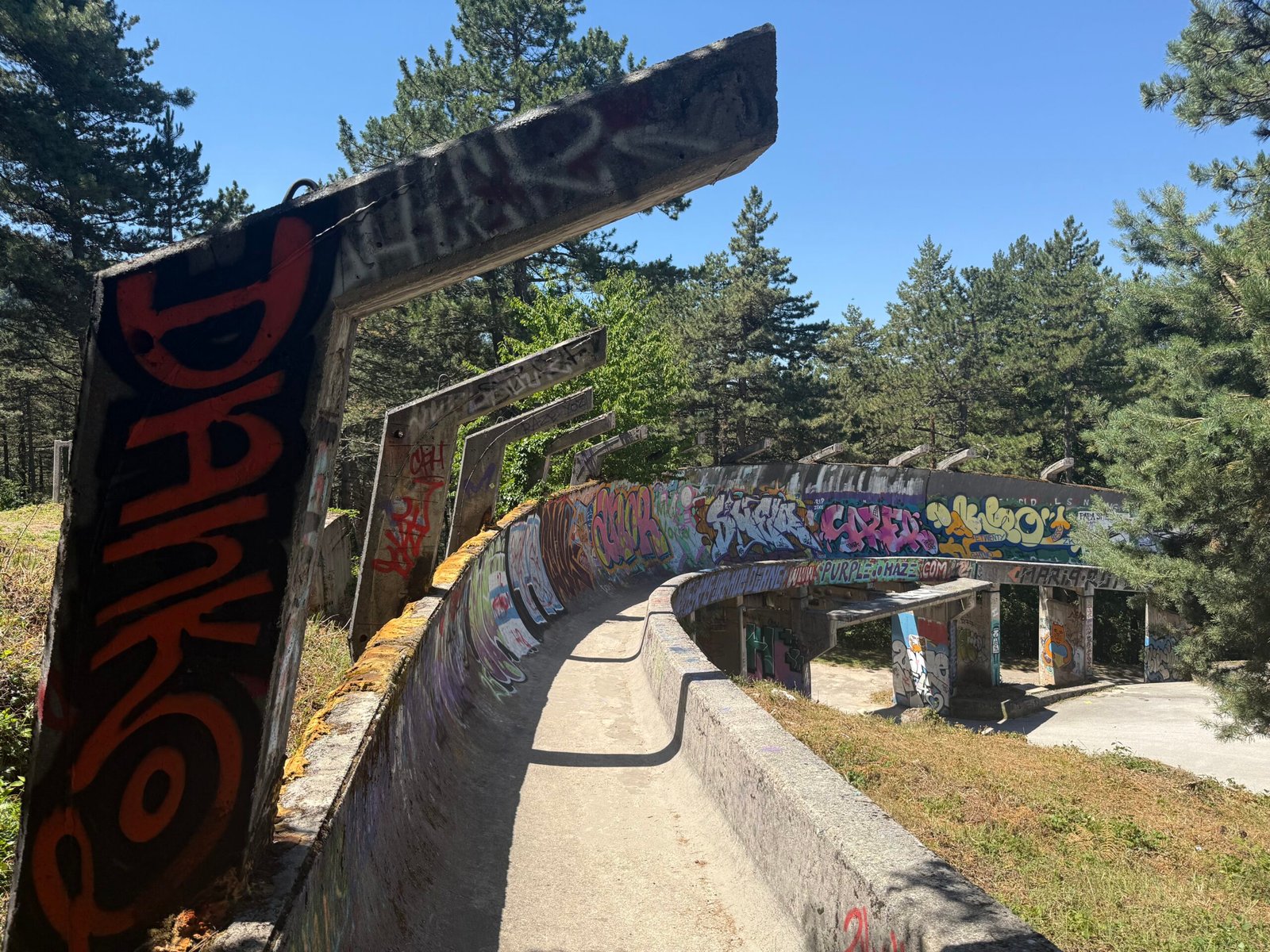
Some peace is needed to enjoy this place properly, as it does take some time to enjoy all the street art that now covers the bobsled track. This place has not been used for decades, and it only makes sense that such derelict structures are used for, well, something.
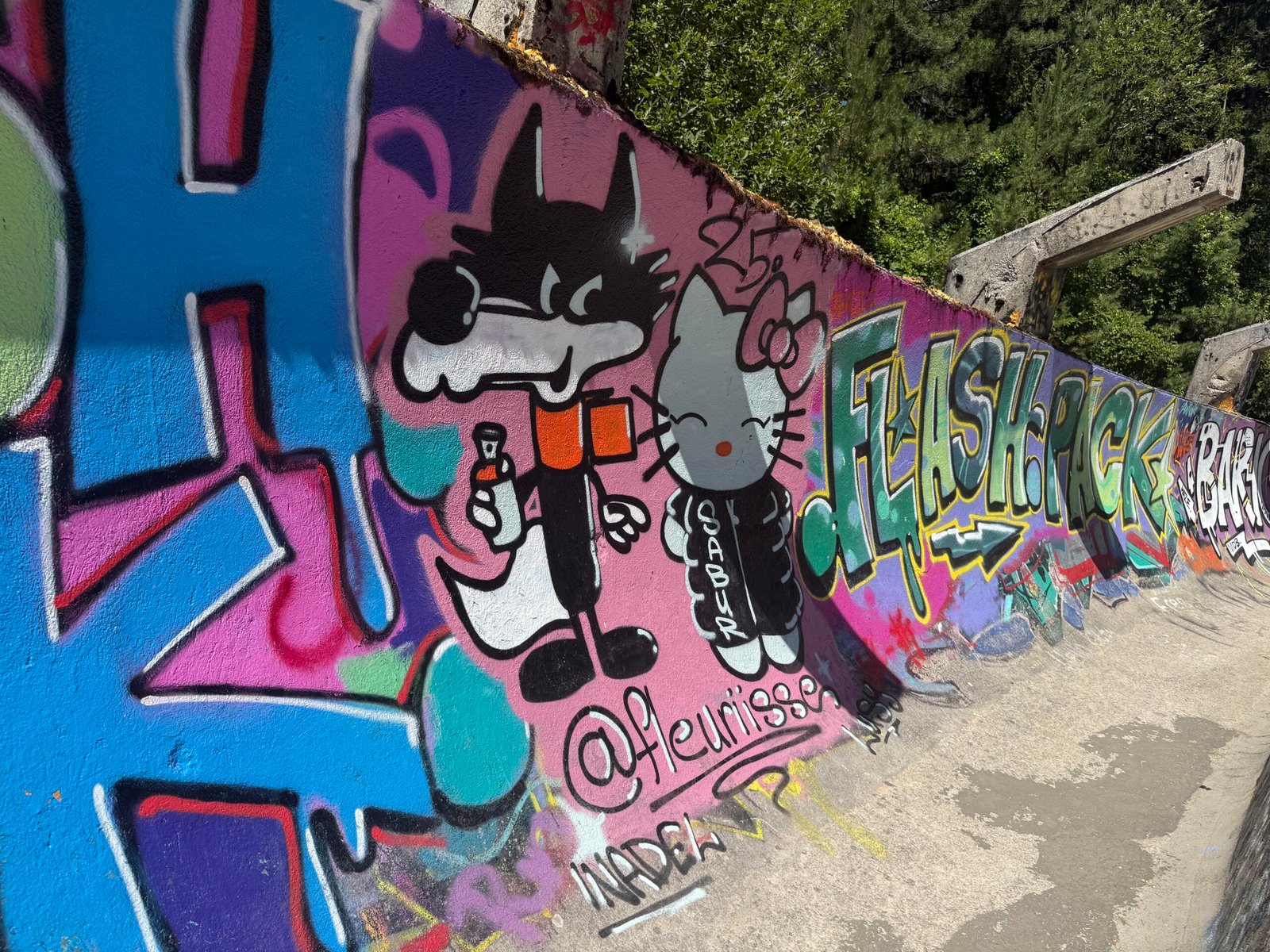
Using these tracks as a canvas for the budding street artist scene in Sarajevo sure was a great idea. After all, despite being somewhat withing reach from the city center, this area was not necessarily visited or policed to this degree until recently, turning it into a safe haven for artists of all kinds.
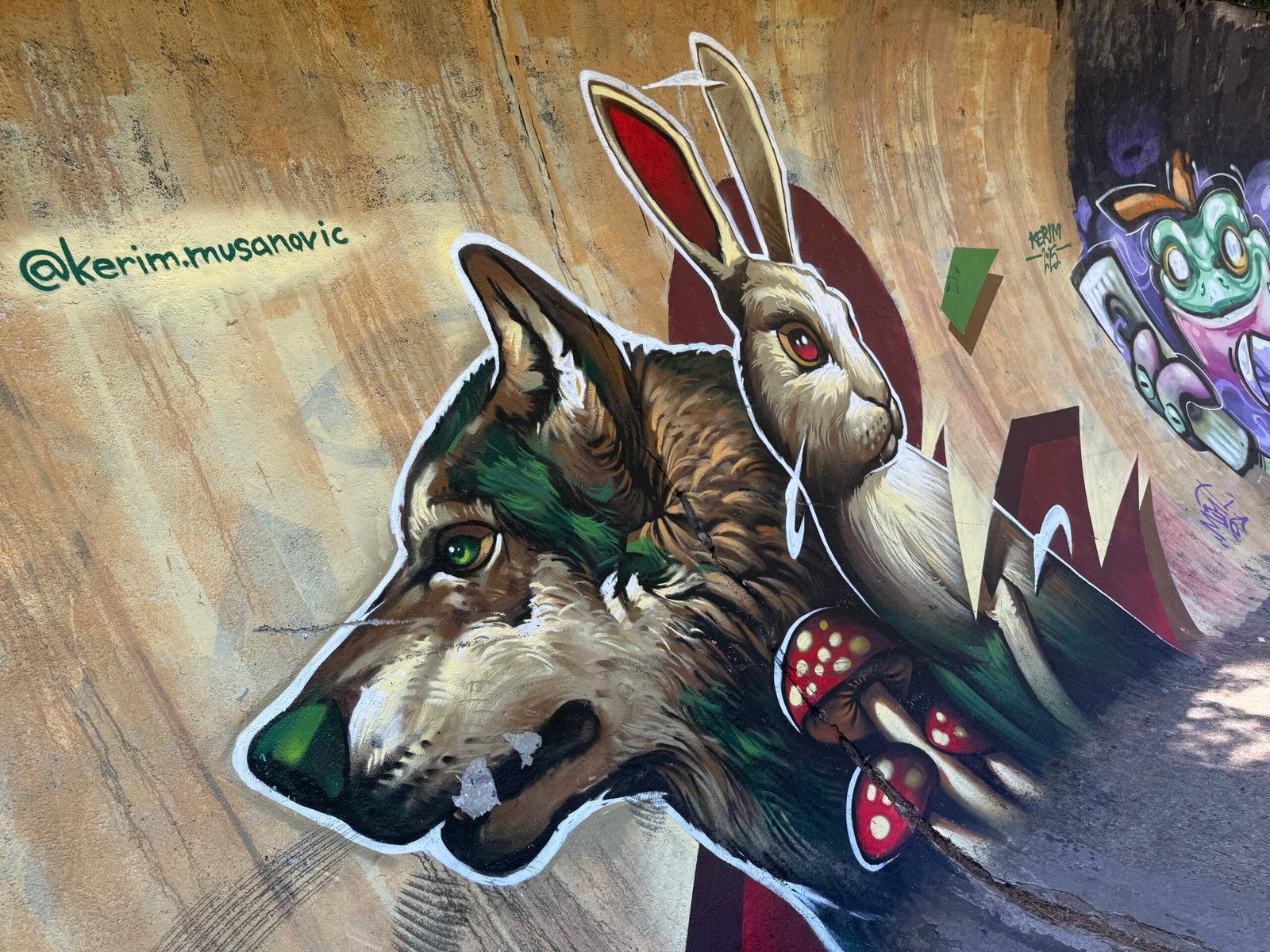
While most graffiti here consist of poor imitations of Vučko, the official mascot of 1984 Winter Olympics, some pieces clearly took more time to create. You may end up spending well over an hour enjoying the art in the twists and turns of the abandoned bobsled tracks here, though in my case, for aforementioned reasons, I kept my visit shorter than that.
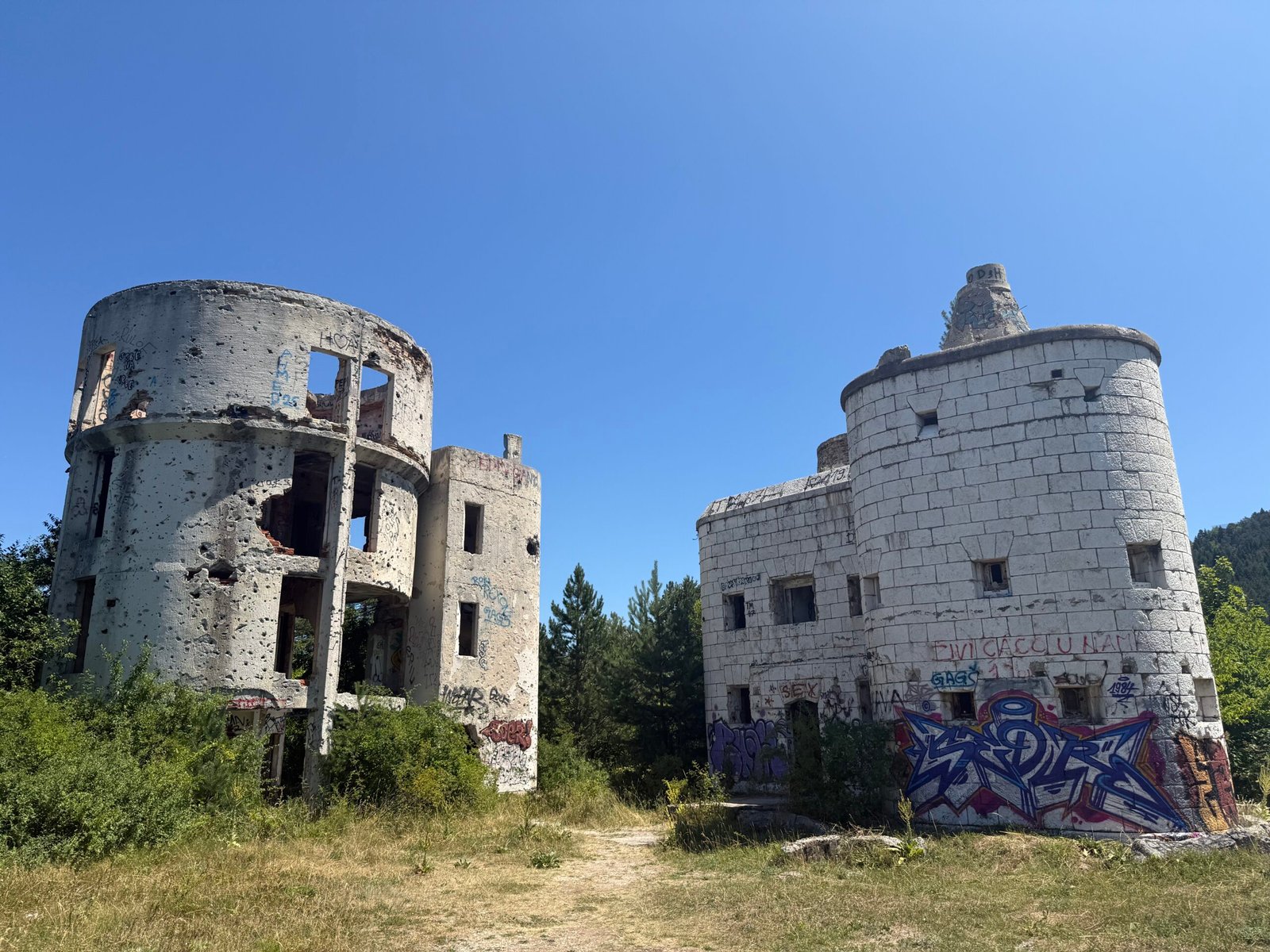
You see, I wanted to take the scenic route down to Sarajevo, by quite literally walking down the mountain, and that is why I did not take the cable car back to Sarajevo. Compared to my visit to the Skakavac waterfall in the previous day, such a journey would hardly be tiresome. Using this route also allowed me to see some unique ruins on the way, though technically you can visit the Bistrik Tower, an old observatory, even if you are taking the cable car both ways. It is not that far away from the bobsled tracks.
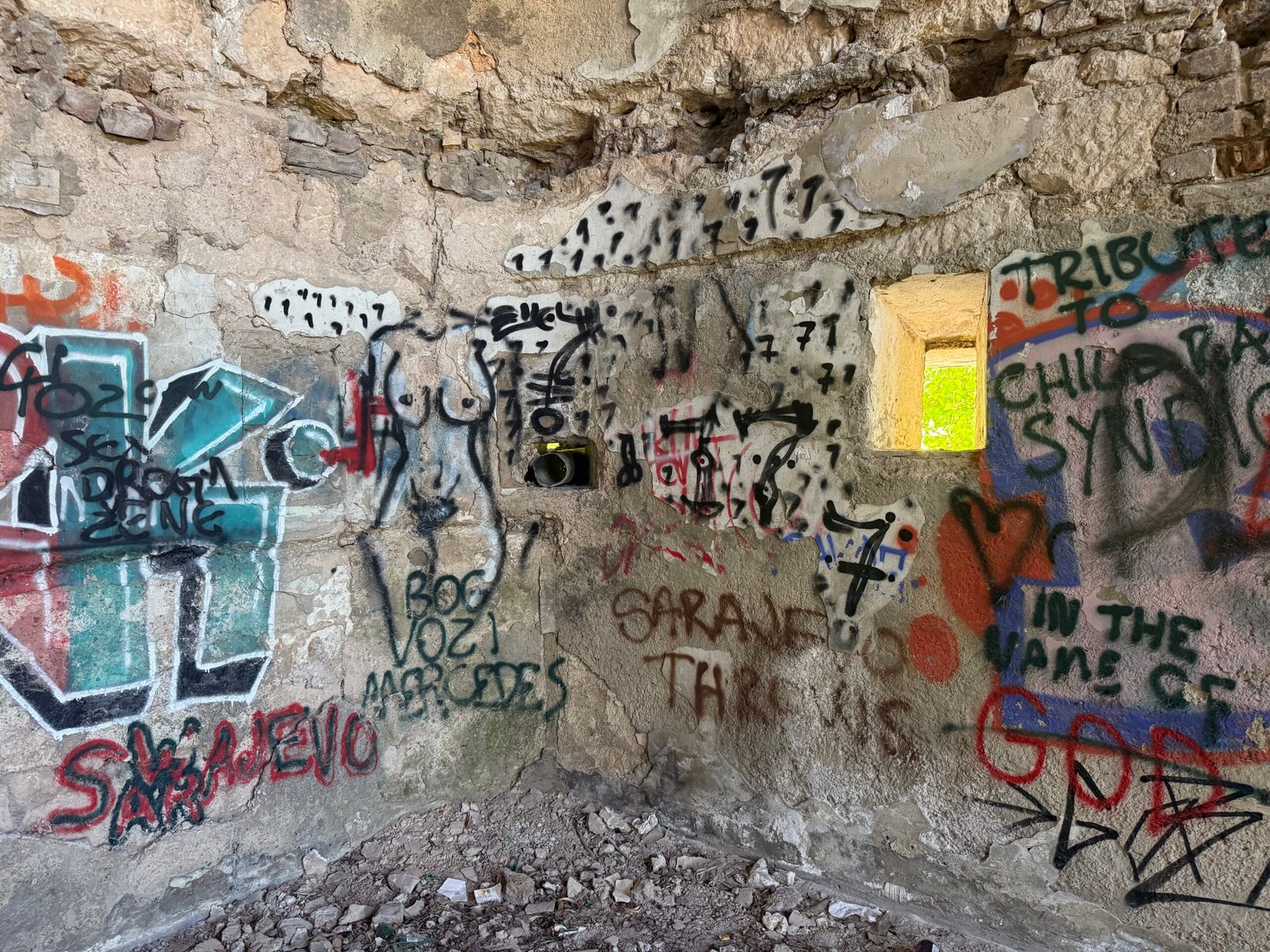
Inside the two ruined buildings here, you can find even more graffiti, though the quality of most of them are questionable, to put it kindly.
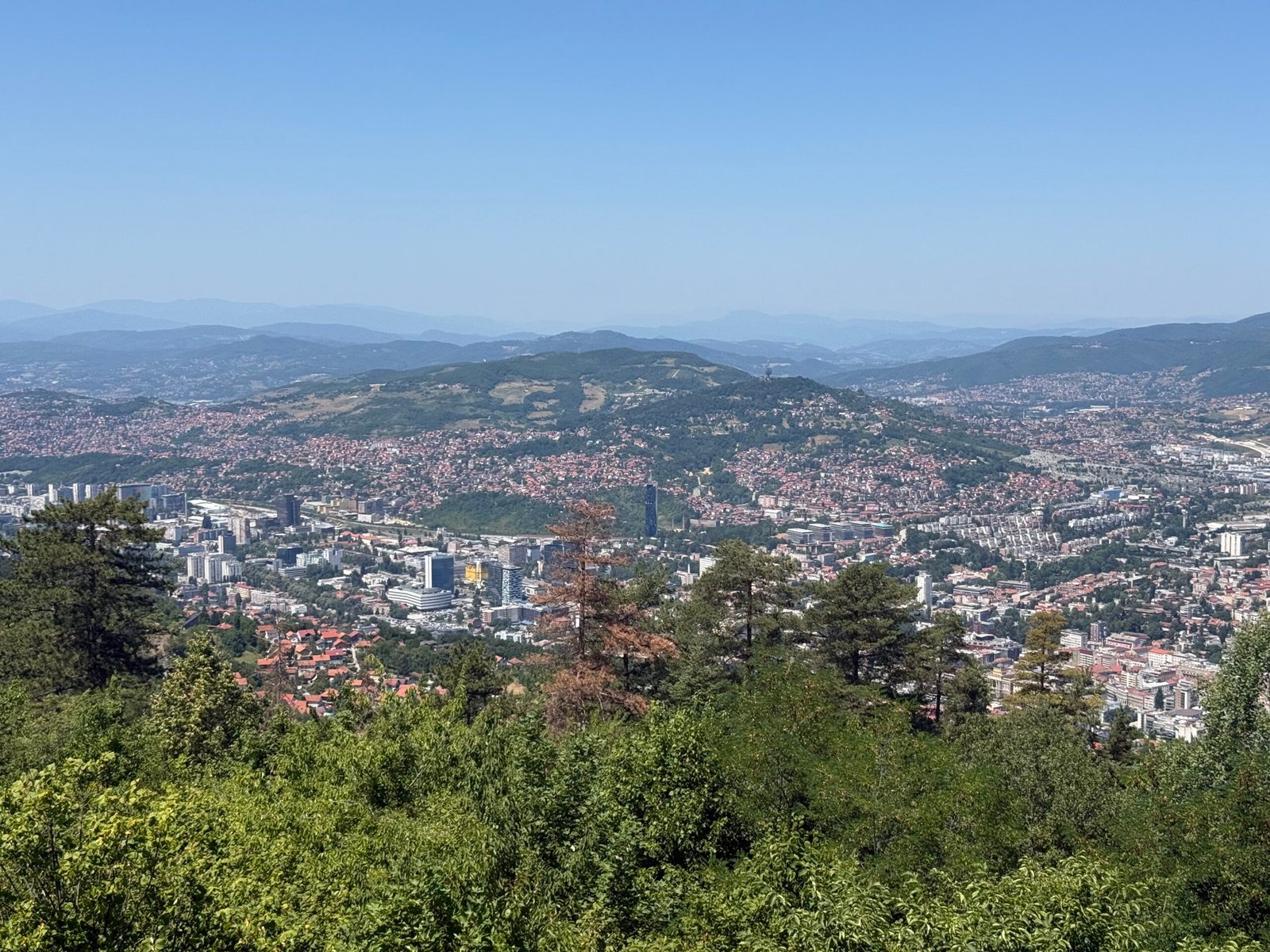
However, I was not there for graffiti to begin with. Some said that the view atop the Bistrik Tower was the best in this area, and it just might be. This photo, unfortunately, does not do justice to the view you will enjoy up there. It should be the best view of Sarajevo, and one of the very few that lets you see both the old Ottoman-Austrian core of the city, and the Yugoslav developments that surrounds it today in all their glory.
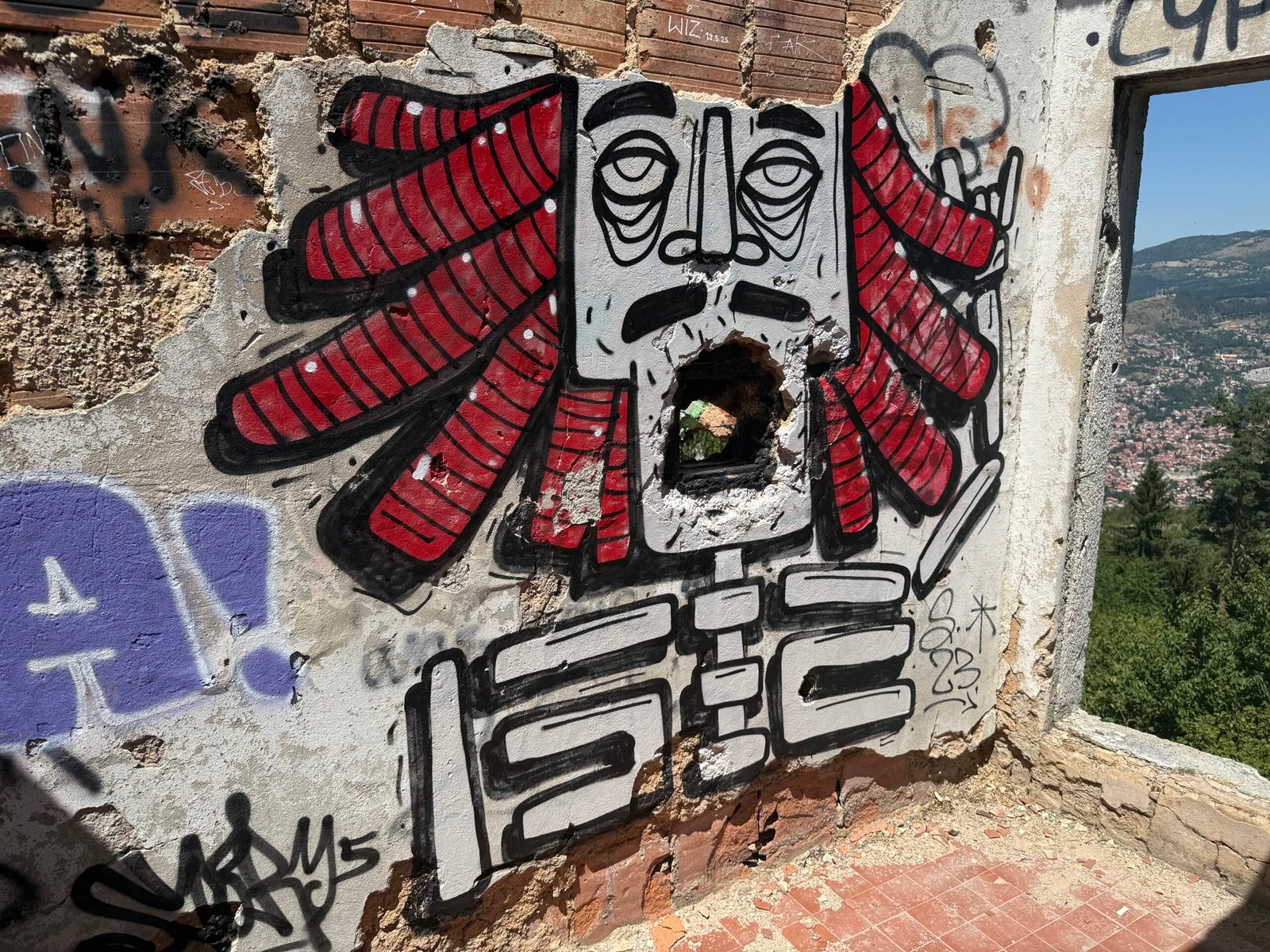
After enjoying the scenery for a while and running into a few more travellers who advised against me walking down the mountain, I chose to disregard their concerns and made my way downwards. Before I left the tower, I did see a more creative street art or two as well.
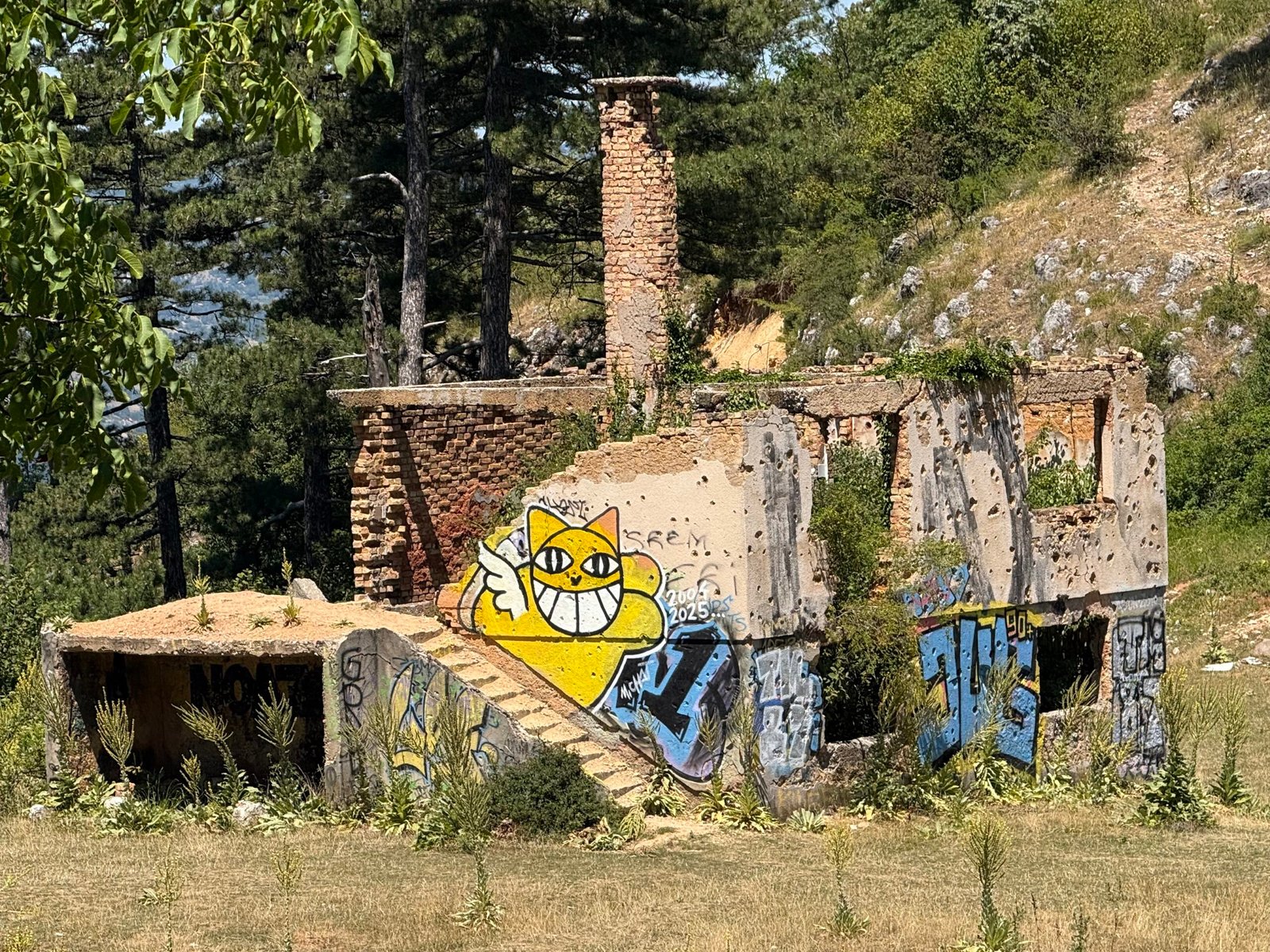
As I slowly started to go down the mountain I realized why people ‘warned’ me against going back to Sarajevo using this way. Other than a few ruinous buildings, there really is not all that much to see on this road, and worse yet, there is barely any coverage against the sun.
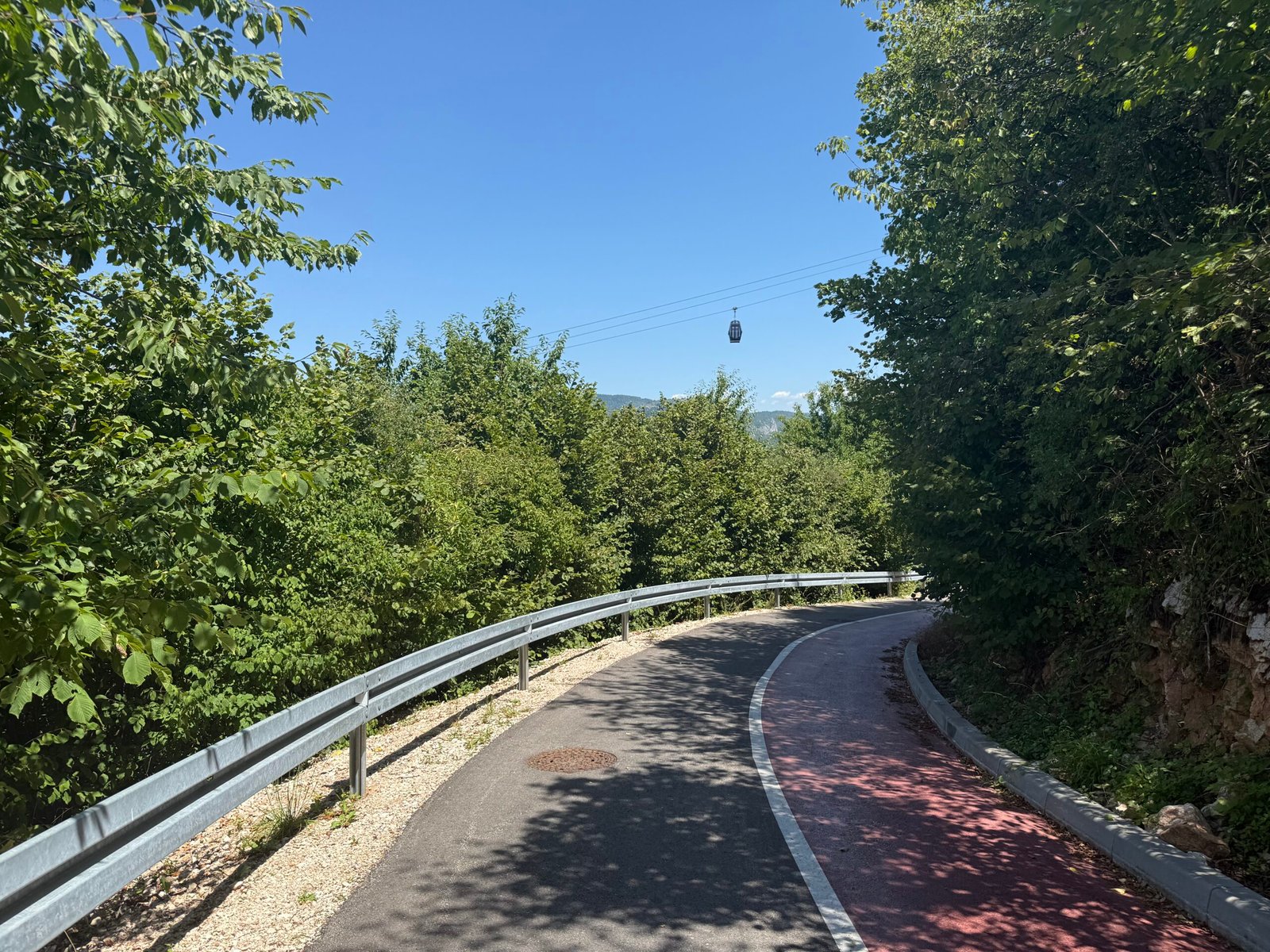
Alas, at this point, I was quite invested in my original plan and wanted to see it to its end. I did enjoy a few nice scenes like this, where you can see the cable cars slowly ferrying people to and from the mountain.
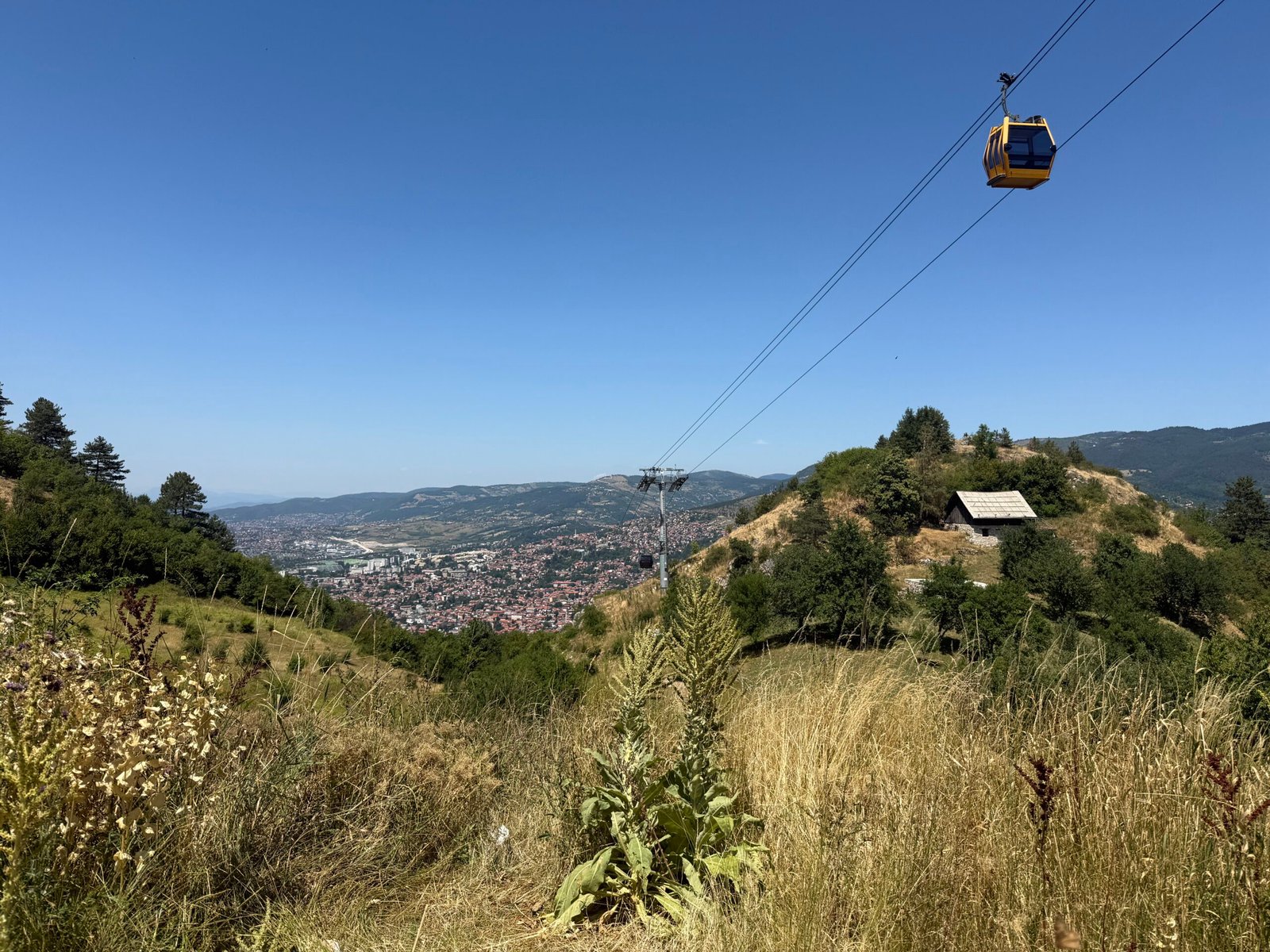
Little did I know, I would eventually come extremely close to these cable cars, which turned out to be one of the better parts of walking down to the city. If that is something you fancy, all you need to do is finding the pole in this photograph and waiting for a cable car to glide a meter or two above your head.
However, in all honesty, unless you are really interested in saving 10 BAM, I cannot recommend walking down the mountain. After a while all you really see are walls that shield the courtyards of houses as you come closer to the city center. You have to suffer a lot of speeding cars threatening to hit you in winding narrow streets as well as direct sunlight without any shade to cover you. If I visit Sarajevo again, I will most likely be using the cable car on both ways and enjoy my time exploring the other opportunities Trebević mountain offers instead, though I do hope that the cable car company reconsiders their pricing policy. More tourists would flock to this part of Sarajevo if prices were a bit more reasonable, as they seem extra prohibitive for larger families, and larger families that visit Sarajevo as tourists are not a rare occurrence.