
While I am done writing about Sarajevo’s history and how it gave birth to a rather enigmatic city today, I am not necessarily done writing about Sarajevo itself. Notably, despite mentioning the Catholic Croats, Orthodox Serbs, and Muslim Bosniaks in my writings so far, I am yet to show where these people pray at and where they are buried. Visiting religious sites and cemeteries are some of my favourite pastimes, and Sarajevo, being known as the Jerusalem of the Balkans, is an excellent location for those who enjoy such activities. Let us now explore just how such a small city deserved such a hefty title.
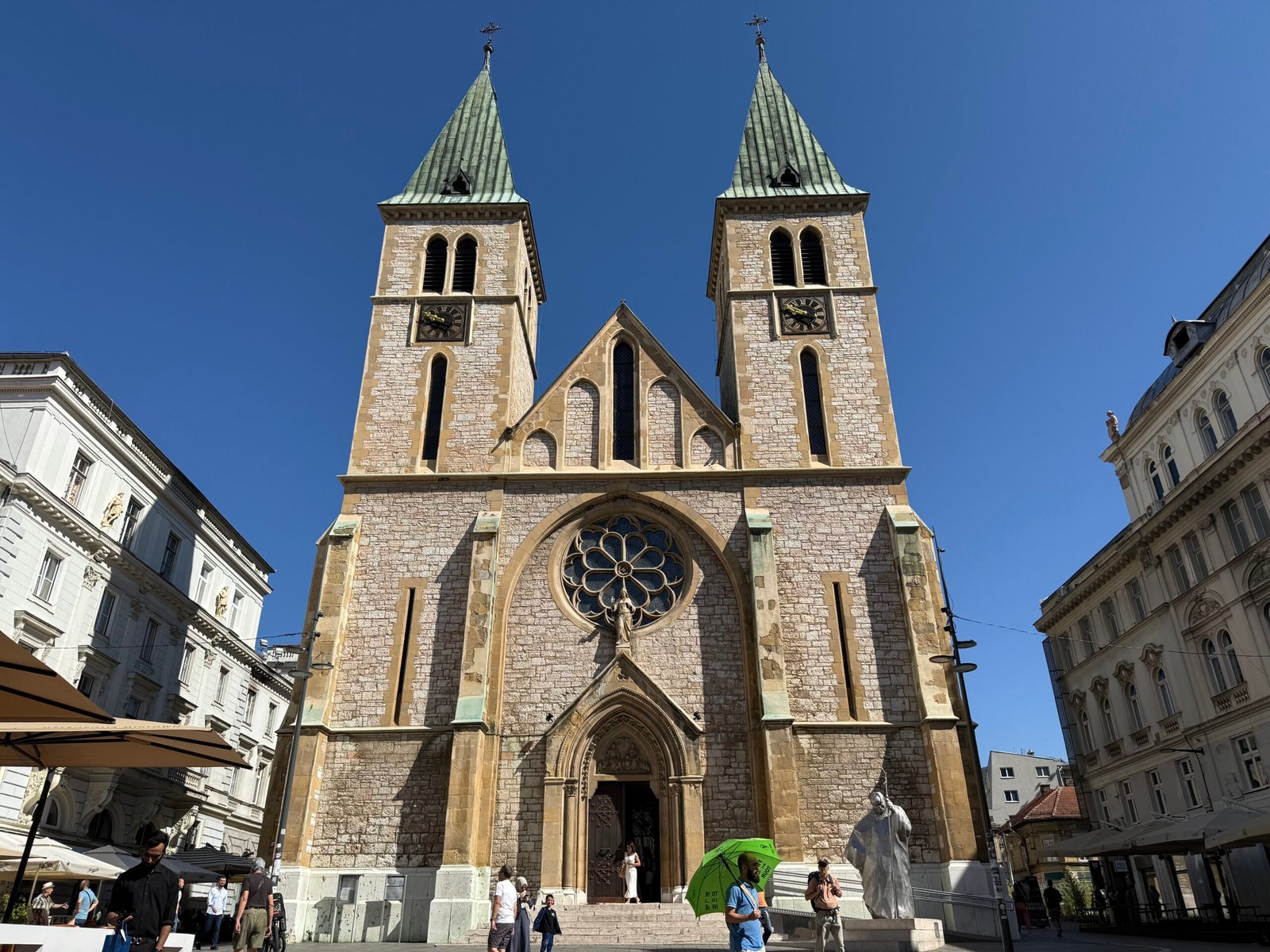
Most Croats in Bosnia are Catholics. That is why one of the more imposing structures in the center of Sarajevo is none other than the Sacred Heart Cathedral, which you can visit freely. It does not look like the most impressive Catholic cathedral from the outside, but the interior is well worth your time, though a lovely nun will make sure that you cannot take any photographs while you are in there.
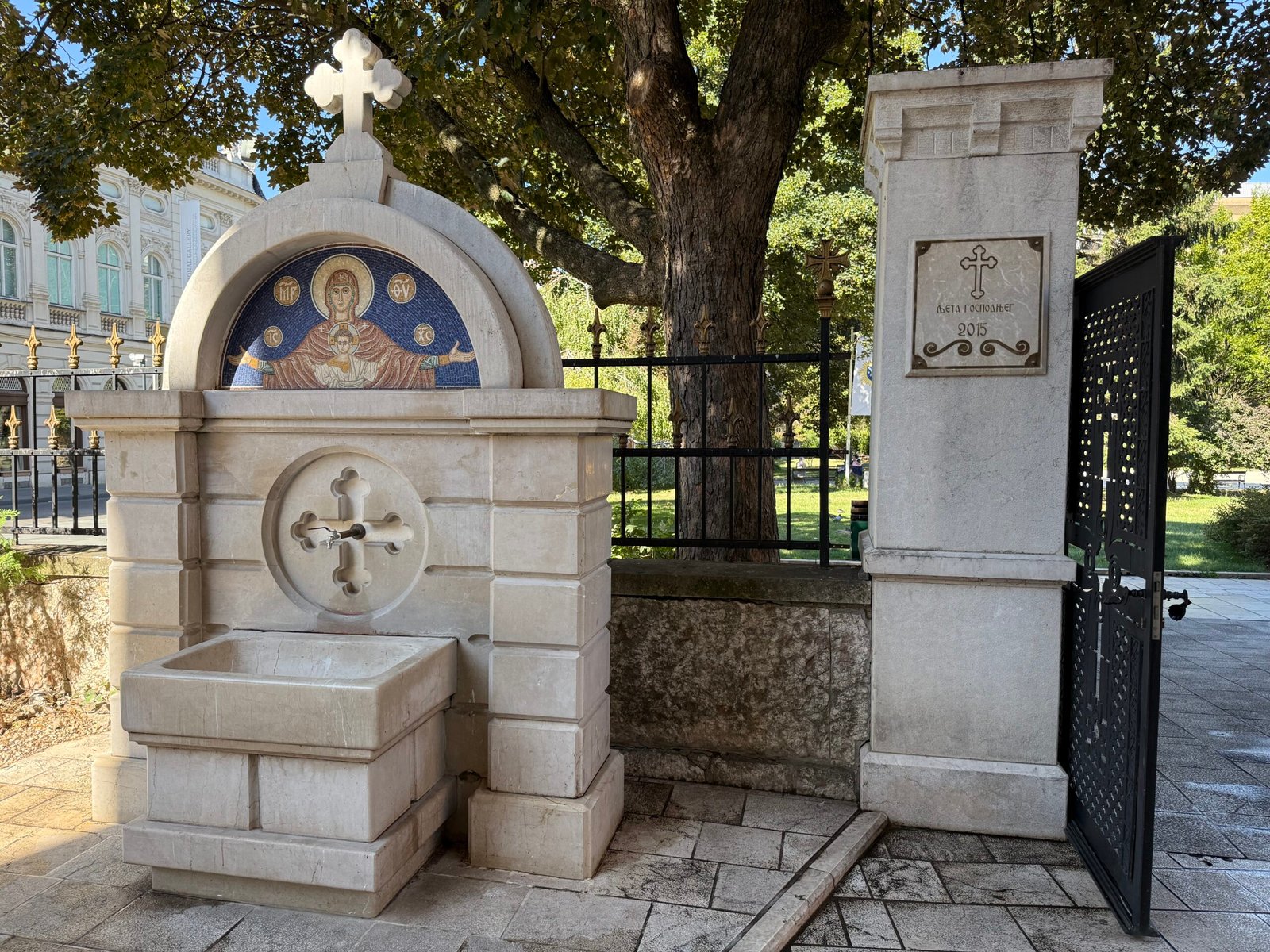
I had to mention that the previous cathedral was free to visit, because not all of them are. I am categorically against charging anyone to visit places of worship, especially if they are actively used today. Unfortunately, in some Balkan countries, it seems to be the norm to charge people to see mosques, churches, and synagogues alike. Some say that this has to do with the meagre funding these places get, some others, like me, find the practice utterly unethical, regardless of the reasons behind it. Serbian Orthodox Church of the Nativity of the Theotokos was one of those places that charged a small fee for its visitors, so I ended up taking a photograph of its small fountain instead.
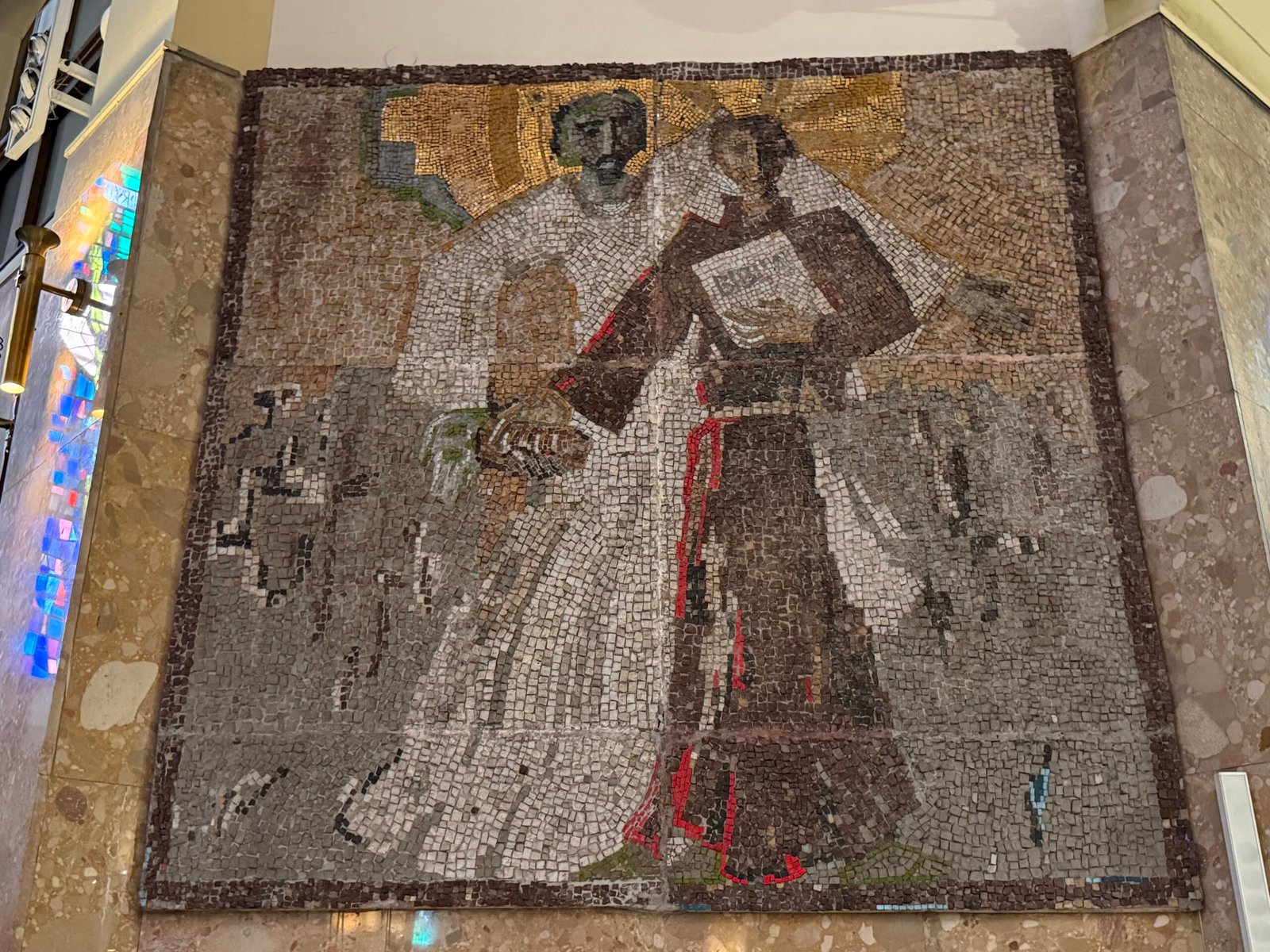
Thankfully, not many if any of the Catholic churches seem to charge an entry fee. Having visited some top-notch Orthodox churches in Serbia, Georgia, and the Russian Federation, I must say, I am fine with skipping one or two of those during my travels by now. Saint Anthony Catholic Church, on the other hand, was a decent addition to my Sarajevo itinerary. Not only can one visit it freely, but you will also be left completely alone as you enjoy its interior in peace. It had some rather new-age mosaics and visuals that adorned its walls, and these were all a joy to get lost in.
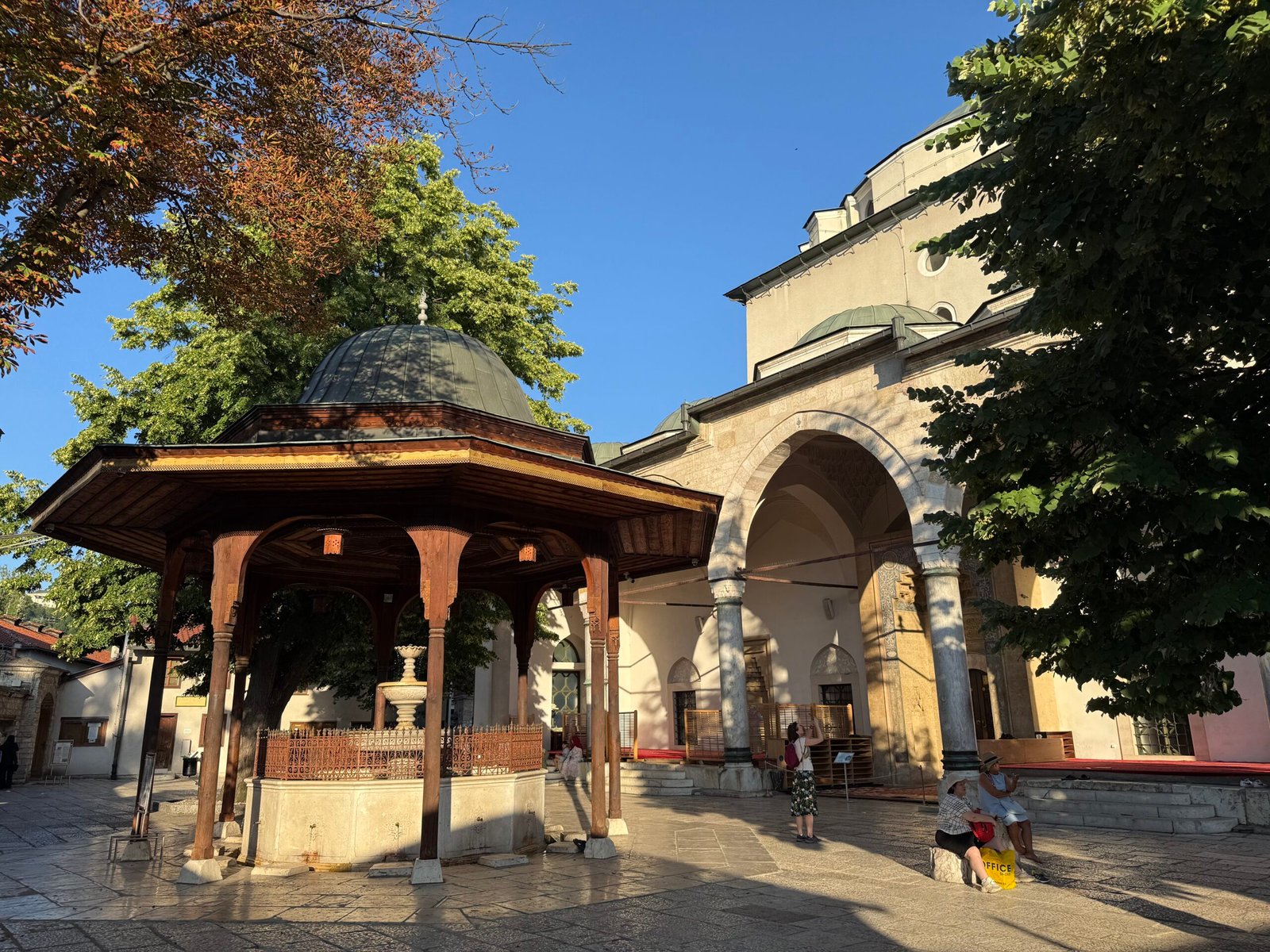
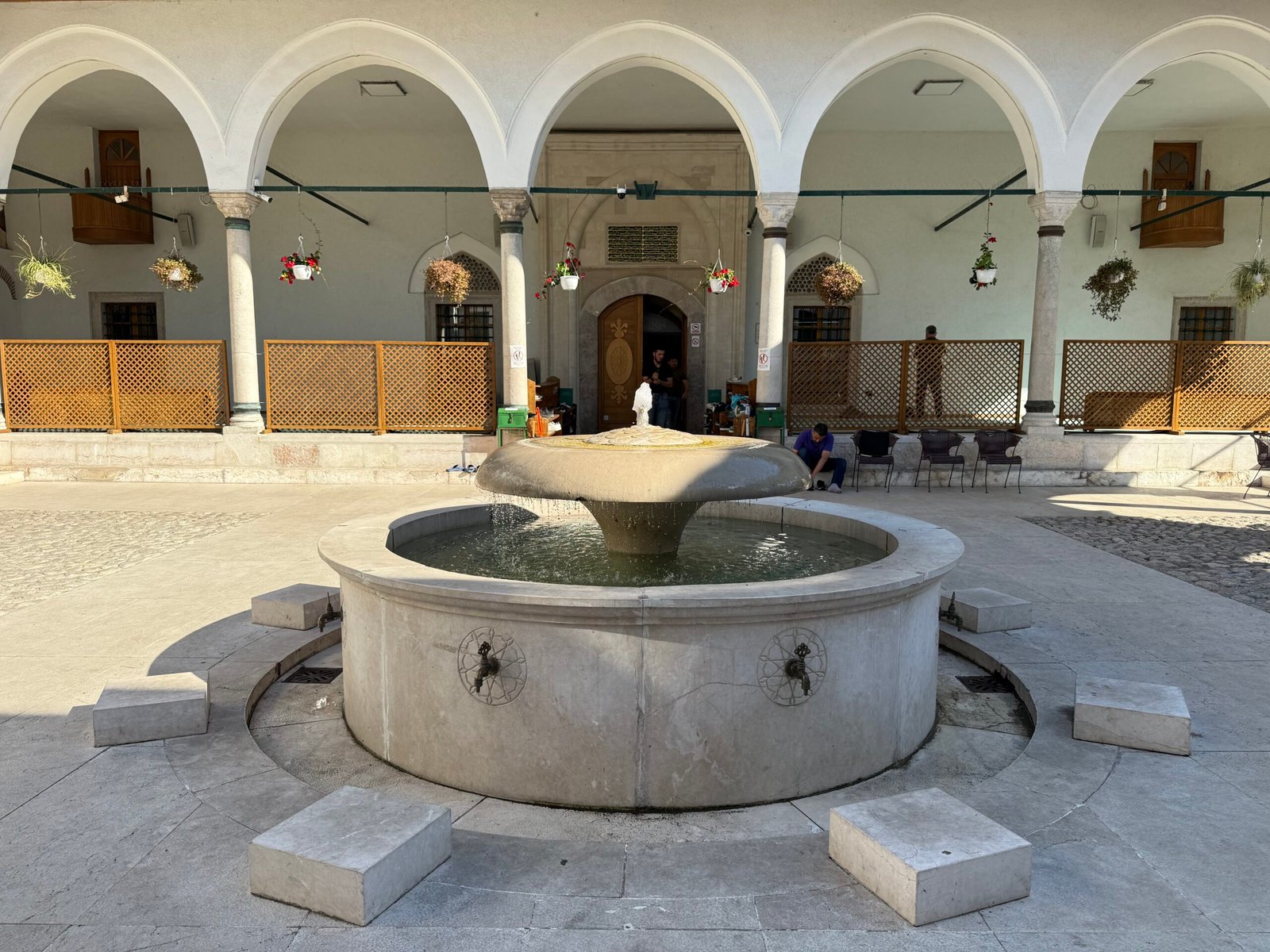
Christians are not the only ones that live in Sarajevo, in fact, majority of the people here are Muslims. That, combined with the Ottoman past of the region results in this small city hosting an incredible number of mosques. Unfortunately, the more renowned ones, like Gazi Husrev-beg Mosque, do charge a small fee for entry. In other words, I resorted to taking a photograph of its fountain as well.
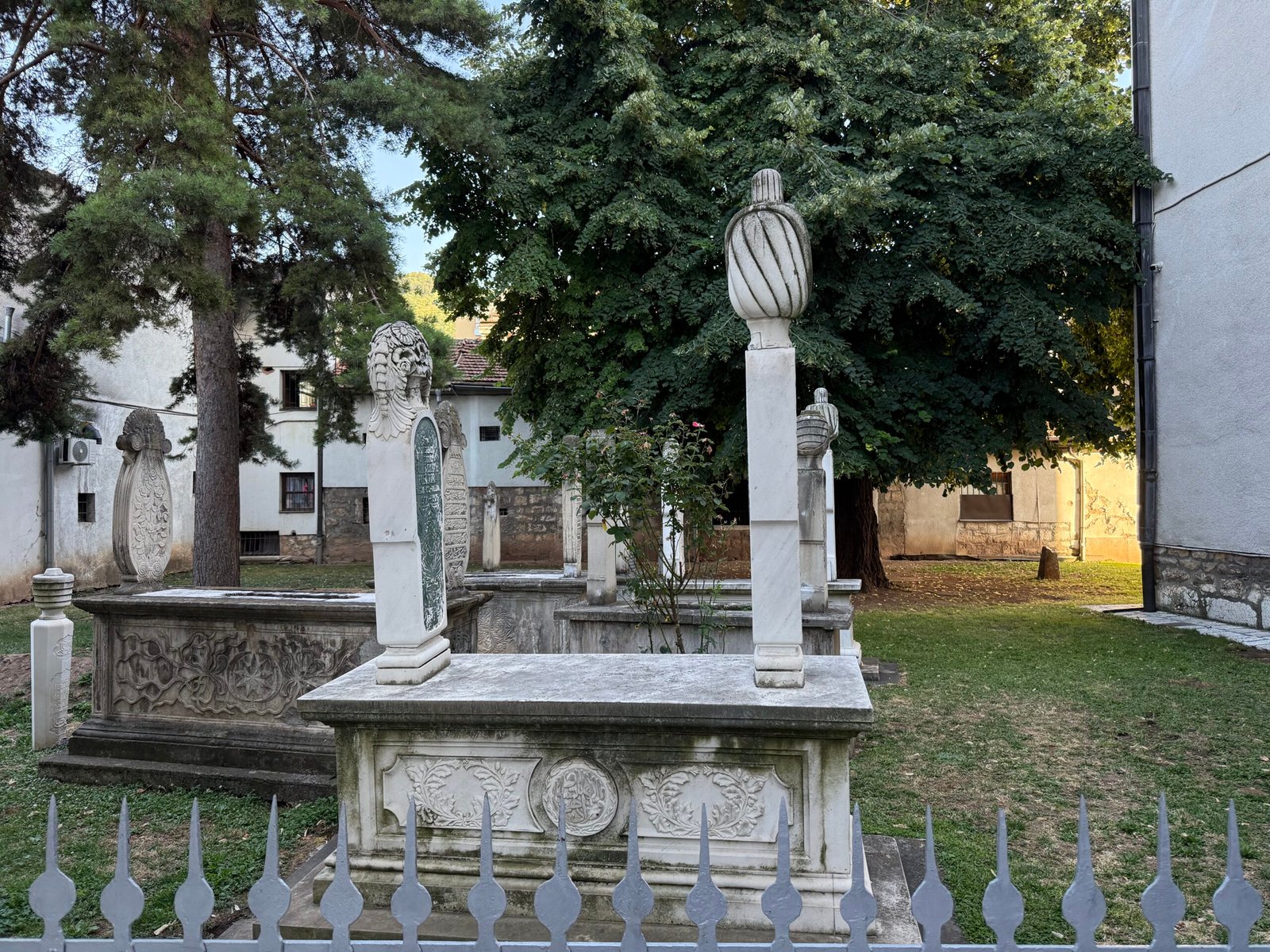
To be fair, I took multiple photographs here. There is a small area dedicated to tombs of holy figures in what seems to be the backyard, which was, unfortunately, fenced off.
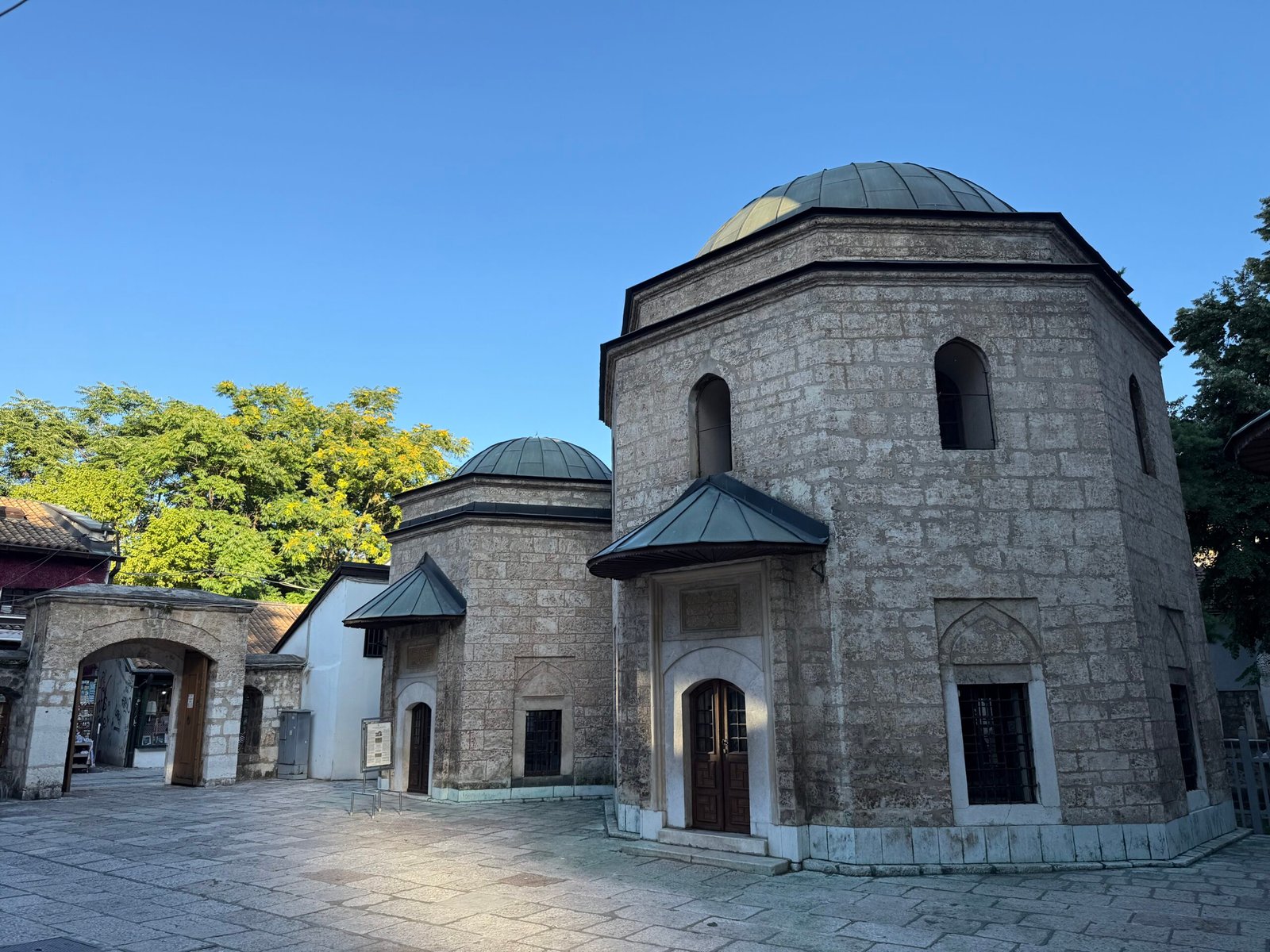
There were also these seemingly administrative buildings nearby. They did look somewhat old as well, though do not take my word for it.
Truth be told, already being two weeks into this trip, I was quite tired by this point. Therefore, even when I did find some mosques which seemed to be freely open to all, I did not necessarily venture in. This was the case in the Emperor’s Mosque. Built in 1565, this may be the oldest place of worship in Sarajevo.
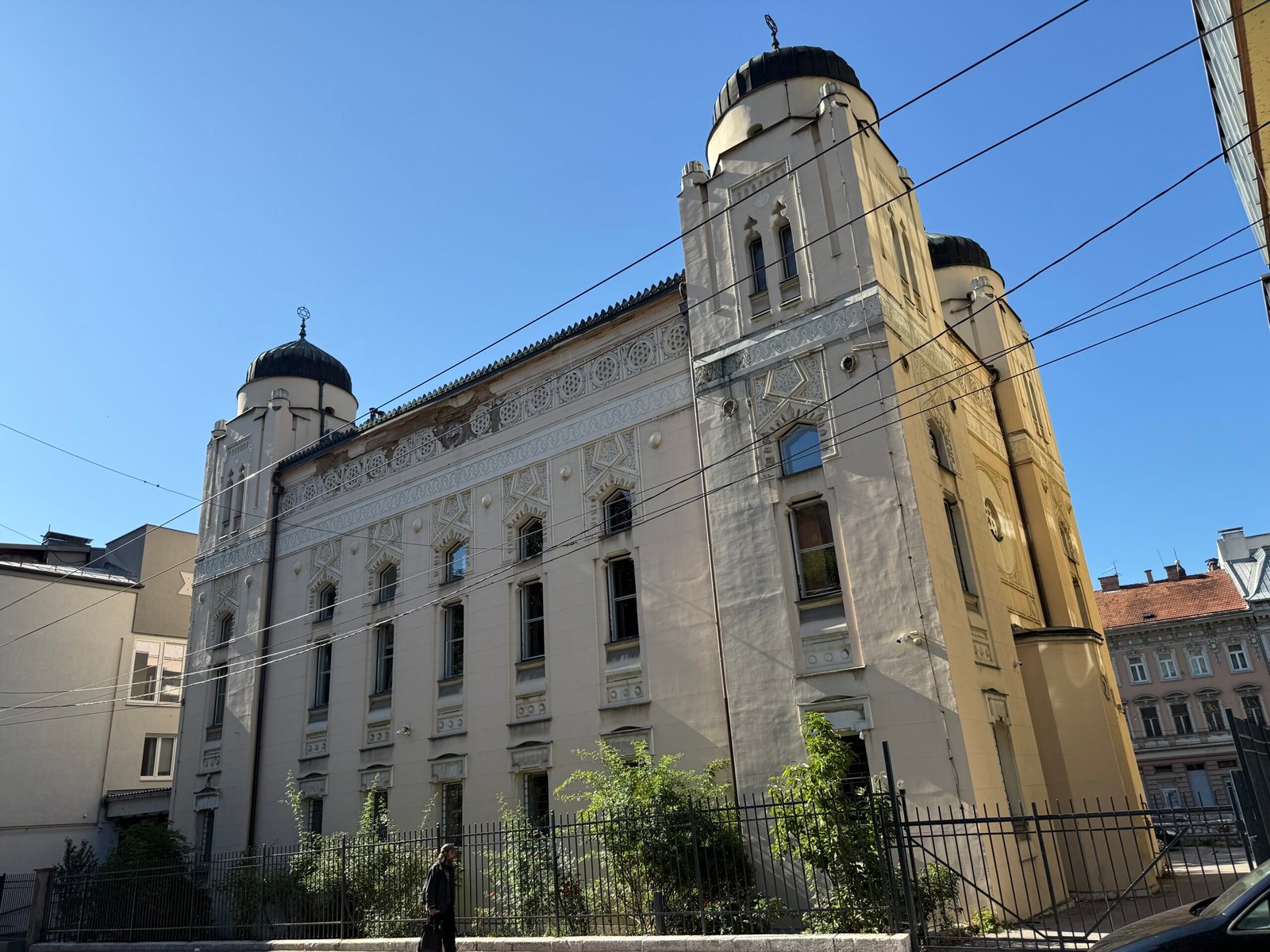
Near the Emperor’s Mosque, one can find one of the few remaining synagogues in the region as well, simply named the Ashkenazi Synagogue. You do need to pay to get into that one as well, which to nobody’s surprise, I did not. I also could not find a fountain nearby so you must make do with a photograph of the actual synagogue instead.
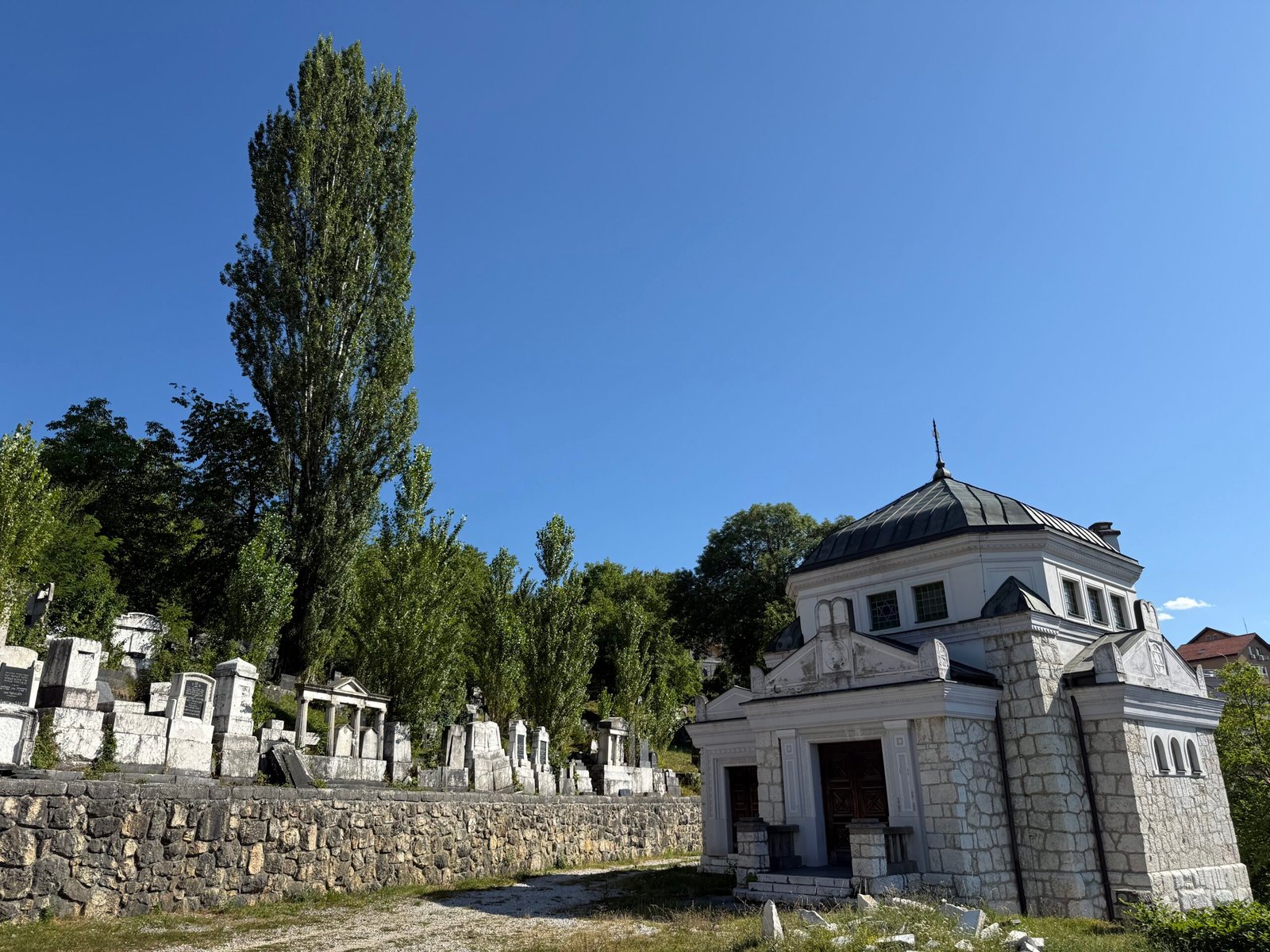
With that being said, if one has to choose between places of worship being outright abandoned or being exploited as cash cows, I must say, I may opt for the latter. The thing is, while some Bosnian churches, mosques, and synagogues charge an entry fee, at the very least, these seem to be maintained well enough. I cannot say the same for many abandoned religious sites in the city, such as this synagogue near the likewise seemingly abandoned Jewish cemetery.
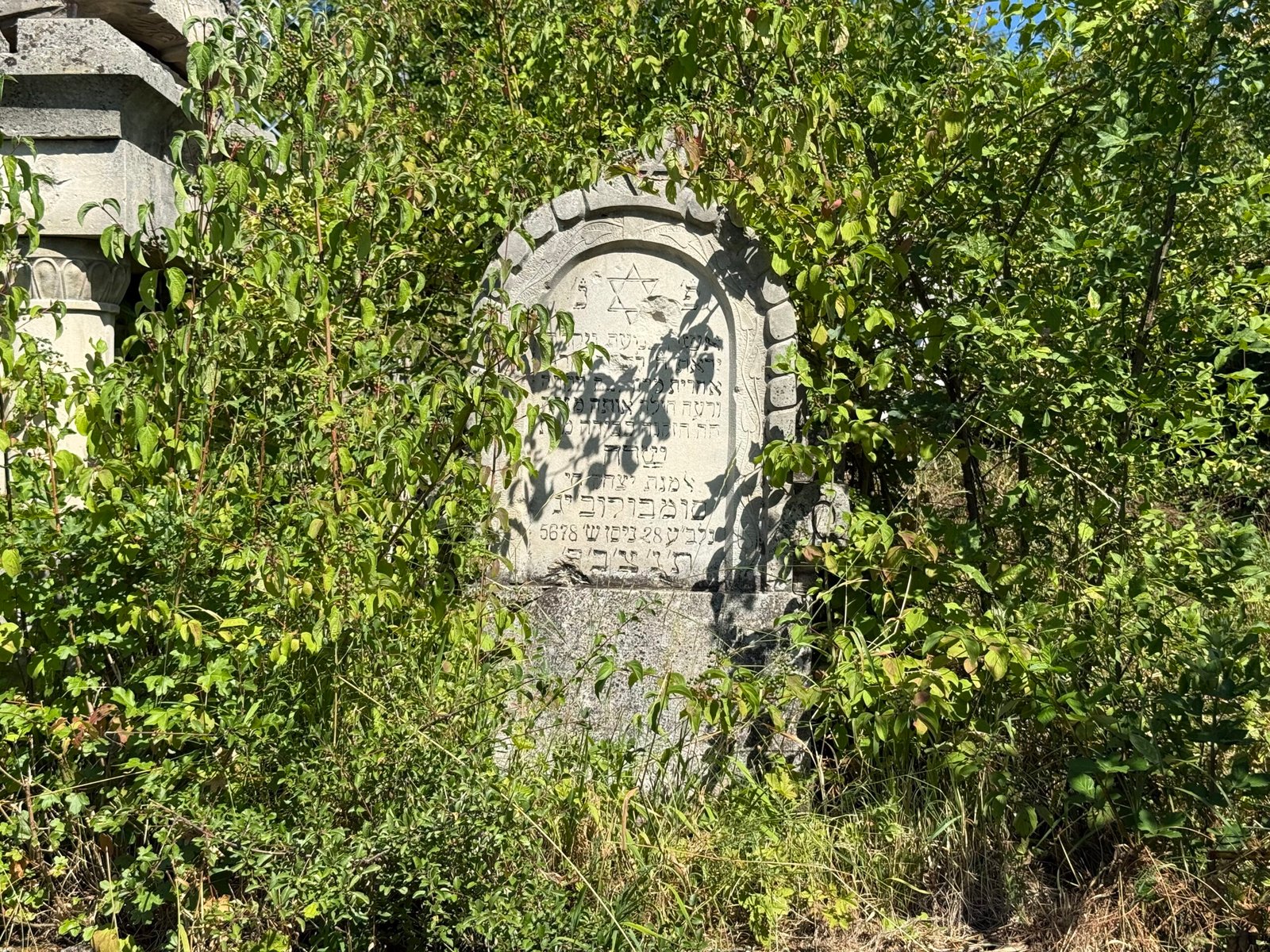
Sarajevo is supposedly home to the second largest Jewish cemetery in Europe. Unfortunately, it seems to be barely maintained today. Most tombstones are already illegible, and the ones that stand still are swarmed by shrubs on all sides. In fact, I could not help but wonder if this cemetery can even be saved at this point, given how much the site has deteriorated.
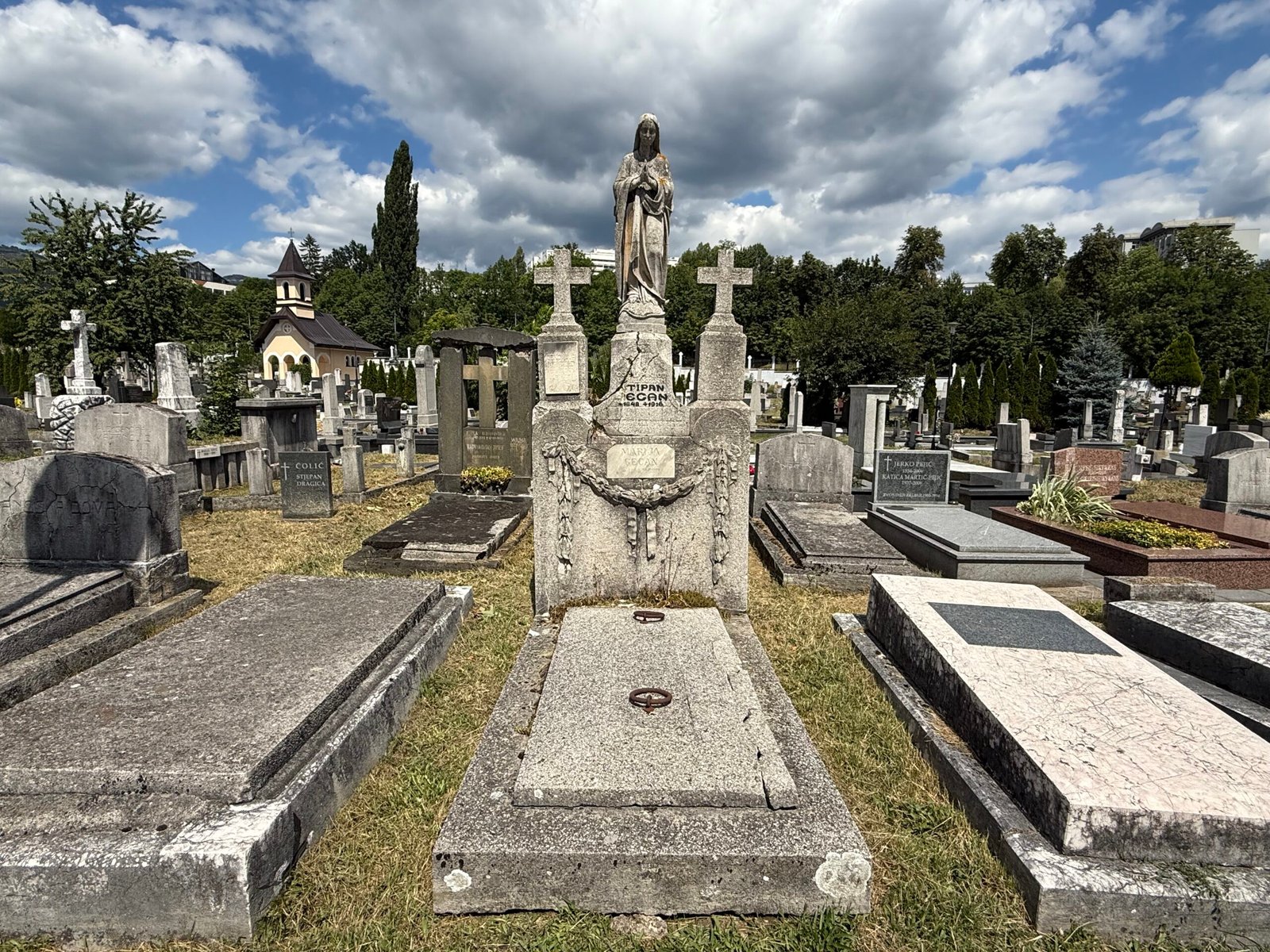
Thankfully, Christian and Muslim cemeteries seem to fare a bit better in this regard, and there are plenty of these scattered around town. For example, this is the Saint Mark Cemetery, where the Serbian Orthodox individuals are laid to rest. It is one of the bigger cemeteries I visited in BiH, and you can find tombs that are as much as two centuries old.
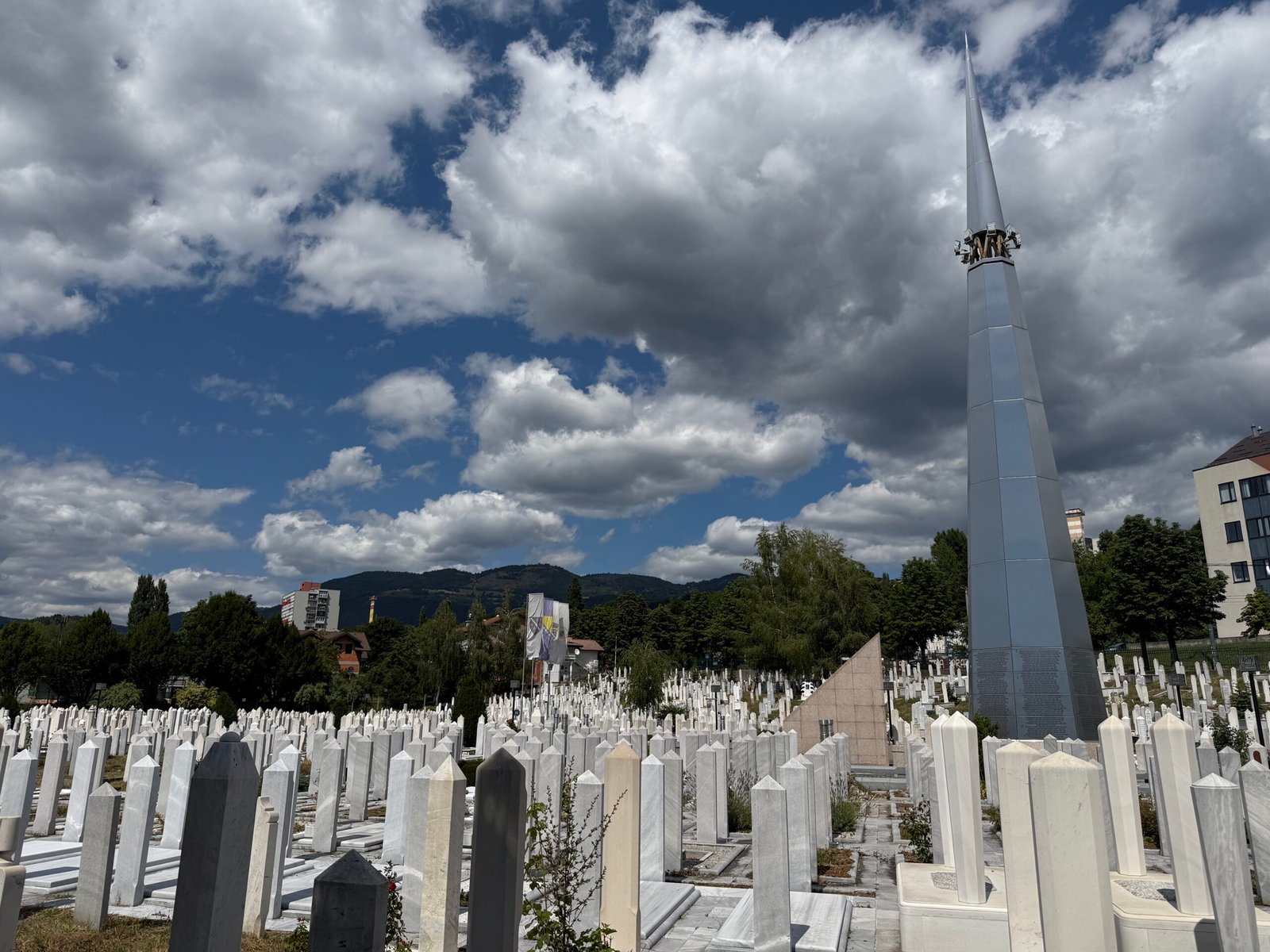
Right next to that Christian cemetery, one can find a Muslim one that is filled to the brim with those that died during the atrocious 1990s. I suppose it is more of a memorial than a cemetery.
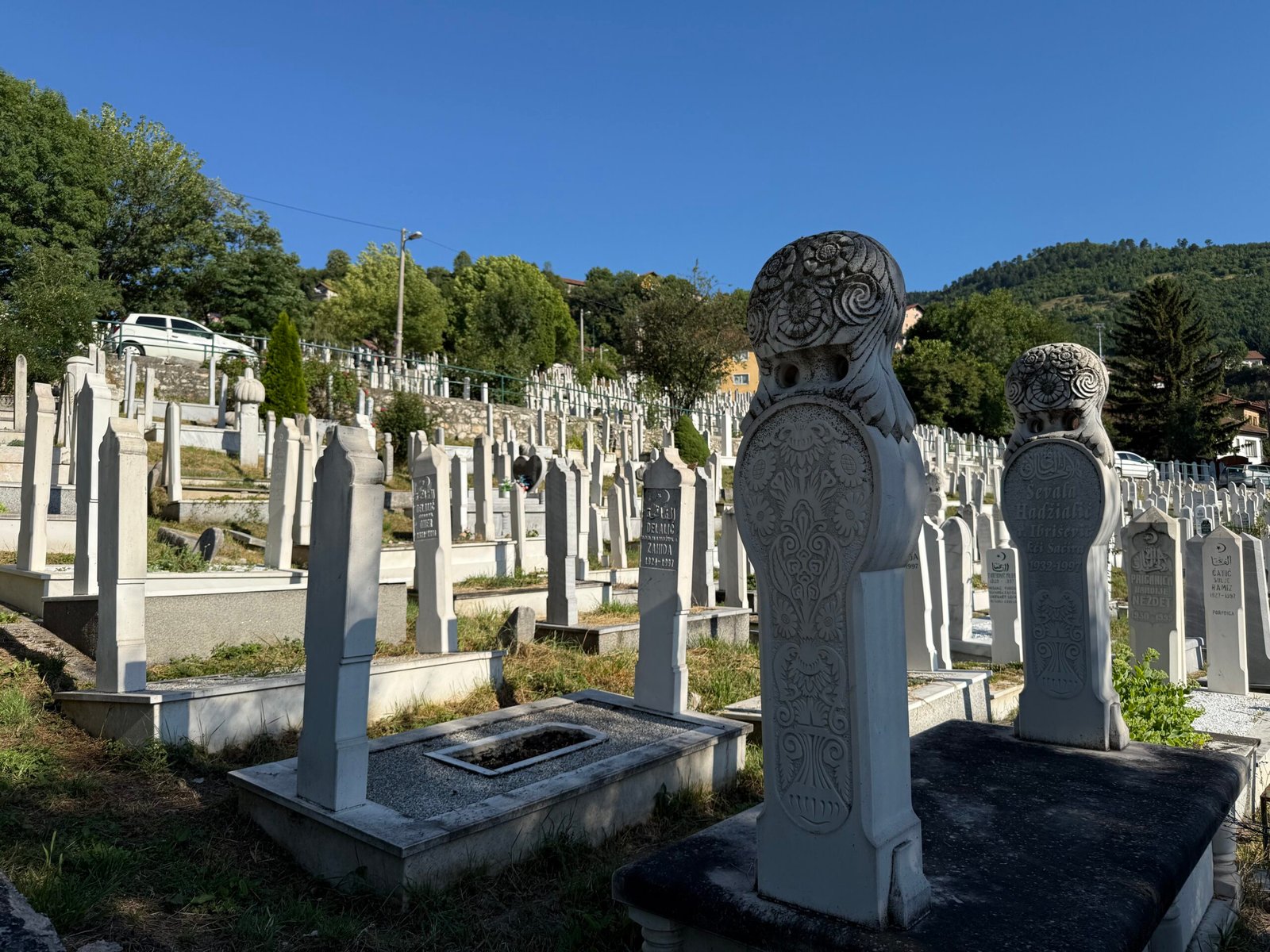
To be honest, it is not easy to figure out whether you are in a memorial or a cemetery in Sarajevo, the line between the two can be quite blurry. Places that seem to have a ton of tombs filled with the victims of the massacres in 1990s can also have centuries old tombs in which Ottoman soldiers were once laid to rest.
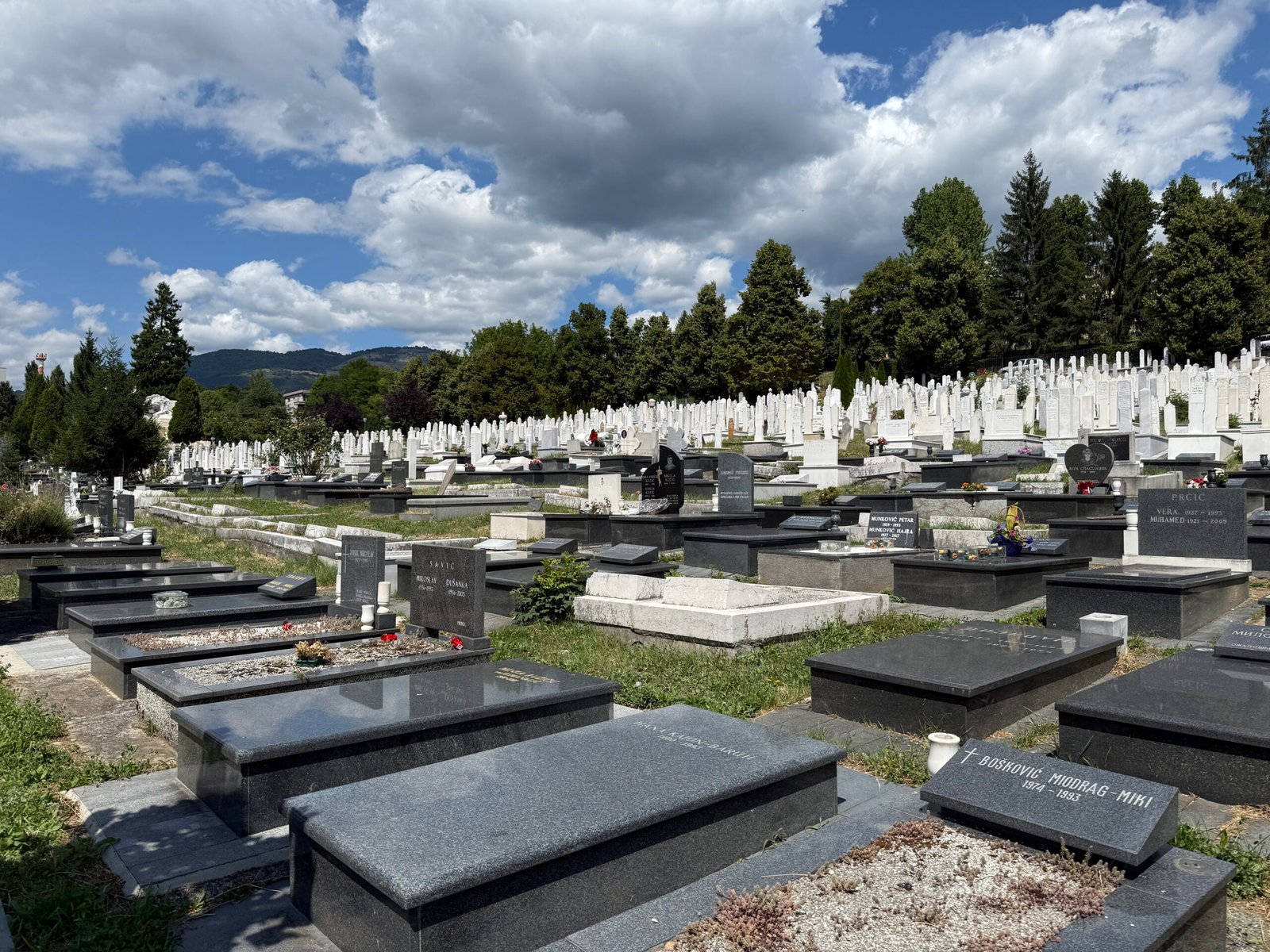
This region did see its fair share of violence in the last few centuries, and that is why its cemeteries are this complex, and multilayered. Other than Ottoman tombs being found next to Bosnian ones, you can also find Austro-Hungarian martyrs being memorialized a few hundred meters away from a memorial dedicated to Yugoslav partisans. In short, there is no shortage of cemeteries in Sarajevo, and if you fancy visiting them, that may be reason enough to visit the Bosnian capital.
At the end of the day, I do think that Sarajevo earned its title. It is the Jerusalem of the Balkans. However, its multireligious community could use a better funding scheme, one that does not rely on tourists paying to see small churches, mosques, and synagogues, one where cemeteries of all religions are fully maintained. One can only hope that things will only get better for the Jerusalem of the Balkans in the coming years.