
When we decided to celebrate my mother’s birthday in Bosnia and Herzegovina (BiH), it proved more difficult than usual to create the perfect itinerary. We wanted to enjoy the Adriatic Sea for a few days in Neum, stay in Mostar and Sarajevo for a while, and ideally visit a few cool sights near those two cities. However, since flights to Sarajevo were the most convenient, we more or less had to start and finish our journey in the capital. While losing an entire day in transit did not sound exciting, eventually, we decided to take the train directly to Mostar after landing in Sarajevo to properly start our trip from there. The following is what we ended up seeing during our three-night stay in this popular town, which should explain why Mostar attracts so many visitors to begin with.
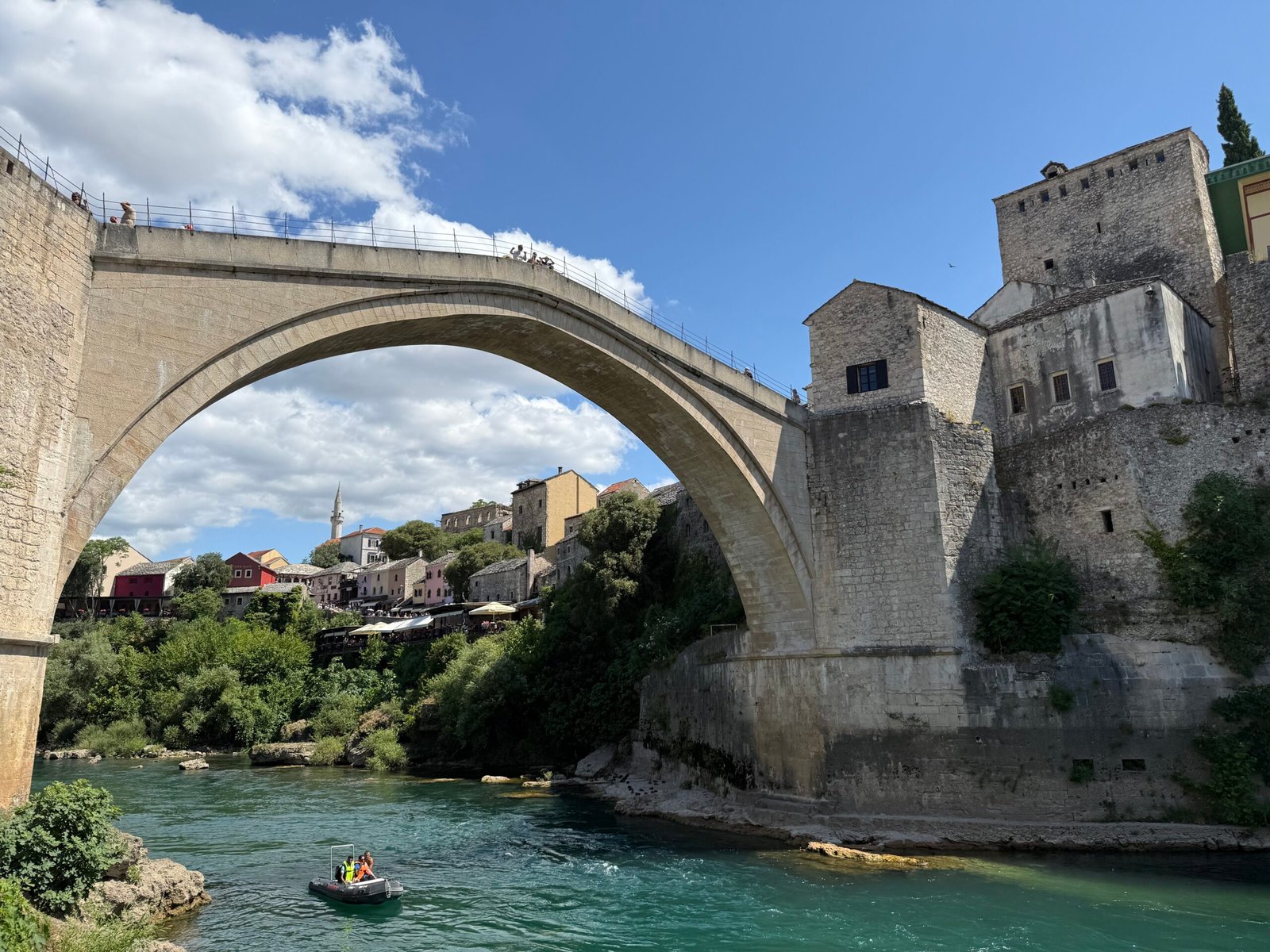
Chances are, if you have seen anything about BiH online, it was this bridge. This is the Stari Most, meaning the Old Bridge. Commissioned by the Sultan Suleiman the Magnificent (yes, the one from that one TV series) and designed by Mimar Hayruddin, then the chief architect of the Ottoman Empire and a student of the legendary Mimar Sinan, it was completed in 1566. Sounds pretty cool right?
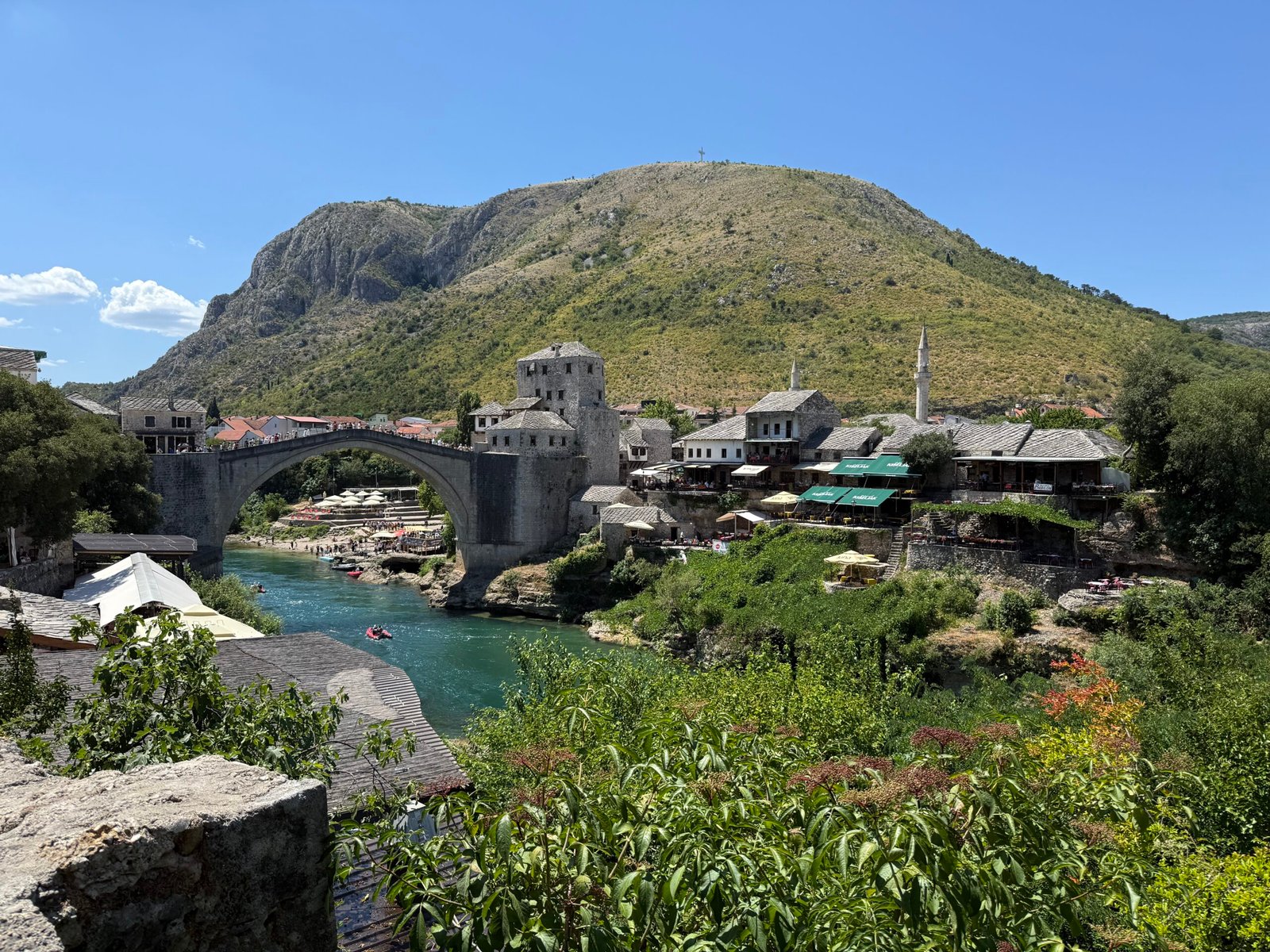
Well, let me tell you something even more interesting. This is not that bridge but it could have been, if the original was not demolished by Bosnian Croat artillery in 1993 during the height of the Croat-Bosniak War. We will cover the extremely bloody and controversial recent past of the country in a much later article on the Siege of Sarajevo, but suffice to say, the dissolution of the Yugoslav polity and the ensuing civil wars did an insurmountable amount of damage to its many constituent states, wounds of which can be seen to this date.
All of this is to say, some of the old-looking structures you come across in BiH (and beyond) can be deceptively new in reality. Case in point, the so-called Old Bridge that we can see today was completed in 2004. This is not to say that it is less worthy of a visit. On the contrary, knowing this basic fact should make your visit to Mostar more interesting. An old Ottoman bridge that once connected the Christian and Muslim sides of the town was destroyed during a civil war between clearly religiously affiliated groups in 1990s, only to be rebuilt again to bridge the Muslim Bosniak and Catholic Croat sides of the town once again today. The Old Bridge is a symbol, and that alone makes it worthy of a visit!
However, there is much more to Mostar than its poster child. While the Old Bridge is gorgeous and offers some insane views of the old town that surrounds it, it is also extremely crowded and weirdly slippery due to the type of stones that were used to rebuilt it. I have seen far too many children and elderly slip and fall as they try to avoid a tourist group heading their way in a rush, and as such, it is not necessarily the best place in town to spend some quality time in.
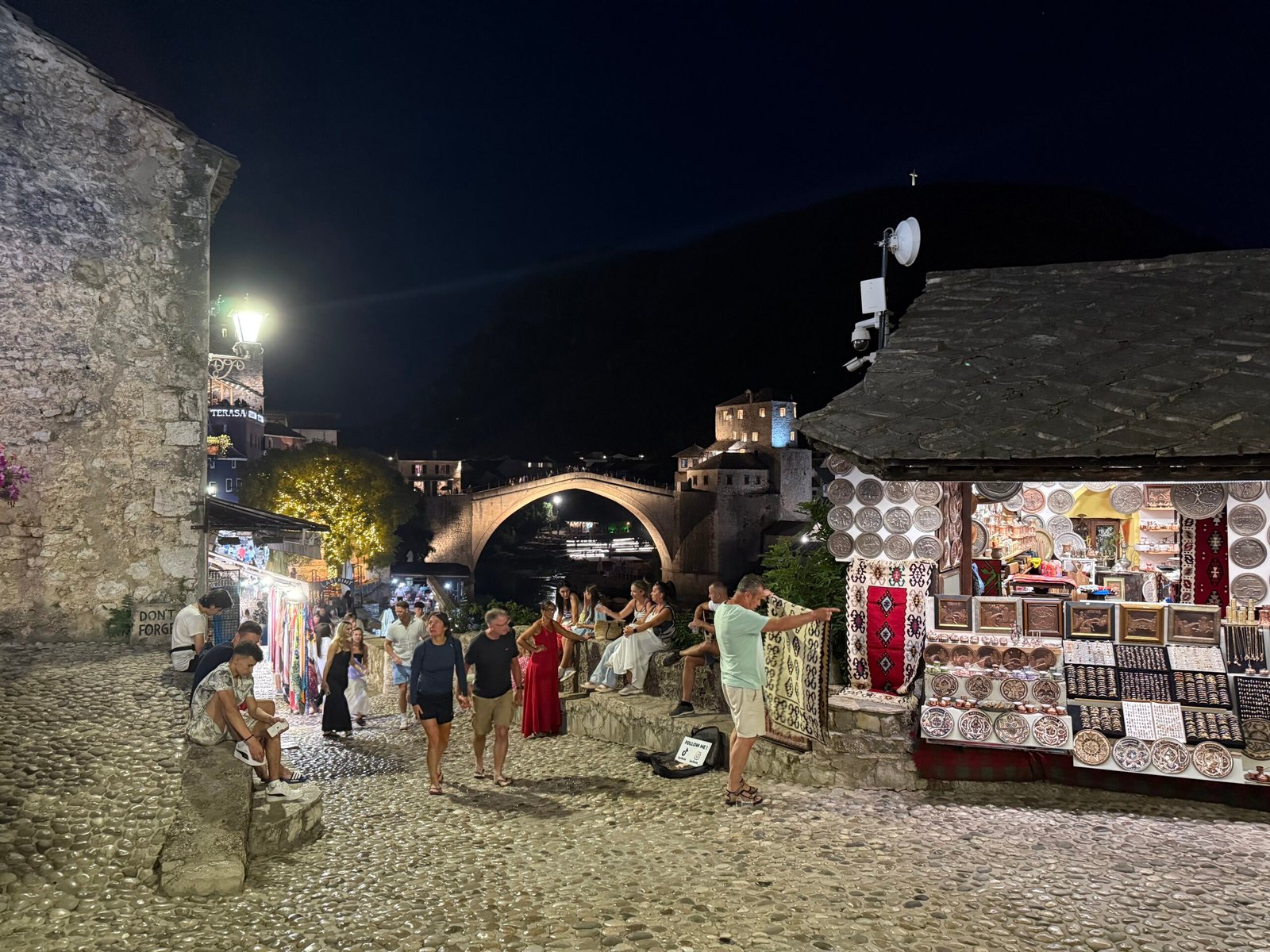
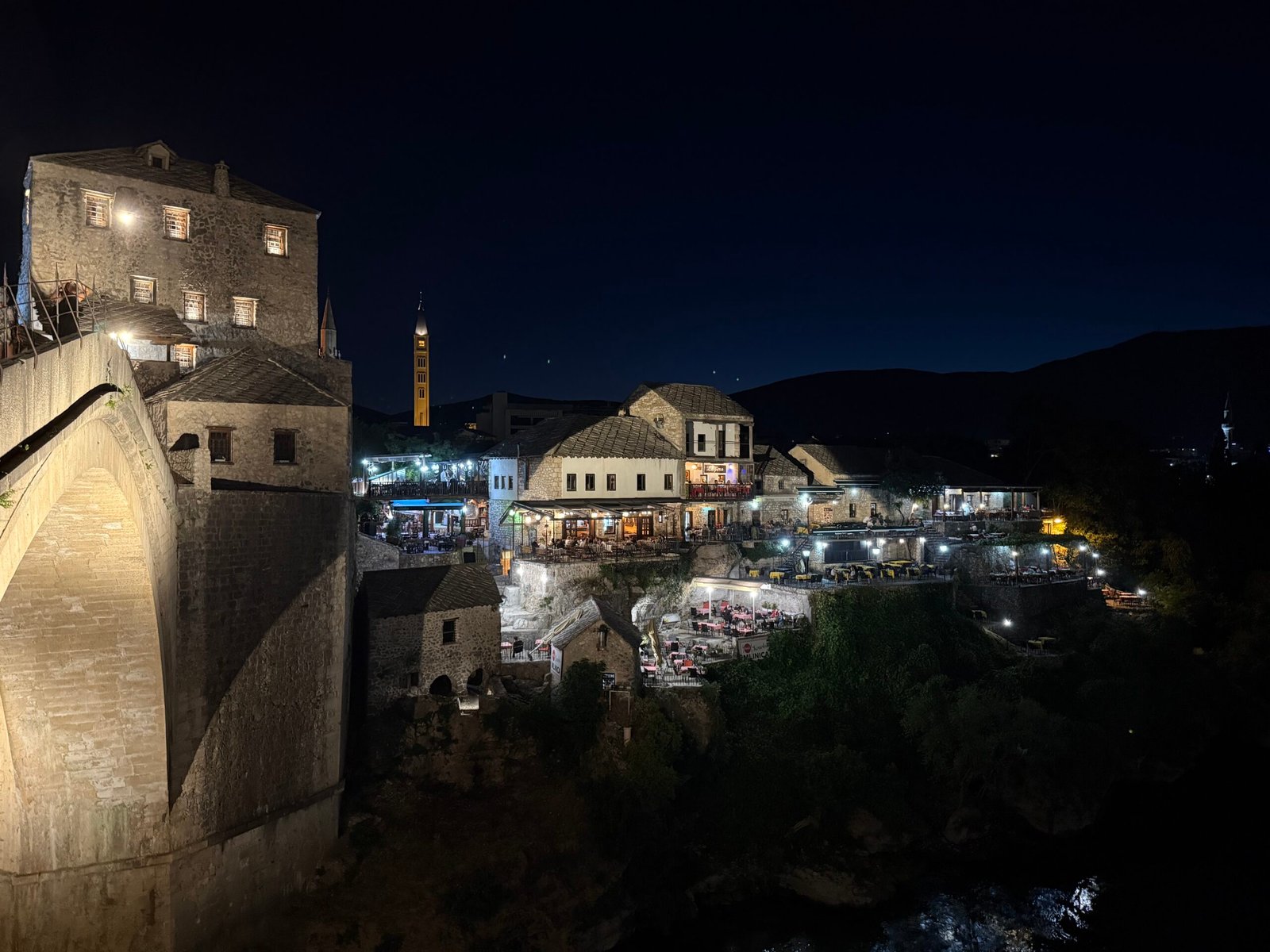
The surrounding old town is not that different in this regard. While I adored the old timey exterior of all the stores and eateries here, day and night, this place was always swarming with tourists in July.
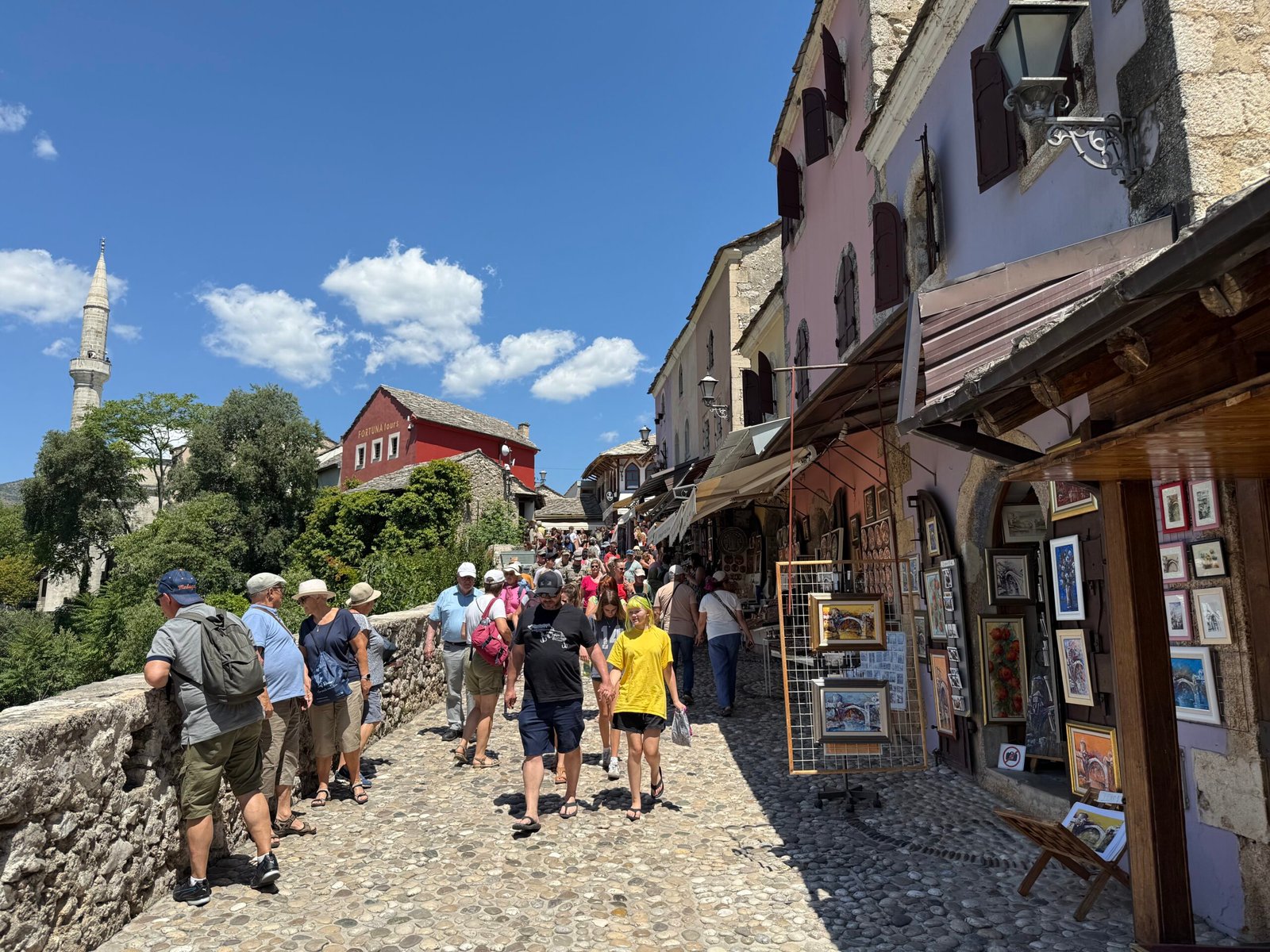
Being a visitor myself at the time, this is not an ironic statement against the negative impacts of tourism in the city. It is just to let you know that it may be best to visit this gem of a town during the shoulder months. Weather should be more comfortable, meaning not scorching hot all the time, and the crowds should be more manageable.
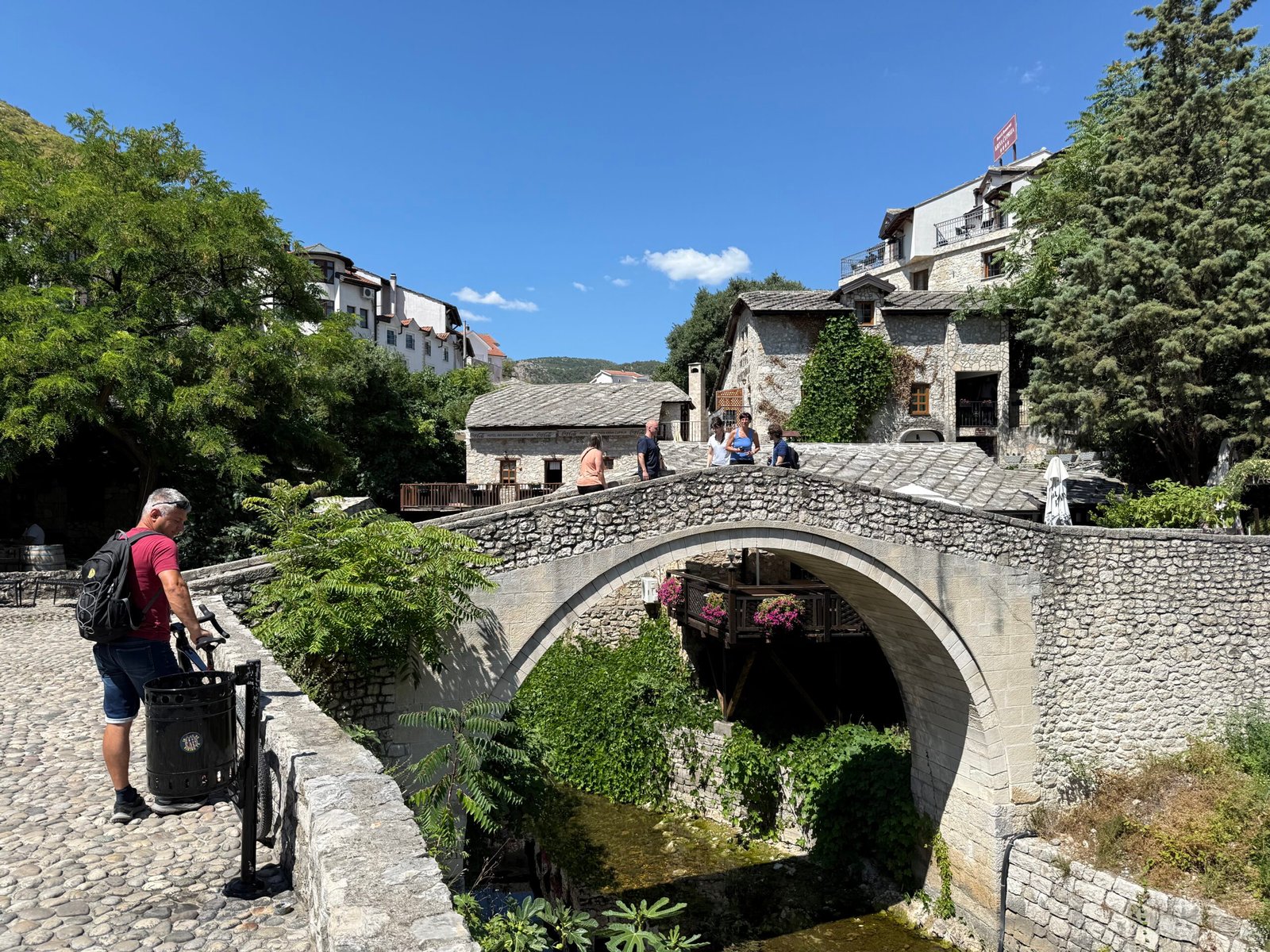
Regardless of the time of your visit, you will be happy to hear that the moment you leave the more touristic center of the city, you will be running into less and less people. Since Mostar is pretty tiny, this usually means walking five minutes or so in one direction, which is negligible. Even the Crooked Bridge, my actual favourite bridge in Mostar, which is just about a three-minute walk away from the Old Bridge, was mostly empty when we visited it. It is not actually empty on this photo, which is ironic to say the least, but it was most certainly empty in all the other times we were passing by. You will just have to take my word for it…
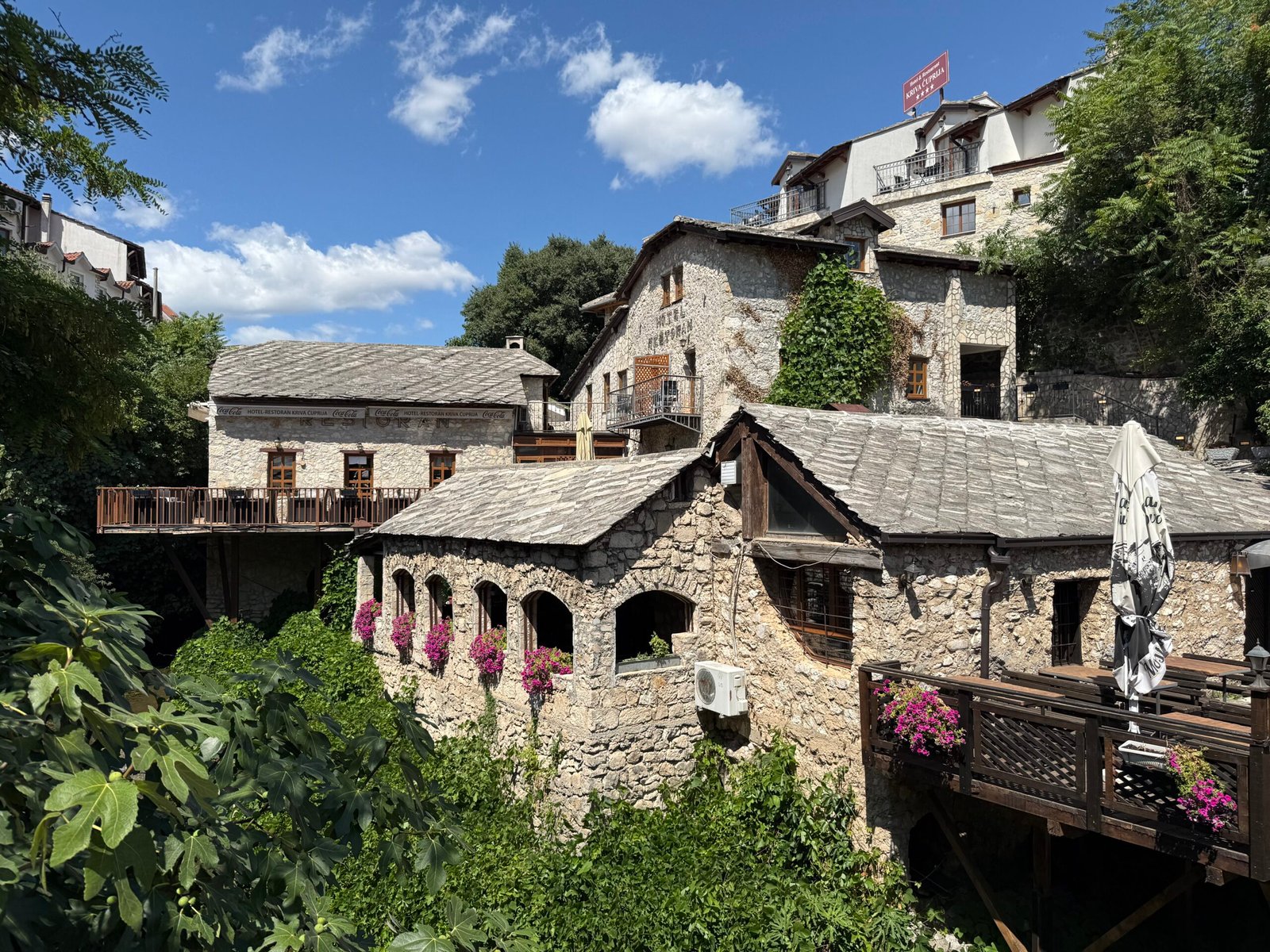
The area around the Crooked Bridge is why I preferred this smaller bridge so much. It is quainter and offers some excellent views of the surrounding hotels and restaurants. Some of the best food that you can have in Mostar is located in this area as well, though you will have to wait until next week to read more about them!
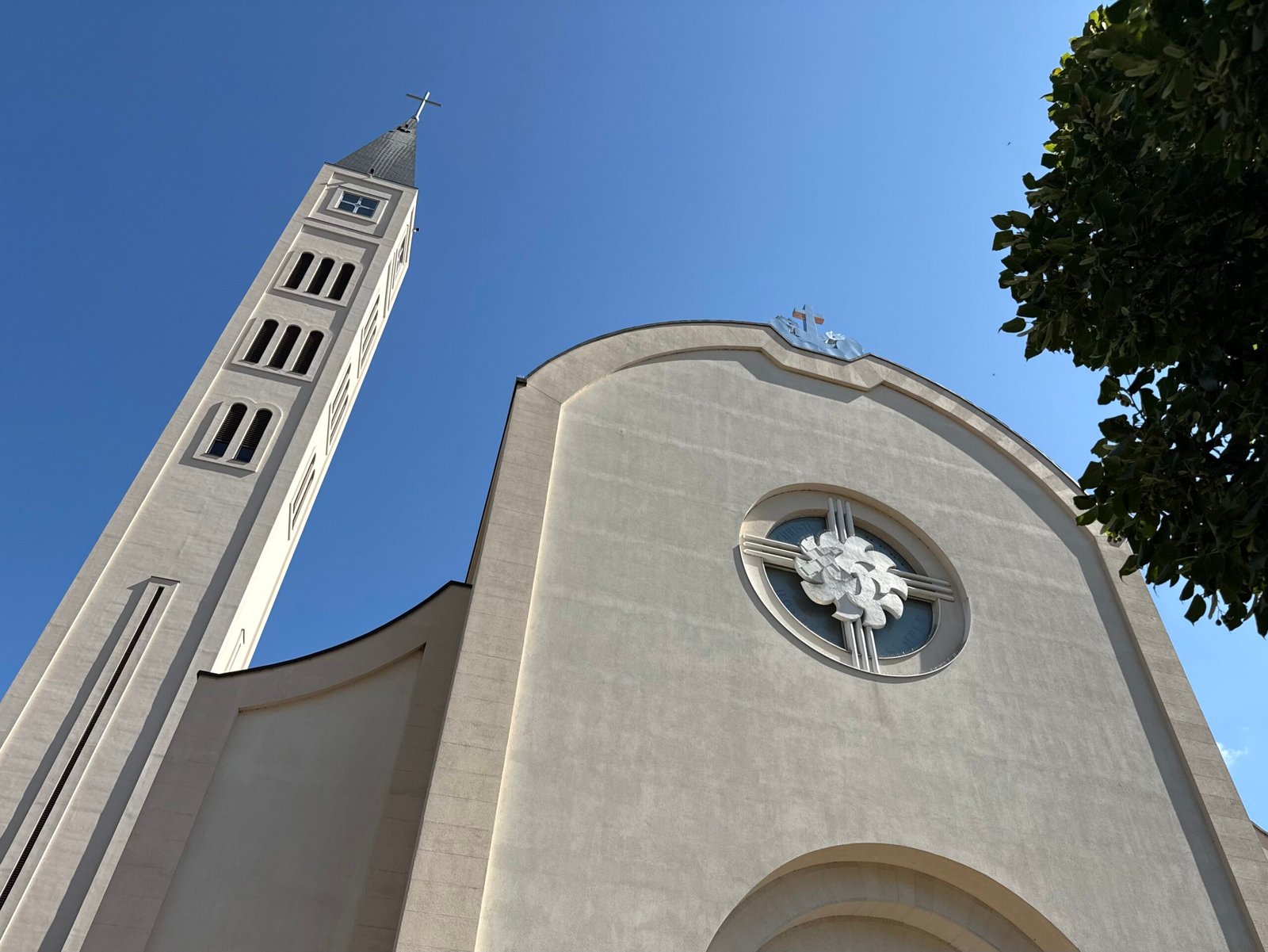
From the Crooked Bridge, if you walk for yet another three minutes or so, you will find yourself in Church of St. Peter and Paul, which reportedly offers some fantastic views of the city atop its tower. As you explore the area you will almost certainly be greeted by an energetic young lady who will offer to take you upstairs for a small fee. By this point, I had my fill of scaling towers and overviewing towns I am visiting, and I was extremely hungry, so I politely declined the offer.
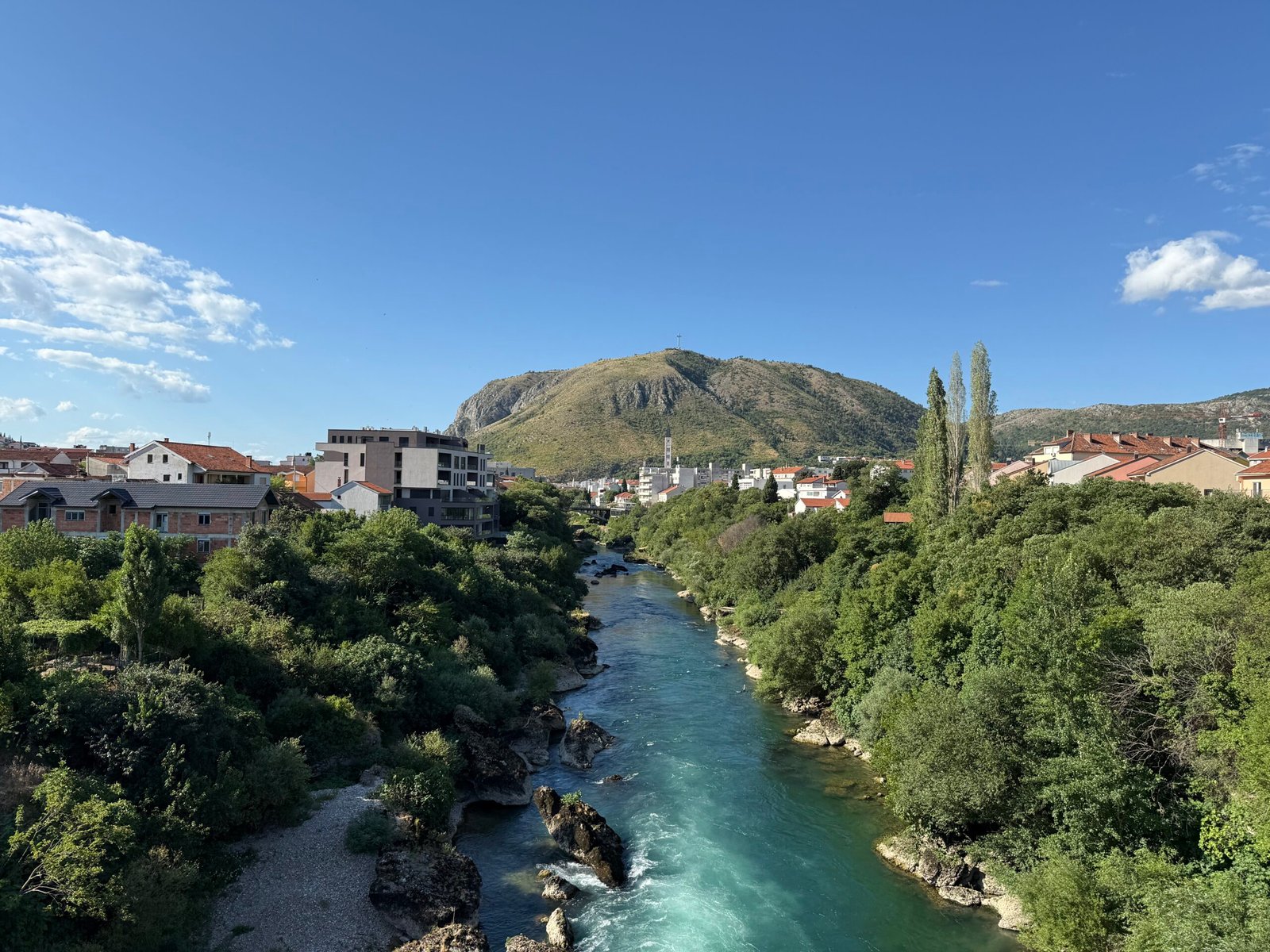
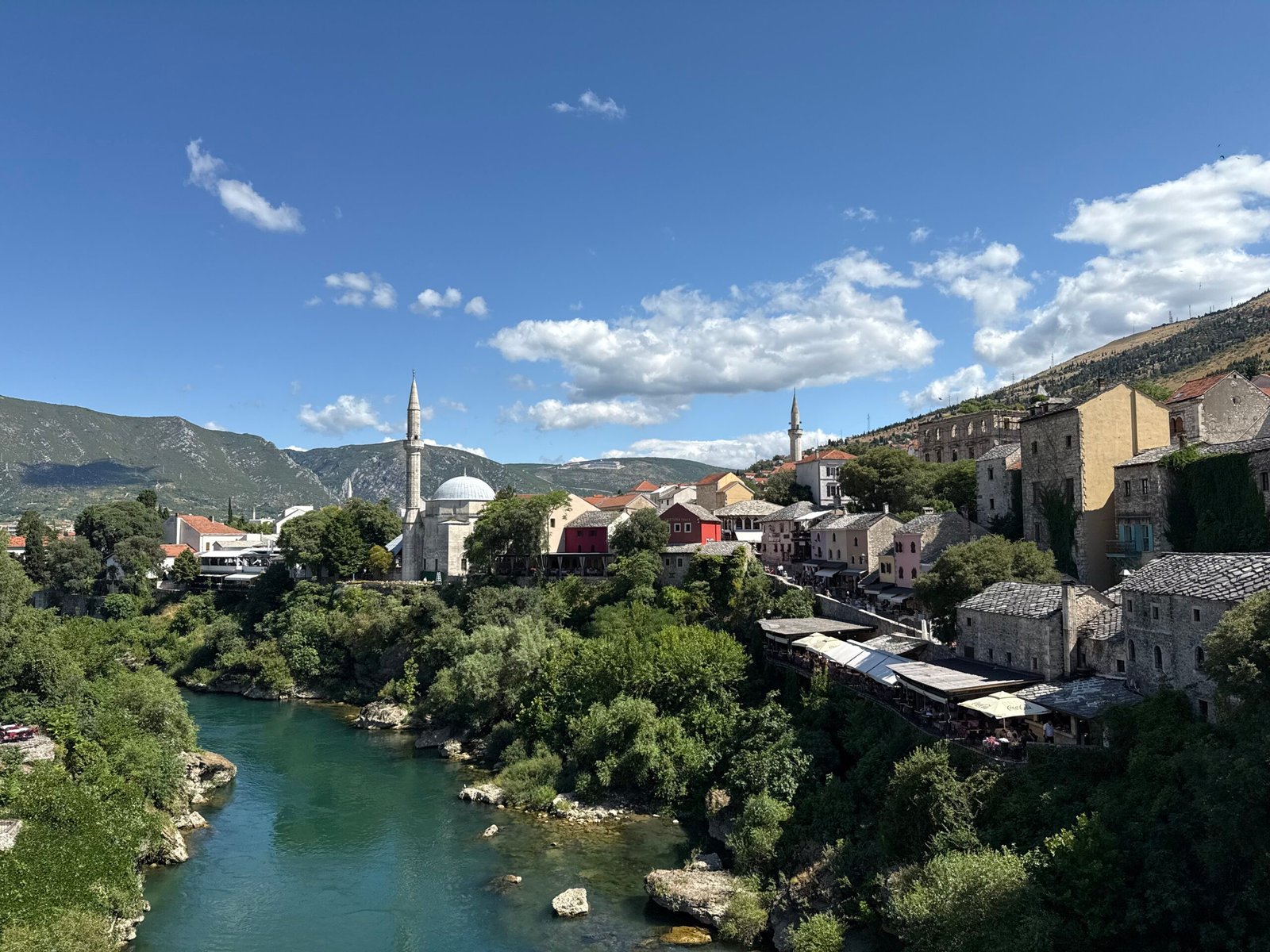
Truth be told, I did not really regret my decision. Mostar is an extremely scenic town, regardless of where you are and at which direction you are looking at. For example, the Carinski Bridge, which just happened to be located near our accommodation, offered exceptional views of the city and the Neretva River that divides it in two. In fact, pretty much all the bridges in the city are perfect to spend some time just taking in the views.
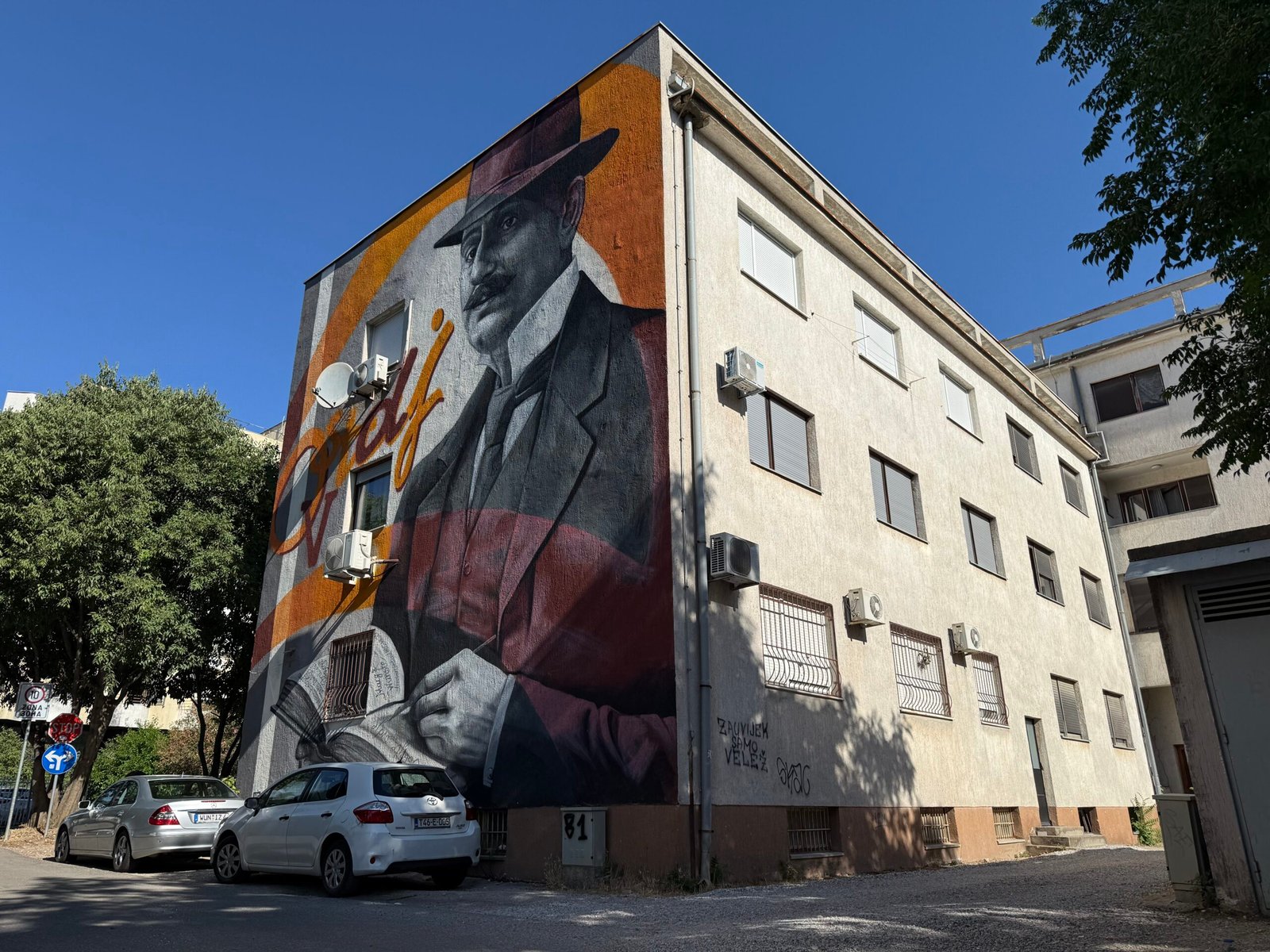
Thankfully, there is more to Mostar than its already well-known landmarks. Those that enjoy street art like me should be happy to hear that there is a quarter in town called Fassadenmalerei where you can enjoy plenty of these massive art pieces that cover entire sides of apartment blocks. This area is on the Croat side of the town and can be accessed easily with the aforementioned Carinski Bridge. There is also a wall nearby which is home to numerous smaller graffiti.
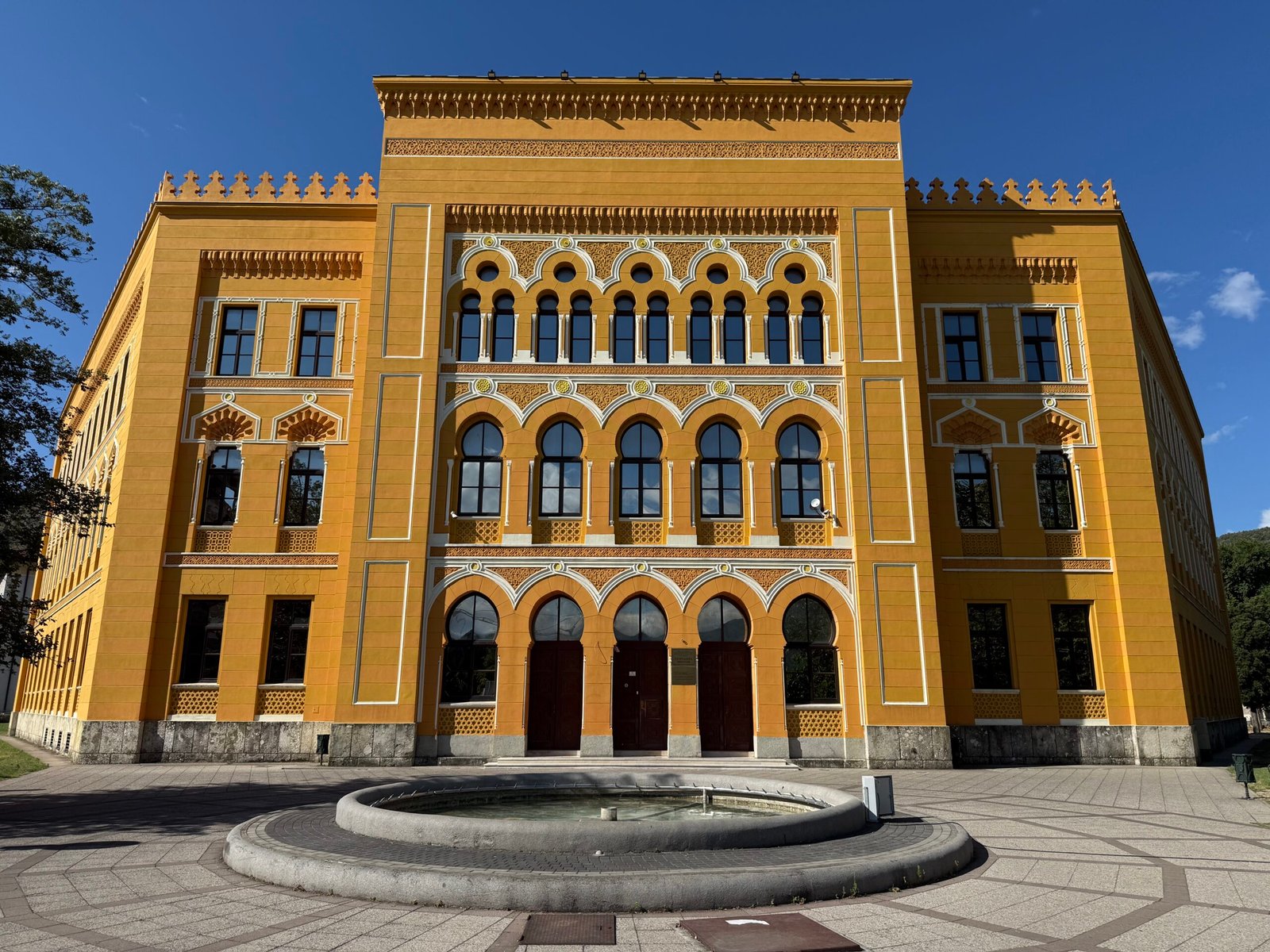
While such gorgeous sites are worth mentioning, I must say, it is really the recent bloody history of the region that sets most Balkan countries apart from many other similar destinations across the globe. Frankly, these are not mere leisure destinations. Cities like Mostar are open-air museums about some of the most horrifying aspects of our species. Therefore, some knowledge regarding where you are and what you see truly matters. For example, this is the United World College located in the Spanish Square. Why does Mostar have a square named after the Spanish? Well, from 1992 to 1995, 21 Spanish soldiers died during their peacekeeping duties in Mostar, who were then memorialized by the local administration in this manner.
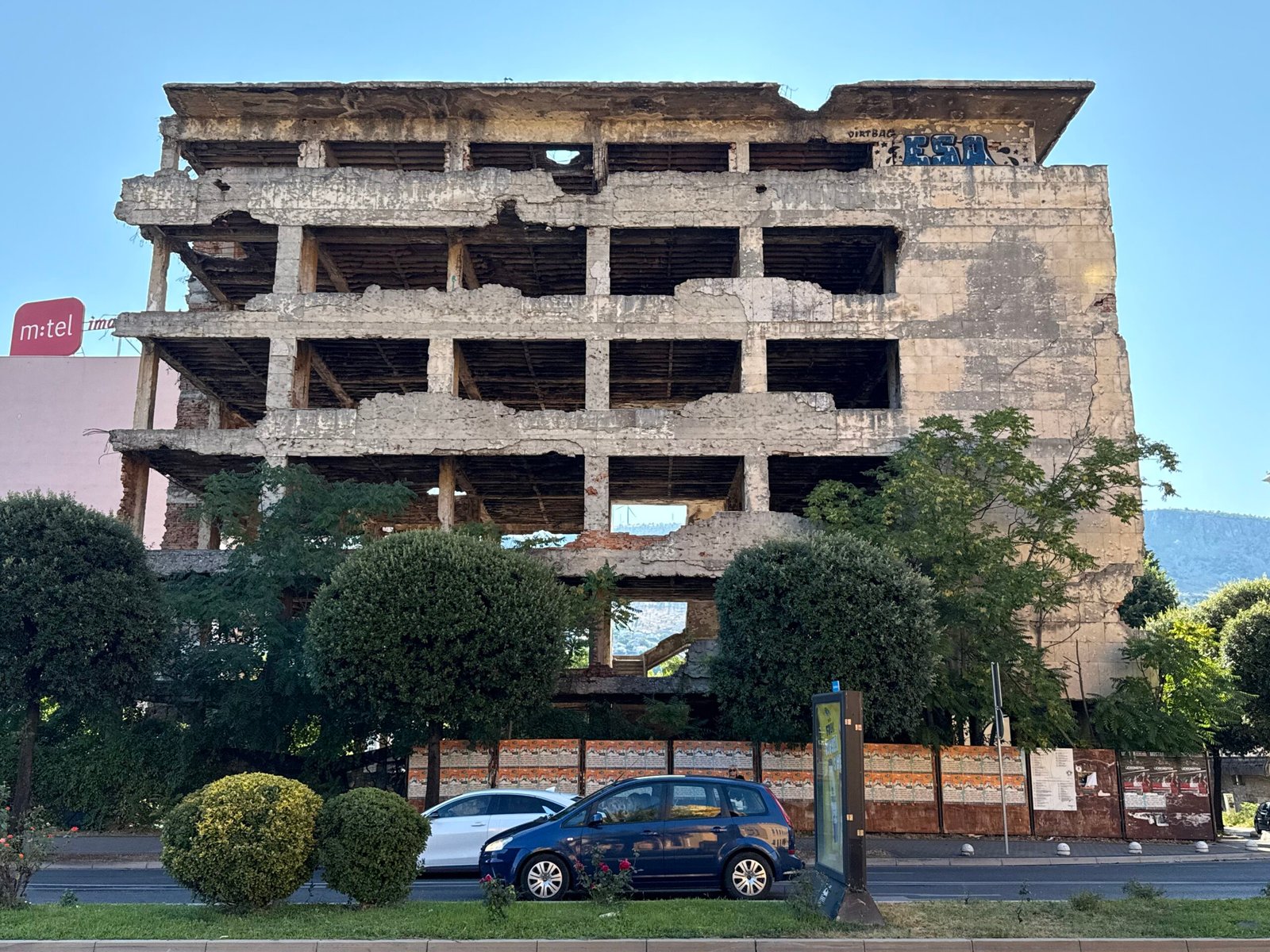
Such names in honour of the fallen soldiers are not the only reason to remember the latest hostilities in the region. While the United World College looks like a decent establishment, the ruined building across the street looks the exact opposite. Some such derelict buildings can be spotted across BiH. While they act as reminders of a recent past that is already difficult to forget, presumably, the main reason why such ruins remain unattended is due to the economic hardships and political instability that the country faces today.
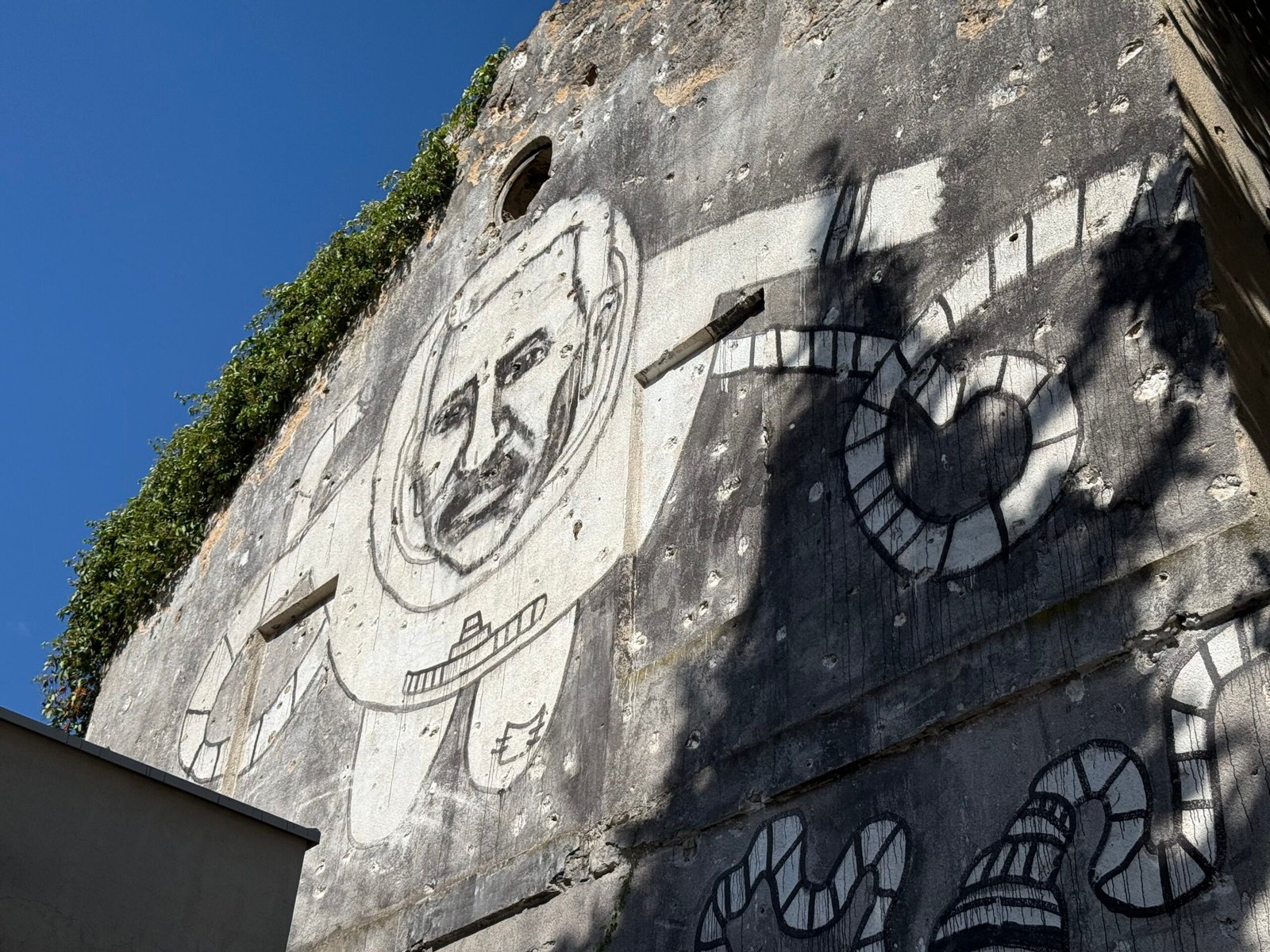
While some buildings are in a much better condition and are usable to this day, you can still see the damage done by guns on their exterior. Such damage seems to have been left alone if it is cosmetic and does not actually impact the living conditions inside, but the bigger holes are either filled using whatever material was available after the war, or are fixed properly in later years.
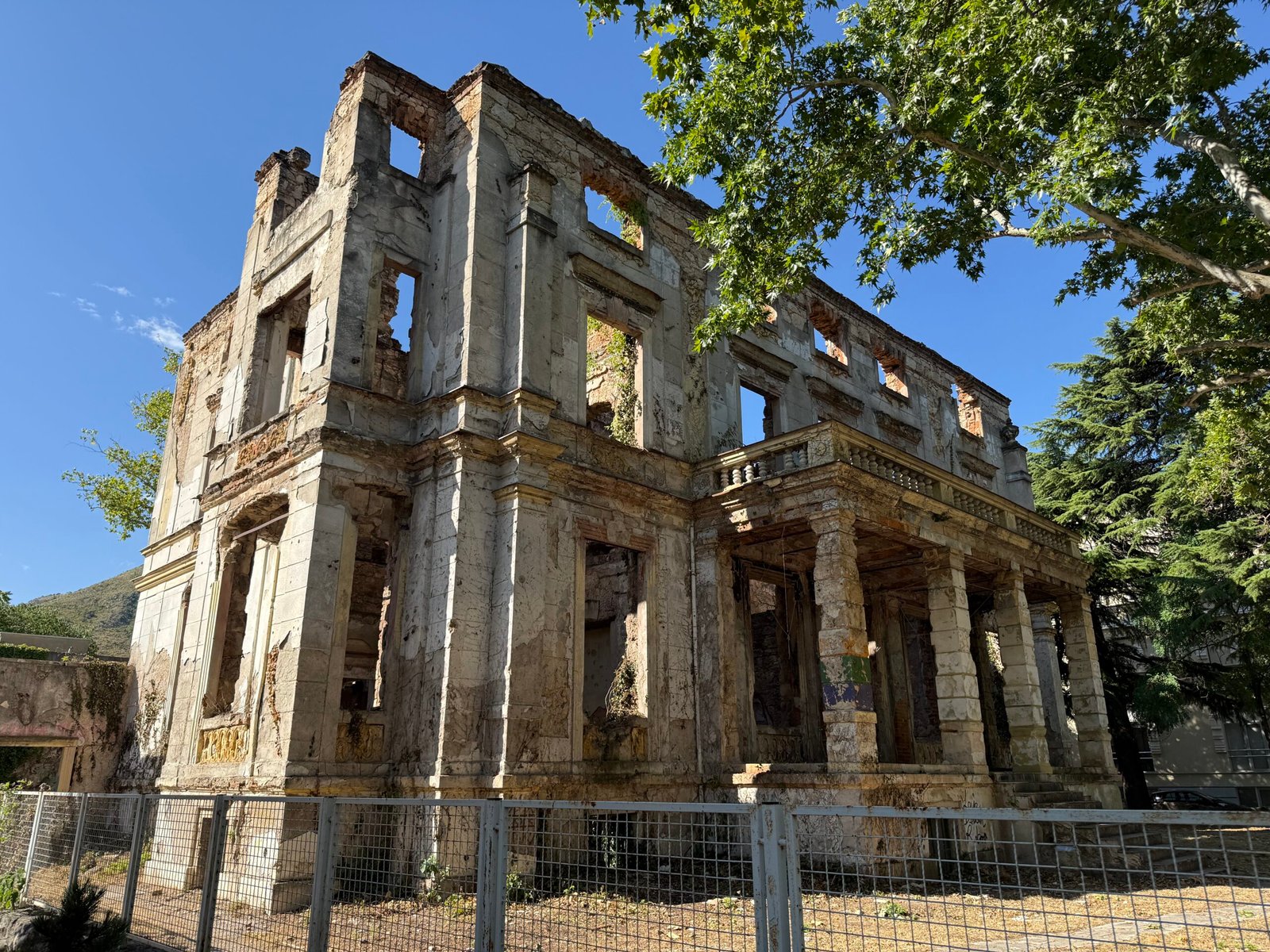
Though the majority of the damage in Mostar seemed to be inflicted on the Yugoslav infrastructure and Yugoslav-era housing, naturally, some of the older structures suffered during the conflict in 1990s as well. Much like the Ottoman bridge that was demolished completely, some seemingly Austro-Hungarian remnants were also damaged pretty extensively. Unfortunately, not everything was rebuilt with the same vigour, not that such an ambitious project could ever be funded in this economy.
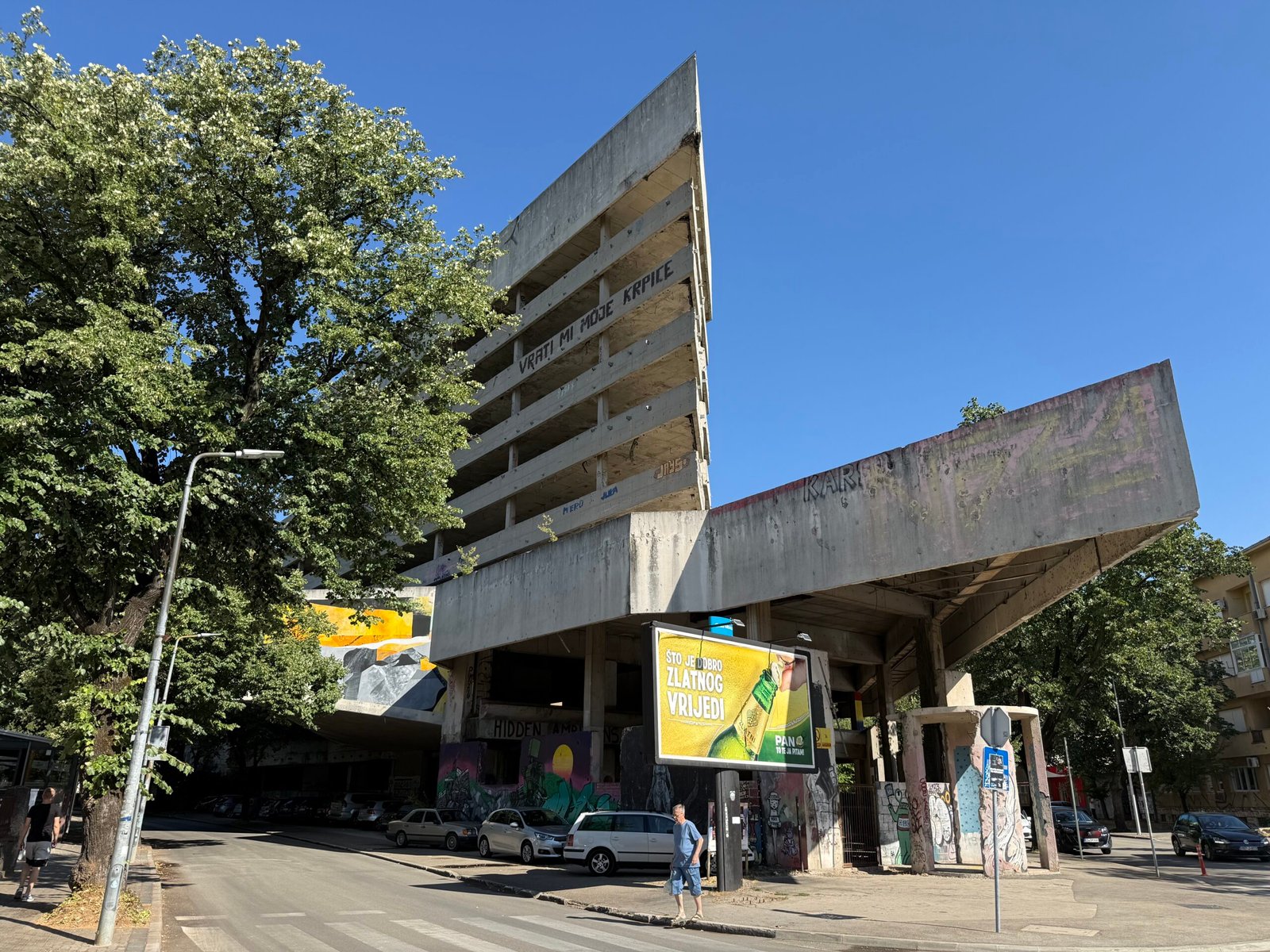
The fact that such derelict buildings are left alone even in the dead center of the town means that Mostar has two sides to it. One that we can see on posts and videos prepared for tourists, complete with a rebuilt Ottoman bridge and shots of the gorgeous Neretva River. There is also a much darker side to Mostar that I shared a few samples of here, one that includes abandoned structures, such as this so-called Sniper Tower. As its name suggests, this was where Croat snipers were mostly located in during the Croat-Bosniak War, as it was the tallest building in the city at the time. Military and civilian targets alike were targeted from above, and this building stands the tests of time to work as a reminder of such horrors.
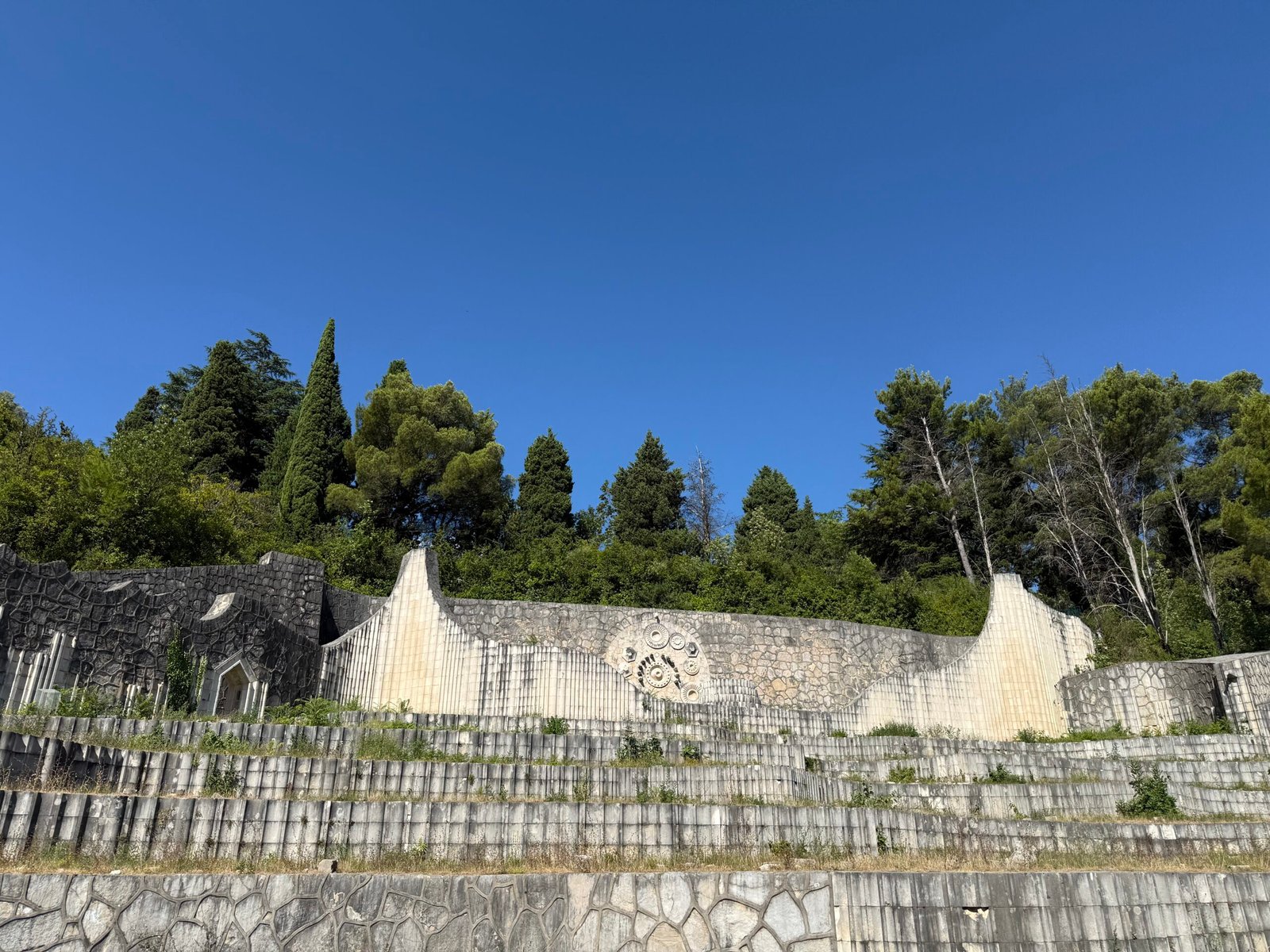
To finish this guide on a lighter note, let us now make our way to the nearby Partisan Memorial Cemetery. This is to be reminded that the locals of this region did not always kill one another as they did in the 1990s. There was a time when, under Tito’s leadership, local communist partisans of all backgrounds fought side by side against the invading Nazi forces during the Second World War. That struggle led to the eventual creation of Communist Yugoslavia, the successor to the short-lived Kingdom of Serbs, Croats, and Slovenes.
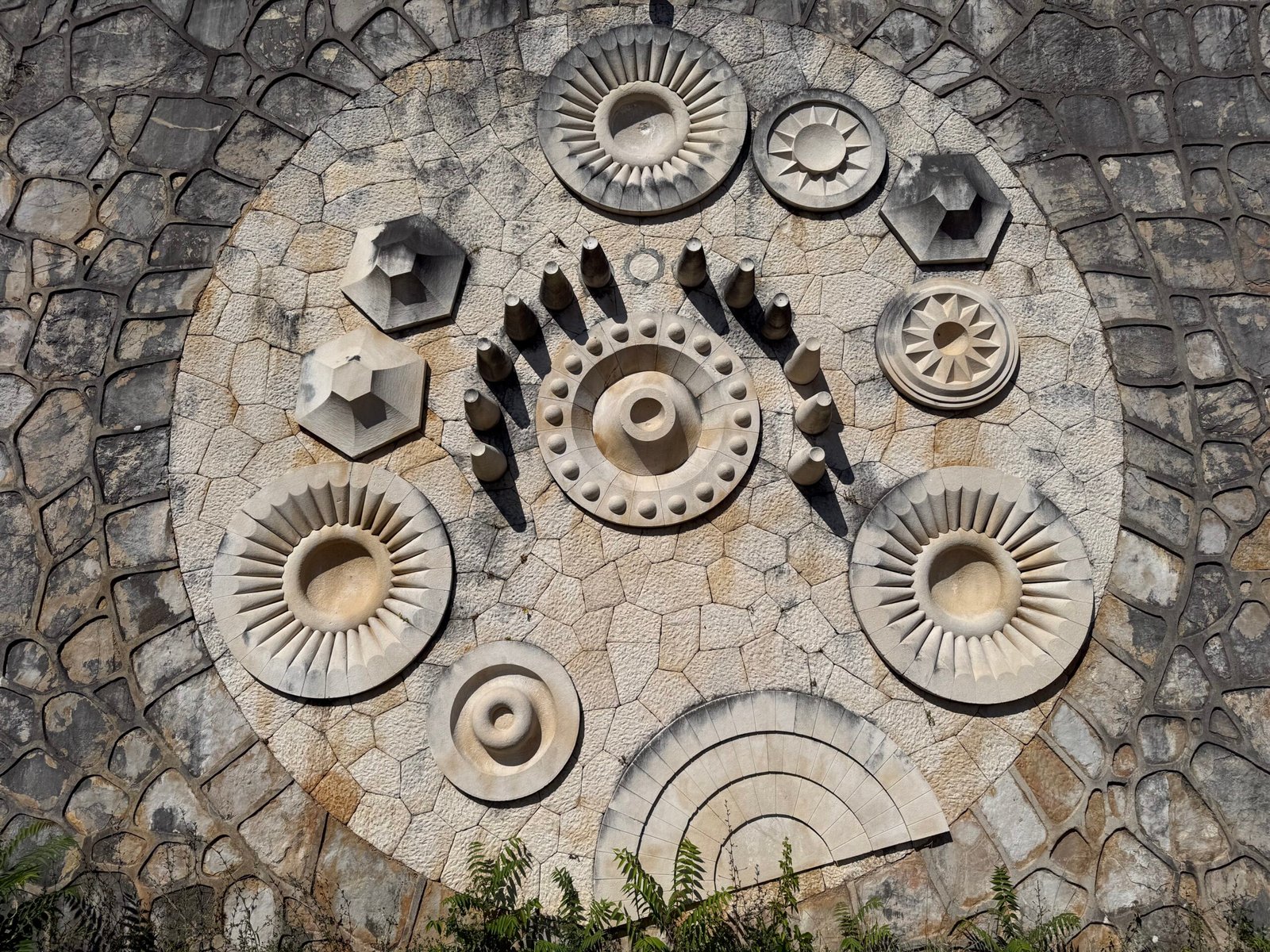
The Partisan Memorial Cemetery in Mostar is dedicated to those Yugoslav partisans that died during the fight against fascism in the Balkans. It is a little-known memorial visited by a few, so regardless of when you visit it you should be left alone as you enjoy it. The design of the memorial feels almost alien at times, which is a refreshing change from the more predictable Soviet counterparts that I have been enjoying for a while now. But then again, in my experience, the former Yugoslav territories always had the quirkiest architectural statements to make.
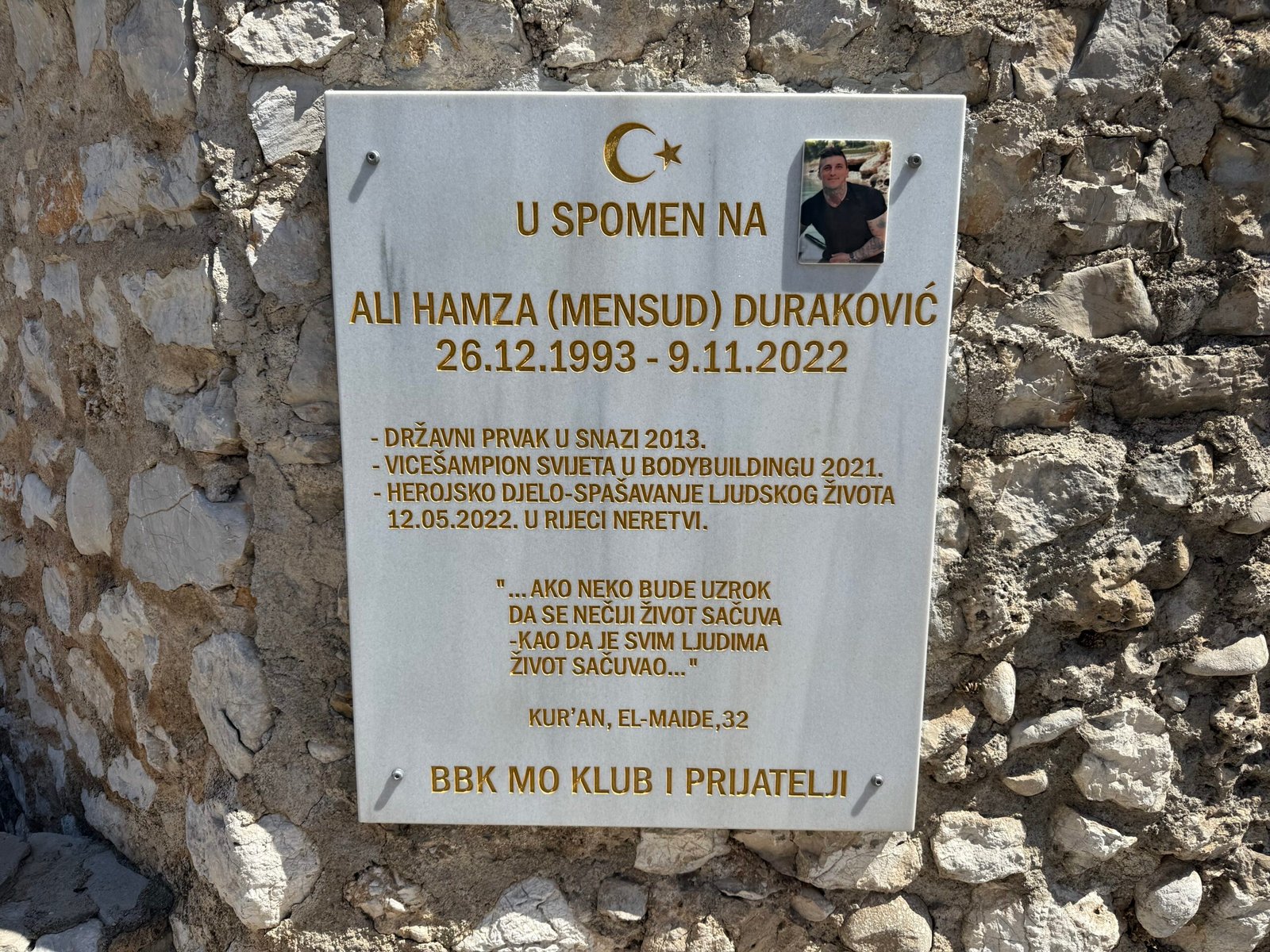
There are also some much smaller and newer memorials that one can find around town, and some of them are quite novel to me. For example, you can find these plaques adorning a few street corners around Mostar. These are not commonplace and are seemingly made for those that died particularly young, though truthfully, I have not found enough of these to arrive at such a conclusion.
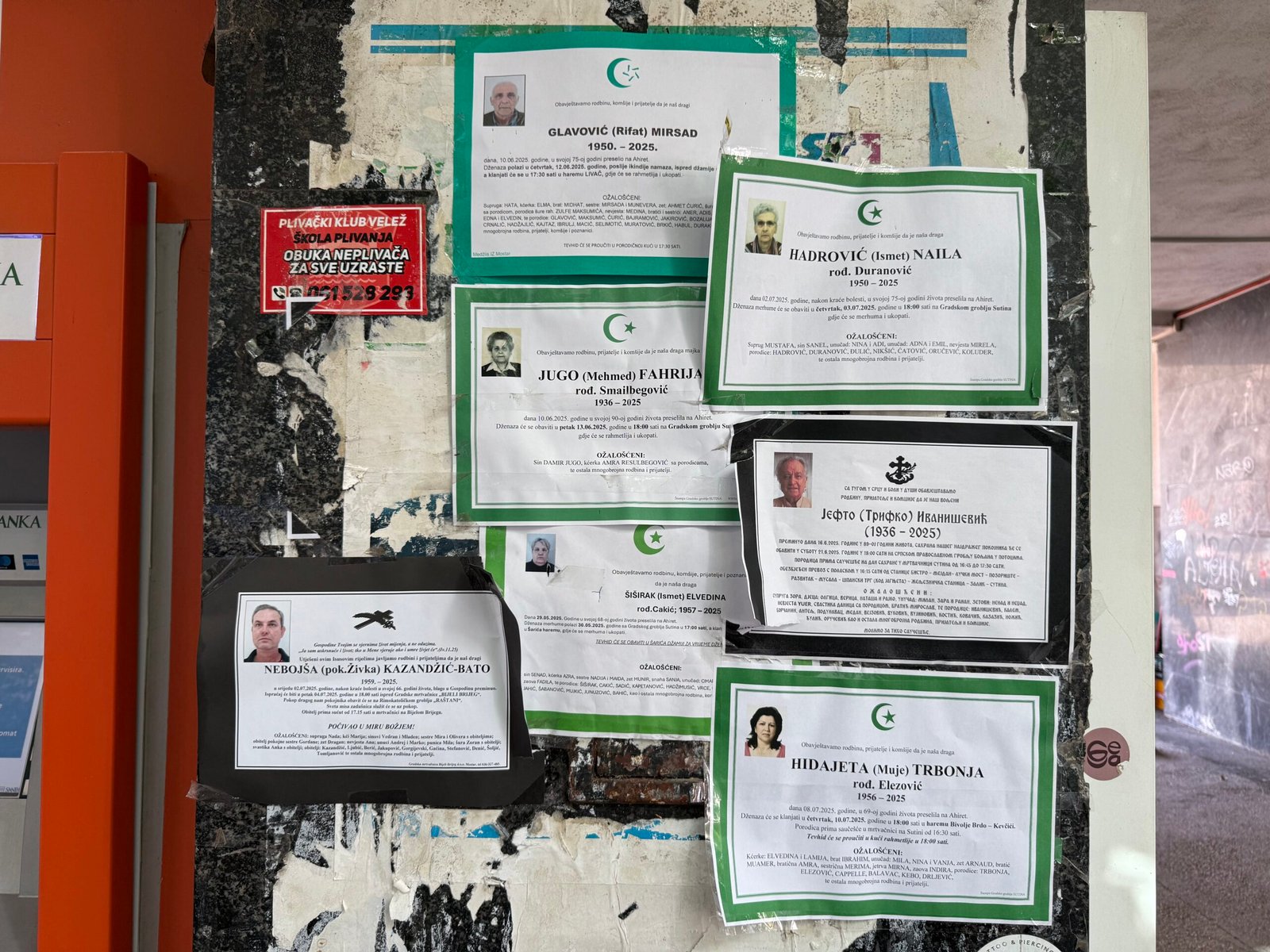
What is quite frequent, on the other hand, are these declarations of death, though I am sure there is a much better name for them in the local language. When someone passes away, it seems to be the norm to share the news with the neighbourhood using announcements like these. While this was not a novelty for me, since practices are common across the USSR as well, it was quite interesting to see so many of them with crosses and crescents side by side, a macabre testament to the religious diversity of Mostar. One can only hope that such displays will forever be a part of the local culture.
Mostar was a fascinating start to our BiH tour. Other than the interesting sites that I mentioned above, it had fascinating locals, who happened to be some of the kindest people I ever met. Moreover, due to it being a popular tourism destination, communication with said locals is a non-issue to say the least. It seemed like everyone knew some English, which is a refreshing break from my usual travels. Next week, we will explore just how there is even more to Mostar than its landmarks and people, as the city is also home to a plethora of excellent eateries and coffee shops!