
Umm Al Quwain is the least populated emirate in the UAE, and it is likely the least visited one as well. Ironically, this was all the more reason for me to visit it. Perhaps unsurprisingly, it was difficult to find much information about it on the internet as well, which only made me want to visit it even more, so that I could write about it myself. Last but not least, a few people I talked with in my hostel mentioned that visiting Umm Al Quwain is as close as one can get to experiencing the Emirati lifestyle as it used to be before this part of the globe changed radically in the last few decades, which sounded quite adventurous to me. That is why, filled with curiosity and armed with a purpose, in one warm December morning, I hopped on a bus that goes to Ajman, and than took a minibus from its bus station to get to the mysterious Emirate of Umm Al Quwain.
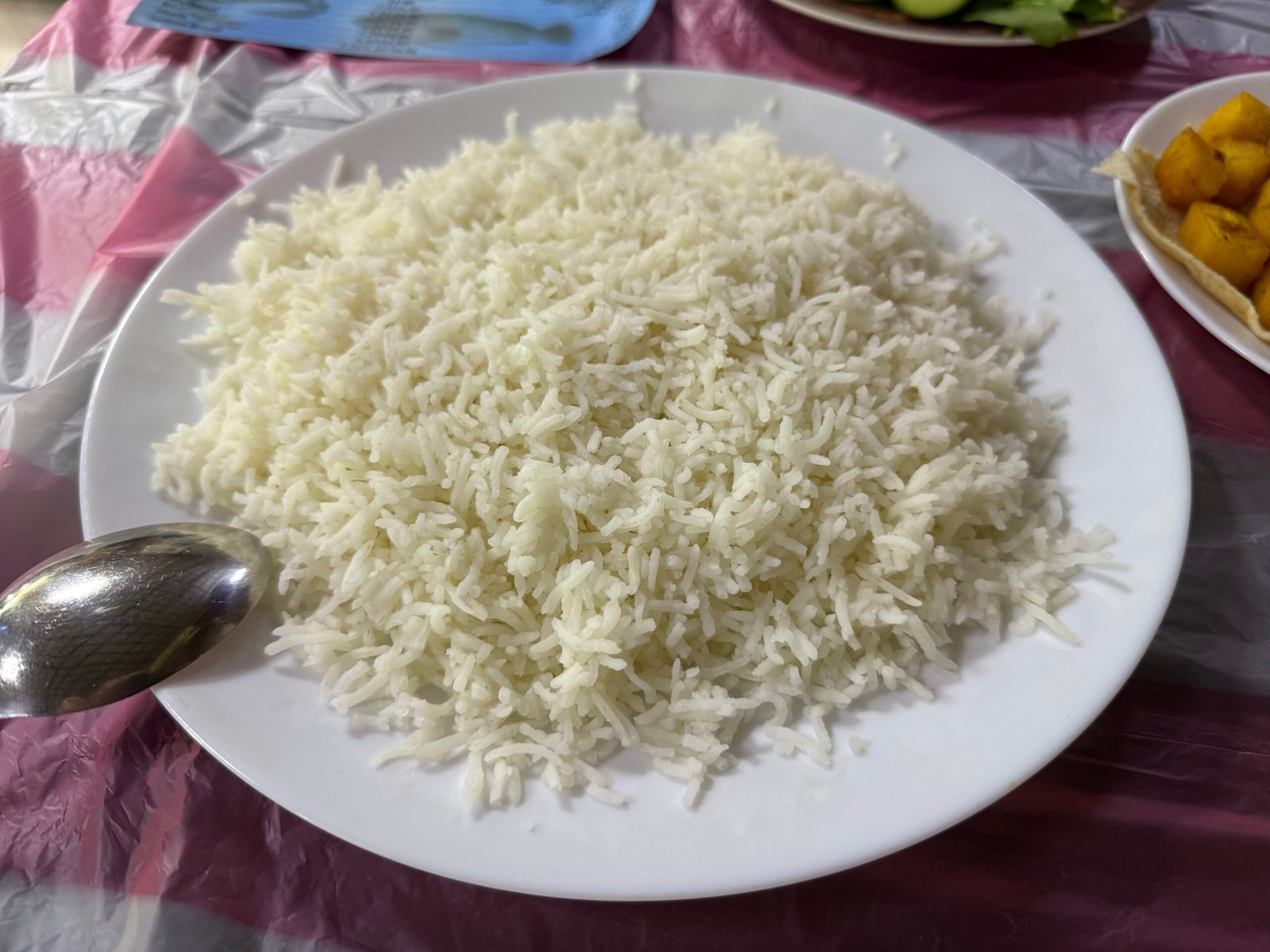
Rice, that is right. I started this day trip with a plate of rice. Well, there is a good reason for that. I spent a bit more than two hours on the road just to get to this emirate and I was already a bit hungry as a result. I found out about Wadi Al Neel Restaurant before coming to Umm Al Quwain, thanks to an especially long session of fooling around in Google Maps. This place was known for a few very interesting things, but before the things that I actually ordered came to my table, I was served a massive plate of rice, which was already a good sign.
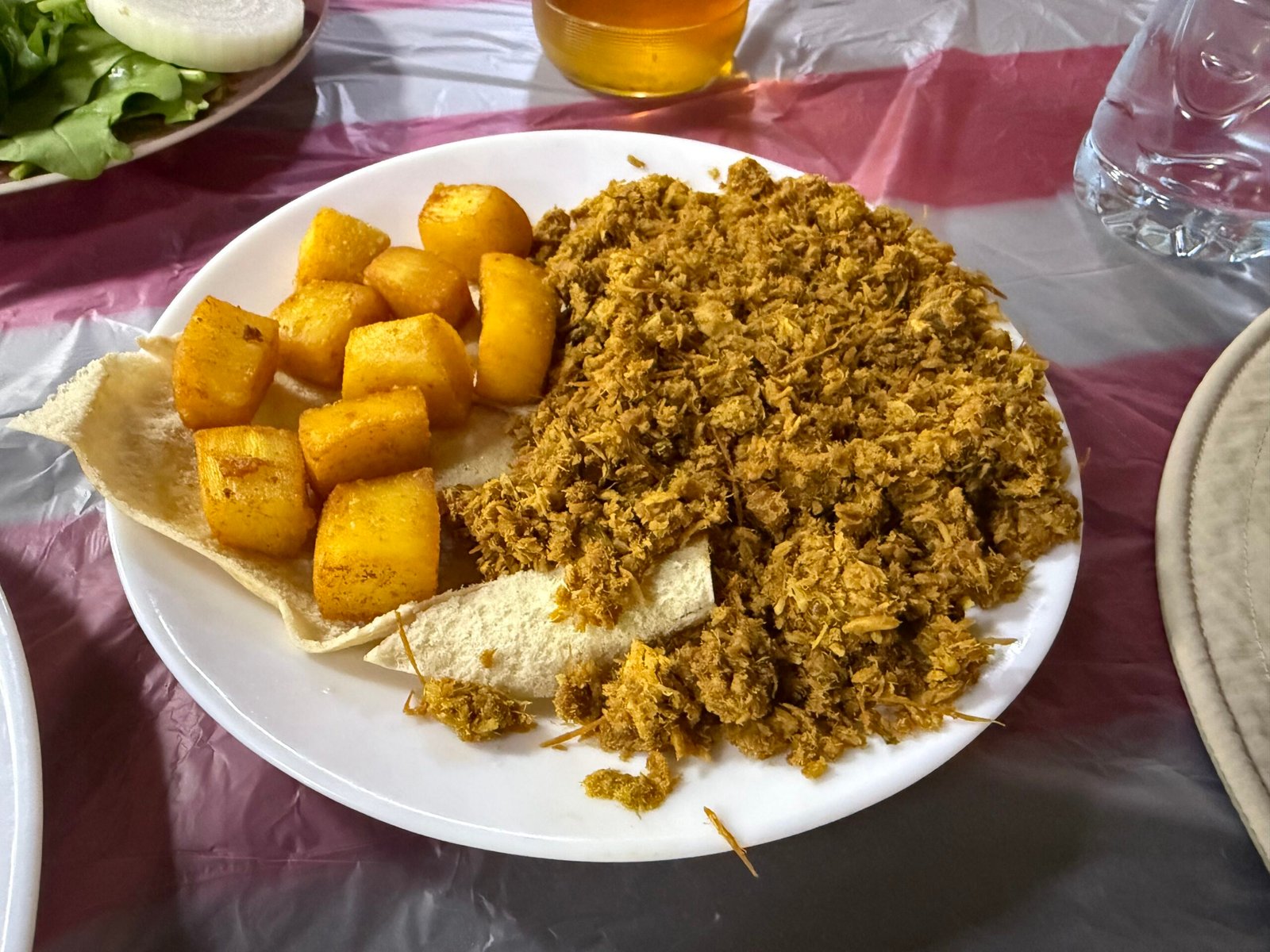
You see, Umm Al Quwain is home to a coastal community. In fact, there used to be a time when the locals of this emirate were some of the finest shipwrights in the entire region. This is perhaps not surprising. Umm Al Quwain is quite literally located on a peninsula, being surrounded on all but one side by water, which is why its fishermen are said to catch some of the freshest and finest seafood in the entire country. Well, shark meat, certainly an exotic option for many, was especially recommended by the Emiratis that had this delicacy in this establishment, and I have soft spot for calamari, especially if it is freshly caught. Therefore, I asked for a combo platter of the two. The perfectly fried calamari are on the left, and the shark meat in its shredded and panfried form can be found on the right.
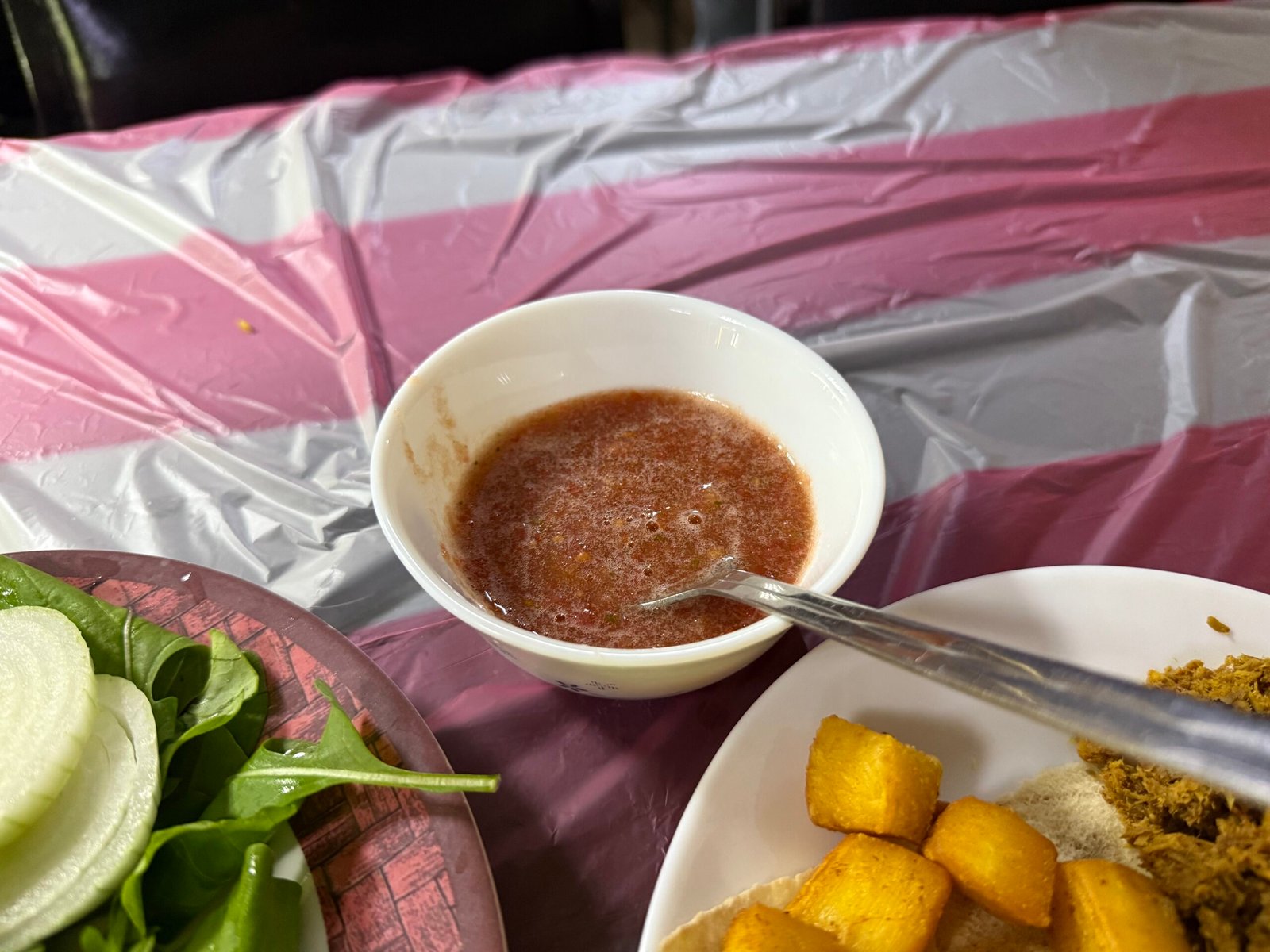
Other than that enormous platter of rice which welcomed me to the restaurants, some greens and a red sauce were provided as well. While the latter was not spicy at all, it was extremely flavourful to say the least. Well to be clear, this entire feast was a flavour bomb. For just slightly above 30 AED, I felt like I quite literally dined like a king, or I should say a sheikh. The calamari were the crispiest and the juiciest I had so far, period. The shark meat was quite interesting, in a good way. It did not taste like chicken as some claimed, it was more potent than that. I enjoyed it quite a lot, especially when it was all mixed in with rice and that lovely red sauce. I am not sure if I would ever buy a shark myself and go through the trouble of cooking it on my own, but as soon as I will find it on a menu again, you can bet that I will be ordering it without any hesitation.
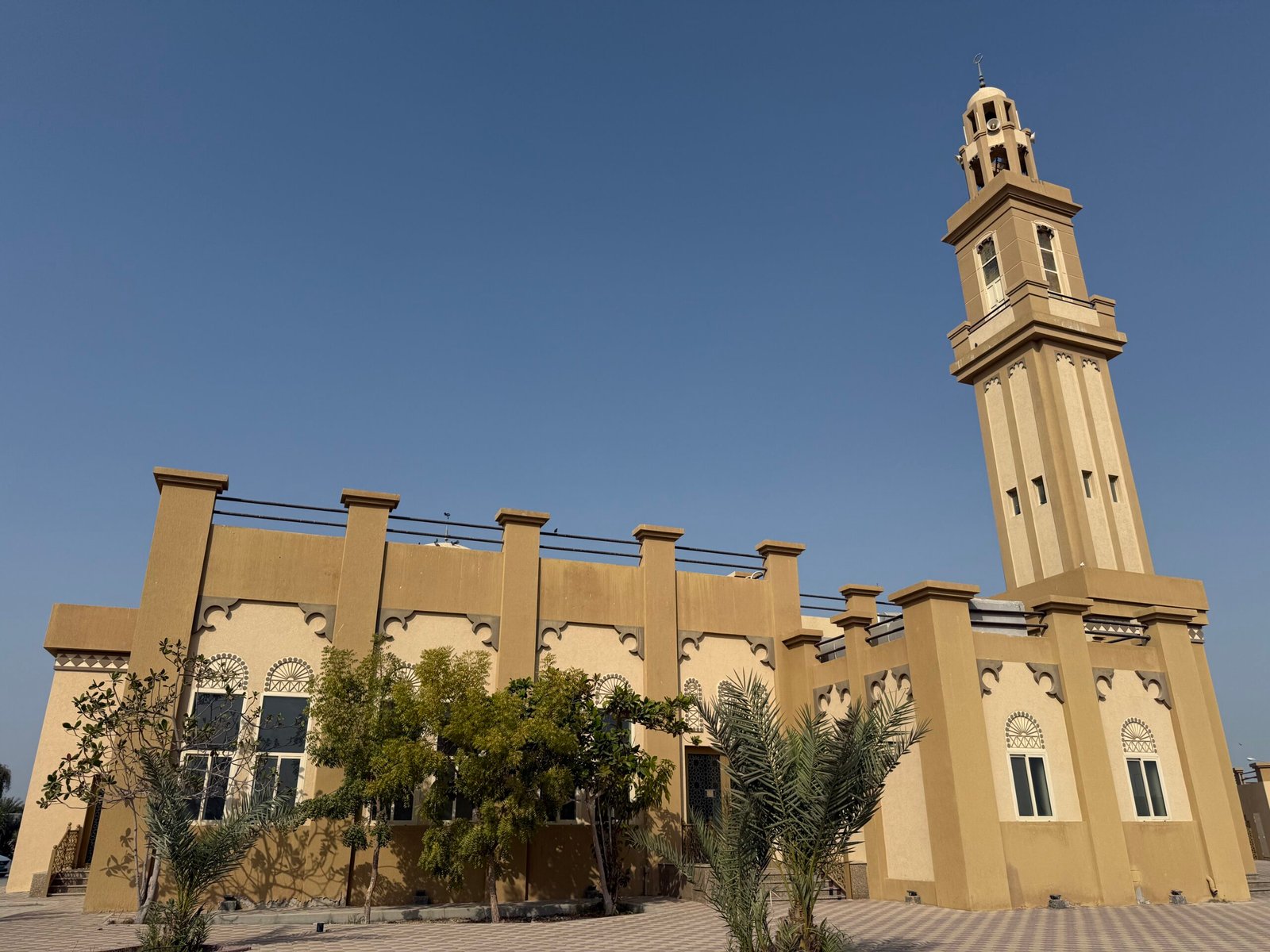
Satisfied beyond words with that hefty lunch of mine, I set out to explore what Umm Al Quwain had to offer. I was greeted by the Masjid Rashid bin Saeed as I walked from Wadi Al Neel Restaurant to the nearest coast. Such small mosques were commonplace in Umm Al Quwain, but they seemed a bit deserted more often than not, which was not necessarily the case in other Emirates. This was quite interesting to me, but I would get some answers for that later on in the day.
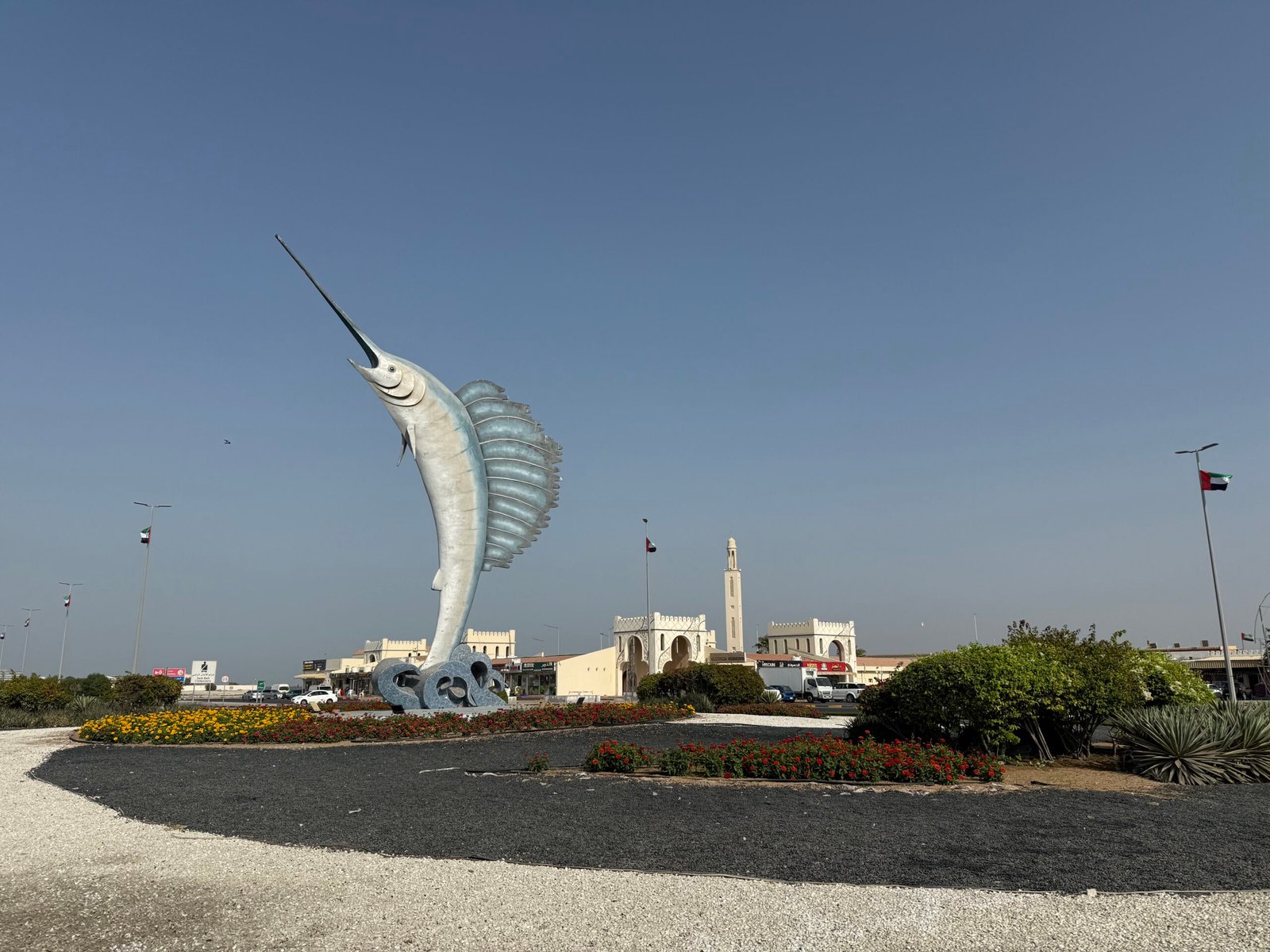
After a short walk, I made my way to Al Khor Roundabout, where you can see this marlin statue. I wondered whether there was marlin meat available at the restaurant too, and tried to guess what it would taste like despite devouring enough food to feed a small family just a few minutes ago. I could not dare to go back and eat more as I try and care about my health, to some degree, but I made a mental note to try some marlin meat as soon as I can.
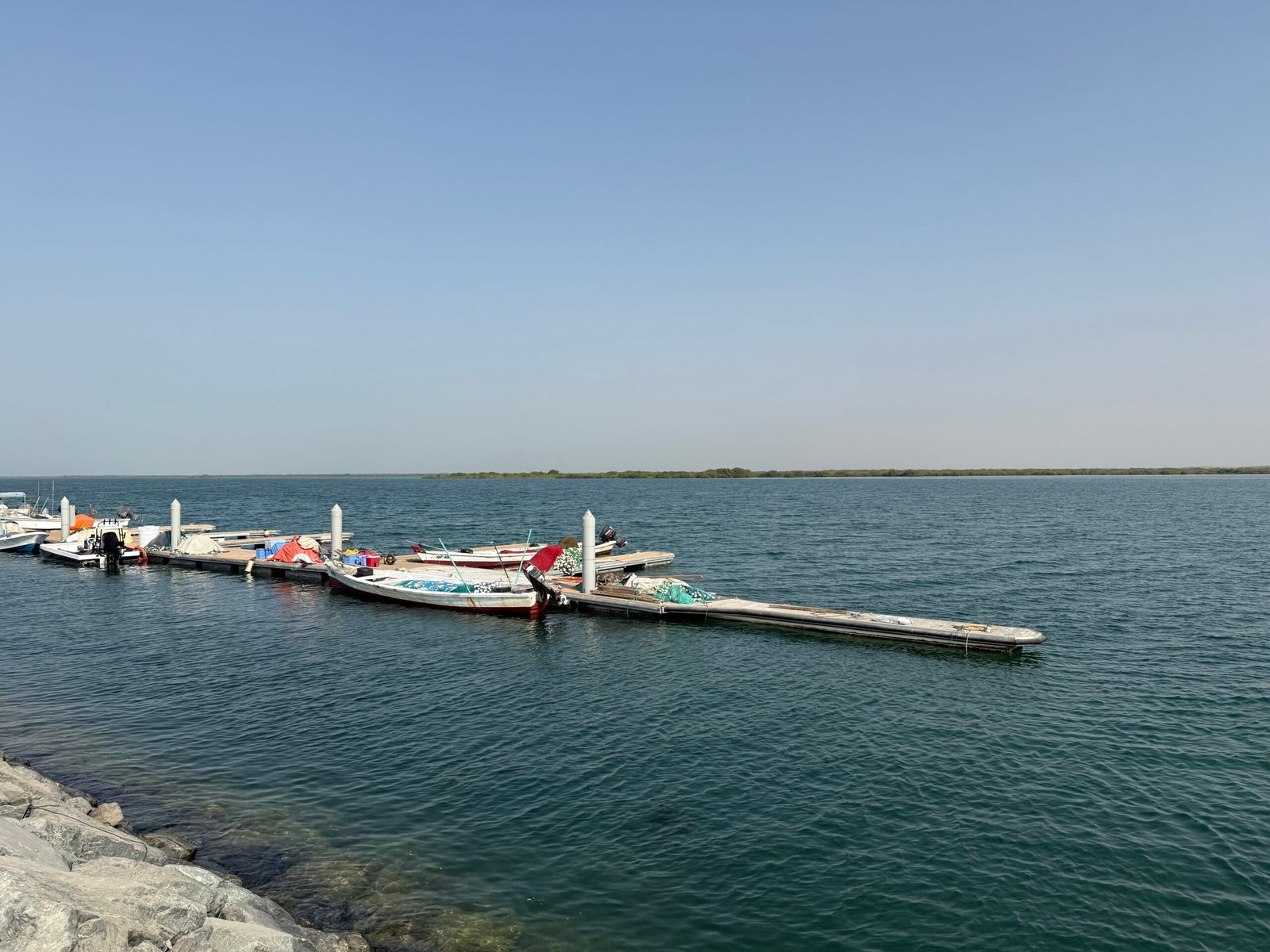
That marlin statue may be a general reference to the fishing industry in the region, or it may just be a literal sign for the fish market just behind it. And beyond that fish market, one can find the coast of Umm Al Quwain, from where you can see the mangroves on the horizon. Well, mangroves go hand in hand together with all of the emirates to the best of my knowledge, perhaps with the exception of Fujairah as the mangroves in that region lay in the territory of Kalba, an exclave of Sharjah. These shrubby trees can be found on the coasts of the UAE, where tidal activity makes it possible for these mostly submerged trees to survive and thrive. These mangroves also provide a rich ecosystem for the fish that swim around their roots, and a bunch of other animals that use this green space as food and shelter. They are more or less short forests stuck in shallow water, and for those of us who are not familiar with them, they are a quite the sight at first. I knew that you could take boats to visit them up close in Umm Al Quwain, as you can do in Abu Dhabi and a few other Emirates, alas, I did not do that at the time. I do love the way they look, but spending a good chunk of my time visiting them thoroughly just was not a priority for me during my first visit to the UAE. In my second time in the Emirates, I just might pay the mangroves a proper visit as well, as I have only heard good things about such tours.
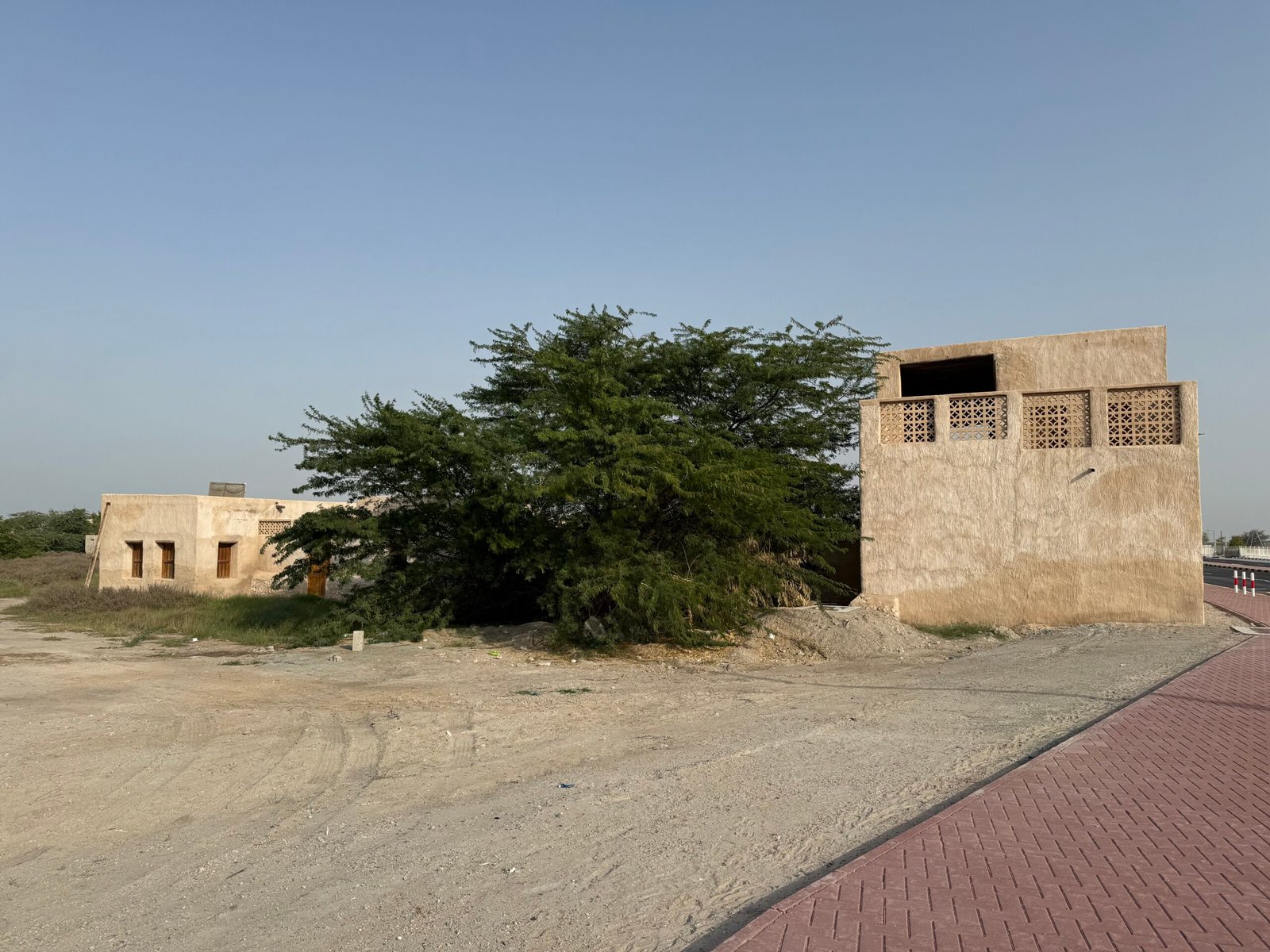
As I walked to the center of the town, I could not help but notice that this place could really use a bit more locals. While there are some destinations on this globe of ours which are attractive enough for me due to their historicity, natural beauty, cuisine, and so on, the thing that really makes or breaks a location at the end is its people. My time in the UAE was exceptional in many ways, in fact, the Emirates is easily among the top three countries that I visited so far, beating almost twenty others to it. Most of this sentiment comes from my interactions with the locals in the UEA. Anyone from the Emirati police officers at the customs to the Egyptian koshary makers, from Afghan bakers to Pakistani security officers, quite literally everyone that I met in the UAE was friendly towards for me. Good recommendations and excellent jokes were exchanged long before I could even learn the name of many people I randomly ran into in the streets of Abu Dhabi, Dubai, Ajman, and so on. That is why, despite spending sixteen days on this solo trip of mine, I never felt like I was truly alone even once. This is also why while I already had some decent memories from Umm Al Quwain by this point in my trip, I just had this feeling that if only it had some more people in it, I am sure that my time here would be even more special.
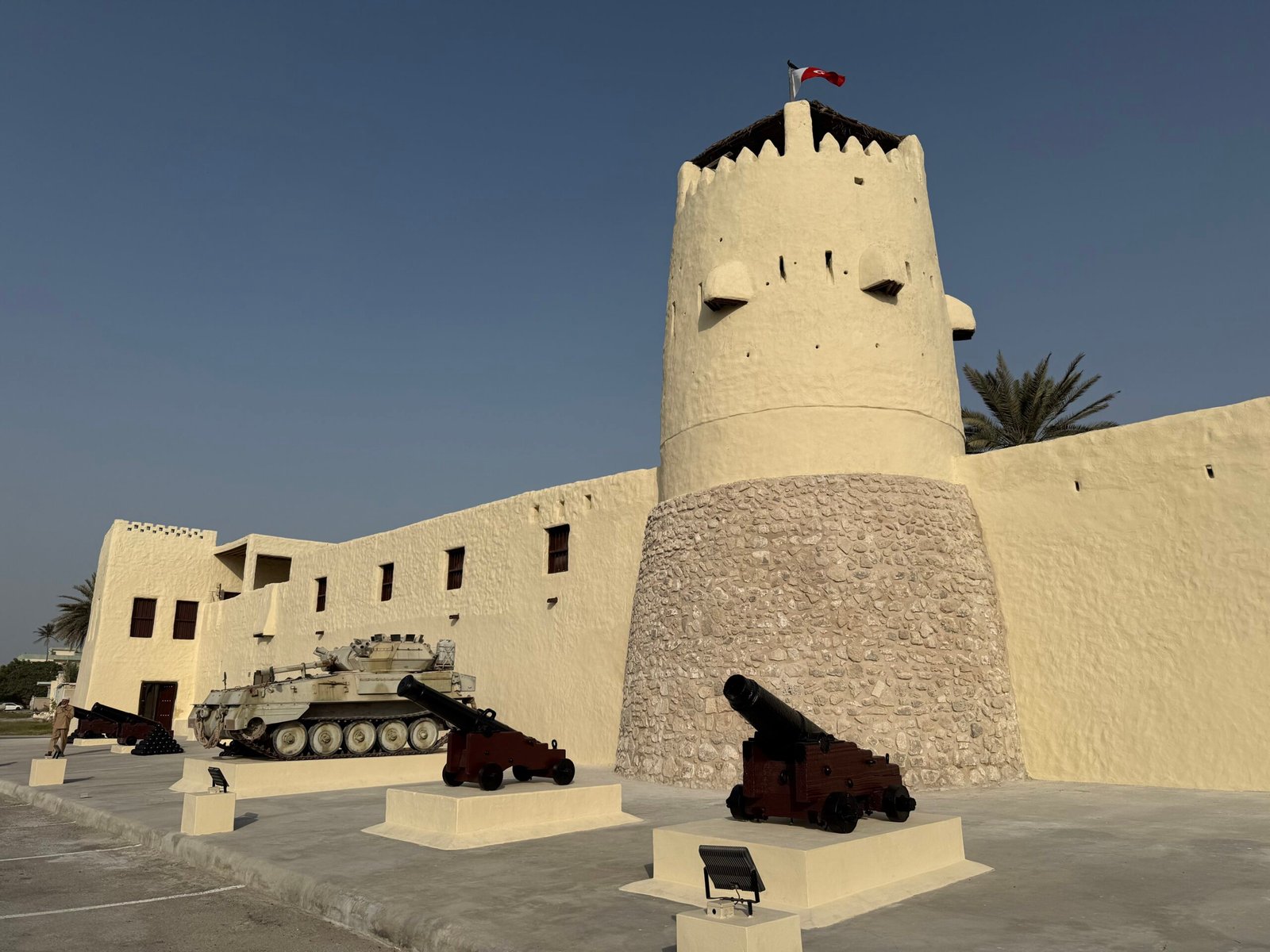
Moving on, in the city’s historic quarter, one can (naturally) find Umm Al Quwain’s very own history museum. This structure seemed to be built quite recently, but to be more accurate, it is most likely a renovation of a much older fort that once stood in this part of the Emirate. These cannons and a solitary tank stood in the way of all that came to visit the museum.
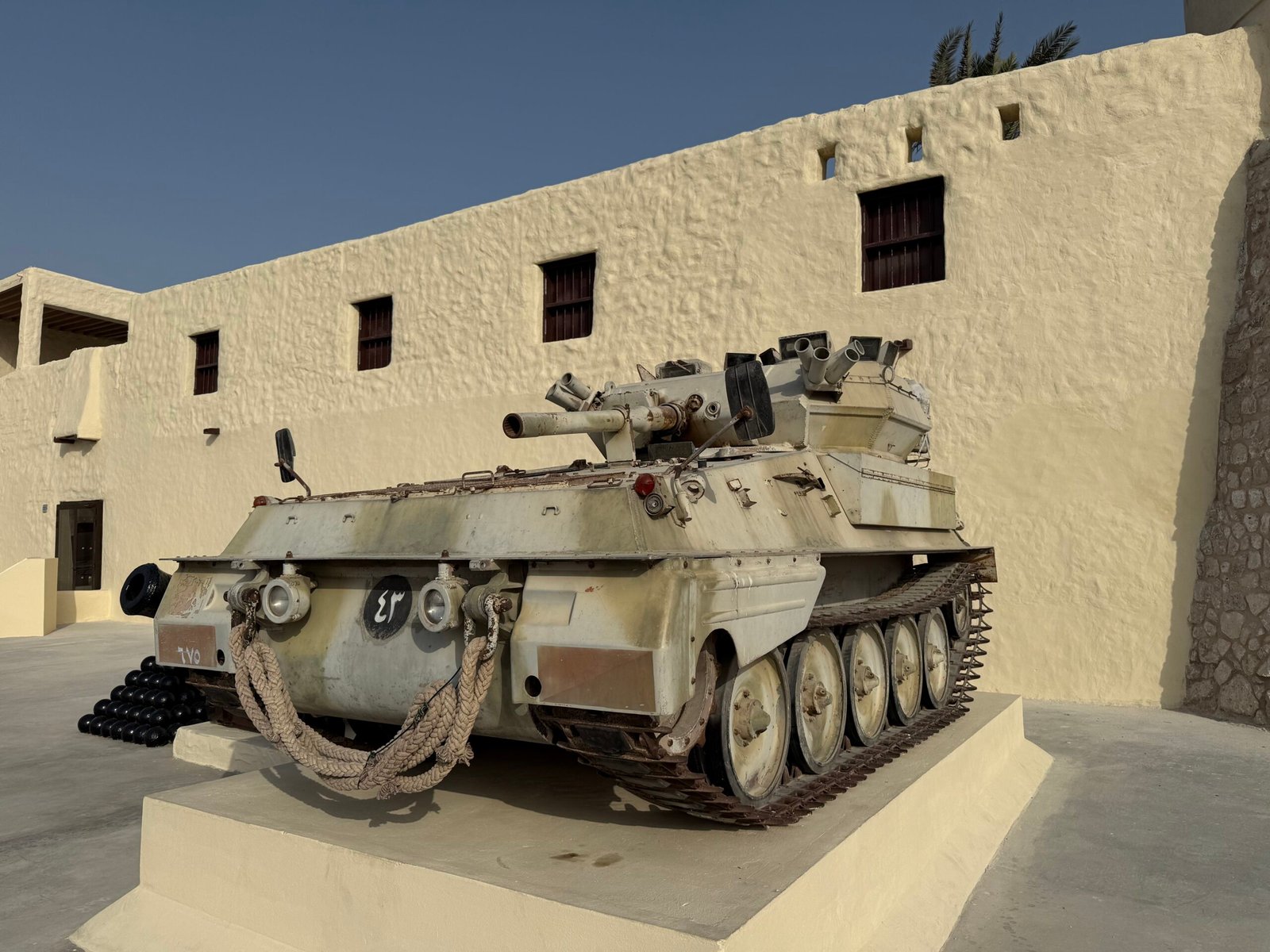
Two friendly folks greeted me in surprise, it was clear that they were not expecting any visitors. The younger gentleman gave me my ticket after I paid the humble 5 AED fee, and the Emirati grandpa opened me the door courteously, saying a few Arabic words that I could not understand in the slightest in the process. Presumably, I was allowed to freely roam around the premises, which is what I did in the next half an hour.
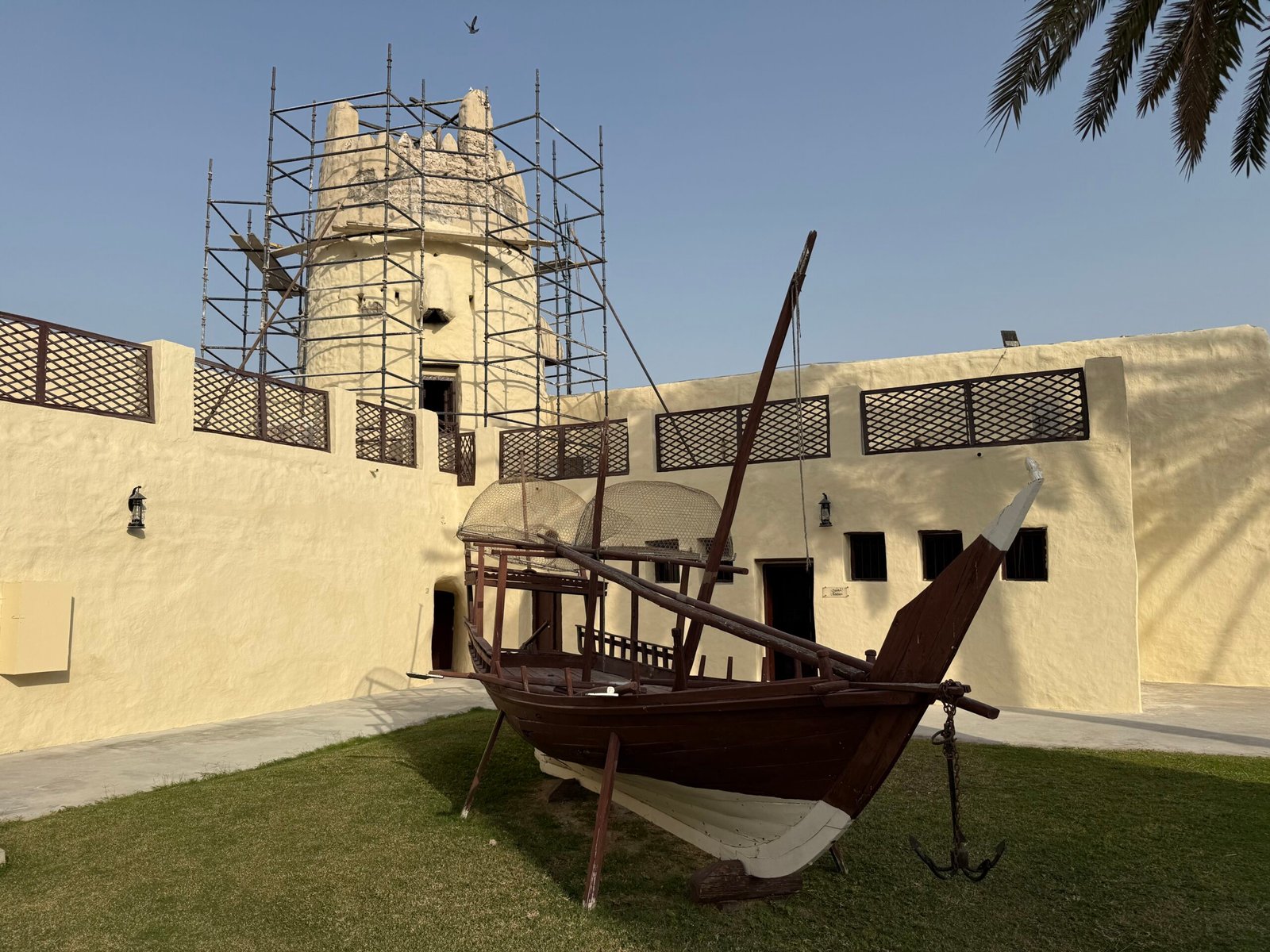
This was a humble museum, where work was still undergoing. Two fine gents were working on repairing a part of the tower, and two others were painting the walls behind me in this photograph. The courtyard had a boat in it, which was surrounded by a bunch of rooms with different exhibitions in them.
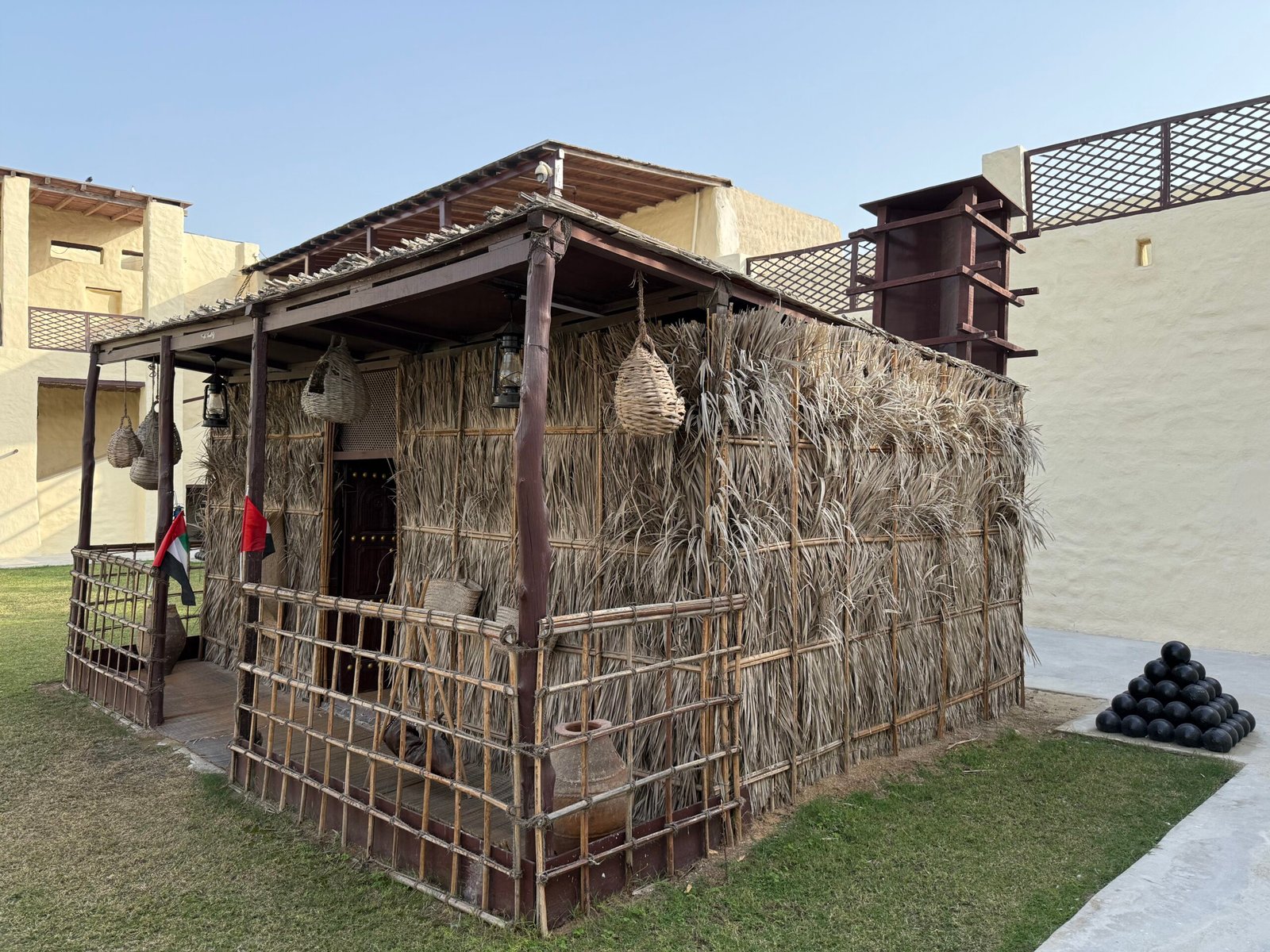
There was also a tiny hut in the courtyard, which is apparently what some of the former houses of the common people in the region looked like. You can see that it is made out of straw and a few shrubs local to the area, perhaps from the nearby mangrove. In any case, it worked well in its environment and was a cost-efficient alternative to grander structures.
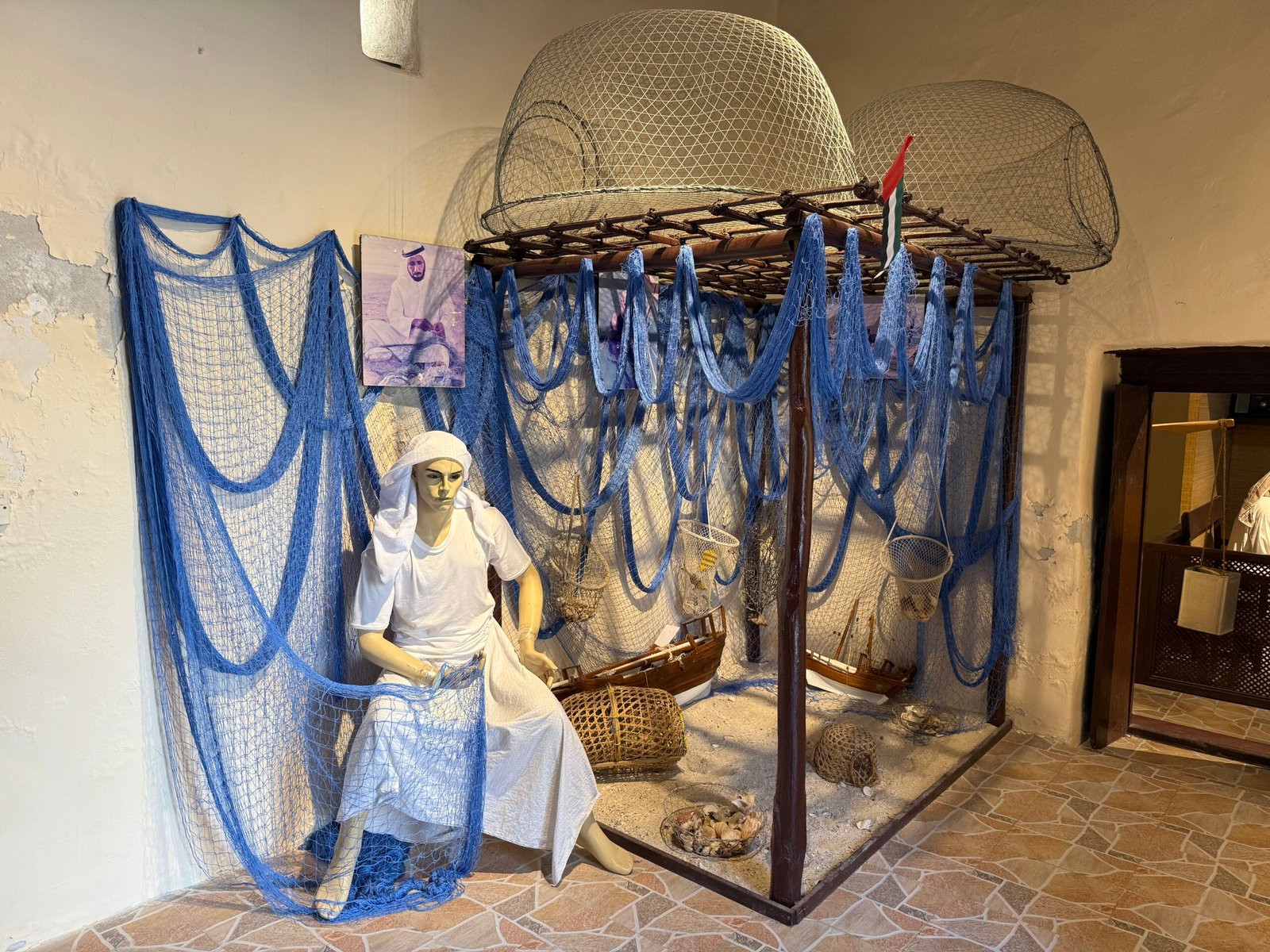
One of the exhibits on the inside was dedicated to Umm Al Quwain’s connection to the sea, where they mention the once booming ship making industry in the vicinity, which is something I would read about a few more times later on in my travels in the country. They also mentioned the fisheries of the region, and how plentiful the catch was, which still seems to be the case today.
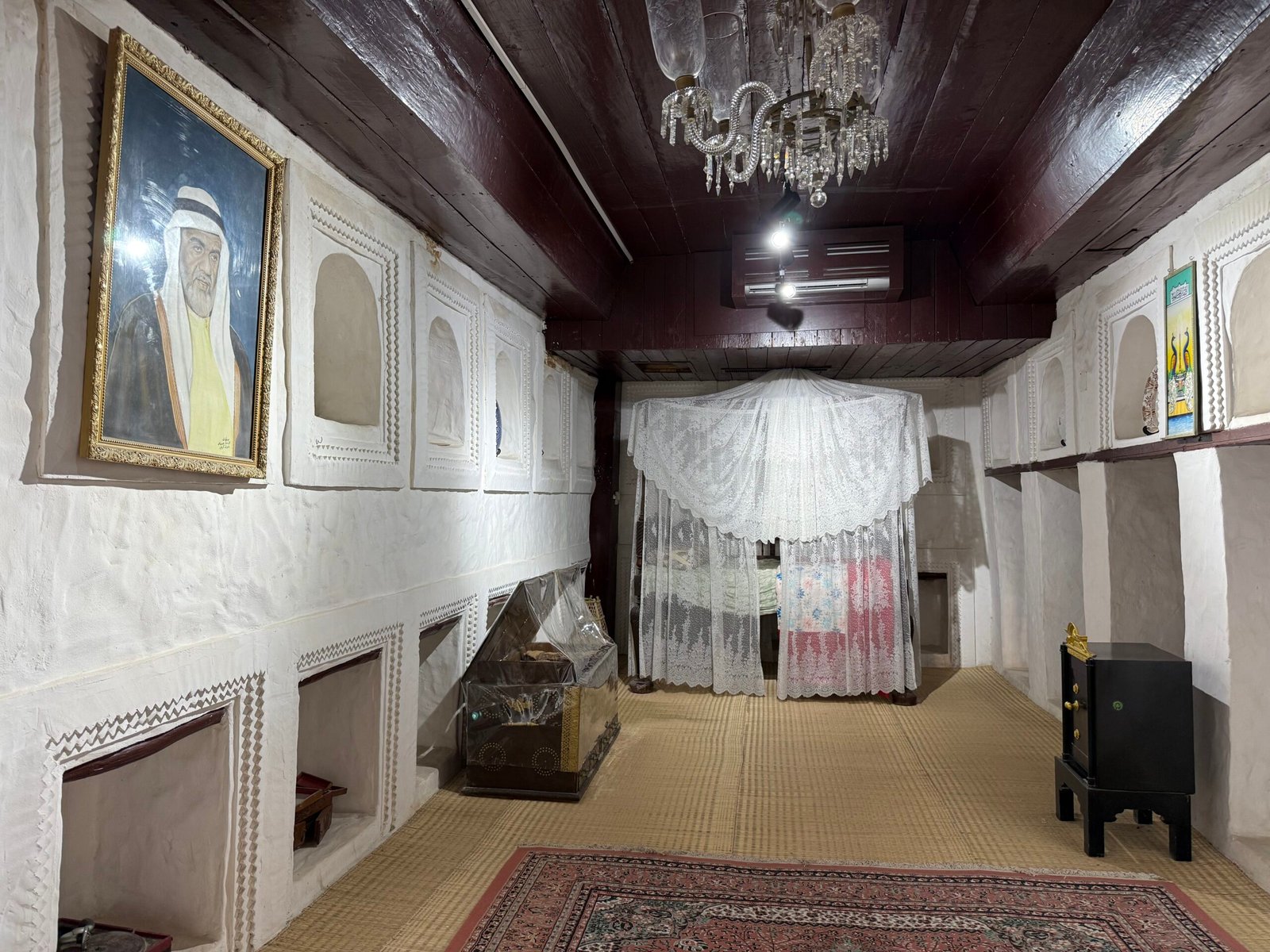
Yet another interesting part of the museum was the old living quarters of the former sheikh of Umm Al Quwain, though I am not entirely sure if these belonged to sheikh Ahmad Bin Rashid Al Mualla, one of the founding fathers of the UAE, or not. It was one of the former sheikhs of the Al Mualla house, that is quite certain and perhaps enough for some of my less curious readers. You can see the much humbler lifestyle common in those olden times compared to what one may expect an Emirati sheikh is living like today.
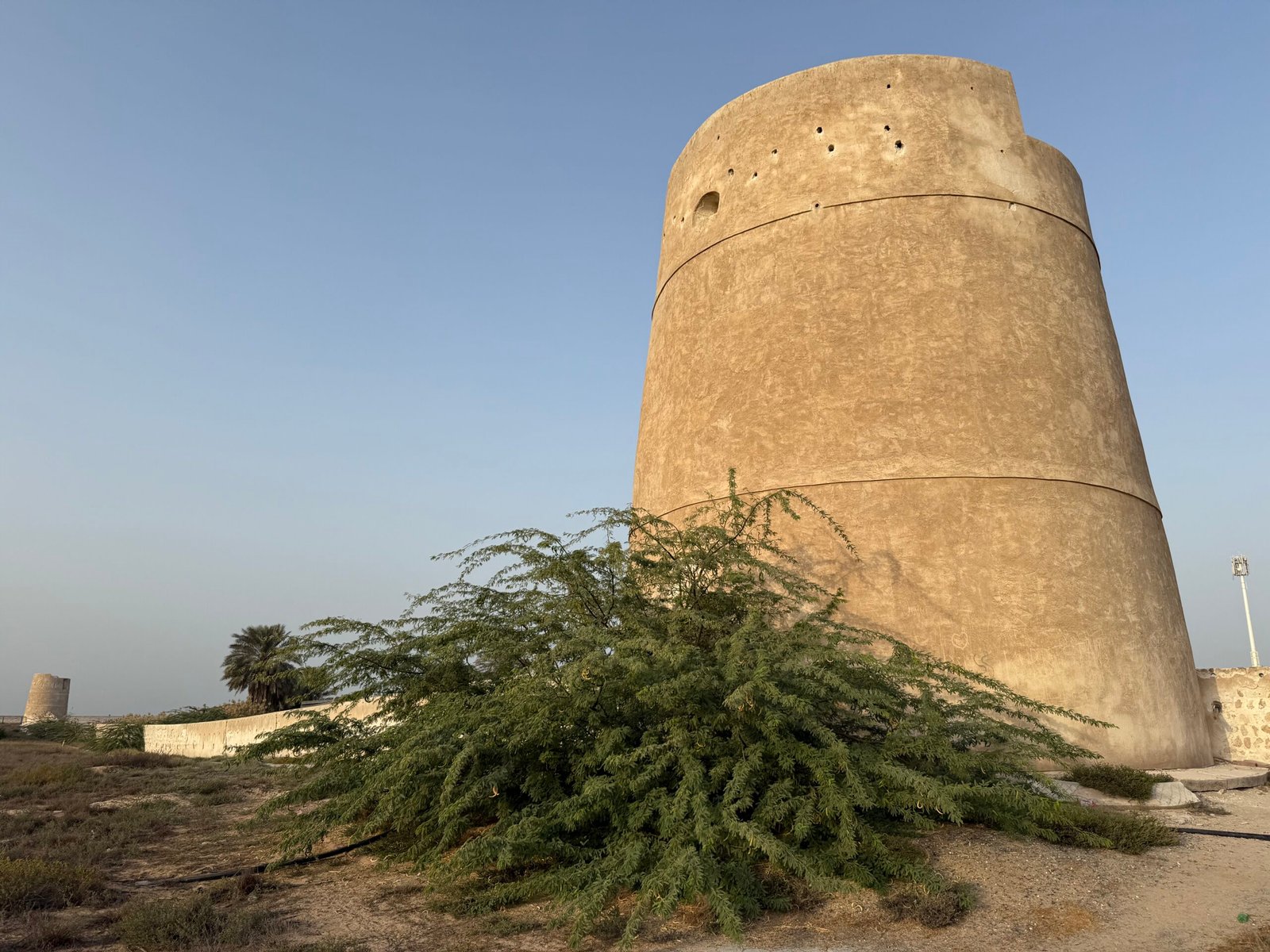
Satisfied with the local museum, and what I had seen in Umm al Quwain thus far, I reckoned it was high time I made my way back to catch the minibus that heads to Ajman. As I made my way to Lulu Center, where the minibus departs from, I saw the remains of Umm Al Quwain’s walls. These thick towers and long walls suggested that there once lived a significantly higher number of people on the other side of these defenses at some point in time, which made me curious. While the emirate is doing fine for itself with its fishing industries and a successful aqua park that attracts visitors from across the country, it seems like its old historic center more or less depopulated at some point, presumably with the locals moving away to where the economy shifted towards.
With that being said, the local government already seems to be hard at work to reverse the fortune of the old town. In fact, by this point, I already came across multiple interesting projects in this part of the town. For example, a crew was busy perfecting the city’s already good-looking beach and developing that area into an even more inviting space for tourists and locals alike, and another construction crew was rebuilding the city’s old souks in a more modern fashion. Sheikh Saud bin Rashid Al Mualla seems to be devising new plans for the development of his domain, and I for one wish him the best in all his endeavours. I do believe that just because a destination is already interesting on its own right does not mean that it cannot get even better. Umm Al Quwain has potential to be much more than what it already is: a laidback emirate where you can enjoy an exceptional seafood feast without breaking the bank, and glimpse into the past of the region when none of the urban centers were as densely populated as they are today. This already makes it a pretty special destination in my humble opinion. However, this emirate is located on a lovely peninsula, surrounded by crystal clean waters on all sides, which is home to some of the best seafood one can find in the country. I hope to be back here someday when I believe I will find the historic quarter livelier than ever, making use of the city’s ship building history through its well curated art installations, all the while making sure to fill the bellies of its now abundant visitors with an increased number of renowned seafood restaurants.