
I started my journey across the UAE in Abu Dhabi. My plan was rather straightforward. After spending three nights in the capital, I would move to Dubai and use it as my hub to explore the rest of the Emirates. This plan worked quite well, mostly due to Dubai’s central location and frequent bus services to all the other Emirati capitals, as well as to Al Ain. Well, just to play it safe, for my very first day trip in the country, I wanted to go somewhere relatively close and relatively small. Ajman caught my attention the most, and so I made my way there on a quiet December morning, by hopping on the bus E400 from Dubai’s Union Bus Station, and reaching my destination in about an hour.
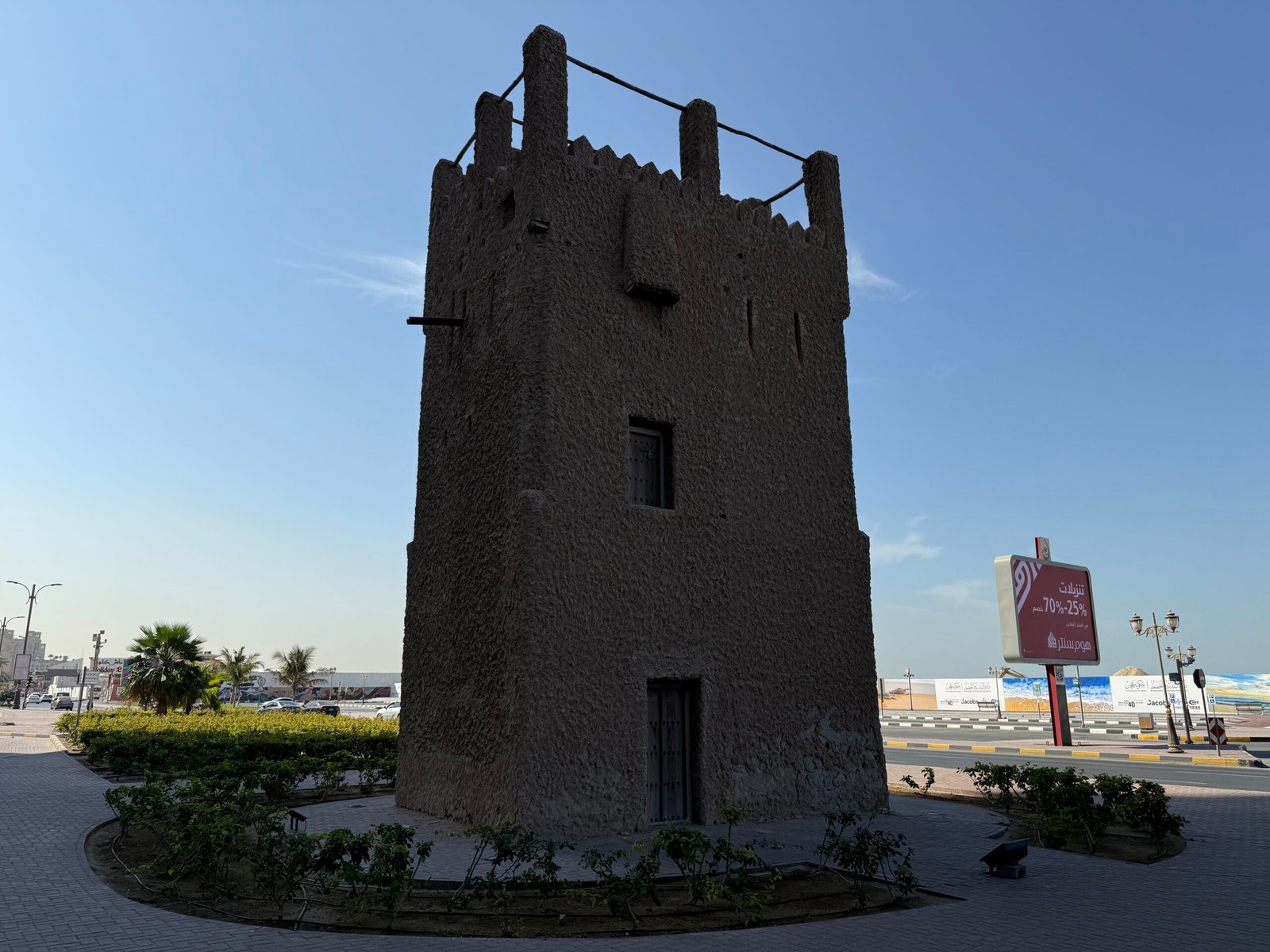
I tried my best to have full itineraries in all the Emirates that I would be visiting in this trip of mine, preferably with a focus on their more historical and urban sites. Regardless of how touristic or not so touristic they may seem at first, I was determined to bring out their finest qualities. After all, why even bother visiting all these towns if you are not even going to see something worthwhile? Well, from the get-go, it did not seem like Ajman had all that much to offer. One of its most famous landmarks, the Al Murabbaa Watchtower, was, well, just a humble watchtower. It was an interesting solitary structure surrounded by vehicles speeding by on both sides. However, initial observations can be misleading, and Ajman would have much more to offer later on in this trip.
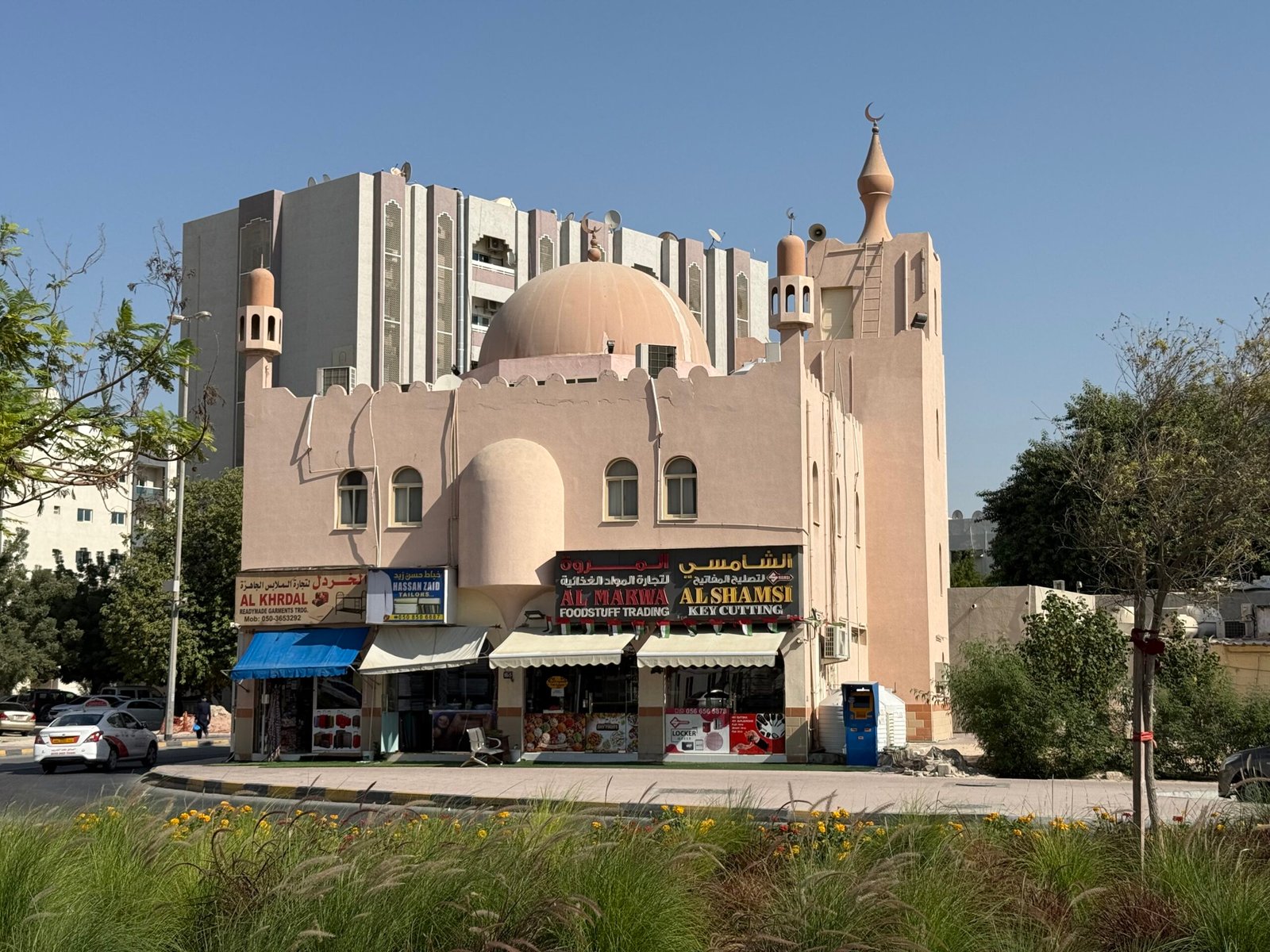
As I walked to more central parts of the town, I started to come across more and more tiny mosques like this one. These are not rare in the UAE, but they seem to be exceptionally common in Ajman. This was a good thing, of course. Up until I discovered some true gems in this quiet and peaceful Emirate, since checking out these smaller mosques were all the entertainment that I had at the time, since I lacked the desire (and the swimsuit) to actually enjoy its pristine beaches, which seemed to be frequented most by some Russian speaking tourists. Speaking of those, well, there really were a decent number of them, in fact, more so than the locals themselves at a first glance. There are some sizable hotels in this Emirate, many along its beautiful coastline. To me, it is clear that Ajman is popular among those who wish to enjoy a more peaceful and relaxing holiday in the UAE, simply enjoying the sun, the beach, and the Emirati hospitality.
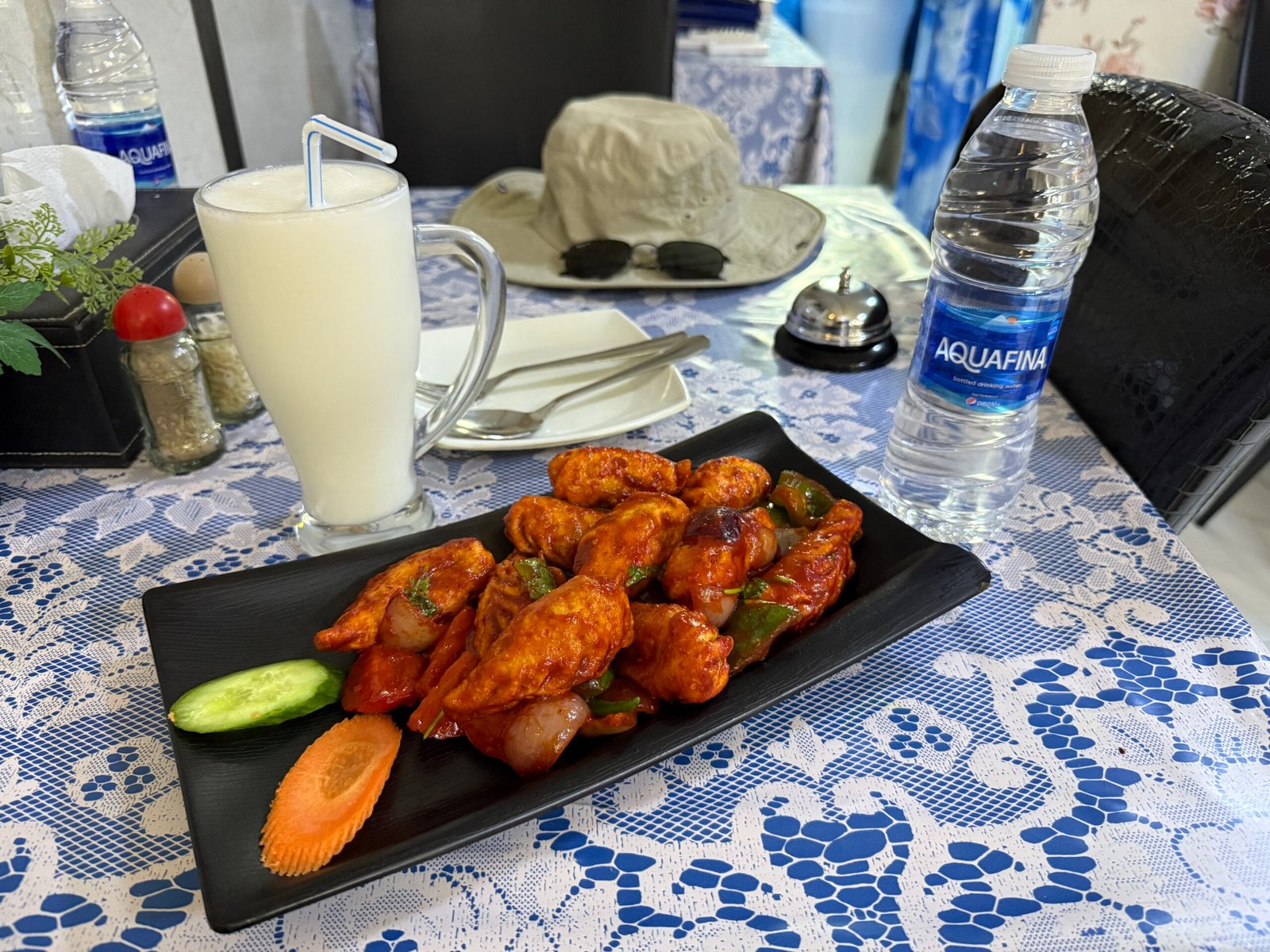
I intended to experience the Emirati hospitality fully on that day by enjoying an Emirati lunch as well, alas, I came across a Nepalese restaurant, Lumbini Himalaya Restaurant, and instantly started to crave spicy momos. In hindsight, I sure am glad that I did. Some of the nicest people welcomed me to their humble restaurant and seated me upstairs in an empty and cool room, far away from the scorching heat on the outside. I then asked for a not so sweet lassi and some very spicy chili vegetarian momos, and to my surprise, both of those slightly customized orders came in perfectly. Momos burned my tongue in the best way possible, while the lassi came to my rescue without overbearing my senses with too much sugar. This was the perfect lunch that I did not know I needed and it gave me the necessary energy to go back out there in order to explore the rest of Ajman.
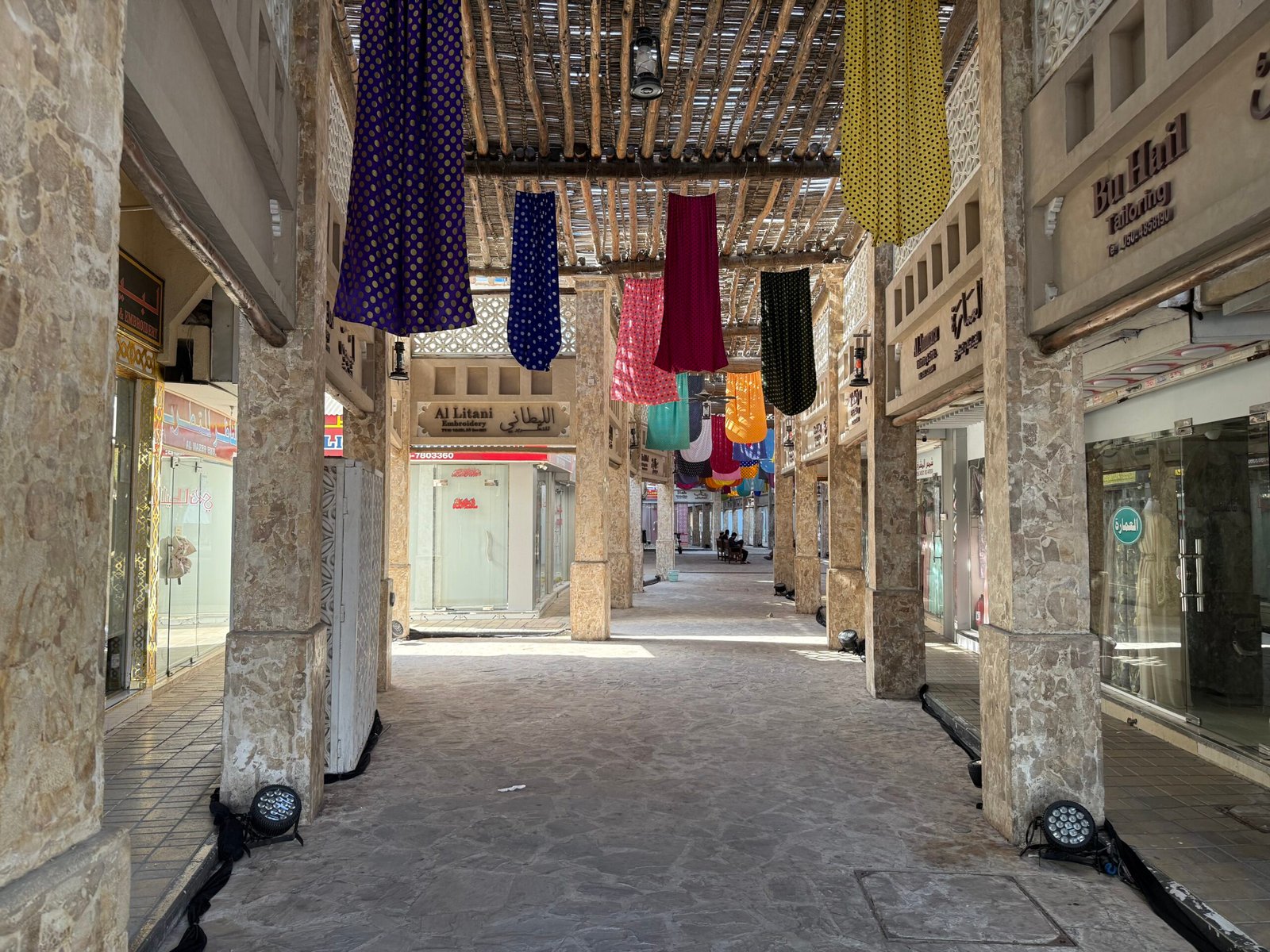
Here is a tip for those interested in visiting Islamic countries: try not to explore new cities when it is Friday. Chances are, people will be praying, and taking the day off. This was certainly the case in Ajman when I was there. City’s multiple somewhat small and certainly recently renovated souks were all there, but they did not really function as they should. I saw some merchants here and there, but they were chatting away with one another, and hardly tended to their stores, which for the most part seemed to be closed.
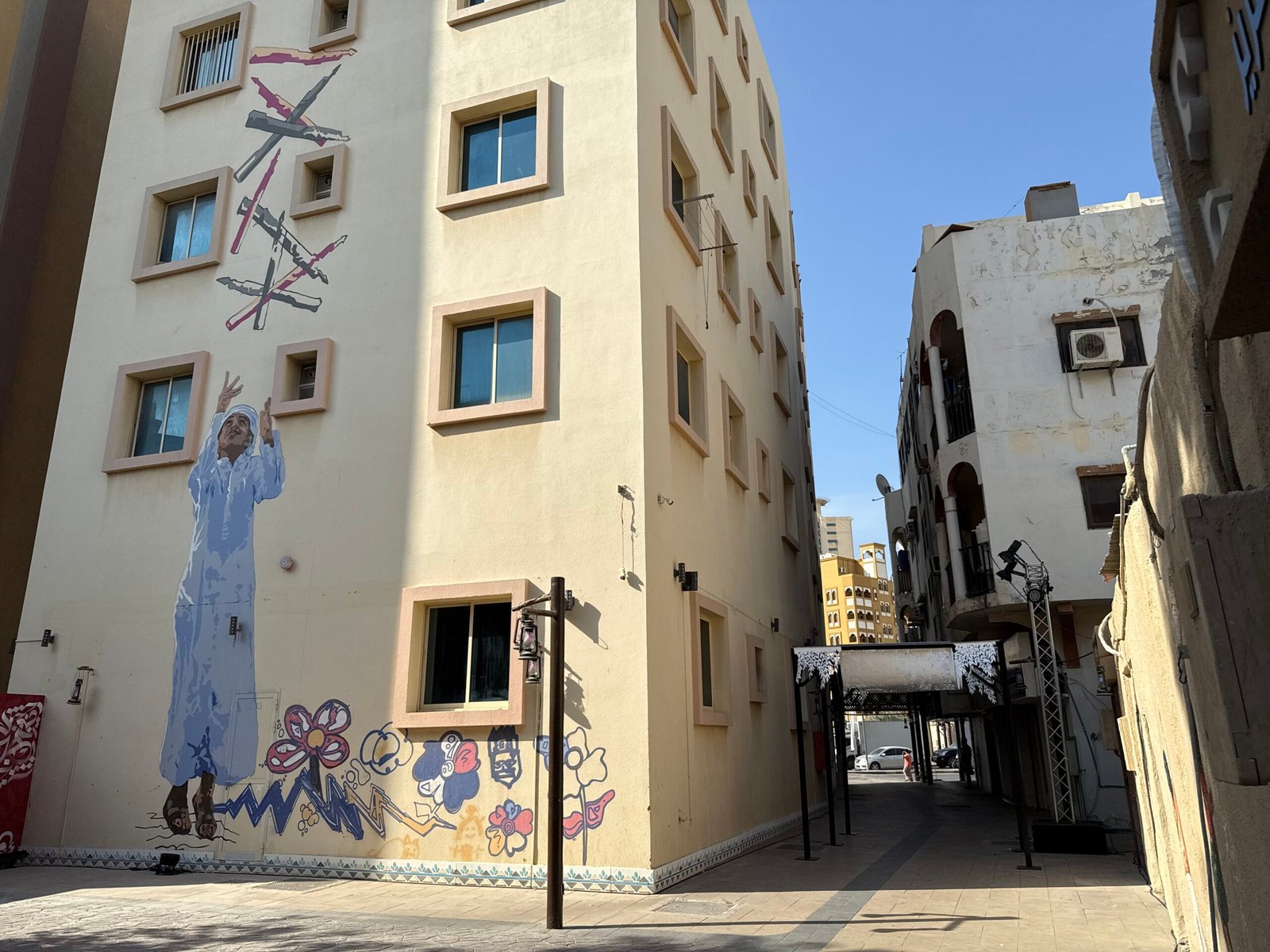
In fact, when the time for the noon prayer came, streets and alleys of Ajman became eerily empty. You could still see a few migrant workers, and a bunch of children playing around, but most locals flocked to the aforementioned mosques and prayed together in harmony. This gave me some time to take a few photos like this one and explore the more lived in parts of Ajman without bothering the locals all that much.
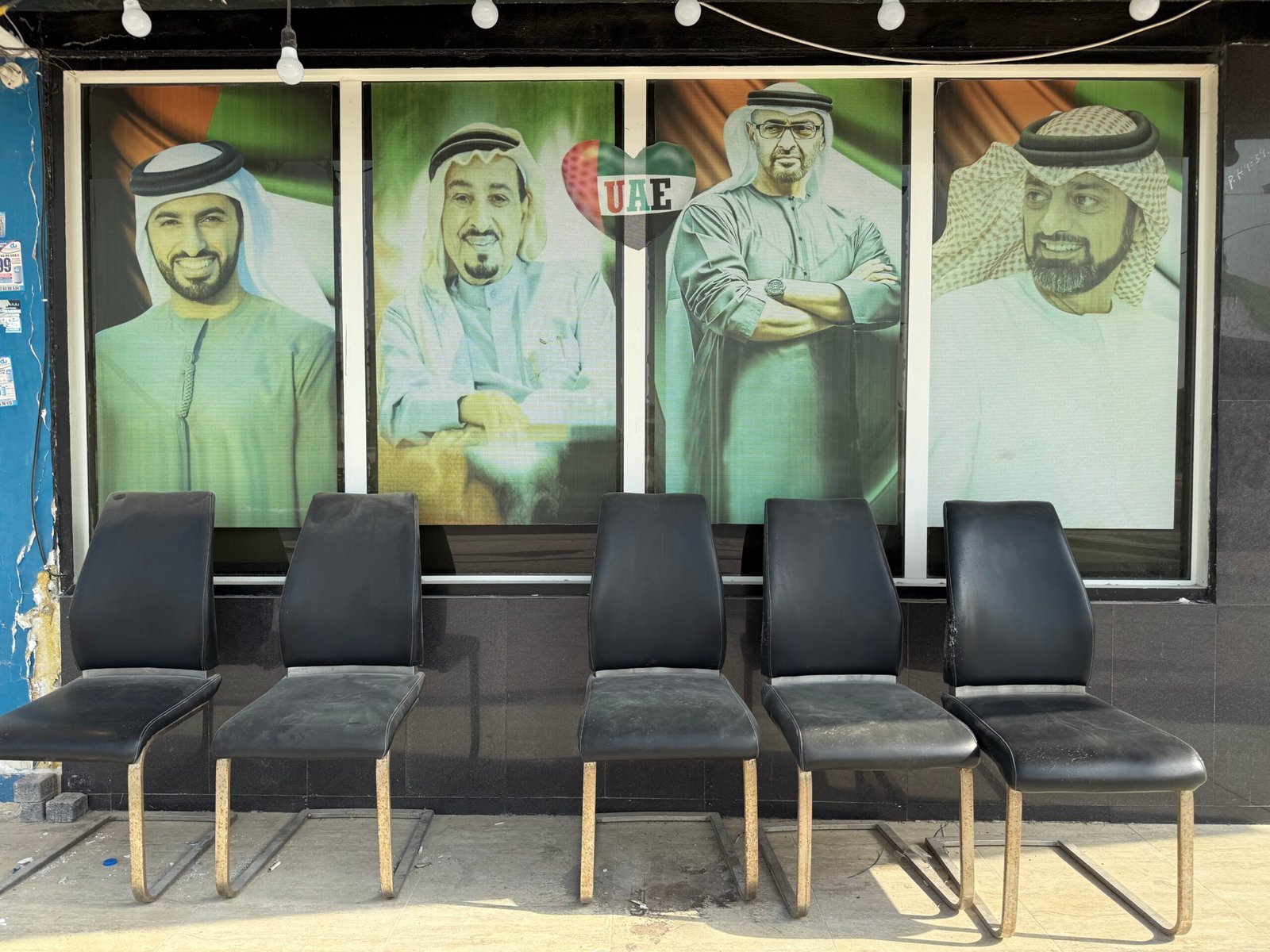
As the noon prayer continued, I managed to pay a quick visit to Marsa Ajman, an up-and-coming area by Ajman’s marina which had a few markets, stores, restaurants, and some entertainment options. Unfortunately, I could not manage to take any good photos of this area, mostly due to me being a bit too much bothered by the sun, as is usual. Nevertheless, it showed me a different side of Ajman, one that looked more like Dubai than anywhere else in this Emirate. You see, Ajman does not have the vast oil resources that Abu Dhabi and to a certain degree Dubai has. Its economy is more modest, being based on manufacturing, construction, and a bit of retail instead. This is partially why instead of the usual flashy exteriors, you will often find charming displays like this one on the frontside of Ajman’s local stores and cafes, which is likely more relatable to many of us. By the way, the second gentleman from the left is none other than Sheikh Humaid bin Rashid Al Nuaimi III himself, the current ruler of the Emirate of Ajman.
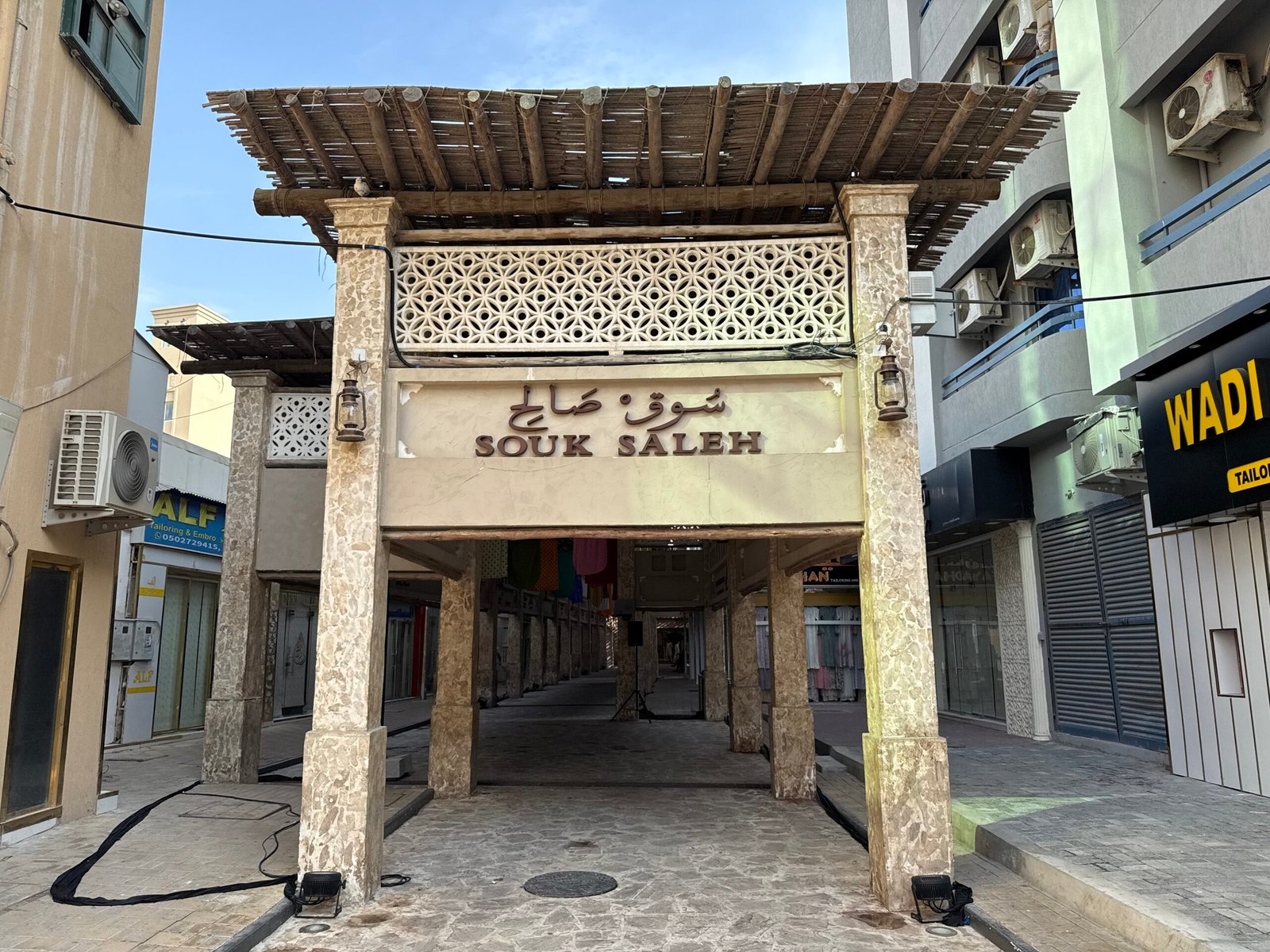
After realizing that I was already running out of time as I ran around Ajman, I made my way back to Souk Saleh, which still did not have many souls in it. However, I knew very well that this place would likely come to life after sunset. All Emirati cities seem to flourish after sunset, and thus I felt a bit sad that I could not really see much of Ajman that late in the evening as I had plans back in Dubai. Well, thankfully, I did not have to feel so bad about this after all, for reasons that will be made clearer later on.
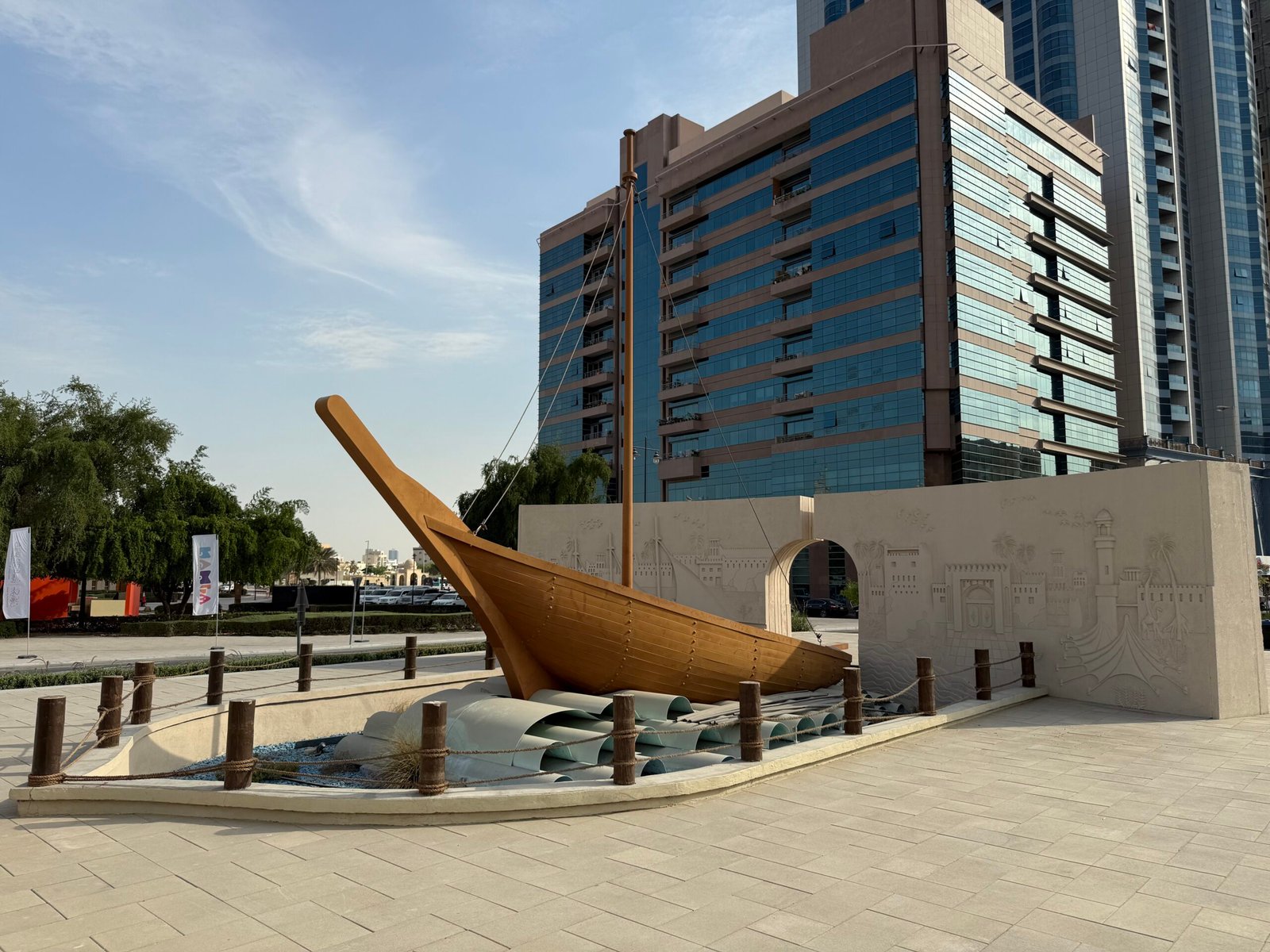
Eventually, I made it all the way back to Ajman’s very own Heritage District, where I was greeted with this monument. All Emirates of the UAE, in varying degrees, have some connection the sea. Through its facilitation of trading, pearling, fishing, and so on, sea acts like a lifeline for most Emirates, whose populations often live on the shore, though there are certainly some outliers who prefer living in the more exotic oasis towns in the interior to this day as well. Nevertheless, sea has an exceptional place in the Emirati history and culture today, and that is why one can find monuments like this scattered all around the country.
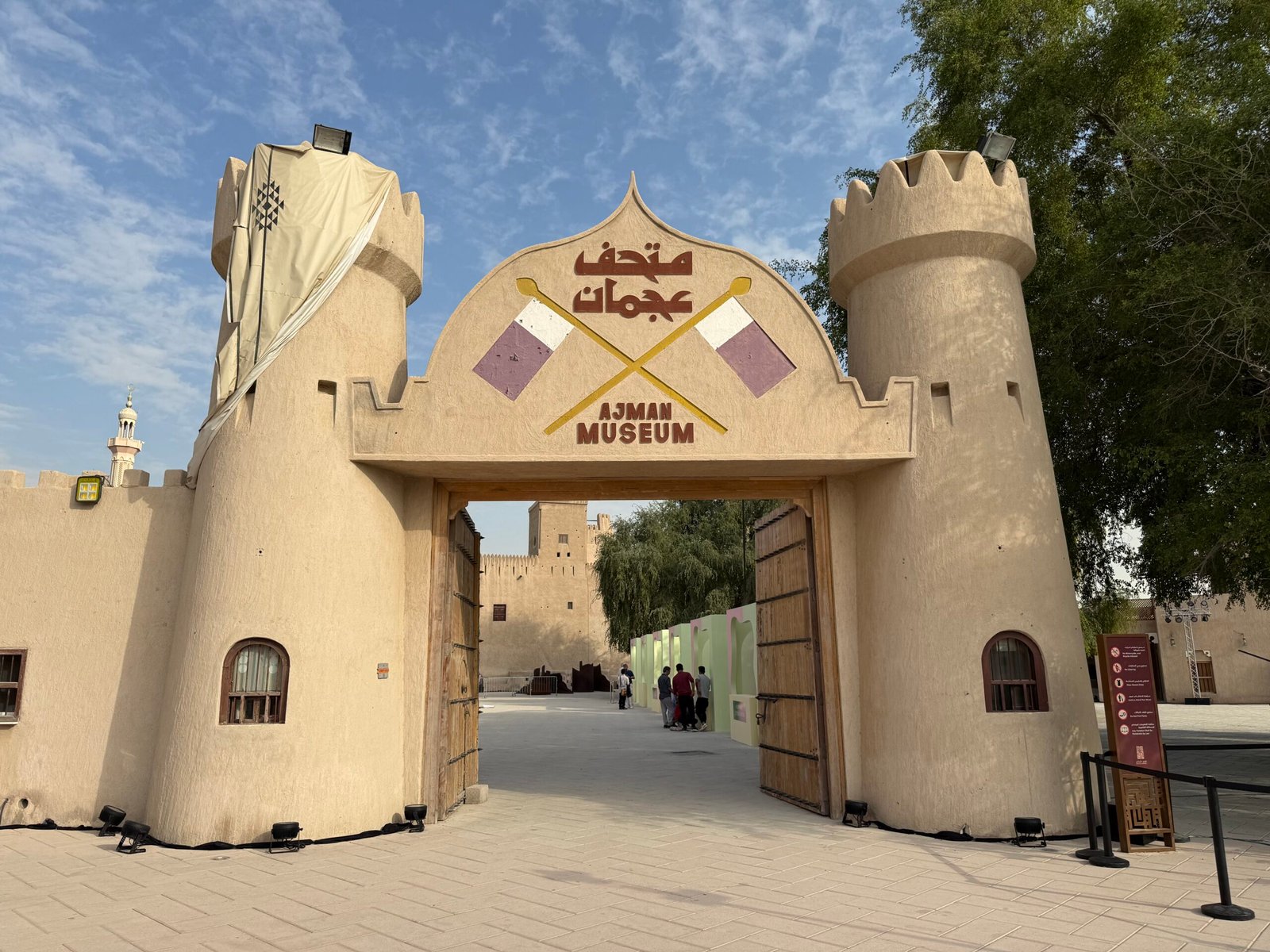
Unfortunately, when I wanted to learn more about Ajman’s own history, I encountered a small problem. While Google Maps assured me that Ajman’s Museum would be working at the time, when I actually arrived at the scene, it was not the case. I asked around and found out that due to an upcoming festival of sorts that would be celebrated that night, the museum would not open until very late in the evening. Some other locals I ran across said that it would not open on that day at all. I was a bit shocked to say the least. After all, other than the Al Murabbaa Watchtower, this was the only other really recommended site to visit in all of Ajman. Though I already enjoyed my visit, met a few friendly locals, and had a tasty lunch, this amount of sightseeing just would not do it for me if I wanted to write about this town (however briefly) for the Wondering Voyager.
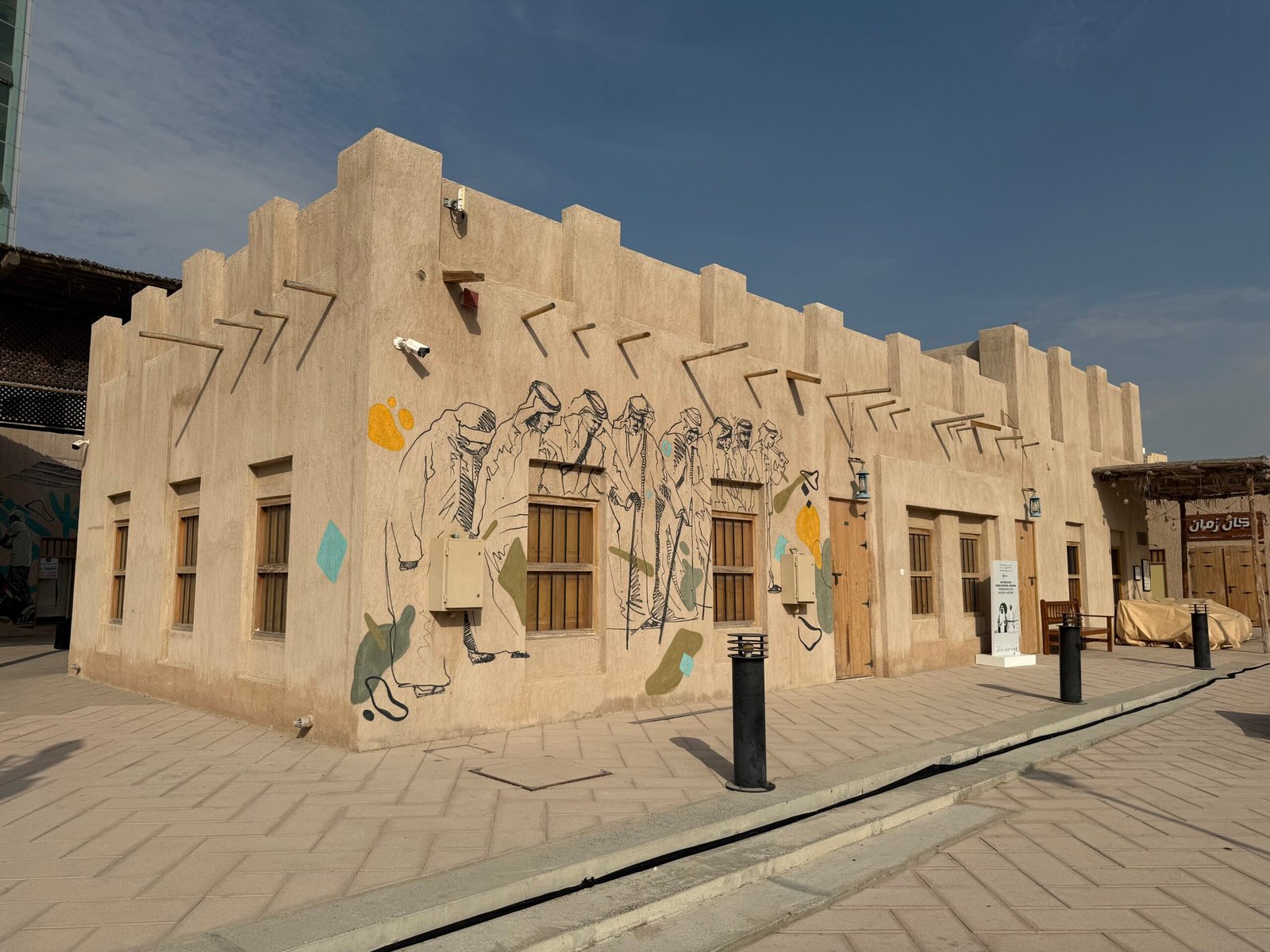
As I thought about how to fix this issue, I started to wonder around rather aimlessly, which made me realize that while the Heritage District seemed all but abandoned at the moment, this gave me an opportunity to photograph it to my heart’s content. This entire central part of Ajman seemed to have been constructed rather recently, and it was populated with some art installations already. There were also a few stores and restaurants in this area, though almost all of them were closed at the time.
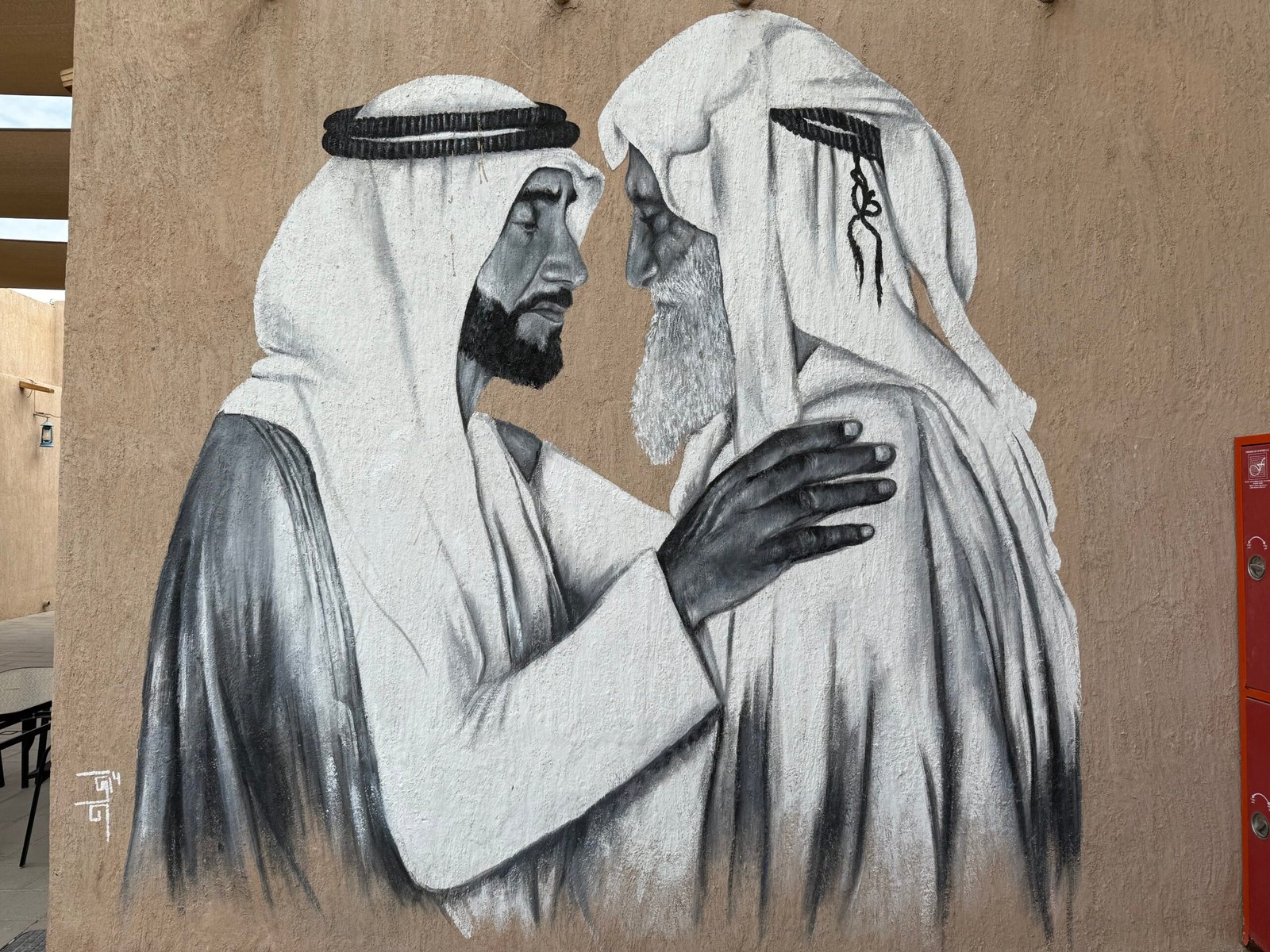
What attracted me the most here was, as usual, the street art, though I am not even sure whether we can call it as such or not in this case. Street art often comes up with some grey areas as far as its legality is concerned. That is why you find some of the best examples in somewhat hidden parts of our concrete jungles. However, here, these artistic projects seem to have been ordered directly by the authorities themselves, and worked quite well in displaying the local culture to curious travellers such as myself.
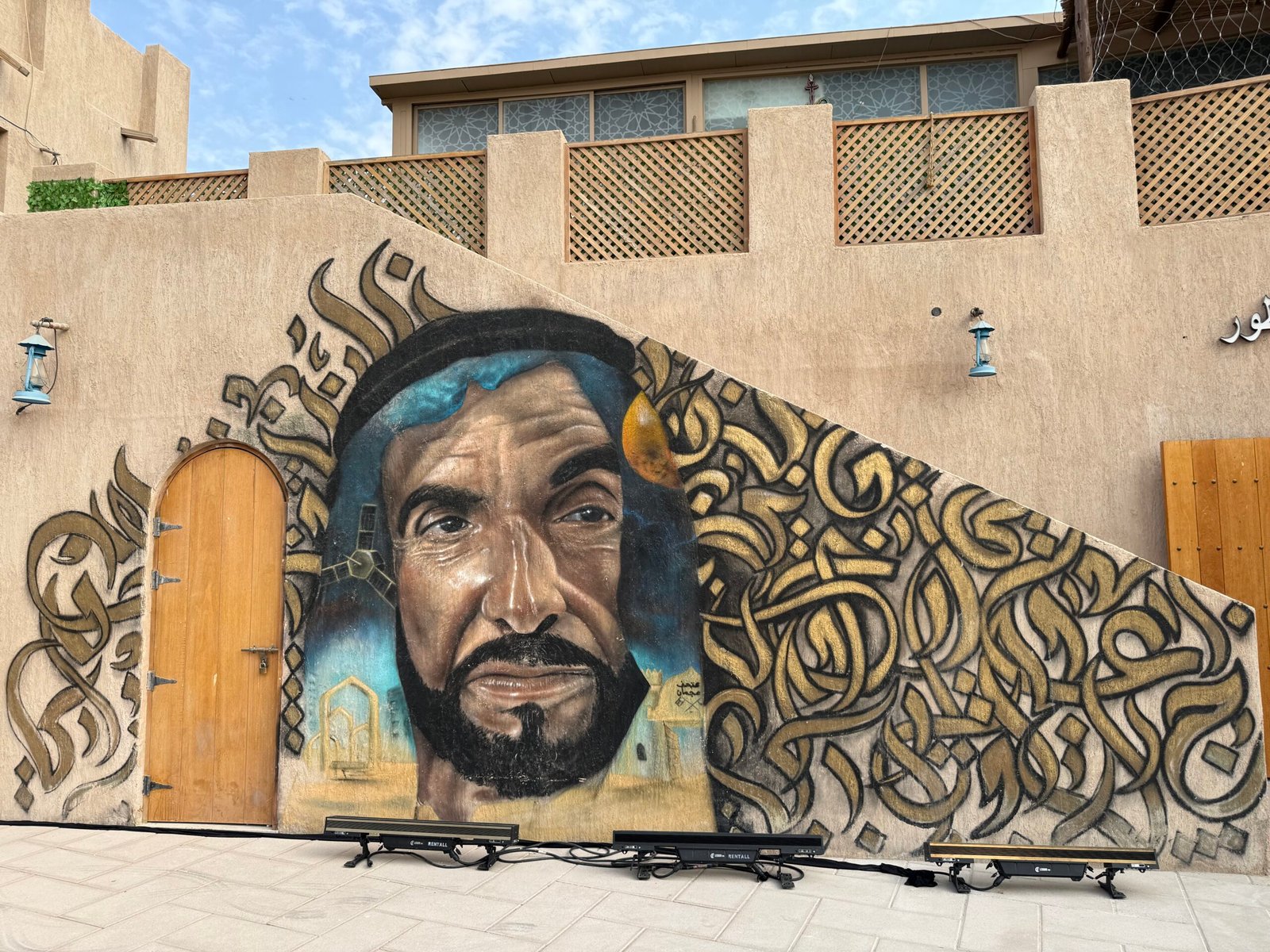
These all looked quite beautiful, using the otherwise empty parts of structures that populated this part of the town as their canvas. Not all buildings had such pieces of art on them, but more than half of them did.
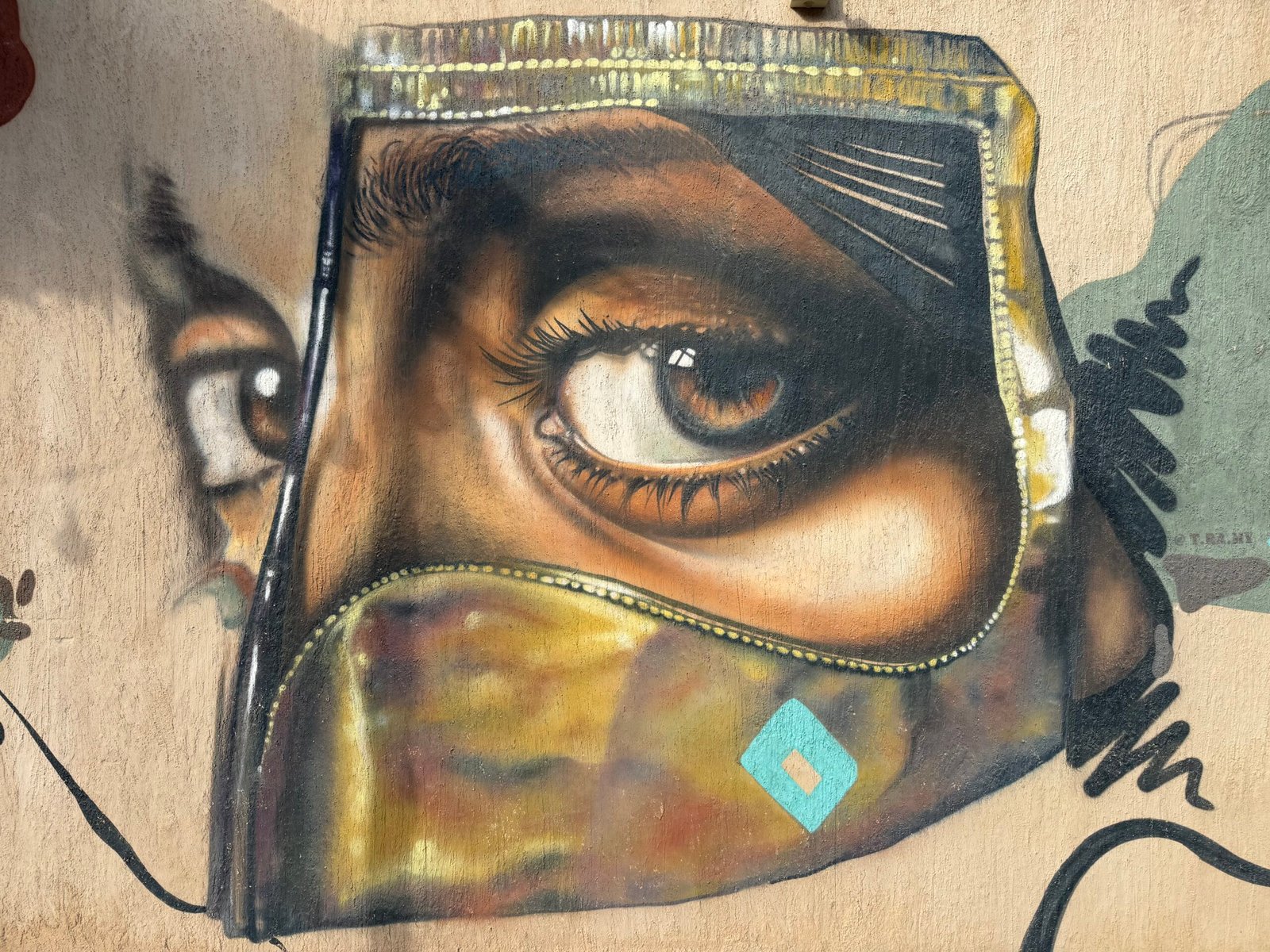
While such graffiti was much welcome to my sore eyes, which are accustomed to seeing decaying Soviet mosaics and rebellious street art in sketchy backstreets, they did not help me solve my issue at that moment. What was I supposed to do vis-à-vis visiting the museum of Ajman? Well, a few days later, this problem solved itself in a most unexpected manner.
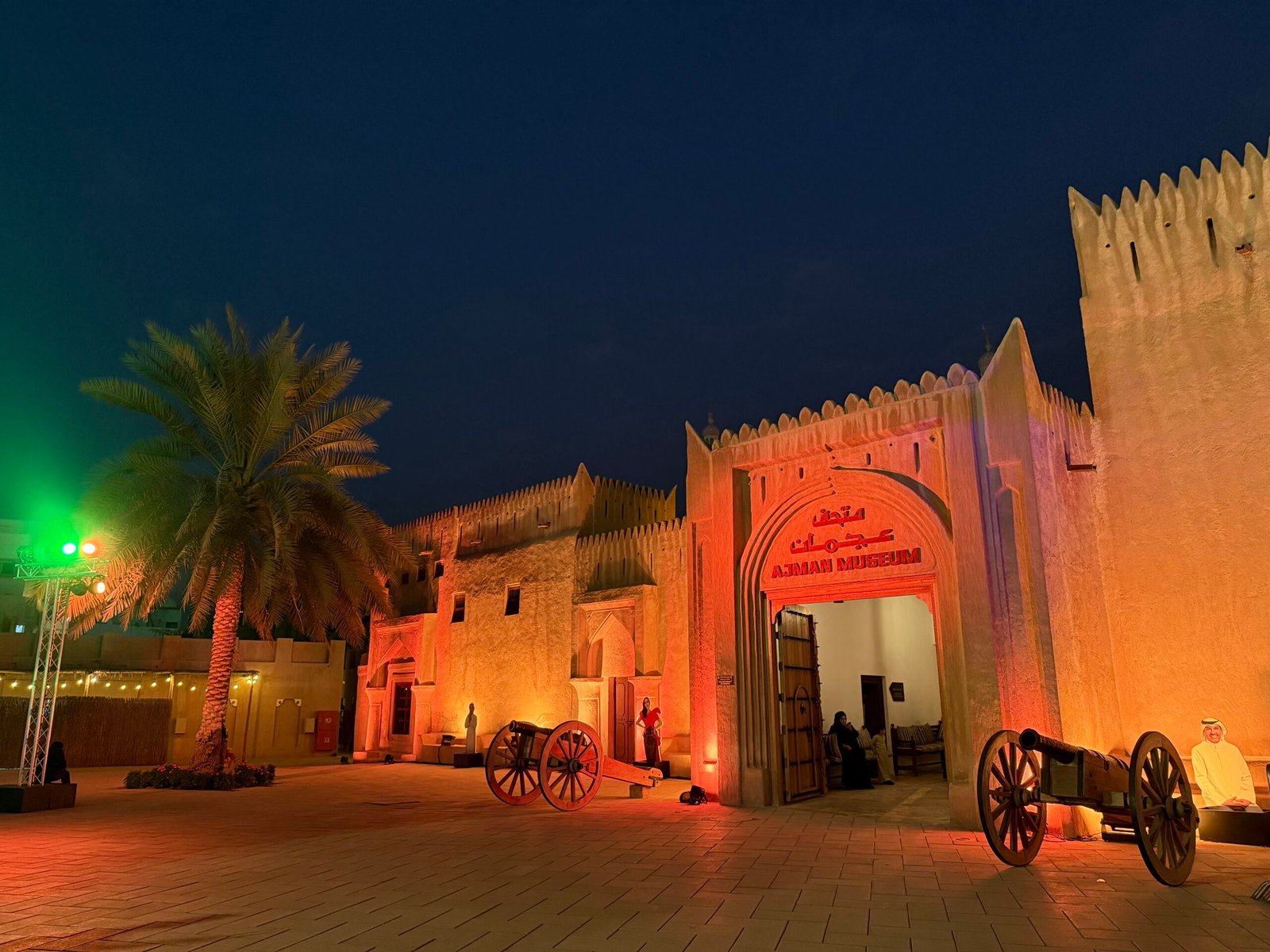
You see, when I first planned my trip to the UAE, I was not certain whether I could make it to Umm Al Quwain by public transportation or not. It seemed like that was almost impossible. Some netizens suggested taking the bus to Ras Al Khaimah and getting off at the closest point to Umm Al Quwain, in the middle of a highway, where you may find some taxi drivers. I really did not want to do that. However, I got very lucky during my trip. A bus service that used to work in between Ajman and Umm Al Quwain reportedly became a minibus service instead, but more importantly, this change added this particular public transportation method officially to Google Maps as well. As I was laying around in my hostel one night trying to figure out the rest of my trips around the UAE, the path to Umm Al Quwain suddenly became clear to me, while no such route seemingly existed a day before. I would now have to go to Ajman as I already did some time ago, and by using Ajman’s own bus network, visit Umm Al Quwain. This also meant that after concluding my visit to that least populated Emirate, I could have a shot at visiting Ajman’s own museum once again on my way back to Dubai.
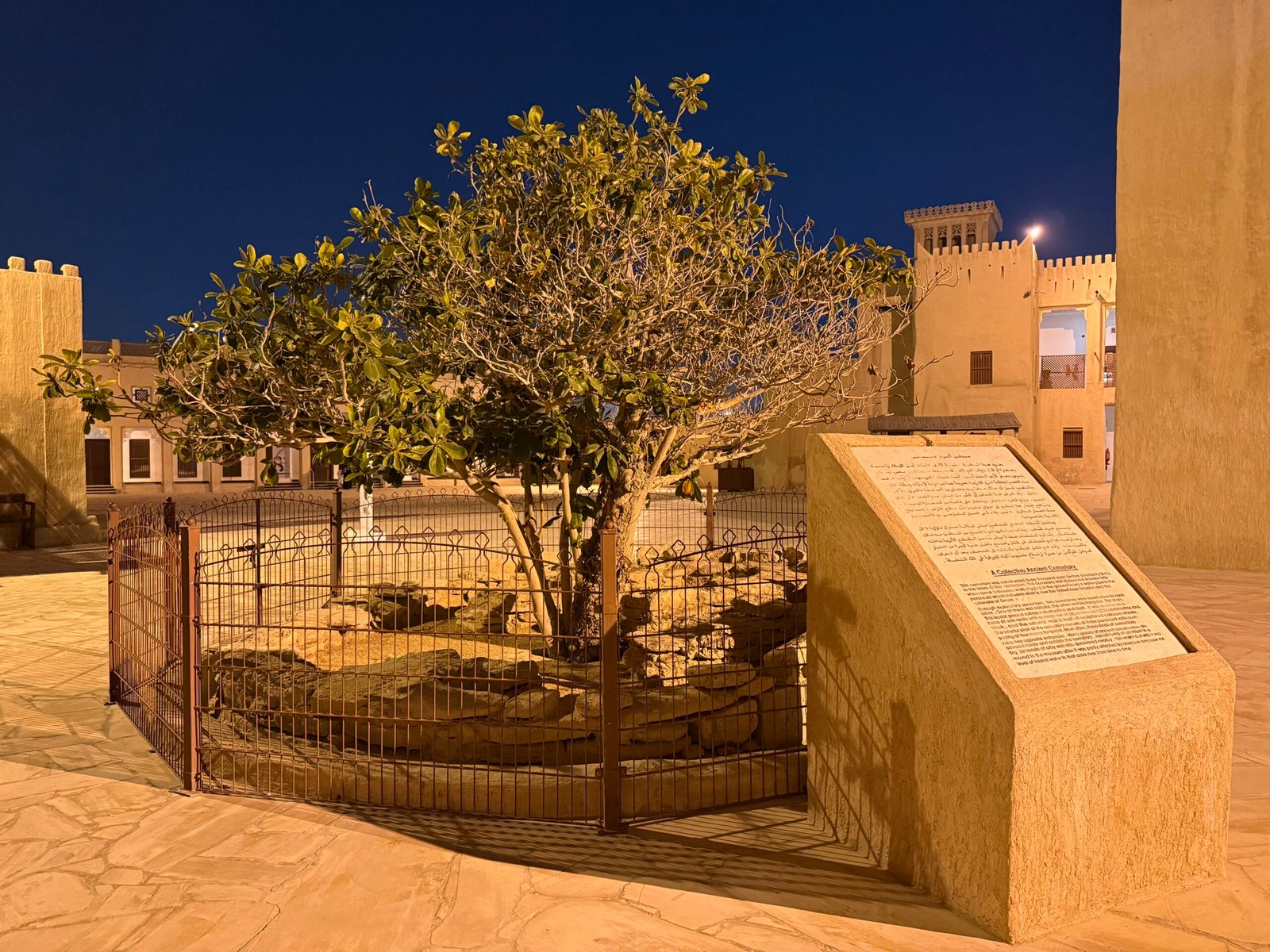
To my luck, on that day the museum worked all the way until late in the evening, and thus I had a few hours to kill there. I did not think that it would take that long, but I was proven wrong quickly. While this affordable museum, which costs only 5 AED to get in, does not seem all that big from the outside, it actually has a respectable number of rooms to visit, most of which has a ton of information to go through. Its many exhibitions are scattered around this courtyard, which has a tree on what used to be a communal tomb back in ancient times.
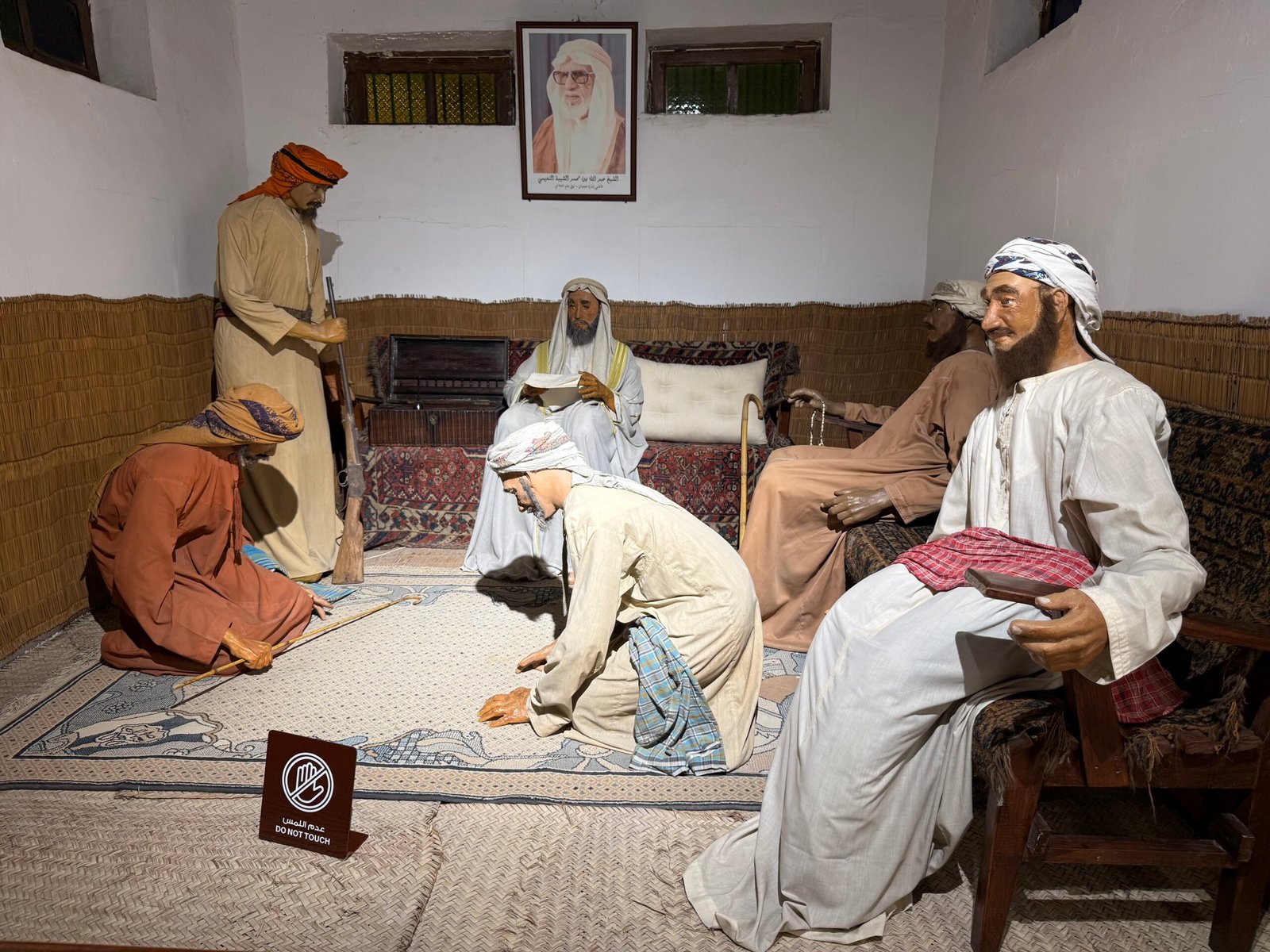
Less ancient history of Ajman, however, was what I was interested in the most. You could read a lot about Ajman’s royalty, how they lived, and how they ruled these lands for many generations in this museum. You could visit the majlis of former sheikhs and see how people came together to discuss the affairs of the realm with their liege back in the days.
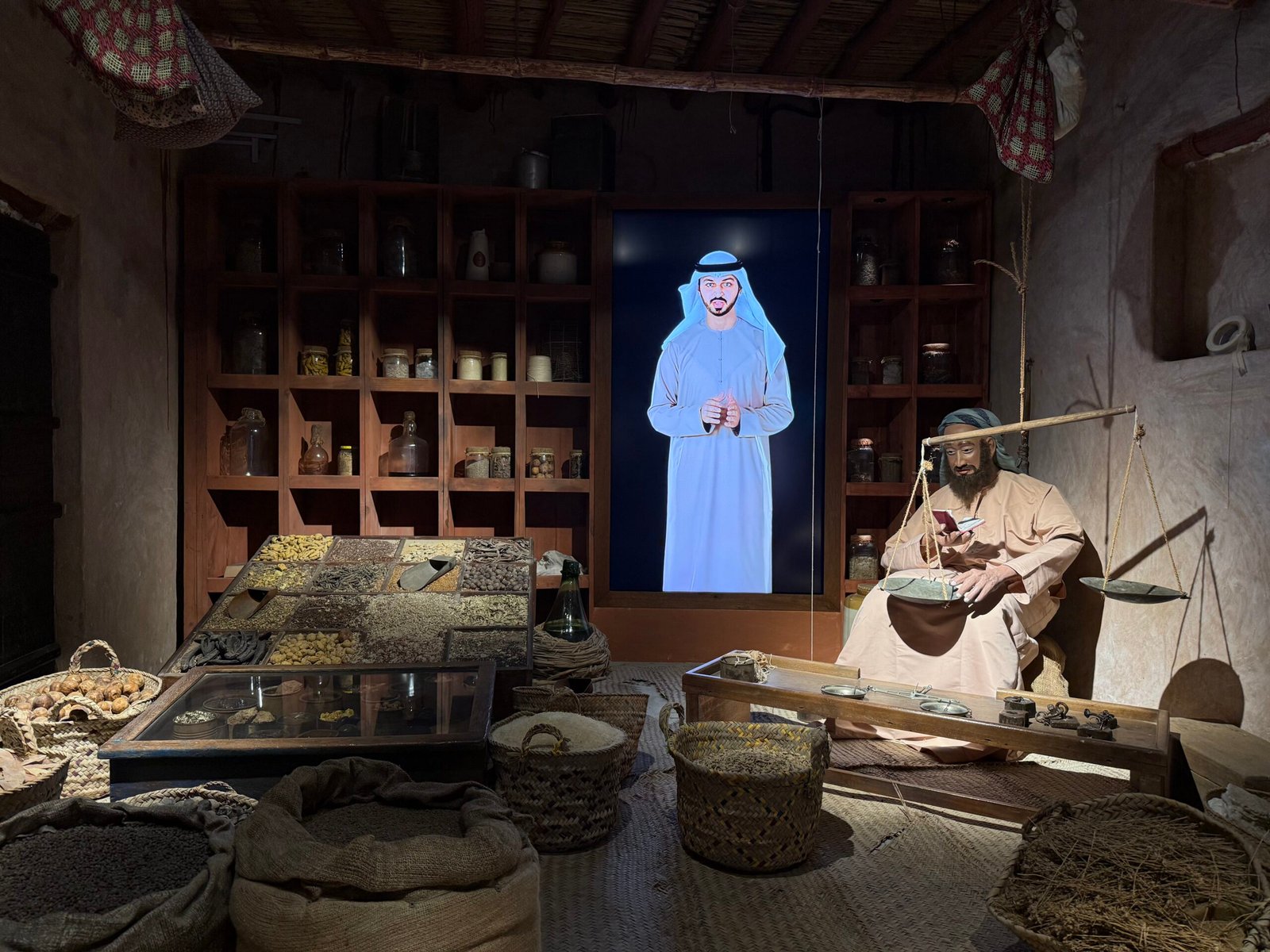
One of the best exhibitions was dedicated to the old commercial life in the souks of Ajman. There were almost twenty merchants here, each having detailed displays that outright seemed authentic at times. Most of these exhibits had an Emirati gentleman talking about the profession at length. Unfortunately, as far as I understood, such information was only available in Arabic at the time, but given how fast Ajman seems to be developing its tourism industry, I am quite sure that an English (and given the abundance of Russian signs around the Emirate, possibly a Russian) option may be available soon enough as well.
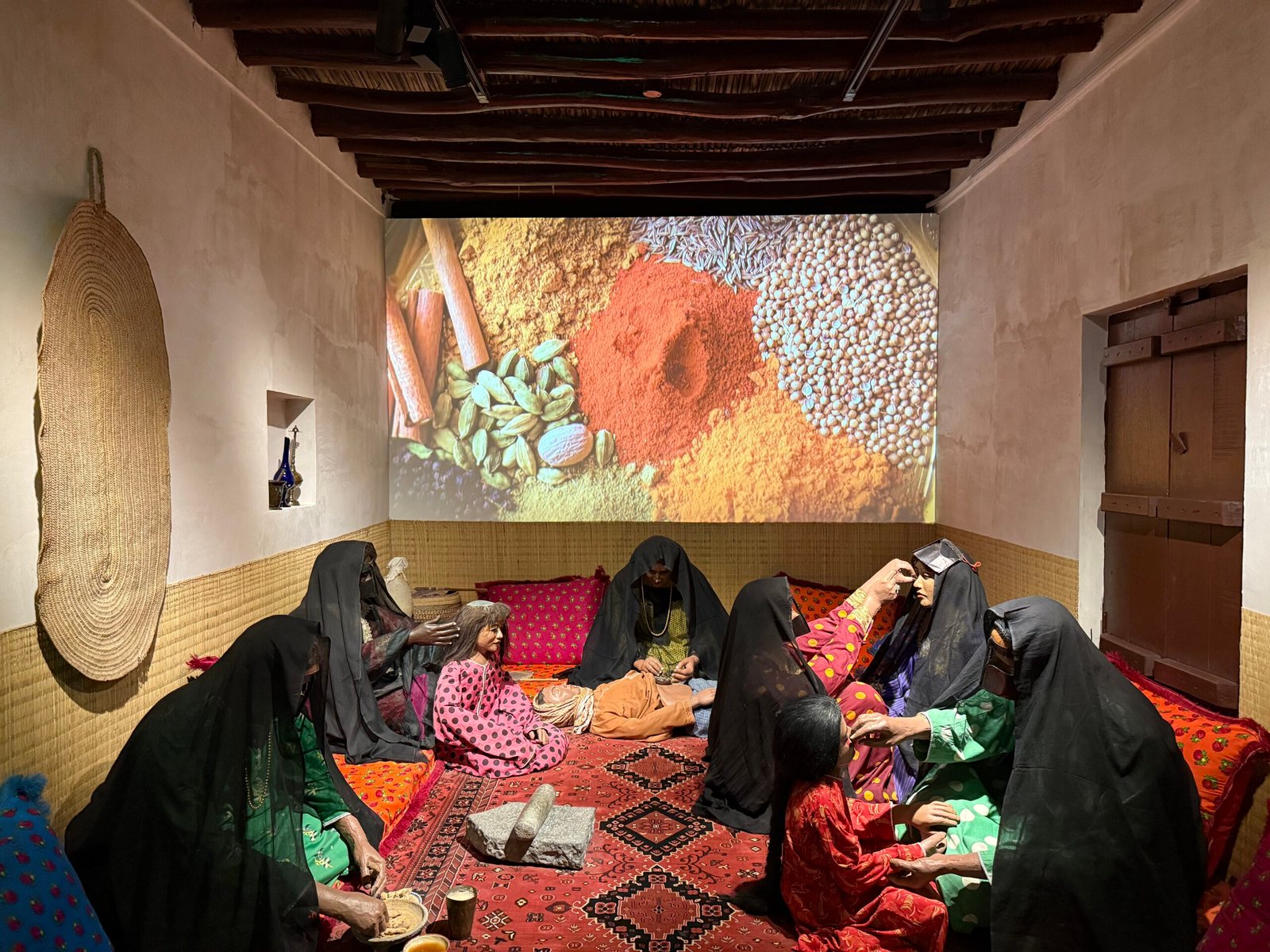
I finished my tour of this museum with a look at the section dedicated to the medical history of the region. Here, there were a few small rooms that were dedicated to the local herbs, and a few other relevant matters, and there was this other room which covered the role of women as healers in the Emirati society up until recently, with many having recipes of their own to fight against numerous ailments.
I was most satisfied with what I had seen in Ajman’s excellent museum and left it in peace to enjoy the streets of this truly relaxing Emirate at nighttime for a while. Though I did not do much photographing that night, suffice to say, just as I predicted, life flourished once the sun set on the Emirate of Ajman. In fact, the simple fact that I did not care much for photography is proof enough that I enjoyed myself a bit too much at that night. There seemed to be a small carnival going on in the Heritage District, with food carts and performers spread across the area. The nearby souks were positively teeming with life, their merchants shouting over one another to attract a potential buyer’s attention from as far away as possible. Life was good in Ajman at the time, and I enjoyed it for a while. Eventually, I got on board the bus to get back to my hostel for the night, though this time, I left Ajman fully satisfied. It is a welcoming and rather lively Emirate with an excellent museum and an inviting heritage district. I sure would not mind spending a bit more time there, enjoy its cuisine, its pristine beaches, as well as the hospitality of the locals if I can find the time in the near future. Moreover, Ajman was a bit more affordable compared to the likes of Dubai and Abu Dhabi, and unlike those two metropolises, its humbler size made it one of the most walkable Emirates I visited during my entire trip. All of this is to say, Ajman has a lot going on for it, and it is a short one-hour bus ride away from Dubai. A daytrip to this lovely Emirate will be rewarding for most, and I would not say no to a longer stay myself…